
Carpal tunnel syndrome is numbness, tingling, and weakness in the hand caused by pressure on the median nerve as it passes through a narrow channel in the wrist. It most often affects adults between 30 and 60 and is more common in women than men. Board-certified pain specialists at California Pain Consultants in San Diego evaluate carpal tunnel symptoms, confirm the diagnosis, and guide treatment from splinting and injections to surgical referral when needed.
Carpal tunnel treatment is designed to reduce pressure on the median nerve at the wrist and protect hand function. Early symptoms may come and go, but persistent compression can lead to constant numbness, weakness, and loss of fine motor control.
Treatment depends on severity, symptom duration, examination findings, health conditions, and whether there is evidence of nerve damage. Splinting and activity changes may be appropriate early, while injection or surgical release may be discussed for selected cases.
A focused evaluation matters because neck problems, other nerve entrapments, arthritis, tendon conditions, and neuropathy can mimic carpal tunnel syndrome.
Carpal tunnel syndrome occurs when the median nerve is compressed inside the wrist. Treatment may include night splinting, ergonomic changes, therapy, injection, or surgical release based on severity.
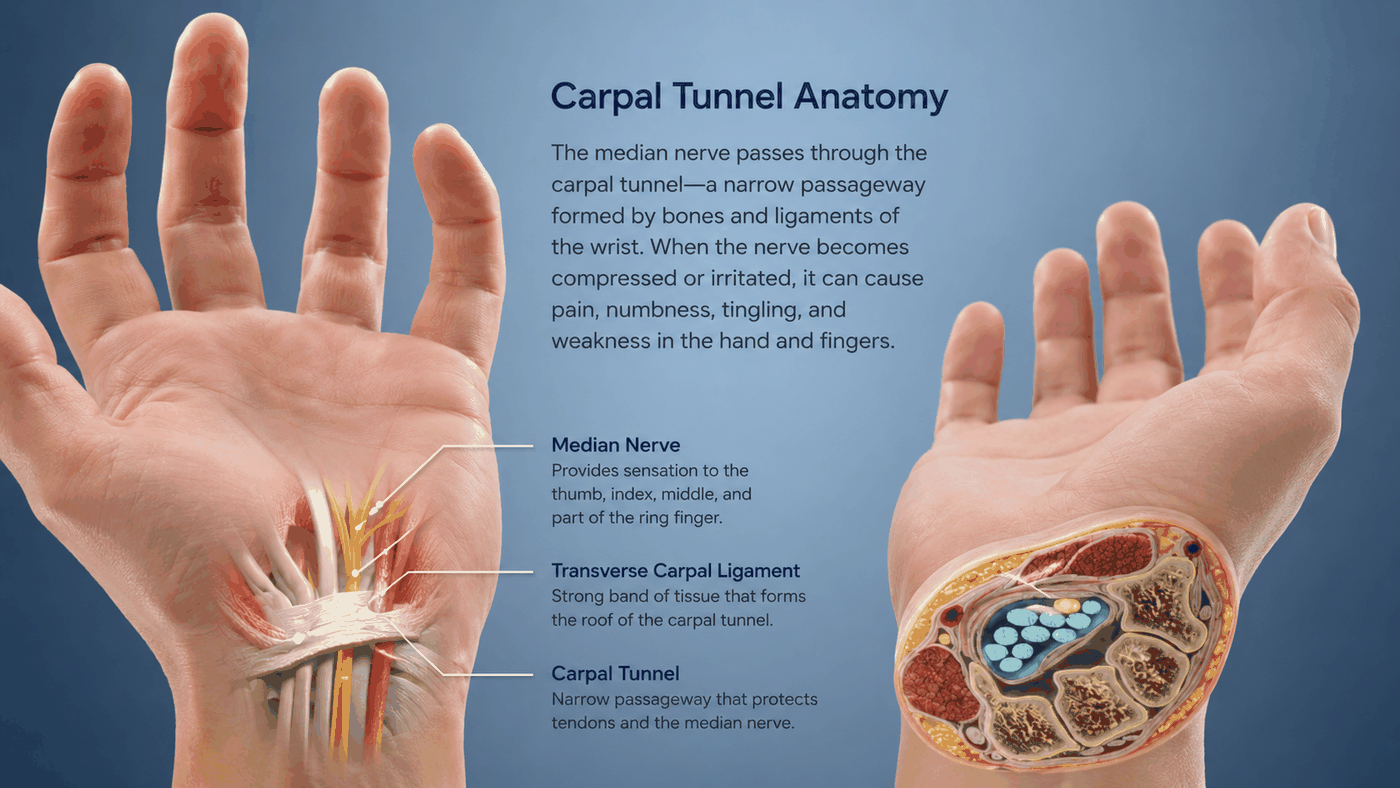
Understanding Carpal Tunnel Syndrome
The carpal tunnel is a rigid passage formed by wrist bones and the transverse carpal ligament. Swelling or reduced space can increase pressure on the median nerve.
The median nerve supplies sensation to the thumb, index, middle, and part of the ring finger and controls several thumb muscles. Symptoms often worsen at night or during sustained wrist flexion, gripping, driving, or device use.
Risk can be influenced by anatomy, pregnancy, diabetes, thyroid disease, inflammatory arthritis, wrist injury, and repetitive or forceful hand use. Repetition alone is not the only cause, and treatment should address the full clinical picture.
According to MedlinePlus, carpal tunnel syndrome occurs most often in people ages 30 to 60 and is more common in women than men. People with diabetes are also prone to nerve entrapment: the National Institute of Diabetes and Digestive and Kidney Diseases names entrapment syndromes such as carpal tunnel syndrome as the most common types of focal neuropathy.
Carpal Tunnel Treatment Options
The plan is matched to symptom severity and evidence of nerve impairment rather than using the same treatment for every patient.
Night Splinting
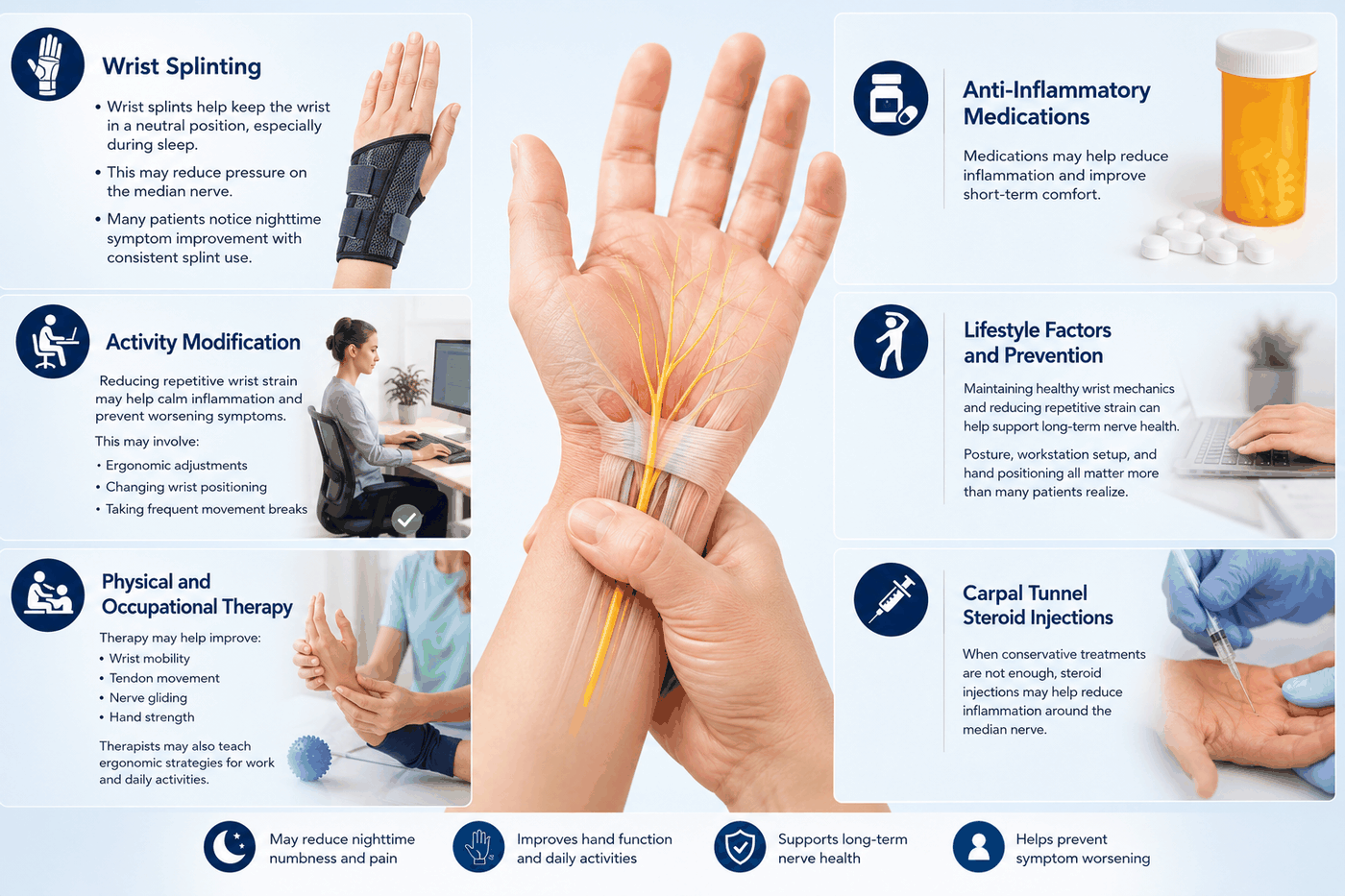
A neutral-position wrist splint may reduce nighttime pressure and is often a reasonable early option for mild or intermittent symptoms.
Activity and Ergonomic Changes
Changing wrist position, grip force, tool setup, vibration exposure, and break patterns may reduce aggravating load without requiring complete rest.
Therapy and Medication
Hand therapy may address tendon mobility, nerve gliding, strength, and technique. Medication may provide short-term symptom relief but does not remove mechanical compression.
Injection or Surgical Release
A corticosteroid injection may offer temporary relief or diagnostic information. Surgery may be recommended for severe, progressive, or persistent nerve compression. The American Academy of Orthopaedic Surgeons notes that steroid injections typically provide temporary relief rather than long-term benefit, which is why an injection is often used to calm symptoms, buy time, or help confirm the diagnosis.
Common Carpal Tunnel Symptoms
The symptom distribution and progression help distinguish carpal tunnel syndrome from other hand, wrist, elbow, or neck conditions.
- Numbness or tingling in the thumb, index, middle, or ring finger
- Symptoms that wake you at night or improve after shaking the hand
- Burning or electric discomfort into the palm or fingers
- Dropping objects or difficulty with buttons, jars, or fine tasks
- Weak pinch or reduced thumb control
- Symptoms during driving, gripping, typing, or holding a phone
- Constant numbness or visible thumb-muscle wasting in advanced cases
- Pain that may extend toward the forearm but usually spares the little finger
How Candidacy Is Evaluated
A timely evaluation can identify advanced compression before weakness or sensory loss becomes difficult to reverse.
History and Symptom Map
Timing, finger distribution, nighttime symptoms, work demands, pregnancy, diabetes, thyroid disease, arthritis, and prior injury are reviewed.
Hand and Nerve Examination
Sensation, thumb strength, muscle bulk, tendon function, wrist motion, circulation, and provocative tests are assessed. One common provocative test, described by MedlinePlus, has you bend the wrist fully downward for 60 seconds; numbness, tingling, or weakness during that time supports the diagnosis.
Electrodiagnostic Testing
Nerve-conduction studies and electromyography may confirm median nerve impairment, grade severity, or identify another nerve or neck problem.
Ultrasound or Other Imaging
Ultrasound can show median nerve enlargement or guide injection. Imaging is used selectively when a mass, arthritis, injury, or another structural cause is suspected.
A Stepwise Carpal Tunnel Treatment Plan
Treatment usually begins with protection of the nerve and progresses when symptoms or testing show that more is needed.
Step 1: Confirm the Diagnosis
The clinician distinguishes median nerve compression at the wrist from cervical radiculopathy, neuropathy, tendon disorders, and other nerve entrapments.
Step 2: Reduce Nighttime Compression
A properly fitted neutral wrist splint is often used during sleep, when prolonged wrist flexion commonly aggravates symptoms.
Step 3: Modify Aggravating Load
Tool position, grip force, vibration, keyboard setup, and repetitive tasks are adjusted while maintaining useful activity.
Step 4: Consider Injection
For appropriate patients, an ultrasound-guided corticosteroid injection may reduce inflammation and provide temporary symptom improvement.
Step 5: Protect the Nerve Surgically When Needed
Carpal tunnel release enlarges the tunnel by dividing the transverse carpal ligament. Timing depends on severity, progression, and response to nonsurgical care.
Recovery and Protecting Hand Function
Recovery differs after splinting, injection, and surgery. Nerves recover slowly, and severe or long-standing compression may leave residual symptoms.
After Injection
Temporary soreness or numbness may occur. Follow instructions for activity and monitor for infection, medication reaction, or worsening neurologic symptoms.
After Surgical Release
Incision care, swelling control, finger motion, lifting limits, and return to work are guided by the surgeon and the demands of the patient’s activities.
The AAOS describes a typical recovery path after carpal tunnel release:
- Nighttime symptoms improve dramatically for most patients in about the first week
- A splint or wrist brace may be worn for several weeks
- Soreness in the palm may last several weeks to several months
- Grip and pinch strength usually return by about 2 to 3 months, or 6 to 12 months when the nerve was in poor condition before surgery
- Complete recovery may take up to a year
People with severe, long-standing compression may not regain normal fingertip sensation for 6 to 12 months, and some may have lasting symptoms, which is one reason earlier evaluation matters.
Hand Therapy
Therapy may address scar sensitivity, range of motion, strength, tendon and nerve mobility, and a safe return to work or hobbies.
Follow-Up Testing
Persistent or recurrent symptoms may require repeat examination and, in selected cases, electrodiagnostic testing to reassess the nerve or look for another source.
Potential Benefits and Realistic Expectations
The purpose of treatment is to reduce nerve pressure, improve symptoms, and prevent further loss of hand function. Results depend partly on how advanced the nerve injury is before treatment.
- Uses severity-based options from splinting to surgical release
- May improve nighttime tingling and numbness
- Can protect grip, pinch, and fine motor control
- Ultrasound can improve anatomic visualization for selected injections
- Addresses work and activity factors that aggravate symptoms
- Provides a clear pathway when conservative care is not enough
When Hand Symptoms Need Prompt Evaluation
Progressive nerve symptoms should not be ignored. Injection and surgery also have procedure-specific risks that must be discussed individually.
- Seek prompt care for increasing weakness, constant numbness, or thumb-muscle wasting
- Urgent evaluation is needed after major wrist trauma, deformity, or loss of circulation
- Call for fever, drainage, spreading redness, or severe swelling after a procedure
- Discuss diabetes, blood thinners, pregnancy, allergies, and infection before injection or surgery
- Injection risks include infection, bleeding, temporary blood-sugar change, and rare nerve or tendon injury
- Surgery can involve scar tenderness, stiffness, nerve injury, persistent symptoms, or recurrence
Call 911 for a severely injured, cold, pale, or blue hand, major bleeding, or another life-threatening emergency.
Carpal Tunnel Treatment in Context
A complete plan considers the wrist, the entire nerve pathway, and health conditions that affect nerves and healing.
Health Condition Management
Diabetes, thyroid disease, inflammatory arthritis, pregnancy-related swelling, and other contributors may need parallel care.
Work and Ergonomics
Equipment changes, task rotation, grip modification, and pacing can reduce aggravating exposure while supporting participation.
Neck and Proximal Nerve Evaluation
Symptoms outside the classic distribution may prompt assessment for cervical radiculopathy, ulnar neuropathy, or another entrapment.
Surgical Collaboration
Pain and hand specialists can coordinate with a hand surgeon when testing or progressive symptoms indicate decompression should be discussed.
Protect Your Hand Function
California Pain Consultants can evaluate hand and wrist symptoms, review nerve testing, and explain whether conservative care, injection, or surgical referral fits your carpal tunnel treatment plan.
Getting Care in San Diego
If tingling wakes you at night or you are starting to drop things, it is worth having your hand evaluated before weakness sets in. Your care team at California Pain Consultants will map your symptoms, examine the hand, wrist, elbow, and neck, and order nerve testing when it will change the plan. Because symptoms in the hand can come from the neck or from neuropathy pain, part of the visit is making sure the problem is truly at the wrist.
We see patients at four San Diego County clinics: Kearny Mesa, Rancho Bernardo, La Mesa, and Chula Vista. We accept most insurances. Call (858) 571-3630 or request your appointment to book your appointment.
Book Your AppointmentTrusted Information and Related Care
Medical references: AAOS: Carpal tunnel syndrome guideline · AAOS OrthoInfo: Carpal tunnel syndrome.
Related California Pain resources: Neuropathy · Cervical pain · Arthritis pain · Conditions and treatments.
This article is for general education and does not replace an individualized medical evaluation. Recommendations depend on the diagnosis, health history, current medications, imaging, examination, and personal goals.
Frequently Asked Questions
Can carpal tunnel syndrome go away on its own?
Mild carpal tunnel symptoms sometimes improve with rest, splinting, and changes to how you use your hands, especially when a temporary factor such as pregnancy-related swelling is involved. Symptoms that become constant, or that come with weakness or thumb-muscle wasting, are less likely to resolve without treatment and should be evaluated promptly to protect the nerve.
How long should I wear a wrist splint for carpal tunnel?
Splints are usually worn at night, when the wrist tends to curl and increase pressure on the nerve. MedlinePlus describes wearing a night splint for several weeks as a typical first step. Your care team may also suggest daytime use during aggravating tasks. If symptoms do not improve after a reasonable trial, the plan should be reassessed.
Does a cortisone injection help carpal tunnel?
A corticosteroid injection may reduce symptoms for a period of time and can also help confirm that the median nerve at the wrist is the source. The AAOS notes injections typically provide temporary rather than long-term relief. For some patients that window is enough to get through a busy period or decide on next steps.
How do I know if my hand numbness is carpal tunnel or something else?
Carpal tunnel typically affects the thumb, index, middle, and part of the ring finger, often worse at night, and usually spares the little finger. Numbness that includes the little finger, involves both hands and feet, or travels from the neck suggests another cause, such as a pinched cervical nerve or neuropathy. Nerve testing can help sort this out.
How long does it take to recover from carpal tunnel surgery?
Recovery happens in stages. According to the AAOS, night symptoms often improve within about the first week, grip and pinch strength usually return by about 2 to 3 months, and complete recovery may take up to a year. Severe, long-standing compression may slow recovery. Your surgeon and hand therapist guide return to work and activities.
When should I see a specialist for carpal tunnel?
See a specialist if numbness or tingling is waking you at night regularly, lasts beyond a few weeks of splinting and activity changes, or comes with weakness, clumsiness, or dropping objects. Constant numbness or visible thinning of the thumb muscles needs prompt evaluation, because long-standing compression may lead to nerve damage that does not fully recover.