
A celiac plexus block is an image-guided injection that numbs, or in some cases longer-term interrupts, the nerve network that carries pain signals from the upper abdominal organs. It may help people with severe upper-abdominal pain from pancreatic or other upper-abdominal cancers, and selected patients with chronic pancreatitis. Board-certified pain specialists at California Pain Consultants in San Diego evaluate candidates, perform the procedure, and coordinate with your oncology or gastroenterology team.
The celiac plexus is a network of nerves near the aorta that carries pain signals from several abdominal organs. A block places medication near this network to reduce signal transmission rather than treating the underlying organ disease.
The procedure may be one part of cancer care, gastroenterology care, medication management, nutrition support, and other treatment aimed at comfort and function.
Celiac plexus block uses image guidance to place local anesthetic, and in some cases a longer-acting neurolytic agent, near the celiac plexus to reduce selected upper-abdominal pain signals.
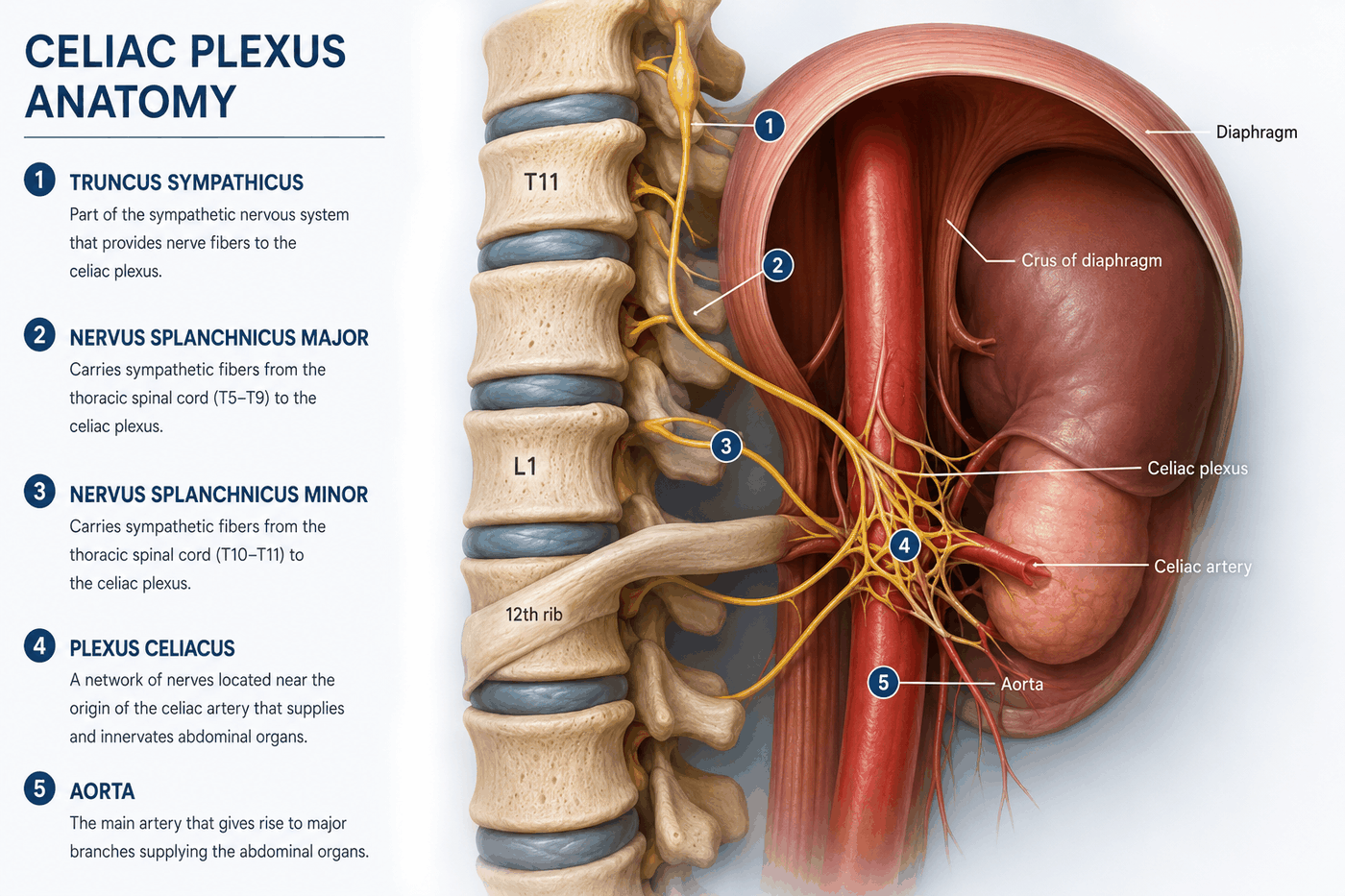
What Is a Celiac Plexus Block?
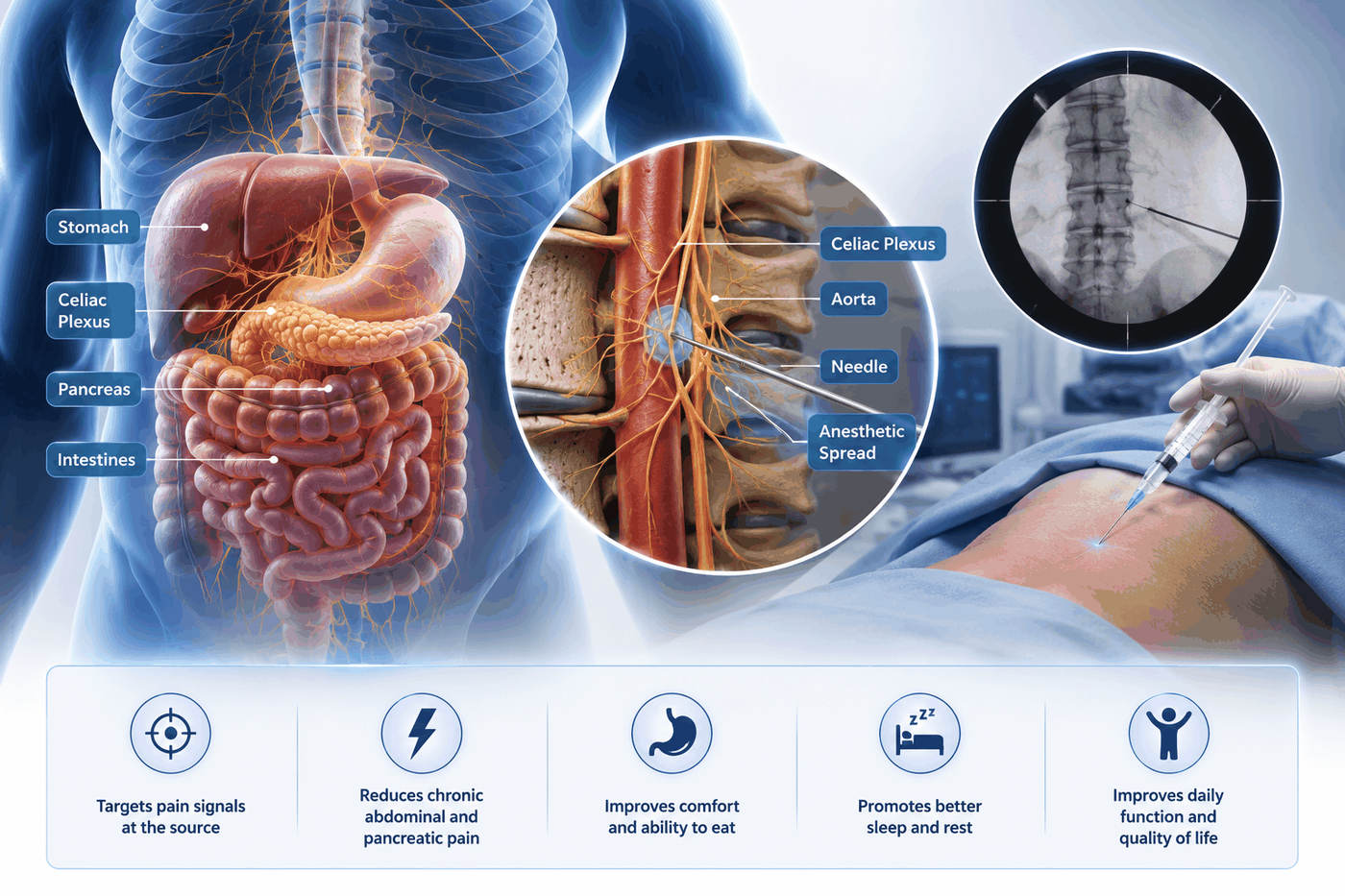
The block targets visceral pain pathways from the pancreas, liver, gallbladder, stomach, spleen, kidneys, and portions of the intestine.
A diagnostic or therapeutic block commonly uses local anesthetic and may include corticosteroid in selected situations. Neurolysis uses alcohol or another agent to interrupt nerve signaling for a longer period, usually in advanced cancer-related pain after careful discussion.
Approaches include posterior fluoroscopic or CT-guided techniques and anterior endoscopic-ultrasound guidance. The chosen route depends on anatomy, diagnosis, specialist expertise, and individual risks.
Block Versus Neurolysis
- A diagnostic or therapeutic block uses local anesthetic, sometimes with a corticosteroid, and its effect is temporary
- Neurolysis uses alcohol or another agent to interrupt nerve signaling for a longer period
- A block is often used first to confirm that the celiac plexus is carrying the pain before neurolysis is considered
- For chronic pancreatitis, a review published by the National Library of Medicine notes that a shorter-acting block using a local anesthetic and a steroid is usually performed
When a Celiac Plexus Block May Be Considered
The strongest use is targeted management of upper-abdominal visceral pain after the source has been medically evaluated.
Pancreatic Cancer Pain
A block or neurolysis may reduce pain transmitted through the celiac plexus and may help reduce medication burden for some patients.
Pain is a frequent and often difficult part of cancer. The National Cancer Institute reports that pain occurs in 20% to 50% of patients with cancer and that roughly 80% of patients with advanced-stage cancer have moderate to severe pain. Our cancer pain page describes the broader range of options.
Other Upper-Abdominal Cancer Pain
Selected pain from upper-abdominal malignancy may respond when the visceral afferent pathway includes the celiac plexus.
Chronic Pancreatitis
A temporary block may be considered for selected refractory pain, although response and evidence are less predictable than in pancreatic cancer. The NLM-hosted review describes the available literature as suggesting a lower response rate in chronic pancreatitis than is traditionally seen in pancreatic cancer.
Diagnostic Clarification
A short-acting block may help determine whether celiac plexus signaling is a meaningful contributor before a longer-acting intervention is discussed.
Symptoms That Require a Complete Abdominal Evaluation
A block should not replace diagnosis of new, changing, or unexplained abdominal pain.
- Deep upper-abdominal or epigastric pain
- Pain that travels through to the mid-back
- Pain associated with pancreatic or upper-abdominal cancer
- Persistent pain from medically evaluated chronic pancreatitis
- Difficulty eating, sleeping, moving, or tolerating treatment because of pain
- Medication side effects or inadequate relief despite a supervised plan
- Unexplained weight loss, jaundice, vomiting, or digestive change
- A sudden or rapidly worsening abdominal pain pattern
How Candidacy Is Evaluated
The underlying disease, anatomy, medication plan, blood counts, infection risk, and goals of care are reviewed before treatment.
Diagnosis and Imaging
CT, MRI, ultrasound, endoscopy, pathology, and specialist records help confirm the pain source and show relevant abdominal anatomy.
Pain Pattern and Function
The team reviews location, timing, eating-related symptoms, back radiation, sleep, activity, and the response and side effects of current medication.
Bleeding and Infection Risk
Blood thinners, platelet count, fever, immune suppression, and other risks are assessed before placing a needle near major vessels.
Shared Goals
The patient and care team discuss the expected duration, alternatives, medication goals, and how the result will be measured.
The Celiac Plexus Block Procedure
The exact technique varies. The following describes common elements of an image-guided percutaneous approach.
Step 1: Preparation and Monitoring
Fasting and medication instructions are reviewed. Monitoring, intravenous access, and sedation or local anesthetic are used as planned.
Step 2: Image-Guided Approach
Fluoroscopy, CT, or ultrasound helps identify the vertebrae, aorta, surrounding organs, and safe needle path.
Step 3: Needle Position Confirmation
One or more needles are advanced toward the target. Contrast may confirm spread and help avoid intravascular injection.
Step 4: Medication Delivery
Local anesthetic is injected for a block. When neurolysis is planned, a longer-acting agent is delivered only after appropriate confirmation and discussion.
Step 5: Observation
Blood pressure, symptoms, strength, pain, and side effects are monitored because temporary hypotension, diarrhea, or back soreness can occur.
Recovery After a Celiac Plexus Block
Arrange transportation and follow the individualized aftercare plan. Hydration and slow position changes may be especially important if blood pressure falls temporarily.
Early Effects
Temporary warmth, abdominal change, back soreness, diarrhea, dizziness, or lower blood pressure may occur. Assistance with walking may be needed initially.
Pain and Medication Tracking
Record pain, sleep, eating, activity, and breakthrough medication use. Do not reduce prescribed medicine abruptly without clinician guidance.
Duration of Benefit
A local-anesthetic block may be short lived. Neurolysis may last longer, but the response and duration vary with disease and nerve regrowth. In a meta-analysis summarized in the NLM-hosted review, patients with upper-abdominal cancer achieved good to excellent pain relief in 89% of cases at 2 weeks, and partial to complete relief was maintained in 90% at 3 months. Individual results vary, and the review notes that the chance of staying pain free decreases the longer a patient lives after the procedure.
Ongoing Disease Care
Oncology, gastroenterology, palliative care, nutrition, and primary treatment continue because the block changes pain signaling, not the underlying disease.
Potential Benefits and Realistic Expectations
Potential benefit must be weighed against procedural risk, especially in patients with complex illness.
- Targets a defined visceral pain pathway
- May reduce severe upper-abdominal pain for selected patients
- May reduce opioid requirements or medication side effects
- Can support sleep, eating, movement, and cancer-treatment participation
- Offers diagnostic and longer-acting treatment approaches
- Can be coordinated with oncology, gastroenterology, and palliative care
Risks and When to Seek Help
Risks include bleeding, infection, low blood pressure, diarrhea, back pain, injury to nearby organs or blood vessels, medication reaction, pneumothorax, and rare neurologic injury.
According to the NLM-hosted review, serious complications occur in less than 2% of cases. Temporary diarrhea and low blood pressure are among the more common effects, reported in roughly 44% to 60% and 10% to 52% of patients respectively, and neurologic complications are reported in about 1% of cases.
- Report blood thinners, abnormal blood counts, infection, allergies, and prior contrast reactions
- Stand slowly and follow hydration guidance after the procedure
- Call for fever, persistent vomiting, severe new back or abdominal pain, or wound drainage
- Seek urgent care for fainting, major weakness, breathing difficulty, or loss of bladder or bowel control
- New jaundice, gastrointestinal bleeding, or rapidly changing abdominal symptoms require medical evaluation
- Neurolysis is generally reserved for situations in which longer-lasting interruption is clinically appropriate
Call 911 for severe breathing difficulty, loss of consciousness, signs of internal bleeding, or another life-threatening emergency.
Celiac Plexus Block in Multidisciplinary Care
Targeted pain relief can be valuable, but the strongest plan addresses the illness, nutrition, medication, emotional support, and practical needs together.
Oncology or Gastroenterology
Disease-directed treatment and monitoring continue before and after the block.
Medication Management
Analgesics, anti-nausea medication, bowel regimens, and other supportive medicines are adjusted based on response and side effects.
Nutrition and Function
Dietitians, rehabilitation specialists, and supportive-care clinicians can address weight loss, weakness, mobility, and energy conservation.
Palliative and Emotional Support
Palliative care can be involved at any disease stage to improve comfort, communication, coping, and quality of life alongside active treatment.
Video: Celiac Plexus Block Explained
In this brief video, Dr. Cohen explains how a celiac plexus block may be used within an individualized plan for selected chronic upper-abdominal pain.
Discuss Targeted Relief for Upper-Abdominal Pain
California Pain Consultants can coordinate with your medical team, review the pain source and risks, and determine whether a celiac plexus block belongs in the care plan.
Treatment at California Pain Consultants
When upper-abdominal pain is limiting eating, sleep, or the ability to continue treatment, timing matters. California Pain Consultants sees patients at four San Diego County clinics, in Kearny Mesa, Rancho Bernardo, La Mesa, and Chula Vista, and performs image-guided procedures at the Comprehensive Pain ASC in Rancho Bernardo and the EPC Surgery Center in La Mesa. Your care team reviews your imaging and records, communicates with your oncologist or gastroenterologist, and explains whether a block, neurolysis, or another option, such as a superior hypogastric plexus block for pelvic pain or other sympathetic blocks, fits your situation.
We accept most insurances. Call (858) 571-3630 or request your appointment so your care team can review your case.
Book Your AppointmentTrusted Information and Related Care
Medical references: NCBI Bookshelf: Celiac plexus block · NIH review: Celiac plexus block and neurolysis.
Related California Pain resources: Cancer pain · Conditions and treatments · Sympathetic block.
This article is for general education and does not replace an individualized medical evaluation. Recommendations depend on the diagnosis, health history, current medications, imaging, examination, and personal goals.
Frequently Asked Questions About Celiac Plexus Block
Find clear, medically responsible answers about Celiac Plexus Block, who may be a candidate, what to expect, and when to contact your healthcare team.
What is a celiac plexus block, and how does it work?
A celiac plexus block places medication around a network of nerves in the upper abdomen that carries pain signals from organs such as the pancreas, stomach, liver, and intestines. A temporary block or longer-lasting neurolytic treatment may be considered depending on the diagnosis and goals.
What conditions or symptoms may a celiac plexus block help address?
It is most often considered for severe upper-abdominal pain related to pancreatic cancer, chronic pancreatitis, or selected abdominal cancers and visceral pain conditions. It does not treat the underlying disease itself.
Who should consider a celiac plexus block?
People with severe upper-abdominal pain from pancreatic or other upper-abdominal cancers, especially when medications are not controlling pain well or are causing troublesome side effects, may be candidates. Selected patients with chronic pancreatitis may also be considered. New or unexplained abdominal pain must be fully evaluated by your medical team first. Imaging, current cancer treatment, anatomy, and overall health all influence the decision.
Does a celiac plexus block work for chronic pancreatitis?
It may help some people with chronic pancreatitis, but results are less predictable than in pancreatic cancer. Published reviews describe a lower response rate, and a shorter-acting block with a local anesthetic and a steroid is usually used rather than neurolysis. Your specialist will discuss realistic expectations and other options before recommending it.
How should I prepare for a celiac plexus block?
Your team may review blood thinners, infection, allergies, fasting, blood pressure, and the need for sedation. Arrange transportation and follow individualized medication instructions; do not stop prescribed medicines without guidance.
What happens during a celiac plexus block?
Using fluoroscopy, CT, or ultrasound guidance, the clinician advances needles toward the celiac plexus and confirms safe positioning. Local anesthetic, steroid, or a neurolytic agent may then be delivered based on the treatment plan.
Is a celiac plexus block painful?
The procedure is done with local anesthetic and, in many cases, sedation, and you are monitored throughout. Some back soreness at the needle site afterward is common and usually temporary. Other short-term effects can include lower blood pressure, warmth in the abdomen, and diarrhea. Your care team will explain what to expect and how to manage these effects.
What is recovery like after a celiac plexus block?
Temporary soreness, low blood pressure, diarrhea, or light-headedness may occur, so monitoring and hydration instructions are important. Most patients go home the same day with guidance about activity and medications.
What are the risks of a celiac plexus block?
Serious complications are uncommon, occurring in less than 2% of cases according to an NLM-hosted review. More common, usually temporary effects include back soreness, diarrhea, and low blood pressure. Rarer risks include bleeding, infection, injury to nearby organs or vessels, and neurologic injury. Your care team reviews blood thinners and other factors beforehand to reduce risk.
How long does a celiac plexus block last?
It depends on the type. A local-anesthetic block is often short lived, while neurolysis may last considerably longer. In a meta-analysis cited by an NLM-hosted review, partial to complete relief was maintained in 90% of patients with upper-abdominal cancer at 3 months. Duration varies with the underlying disease and nerve regrowth, and the procedure can sometimes be repeated. Pain can return as disease changes.
Can a celiac plexus block reduce my need for opioids?
For some patients, yes. By reducing pain signals from upper-abdominal organs, a block or neurolysis may lower the amount of pain medicine needed and ease side effects such as constipation and drowsiness. Results vary, and medication should never be reduced abruptly. Your care team will adjust your plan gradually based on how you respond.
How does a celiac plexus block fit into a broader treatment plan?
A celiac plexus block is usually integrated with oncology, gastroenterology, medication management, nutrition, and palliative or supportive care. The goal may be to improve comfort and function or reduce medication burden, but results differ among patients.
When should I call my healthcare team or seek urgent care after a celiac plexus block?
Call the care team for fever, severe or worsening abdominal or back pain, persistent vomiting, fainting, new weakness, or signs of infection. Seek emergency care for trouble breathing, chest pain, severe bleeding, loss of consciousness, or sudden neurologic changes.