
Degenerative disc disease is a term for wear-related changes in the cushioning discs between the vertebrae that can cause neck or low back pain, stiffness, and sometimes nerve symptoms in the arms or legs. It most often affects adults over 40, although many people with disc changes on imaging never develop pain. The board-certified pain specialists at California Pain Consultants in San Diego diagnose disc-related pain and offer nonsurgical and interventional treatment options.
Back or neck pain doesn’t always begin with a clear injury. Sometimes, it starts gradually—a stiffness when you wake up, a discomfort after sitting too long, or a feeling that your body just isn’t moving the way it used to. At first, it’s easy to ignore. But over time, that discomfort can become more noticeable. More consistent. More limiting.
Degenerative disc disease describes age- or injury-related changes in spinal discs. Imaging findings do not always match symptoms, so treatment decisions should be based on the full clinical picture.
What Is Degenerative Disc Disease?
Degenerative disc disease (DDD) refers to changes that occur in the intervertebral discs of the spine over time.
These discs act as cushions between the bones (vertebrae) of your spine. They help absorb shock and allow flexibility and movement. Each disc has:
- A soft, gel-like center (nucleus pulposus)
- A tougher outer layer (annulus fibrosus)
As we age, these discs naturally begin to:
- Lose water content
- Become less flexible
- Thin or weaken
These changes can lead to pain, stiffness, or other symptoms.
DDD most commonly affects:
- The lower back (lumbar spine)
- The neck (cervical spine)
According to Cleveland Clinic, approximately 90% of degenerative disc disease occurs in the lowest portion of the lumbar spine, which is why it is a frequent contributor to low back pain.
Why It’s Called a “Disease”
The term “degenerative disc disease” can sound alarming, but it can be misleading.
It is not an infection or a progressive illness in the traditional sense. Instead, it describes:
- Age-related changes in the spine
- Wear and tear over time
- Structural changes that may or may not cause symptoms
Many people have disc degeneration without pain. Cleveland Clinic notes that almost everyone has some disc degeneration after age 40, yet it is estimated to cause back pain in about 5% of adults. Symptoms occur when these changes begin to affect surrounding structures such as nerves or joints.
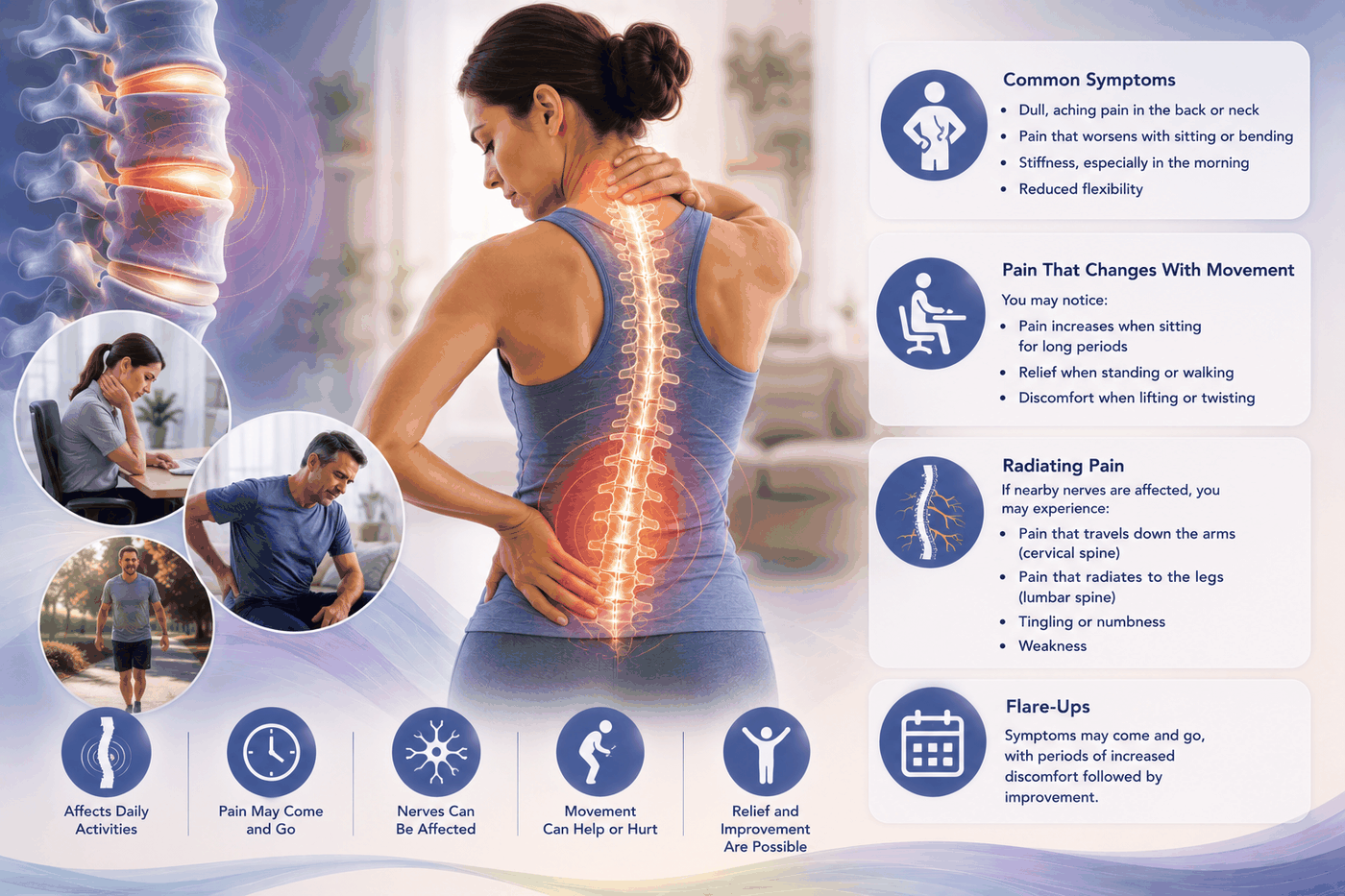
How Degenerative Disc Disease Feels
Symptoms can vary depending on the location and severity of disc changes.
Common Symptoms
- Dull, aching pain in the back or neck
- Pain that worsens with sitting or bending
- Stiffness, especially in the morning
- Reduced flexibility
Pain That Changes With Movement
You may notice:
- Pain increases when sitting for long periods
- Relief when standing or walking
- Discomfort when lifting or twisting
Radiating Pain
If nearby nerves are affected, you may experience:
- Pain that travels down the arms (cervical spine)
- Pain that radiates to the legs (lumbar spine)
- Tingling or numbness
- Weakness
Flare-Ups
Symptoms may come and go, with periods of increased discomfort followed by improvement.
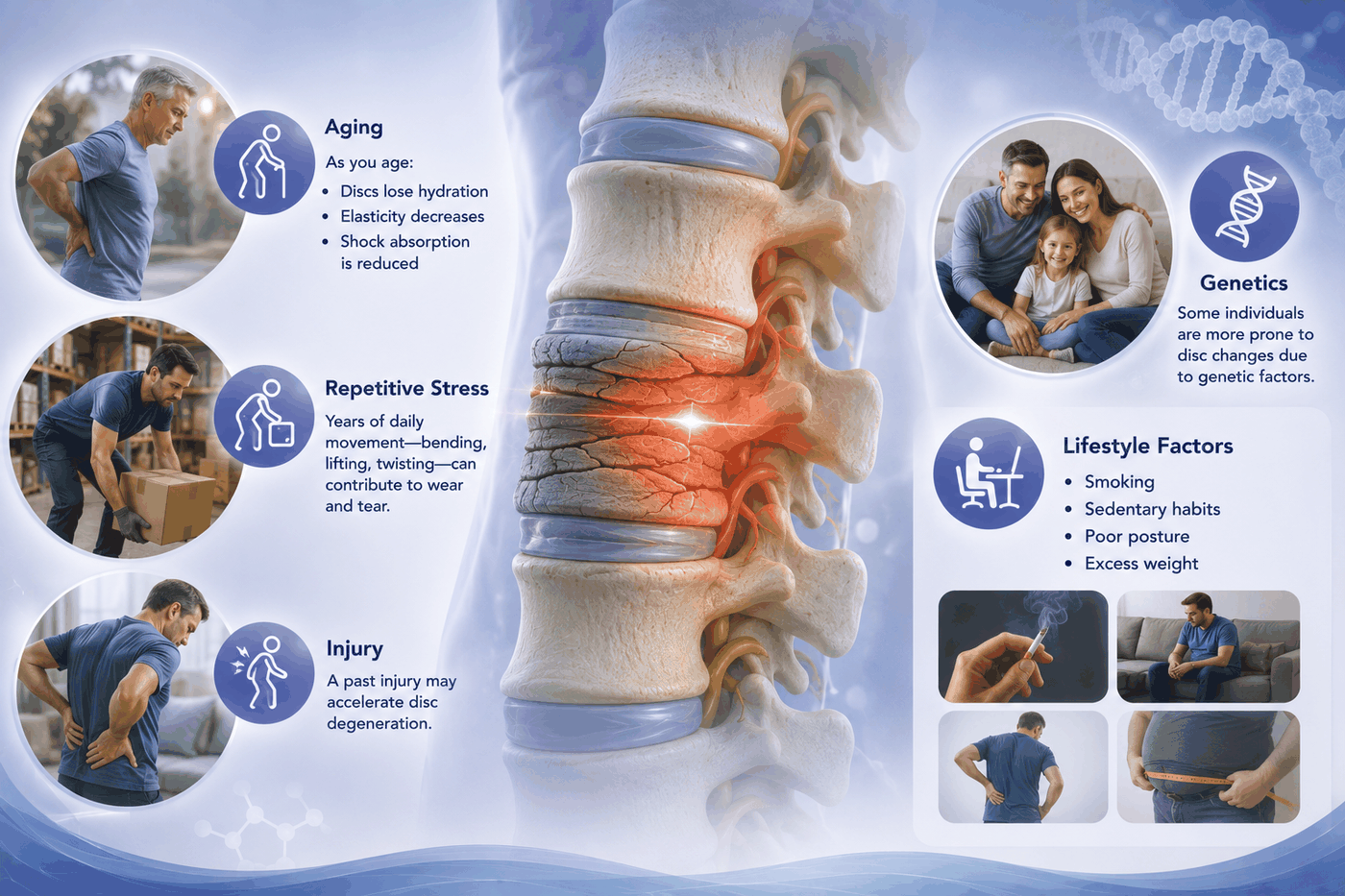
What Causes Degenerative Disc Disease?
DDD develops over time due to a combination of natural aging and lifestyle factors.
Aging
As you age:
- Discs lose hydration
- Elasticity decreases
- Shock absorption is reduced
Repetitive Stress
Years of daily movement—bending, lifting, twisting—can contribute to wear and tear.
Injury
A past injury may accelerate disc degeneration.
Genetics
Some individuals are more prone to disc changes due to genetic factors. MedlinePlus Genetics explains that disc disease can run in families and that variations in collagen-related genes may weaken the disc’s structure.
Lifestyle Factors
- Smoking
- Sedentary habits
- Poor posture
- Excess weight
Diagnosing Degenerative Disc Disease
Medical History
Your provider will ask about:
- Pain patterns
- Daily activities
- Previous injuries
Physical Examination
This includes:
- Range of motion testing
- Strength evaluation
- Nerve function assessment
Imaging Studies
- X-rays to evaluate disc height
- MRI to assess discs, nerves, and soft tissue
- CT scans for detailed imaging
Diagnostic Injections
Used in some cases to identify the exact source of pain.
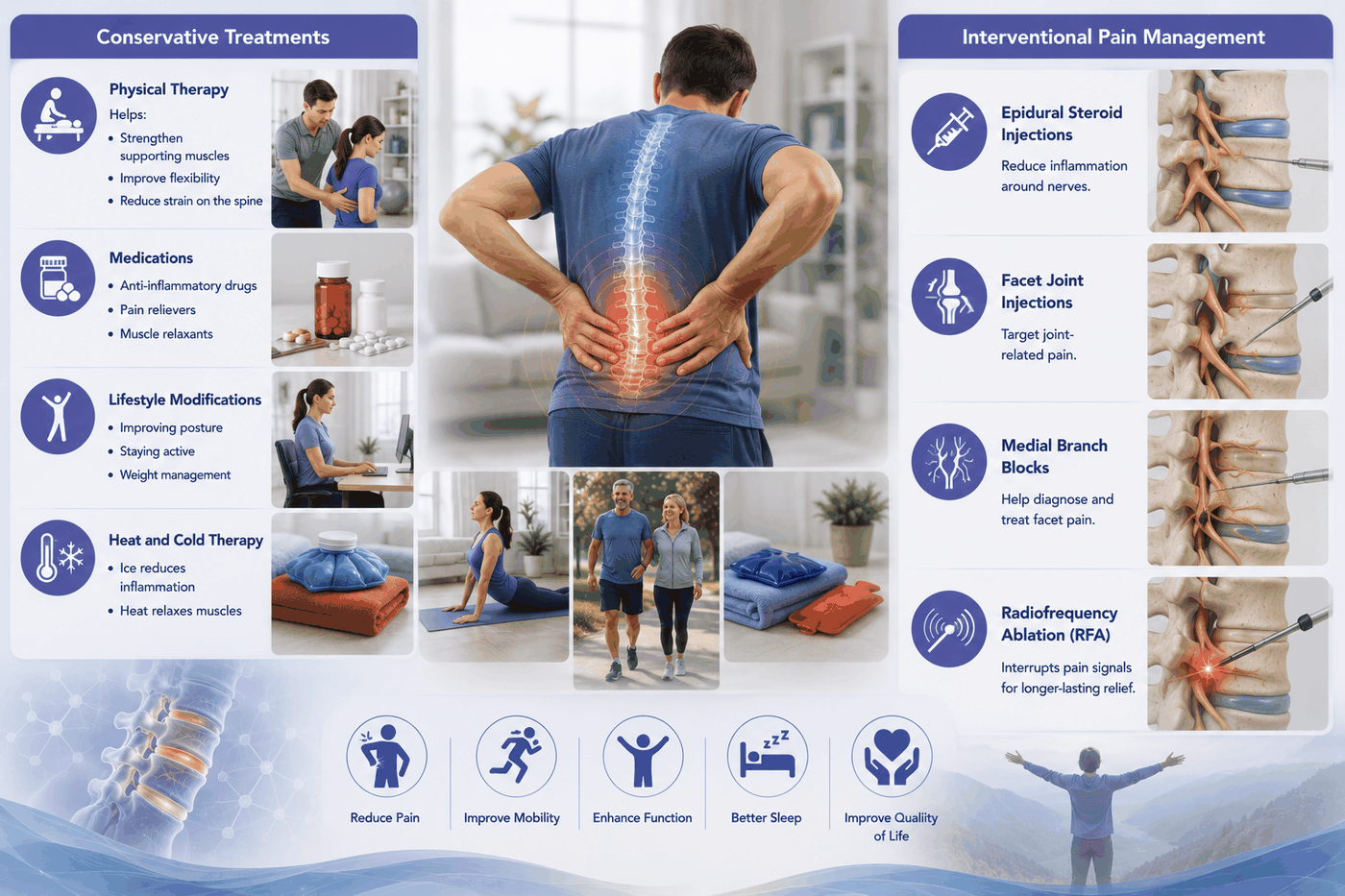
Conservative Treatments
DDD treatment focuses on managing symptoms and improving function.
Physical Therapy
Helps:
- Strengthen supporting muscles
- Improve flexibility
- Reduce strain on the spine
Medications
- Anti-inflammatory drugs
- Pain relievers
- Muscle relaxants
Lifestyle Modifications
- Improving posture
- Staying active
- Weight management
Heat and Cold Therapy
- Ice reduces inflammation
- Heat relaxes muscles
Interventional Pain Management
Epidural Steroid Injections
Reduce inflammation around nerves.
Facet Joint Injections
Target joint-related pain.
Medial Branch Blocks
Help diagnose and treat facet pain. Medial branch blocks are often used as a test before radiofrequency ablation is considered.
Radiofrequency Ablation (RFA)
Interrupts pain signals for longer-lasting relief.
Preventing and Managing DDD
Stay Active
Movement helps maintain spinal health.
Strengthen Core Muscles
Supports the spine and reduces strain.
Practice Good Posture
Reduces unnecessary pressure on discs.
Maintain a Healthy Weight
Minimizes stress on the spine.
The Emotional Impact of Chronic Spine Pain
DDD can affect more than your physical health.
You may feel:
- Frustrated by limitations
- Concerned about the future
- Fatigued from ongoing discomfort
Living with Degenerative Disc Disease
- Pace your activities
- Avoid prolonged sitting
- Use supportive seating
- Stay consistent with treatment
When Spine Symptoms Need Prompt Care
Seek prompt medical evaluation for the following symptoms:
- New or progressive arm or leg weakness
- Loss of bladder or bowel control
- Numbness around the groin or saddle area
- Severe pain after a fall, collision, or other trauma
Call 911 for a life-threatening emergency. This list is not exhaustive; when symptoms feel severe or rapidly worsen, seek urgent care.
Build a Plan Around Your Spine Symptoms
A focused evaluation can clarify whether discs, joints, muscles, or nerves are contributing to pain and which conservative or interventional options fit your goals.
When to See a Pain Specialist for Disc Pain
Back and neck pain often improves with time and home care. It may be time to see a pain specialist when:
- Pain has lasted longer than a few weeks or keeps returning in flare-ups
- Pain travels into an arm or leg, or you notice numbness, tingling, or weakness
- Sitting, driving, or bending has become difficult enough to limit work or sleep
- Physical therapy and medications have not provided enough relief
- You have been told you may need surgery and want to understand nonsurgical options first
Because disc changes on an MRI do not always explain symptoms, a specialist’s role is to match your imaging, examination, and pain pattern to the structure most likely responsible.
Getting Care for Degenerative Disc Disease in San Diego
At California Pain Consultants, your care team looks at the full clinical picture rather than imaging alone. Your evaluation may include a review of prior MRI or X-ray results, a neurological examination, and, when appropriate, diagnostic injections to confirm whether pain comes from a disc, a facet joint, or an irritated nerve. Treatment can then progress in steps, from activity guidance and physical therapy to options such as epidural steroid injections or radiofrequency ablation when they fit your diagnosis.
You can be seen at our clinics in Kearny Mesa, Rancho Bernardo, La Mesa, and Chula Vista, with procedures performed at the Comprehensive Pain ASC in Rancho Bernardo and the EPC Surgery Center in La Mesa. We accept most insurances. Call (858) 571-3630 to book your appointment.
Book Your AppointmentTrusted Information and Related Care
Medical reference: MedlinePlus Genetics: Intervertebral Disc Disease. Related California Pain resources: Back pain · Spinal stenosis · Schedule an appointment. This article is for general education and does not replace an individualized medical evaluation. Treatment recommendations depend on diagnosis, health history, current medications, and personal goals.
Frequently Asked Questions
Is degenerative disc disease the same as arthritis of the spine?
Not exactly, though the two often occur together. Degenerative disc disease describes changes in the discs between vertebrae, while spinal arthritis usually refers to changes in the small facet joints at the back of the spine. Disc thinning can shift more load onto those joints, so both may contribute to pain and are evaluated together.
Does degenerative disc disease always get worse?
No, disc changes do not always lead to worsening pain. Discs tend to change gradually with age, but symptoms often come and go, and many people have long stretches with little discomfort. Staying active, strengthening your core, and treating flare-ups early may help you keep function even as imaging changes slowly over time.
Can a degenerated disc heal on its own?
A degenerated disc does not typically regain its original height or water content, but the pain it causes can often settle. Inflammation around a disc or nerve may calm over weeks to months, and supporting muscles can be strengthened. Treatment focuses on reducing pain and improving how you move rather than reversing disc changes.
Will I need spine surgery?
Most people with degenerative disc disease do not need surgery. Nonsurgical care such as physical therapy, medication, and targeted injections is usually tried first. Surgery may be discussed when there is significant nerve compression, progressive weakness, or disabling pain that has not responded to other treatment, and that decision is made with a spine surgeon.
What activities should I avoid with degenerative disc disease?
You generally do not need to stop activity, but you may need to adjust how you do it. Long periods of sitting, heavy lifting with a rounded back, and repetitive twisting often aggravate disc pain. Walking, swimming, and guided strengthening are usually better tolerated. Your care team can tailor activity advice to your specific spine findings.
Why does my back hurt more when I sit?
Sitting can increase pressure on the lumbar discs compared with standing or walking, which is why disc-related pain often worsens after long drives or desk work. Changing position frequently, using supportive seating, and taking short walking breaks may help. Persistent sitting pain is worth discussing during your evaluation.