
A gel injection, also called viscosupplementation, places a hyaluronic acid gel into the knee joint to supplement its natural lubrication and cushioning. It may help adults with mild to moderate knee osteoarthritis whose pain continues despite exercise, weight management, medication, and activity changes. Board-certified pain specialists at California Pain Consultants in San Diego evaluate knee pain, determine whether a gel injection fits your situation, and perform the injection as part of a broader knee-care plan.
At first, it may only feel like mild stiffness in the morning or soreness after a long day of walking. Climbing stairs becomes a little harder. Standing for long periods feels uncomfortable. Exercise becomes more difficult than it used to be.
But over time, the pain may begin affecting everyday life in ways that are difficult to ignore.
The purpose of Gel Injection is not to promise a cure. It is to address a carefully identified pain source, support function, and help the patient participate more comfortably in an individualized care plan.
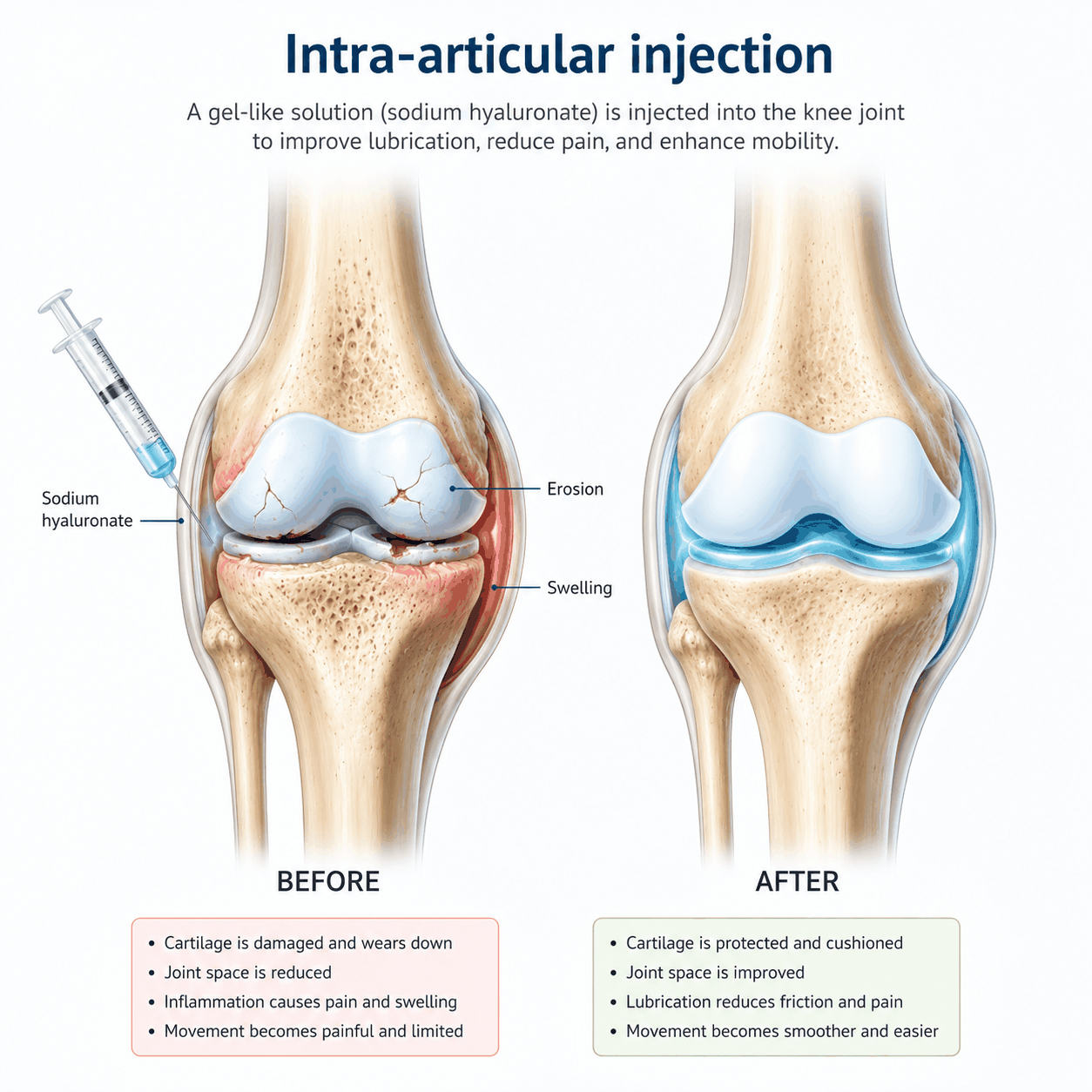
What Is Gel Injection?
Understanding the diagnosis and treatment target helps set realistic expectations before Gel Injection is recommended.
The knee is one of the most important weight-bearing joints in the body. Inside a healthy knee joint is a thick fluid called synovial fluid. This fluid acts like a natural lubricant and shock absorber that helps the joint move smoothly. In osteoarthritis, cartilage wears down and the joint environment changes, which can lead to pain, stiffness, and swelling.
Gel injection therapy, also called viscosupplementation, is a minimally invasive treatment in which a gel-like substance containing hyaluronic acid is injected into the knee joint. The purpose is to help improve joint lubrication and cushioning. For some patients, this treatment may help delay the need for more invasive procedures.
How Common Is Knee Osteoarthritis?
Osteoarthritis is the most common reason people consider a gel injection, and it is widespread. The CDC reports that about 33 million U.S. adults have osteoarthritis, that it is common among adults 45 and older, and that women are more likely than men to develop it, especially after age 50.
When Gel Injection May Be Considered
A procedure or medication plan is chosen only after the likely pain source, prior care, health history, and personal goals have been reviewed.
Mild to Moderate Knee Osteoarthritis
Patients with early to moderate cartilage degeneration may benefit from improved joint lubrication. The American Academy of Orthopaedic Surgeons notes that viscosupplementation may be most effective in the early stages of arthritis, though more research is needed to support this.
Chronic Knee Pain from Wear and Tear
Long-term joint degeneration may gradually reduce normal knee function.
Persistent Pain Despite Conservative Care
A gel injection is generally considered when the following have not provided adequate relief:
- Physical therapy
- Anti-inflammatory medications
- Weight management
- Activity modification
Symptoms and Daily-Life Effects to Discuss
Tell your clinician where symptoms occur, what makes them better or worse, and how they affect function. That pattern can be as important as an imaging result.
- Deep aching knee pain
- Morning stiffness
- Pain with prolonged walking
- Swelling
- Grinding or cracking sensations
- Difficulty standing from sitting positions
- Symptoms often worsen gradually over time
How Candidacy Is Evaluated
Not everyone with a related diagnosis is a candidate for Gel Injection. Evaluation is used to confirm the treatment target and compare reasonable alternatives.
Medical History
Your clinician reviews pain severity, walking limitations, previous injections or treatments, activity goals, and surgical history.
Physical Examination
The exam checks knee movement, swelling, joint tenderness, walking ability, and knee stability.
Imaging and Care Planning
X-rays can show cartilage loss, joint space narrowing, arthritic changes, and bone spurs. The goal is determining whether osteoarthritis is contributing significantly to symptoms, or whether another source, such as a ligament, meniscus, or nerve problem, needs a different approach.
What to Expect During Gel Injection
Specific instructions vary. The care team explains preparation, anesthesia or medication decisions, what the patient may feel, and the follow-up plan before treatment. The AAOS notes that, depending on the product used, patients receive 1 to 5 shots over several weeks.
Step 1: Preparation
The patient is positioned comfortably, and the knee is cleaned carefully.
Step 2: Imaging Guidance If Needed
Some providers use ultrasound guidance to improve injection accuracy.
Step 3: Joint Fluid Removal in Some Cases
If significant swelling is present, excess fluid may sometimes be removed before the injection.
Step 4: Gel Injection Placement
The hyaluronic acid gel is carefully injected into the knee joint. The material helps supplement the joint’s natural lubrication system.
Step 5: Recovery and Observation
Patients are monitored briefly before returning home.
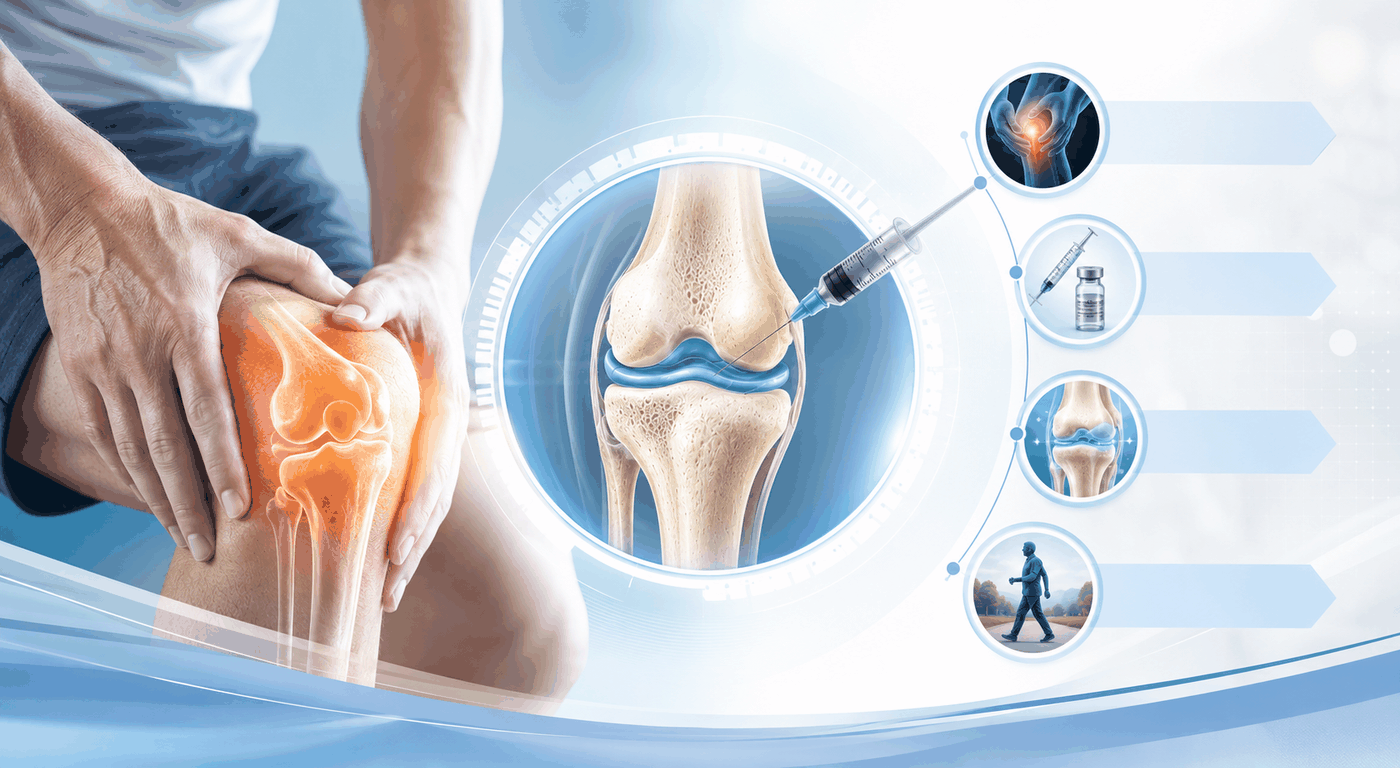
Recovery, Timing, and Follow-Up
Response to Gel Injection varies with the diagnosis, treatment technique, and individual health factors. Follow the specific instructions provided by your care team.
After Treatment
Recovery is generally simple, and most patients return to normal daily activity relatively quickly. Some temporary soreness or swelling may occur. Patients may be advised to avoid strenuous activity for a short period after treatment; the AAOS recommends avoiding excessive activity, such as jogging or heavy lifting, for the first 48 hours.
When Improvement May Begin
Gel injections do not usually provide instant relief. Improvement often develops gradually over several weeks as the joint environment improves; the AAOS notes it may take several weeks to notice a difference. This differs from steroid injections, which may provide faster anti-inflammatory effects.
How Long Effects May Last
Some patients experience improvement lasting several months, while others may require repeat treatment in the future. Duration depends on the severity of arthritis, activity level, and overall joint condition. According to the AAOS, when injections are effective they may be repeated after a period of time, usually 6 months.
Rehabilitation and Activity
Strong muscles around the knee help support the joint and reduce strain. Rehabilitation focuses on leg strengthening, knee stability, walking mechanics, flexibility, and balance.
Potential Benefits of Gel Injection
The goal is meaningful improvement in comfort and function, not an unsupported promise that every symptom will disappear.
- Reduced knee pain
- Improved walking comfort
- Better joint movement
- Reduced stiffness
- Improved activity tolerance
- Delayed need for surgery in some cases
- Many patients report improved daily function after treatment
- A treatment plan matched to a defined pain source
It is also important to know that the research is mixed. The AAOS states that recent research has not found viscosupplementation to be effective at significantly reducing pain overall, even though some patients do report relief. That is why your care team weighs a gel injection against other options rather than treating it as the default.
Risks, Safety, and When to Call
All treatments have risks. The risks of Gel Injection depend on the technique, medication or device, anatomy, and individual health history.
- Temporary soreness
- Swelling
- Infection
- Allergic reactions
- Injection site irritation
The AAOS notes that a local reaction, such as pain, warmth, and slight swelling right after the shot, generally goes away fairly quickly, and that a local allergy-like reaction in the knee is rare.
Contact your care team for increasing redness, warmth, swelling, drainage, fever, severe or worsening pain, or numbness or weakness that does not improve as expected. Seek emergency care for trouble breathing, fainting, or signs of a severe allergic reaction.
How This Treatment Fits into Comprehensive Care
Interventional care is most useful when it supports a broader plan built around diagnosis, movement, function, emotional well-being, and informed decision-making.
Movement and Rehabilitation
Strong muscles around the knee help support the joint and reduce strain, with attention to leg strengthening, knee stability, walking mechanics, flexibility, and balance.
Support for Daily Life
Many patients slowly adapt to knee pain without realizing how much it affects daily life. Targeted treatment may help patients regain mobility and improve everyday comfort again, whether that means walking longer distances, climbing stairs, standing comfortably, traveling, or exercising.
Ongoing Reassessment
Pain care is adjusted over time according to function, response, side effects, and the patient’s priorities. If a gel injection does not help enough, other knee options such as a genicular nerve block may be discussed.
Is Gel Injection Right for You?
Chronic knee pain can slowly change the way people live, move, and participate in everyday activities. Over time, stiffness and discomfort may affect independence, confidence, and quality of life.
California Pain Consultants provides individualized evaluation and discusses the expected benefits, limitations, alternatives, and risks before recommending care.
Treatment at California Pain Consultants
Your care team sees patients with knee pain at four San Diego County clinics: Kearny Mesa, Rancho Bernardo, La Mesa, and Chula Vista. At your visit, we review your imaging and prior treatments, examine the knee, and explain how a gel injection compares with your other options, including steroid injections, nerve-targeted procedures, and rehabilitation.
We accept most insurances. Call (858) 571-3630 or request your appointment to book your appointment.
Book Your AppointmentTrusted Information and Related Care
General medical references: MedlinePlus: Pain · National Institute of Neurological Disorders and Stroke: Pain.
Related California Pain resources: Knee pain · Knee joint injections · Conditions and treatments.
This article is for general education and does not replace an individualized medical evaluation. Recommendations depend on the diagnosis, health history, current medications, examination, imaging or diagnostic testing, and personal goals.
Frequently Asked Questions About Gel Injection
Find clear, medically responsible answers about Gel Injection, who may be a candidate, what to expect, and when to contact your healthcare team.
What is a gel injection, and how does it work?
A gel injection, also called viscosupplementation, places hyaluronic acid into a joint, most commonly the knee. The medication is intended to supplement joint fluid and may improve movement-related symptoms in selected people with osteoarthritis.
What conditions or symptoms may a gel injection help address?
It may be considered for knee osteoarthritis pain when exercise, weight management, topical or oral medication, and other measures have not provided enough relief or are not appropriate. Recommendations vary, and it does not regrow cartilage.
Who may be a candidate for a gel injection?
Candidacy depends on a confirmed osteoarthritis diagnosis, symptom severity, prior treatment response, joint condition, and medical history. A hot swollen joint, active infection, major instability, or pain from another source requires evaluation before injection.
How should I prepare for a gel injection?
Tell the clinician about allergies, blood thinners, infection, recent vaccines or illness, and prior injection reactions. Wear clothing that allows access to the knee and ask about activity limits after treatment.
What happens during a gel injection?
The skin is cleaned and a needle is placed into the joint, sometimes with ultrasound guidance. Excess fluid may be removed when appropriate before the hyaluronic-acid product is injected; some products require a series of visits.
How many gel injections will I need?
It depends on the product. According to the AAOS, patients receive 1 to 5 shots over several weeks, depending on which hyaluronic acid product is used. Your clinician will explain the schedule for the product recommended for you, along with how and when your response will be reassessed.
What should I avoid after a knee gel injection?
The AAOS recommends avoiding excessive activity, such as jogging or heavy lifting, for the first 48 hours after an injection. Normal walking and daily activities are usually fine. Mild pain, warmth, or slight swelling right after the shot is common and generally fades quickly. Call your care team if swelling, redness, or fever develops. Ice and simple pain measures may be recommended, but follow the specific product and clinician instructions.
What are the possible risks or side effects of a gel injection?
Possible risks include pain flare, swelling, bleeding, infection, allergic or inflammatory reaction, and lack of benefit. Severe swelling or a hot joint after injection requires prompt assessment.
How soon will I feel better after a gel injection?
Gel injections usually do not work right away. The AAOS notes it may take several weeks to notice an improvement in those who respond. This is different from a steroid injection, which often acts faster on inflammation. Continuing with strengthening exercises during this period may help you get the most from treatment.
How long does a knee gel injection last?
Relief varies widely. The AAOS notes that some patients report pain relief for several months after the injections, while others notice little change. When injections are effective, they may be repeated after a period of time, usually about 6 months. Arthritis severity, activity level, and overall joint condition all influence how long benefits last. Repeat treatment depends on response, product guidance, and clinical judgment.
Are gel injections better than cortisone shots?
Neither is better for everyone. Cortisone injections may relieve inflammation more quickly, while gel injections aim to supplement joint lubrication and may take weeks to help. Research on gel injections is mixed, so the choice depends on your arthritis stage, prior response to injections, health conditions such as diabetes, and your goals.
Can a gel injection help me avoid knee replacement?
For some patients, a gel injection may help delay the need for more invasive procedures, but it does not reverse arthritis or guarantee that surgery can be avoided. It works best as part of a plan that includes strengthening, weight management, and activity changes. Your care team can discuss when a surgical consultation makes sense.
How does a gel injection fit into a broader treatment plan?
Viscosupplementation is one part of osteoarthritis care and works best alongside strengthening, aerobic activity, weight management when relevant, bracing, and review of other medication or surgical options.
When should I call my healthcare team or seek urgent care after a gel injection?
Call promptly for fever, rapidly increasing swelling, redness, warmth, severe pain, drainage, or inability to bear weight. Seek emergency care for trouble breathing, facial swelling, fainting, or other signs of a severe allergic reaction.