
A medial branch block is an image-guided injection of numbing medication near the small medial branch nerves that carry pain signals from the facet joints of the spine. It helps adults with chronic neck, mid-back, or low back pain find out whether those joints are the source of their pain and whether radiofrequency ablation may offer longer relief. The board-certified pain specialists at California Pain Consultants in San Diego perform medial branch blocks using live X-ray guidance.
Chronic neck and back pain rarely affects only one moment of the day.
Getting out of bed may feel stiff and painful. Sitting too long at work becomes uncomfortable. Turning the neck while driving may trigger aching or sharp pain. Standing for long periods may create pressure deep in the lower back that never fully goes away.
The purpose of Medial Branch Blocks is not to promise a cure. It is to address a carefully identified pain source, support function, and help the patient participate more comfortably in an individualized care plan.
What Are Medial Branch Blocks?
Understanding the diagnosis and treatment target helps set realistic expectations before Medial Branch Blocks is recommended.
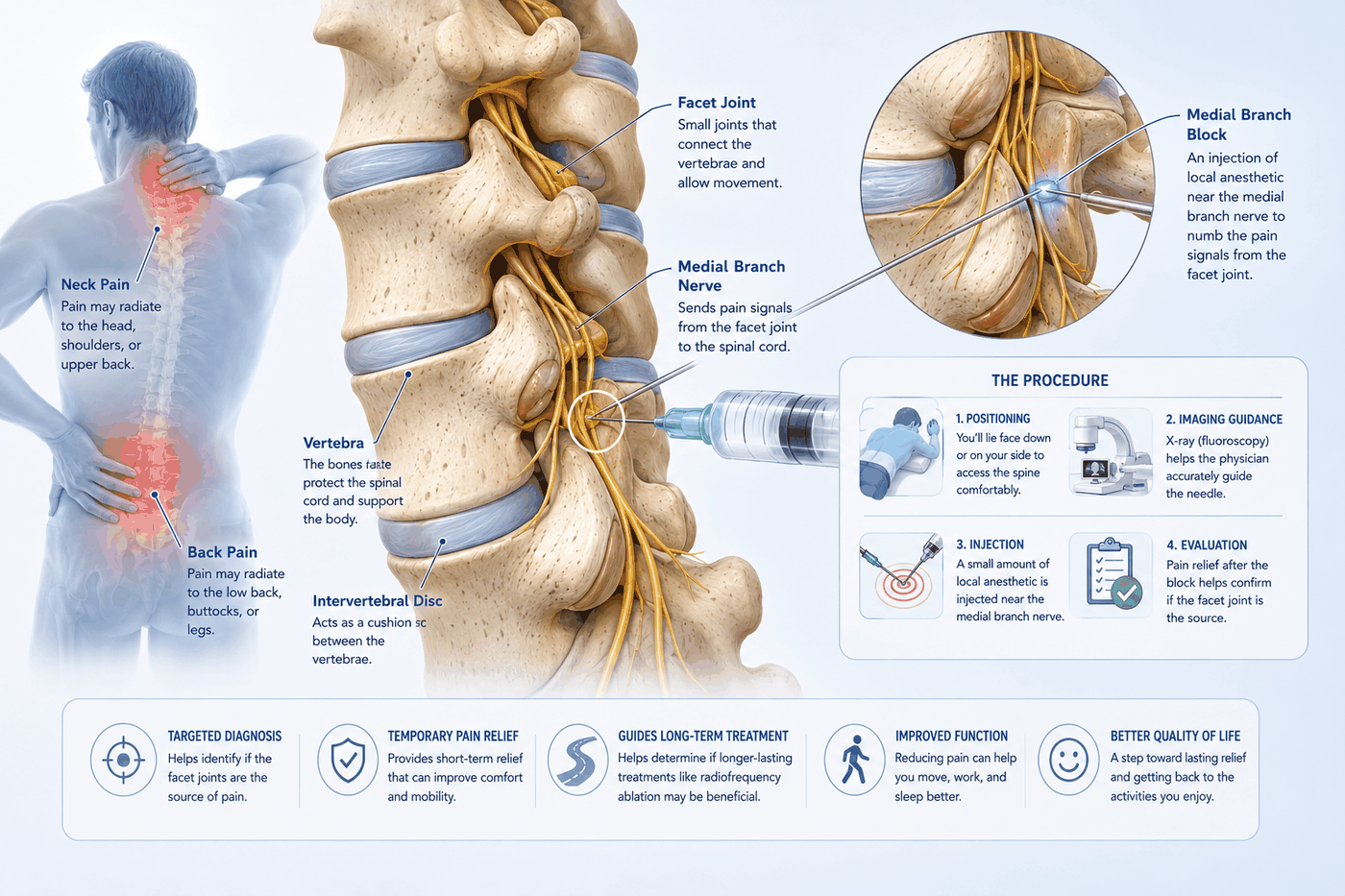
The spine contains small joints called facet joints located along the back portion of the vertebrae.
Every time you lean backward, rotate your neck, or twist your back, the facet joints are involved.
Like other joints in the body, facet joints may become irritated or inflamed over time.
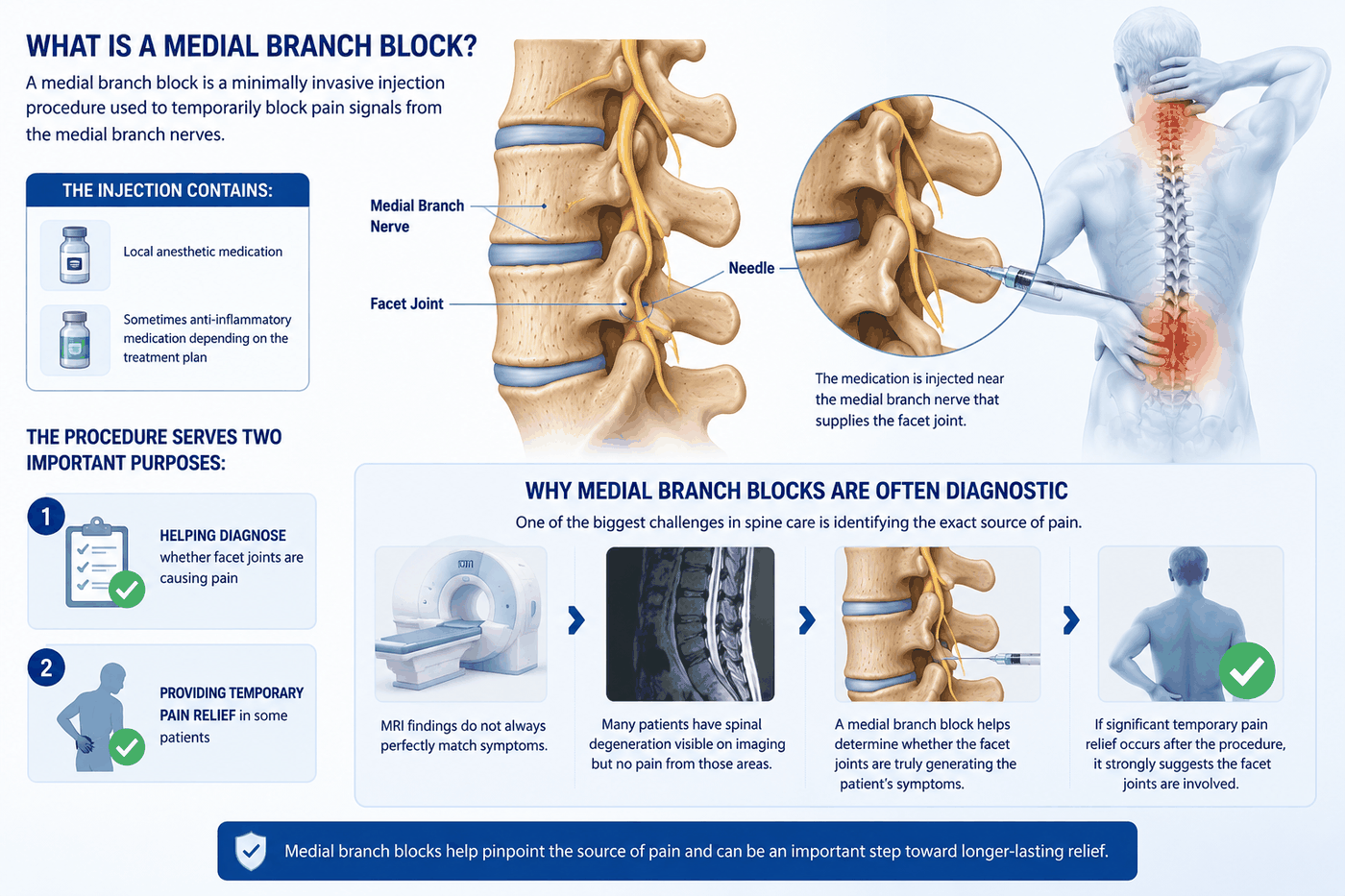
A medial branch block is a minimally invasive injection procedure used to temporarily block pain signals from the medial branch nerves.
Why a Diagnostic Block Comes First
Facet joint pain cannot be confirmed by imaging alone, because many people have facet arthritis on X-ray or MRI without pain. A medial branch block works as a test: if numbing these small nerves clearly reduces your usual pain for the hours the anesthetic is active, the facet joints are likely contributing. Cleveland Clinic explains that this diagnostic block is performed before radiofrequency ablation to confirm the source and level of pain, and that people who do not get significant relief from the block may not benefit from ablation.
When Medial Branch Blocks May Be Considered
A procedure or medication plan is chosen only after the likely pain source, prior care, health history, and personal goals have been reviewed.
Cervical Facet Joint Pain
Typical features include chronic neck pain, headaches, pain when turning the head, and stiffness.
Thoracic Facet Joint Pain
The middle spine may also develop painful facet inflammation, which can be part of thoracic back pain.
Lumbar Facet Joint Pain
Typical features include chronic low back pain, pain while standing, pain during extension or twisting, and morning stiffness.
Degenerative Arthritis of the Spine
Age-related spinal wear may irritate the facet joints over time. Thinning discs, described on our degenerative disc disease page, can shift more load onto these joints.
Post Surgical Spine Pain
Some patients continue experiencing facet-related pain after spinal surgery.
Symptoms and Daily-Life Effects to Discuss
Tell your clinician where symptoms occur, what makes them better or worse, and how they affect function. That pattern can be as important as an imaging result.
- Facet-related pain often feels different from nerve compression or disc-related pain
- Deep aching pain
- Stiffness
- Pain with twisting or leaning backward
- Localized neck or back discomfort
- Pain worsening after inactivity or prolonged standing
How Candidacy Is Evaluated
Not everyone with a related diagnosis is a candidate for Medial Branch Blocks. Evaluation is used to confirm the treatment target and compare reasonable alternatives.
Medical history
Your clinician asks about pain location, activities that worsen symptoms, previous treatments, injury history, and surgical history.
Physical examination
The examination checks spine movement, tenderness, pain during extension or twisting, posture, and muscle tightness.
Imaging and care planning
Imaging may show facet arthritis, degenerative changes, disc disease, or joint inflammation. However, the diagnosis is based on both imaging and symptoms.
What to Expect During Medial Branch Blocks
Specific instructions vary. The care team explains preparation, anesthesia or medication decisions, what the patient may feel, and the follow-up plan before treatment.
Step 1: Preparation
The patient is positioned comfortably, usually lying face down, and the skin is cleaned carefully. Local anesthesia may be used to numb the skin.
Step 2: Imaging Guidance
Using fluoroscopy (live X-ray imaging), the physician carefully identifies the targeted medial branch nerves. Imaging guidance improves safety and accuracy.
Step 3: Medication Injection
Small amounts of medication are injected near the medial branch nerves. The medication temporarily blocks pain signal transmission. Because each facet joint is supplied by more than one medial branch nerve, several nearby levels are usually treated in the same visit.
Step 4: Observation and Recovery
Patients are monitored briefly before returning home. You will usually be asked to record your pain levels and try activities that normally hurt over the following hours, since that pain diary is what the result is based on.
Recovery, Timing, and Follow-Up
Response to Medial Branch Blocks varies with the diagnosis, treatment technique, and individual health factors. Follow the specific instructions provided by your care team.
After treatment
Recovery is usually relatively quick. Most patients return home shortly after the procedure, and temporary soreness at the injection site may occur. Plan for someone else to drive you home.
Rehabilitation and activity
Rehabilitation goals often include core strengthening, posture correction, flexibility, spinal stabilization, and movement mechanics.
Follow-up
Follow-up is used to assess response, function, side effects, and whether the treatment plan should be continued or adjusted. When the block gives clear relief, the next step is often radiofrequency ablation, which uses heat to interrupt the same nerves for longer. According to Cleveland Clinic, relief after radiofrequency ablation can last from six to 12 months, sometimes a few years, while some people get only limited relief, and it may take up to three weeks to begin.
Potential Benefits of Medial Branch Blocks
The goal is meaningful improvement in comfort and function, not an unsupported promise that every symptom will disappear.
- Temporary pain reduction
- Improved movement
- Better understanding of the pain source
- Improved ability to participate in therapy
- Guidance for future treatment planning
- Many patients appreciate finally identifying the specific cause of chronic spine pain
- A treatment plan matched to a defined pain source
- Potential improvement in comfort and everyday function
Risks, Safety, and When to Call
All treatments have risks. The risks of Medial Branch Blocks depend on the technique, medication or device, anatomy, and individual health history.
- Temporary soreness
- Bleeding
- Infection
- Allergic reactions
- Temporary numbness
Contact your care team for increasing redness, warmth, swelling, drainage, fever, severe or worsening pain, or numbness or weakness that does not improve as expected. Seek emergency care for trouble breathing, fainting, or signs of a severe allergic reaction.
How This Treatment Fits Into Comprehensive Care
Interventional care is most useful when it supports a broader plan built around diagnosis, movement, function, emotional well-being, and informed decision-making.
Part of a broader plan
The goal is individualized care focused on improving function and quality of life. A complete plan may include physical therapy, lifestyle changes, weight management, exercise programs, and radiofrequency ablation.
Movement and rehabilitation
Movement work usually emphasizes core strengthening, posture correction, flexibility, spinal stabilization, and movement mechanics.
Support for daily life
Many patients gradually structure their lives around avoiding painful movement. Over time, chronic pain may affect confidence, mobility, and emotional well-being. Targeted treatment may help patients regain movement and improve quality of life again, including standing comfortably, turning the neck, sleeping peacefully, and exercising.
Video: How Medial Branch Blocks Are Used
Dr. Cohen explains how medial branch blocks can help determine whether facet-joint nerves are contributing to neck or back pain and how the results may guide next steps.
Are Medial Branch Blocks Right for You?
Chronic neck and back pain can slowly affect nearly every part of life. It changes movement, sleep, physical activity, work, and emotional well-being. Over time, even simple daily activities may become exhausting because of constant spinal discomfort.
California Pain Consultants provides individualized evaluation and discusses the expected benefits, limitations, alternatives, and risks before recommending care.
Medial Branch Blocks at California Pain Consultants
At California Pain Consultants, your care team starts by confirming that your pain pattern fits facet joint pain, using your history, examination, and imaging together. If a medial branch block makes sense, your physician explains which levels will be tested, how to track your response, and what the next step would be for each possible result. Blocks are performed with fluoroscopic guidance at the Comprehensive Pain ASC in Rancho Bernardo and the EPC Surgery Center in La Mesa.
You can be seen at our clinics in Kearny Mesa, Rancho Bernardo, La Mesa, and Chula Vista. We accept most insurances. Request your appointment online or call (858) 571-3630 to talk with your care team.
Book Your AppointmentTrusted Information and Related Care
General medical references: MedlinePlus: Pain · National Institute of Neurological Disorders and Stroke: Pain.
Related California Pain resources: Facet injections · Radiofrequency ablation · Conditions and treatments.
This article is for general education and does not replace an individualized medical evaluation. Recommendations depend on the diagnosis, health history, current medications, examination, imaging or diagnostic testing, and personal goals.
Frequently Asked Questions
What is the difference between a medial branch block and a facet injection?
A medial branch block numbs the small nerves that carry pain from the facet joint, while a facet injection places medication inside the joint itself. Both can help identify facet pain. Medial branch blocks are usually preferred when radiofrequency ablation is being considered, because ablation targets those same nerves.
How long does a medial branch block last?
The numbing effect of a diagnostic medial branch block typically lasts only hours, matching how long the local anesthetic is active. That short window is expected and is used to judge whether the facet joints are the pain source. Some patients notice relief that lasts longer, but the block’s main purpose is diagnosis.
Does a medial branch block hurt?
Most patients describe a medial branch block as brief stinging from the numbing medicine followed by pressure. The procedure is typically quick, and image guidance allows precise needle placement. Some soreness at the injection sites for a day or two is common and can usually be managed with ice and over-the-counter pain relievers if your physician approves.
Why might I need two medial branch blocks?
Some physicians and insurance plans require two separate diagnostic blocks before radiofrequency ablation. Repeating the test helps confirm that the relief was real and consistent rather than a coincidence. Your care team will explain whether a second block is recommended in your case and how it affects the timeline for ablation.
What happens if the medial branch block does not help?
If the block does not relieve your usual pain, the facet joints are probably not the main source, which is still useful information. Your care team can then look at other possible causes, such as a disc, nerve root, or sacroiliac joint, and recommend different tests or treatments that better fit your pain pattern.
Can I drive after a medial branch block?
You should plan for someone else to drive you home after a medial branch block. Numbing medication and any sedation can affect your reflexes and judgment. Your care team will tell you when it is safe to drive again, which is usually the next day for most patients.