
Motor vehicle accident injuries are the neck, back, joint, nerve, and head injuries that can follow a car, truck, or motorcycle crash, including whiplash, disc injuries, and post-traumatic headaches. They are common: the CDC reports more than 2.8 million emergency department visits for crash injuries in the United States in 2023. The board-certified pain specialists at California Pain Consultants in San Diego diagnose and treat persistent pain after accidents, from early evaluation through interventional care.
A motor vehicle accident can change everything in an instant. One moment, you’re driving through your normal routine—heading to work, taking your kids to school, running errands, or simply trying to get home. Then suddenly, there’s the sound of impact. Your body jerks forward. Everything feels disorienting. Even after the accident ends, the experience often stays with you.
Motor vehicle accidents can affect muscles, joints, discs, nerves, and the brain. Some symptoms appear immediately, while others emerge after the initial stress response settles.
Why Car Accident Injuries Are Often More Complex Than They Seem
Many accident injuries are not always visible right away.
After an accident, adrenaline and stress hormones surge through the body. These chemicals can temporarily mask pain and inflammation, causing symptoms to appear later. This is why many people feel “fine” immediately after an accident—only to wake up the next morning with significant pain and stiffness. OrthoInfo from the American Academy of Orthopaedic Surgeons notes that neck sprain symptoms may not begin until hours after the injury, or even the next day.
The Forces Involved in a Collision
During a collision, the body absorbs tremendous force.
Even when seatbelts and airbags prevent major injury, the body may still experience:
- Sudden forward and backward movement
- Twisting motions
- Compression of joints and muscles
- Impact stress on the spine and nerves
These forces can affect:
- Muscles
- Ligaments
- Discs
- Joints
- Nerves
- Soft tissues
Common Injuries After a Motor Vehicle Accident
Motor vehicle accident injuries can range from mild to severe.
Some heal quickly. Others may become chronic if not properly treated.
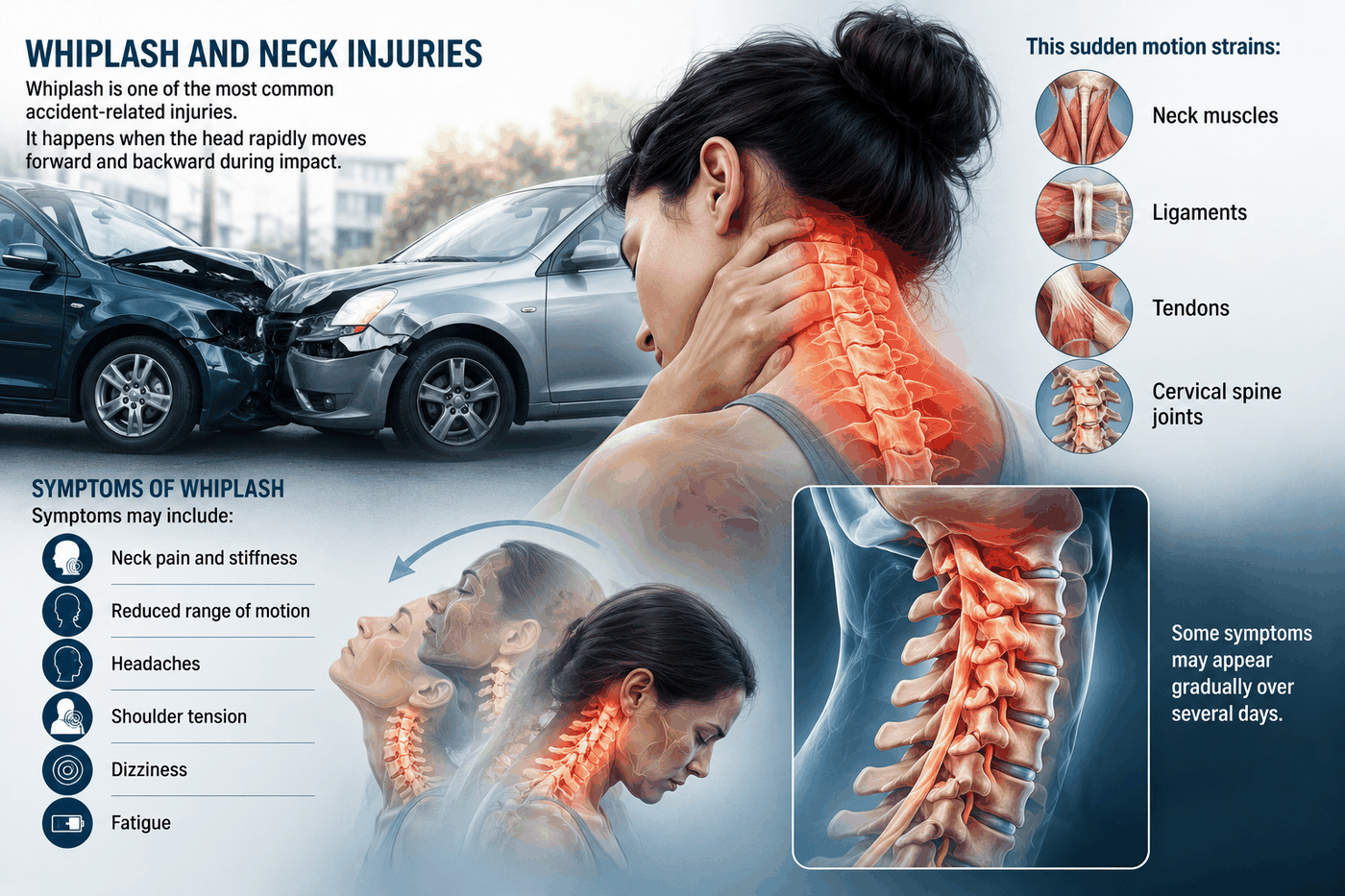
Whiplash and Neck Injuries
Whiplash is one of the most common accident-related injuries. It happens when the head rapidly moves forward and backward during impact. This sudden motion strains:
- Neck muscles
- Ligaments
- Tendons
- Cervical spine joints
Symptoms of Whiplash
Symptoms may include:
- Neck pain and stiffness
- Reduced range of motion
- Headaches
- Shoulder tension
- Dizziness
- Fatigue
Some symptoms may appear gradually over several days. For many people, whiplash-type neck sprains improve on their own; OrthoInfo reports that most symptoms go away in 4 to 6 weeks, although severe injuries may take longer. Pain that persists beyond that window deserves a closer look at the discs, facet joints, and nerves of the neck.
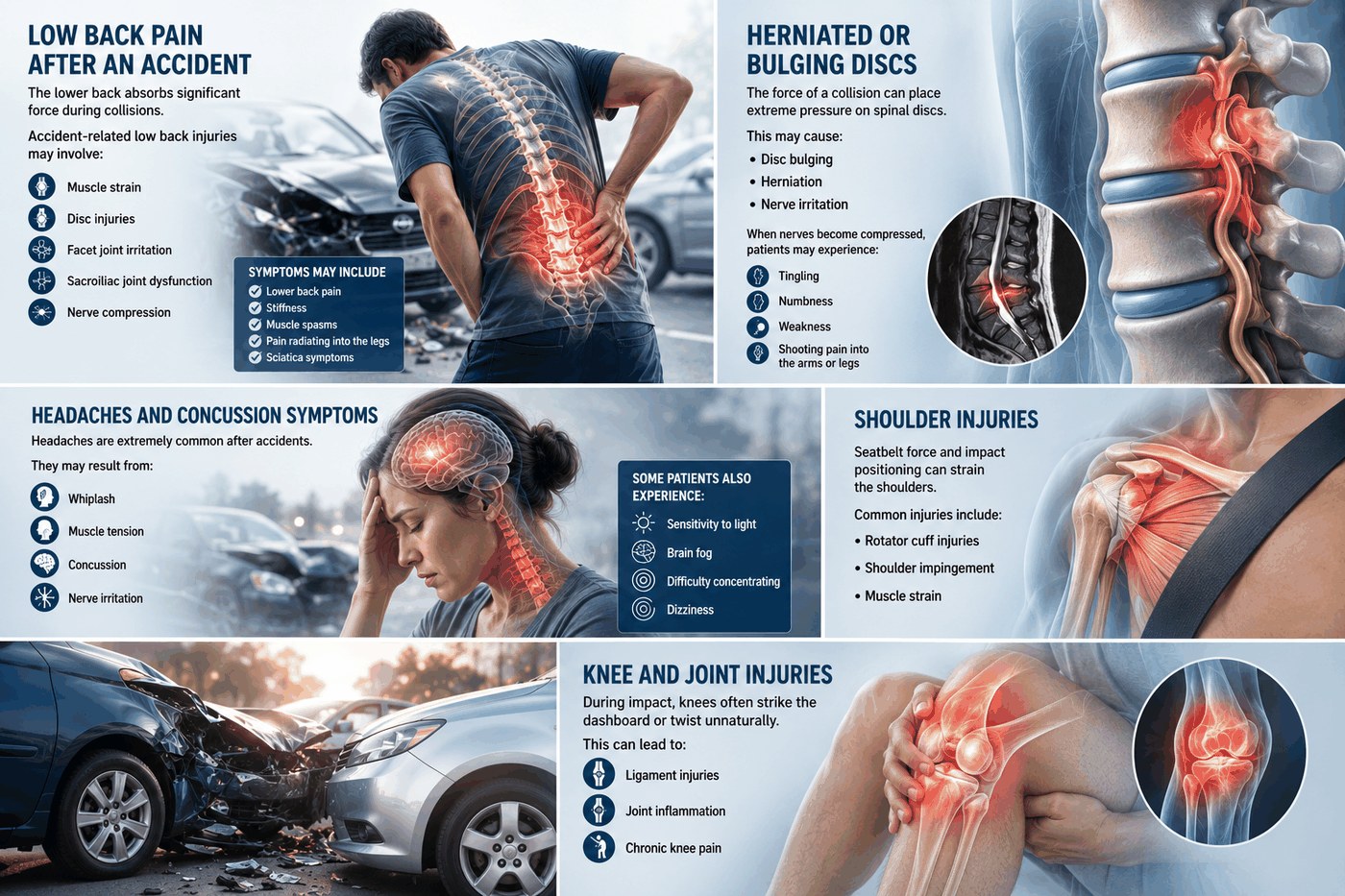
Low Back Pain After an Accident
The lower back absorbs significant force during collisions. Accident-related low back injuries may involve:
- Muscle strain
- Disc injuries
- Facet joint irritation
- Sacroiliac joint dysfunction
- Nerve compression
Symptoms May Include
- Lower back pain
- Stiffness
- Muscle spasms
- Pain radiating into the legs
- Sciatica symptoms
Herniated or Bulging Discs
The force of a collision can place extreme pressure on spinal discs. This may cause:
- Disc bulging
- Herniation
- Nerve irritation
When nerves become compressed, patients may experience:
- Tingling
- Numbness
- Weakness
- Shooting pain into the arms or legs
Headaches and Concussion Symptoms
Headaches are extremely common after accidents. They may result from:
- Whiplash
- Muscle tension
- Concussion
- Nerve irritation
Some patients also experience:
- Sensitivity to light
- Brain fog
- Difficulty concentrating
- Dizziness
Headaches that start in the neck after a crash are often cervicogenic. Our headaches page describes the patterns and treatments in more detail.
Shoulder Injuries
Seatbelt force and impact positioning can strain the shoulders. Common injuries include:
- Rotator cuff injuries
- Shoulder impingement
- Muscle strain
Knee and Joint Injuries
During impact, knees often strike the dashboard or twist unnaturally. This can lead to:
- Ligament injuries
- Joint inflammation
- Chronic knee pain
Nerve-Related Pain After an Accident
Trauma may irritate or compress nerves. This can cause symptoms such as:
- Burning sensations
- Tingling
- Electric-like pain
- Weakness
- Nerve injuries sometimes become chronic if left untreated
The Emotional Effects of Motor Vehicle Accidents
Physical injuries are only part of the recovery process.
Many patients also experience emotional symptoms after an accident.
Anxiety and Driving Fear
It’s common to feel nervous driving again after an accident. Some patients notice:
- Increased anxiety in traffic
- Panic during sudden stops
- Fear of another collision
Sleep Problems
Pain and emotional stress may interfere with sleep quality.
Stress and Fatigue
Recovering from an accident can feel exhausting—physically and emotionally. These reactions are valid and common after traumatic events.
Why Some Pain Becomes Chronic
Most accident injuries improve over time.
However, some patients develop chronic pain. This can happen when:
- Injuries are not fully treated
- Nerves remain irritated
- Muscles compensate improperly
- Inflammation persists
Early treatment often improves long-term outcomes.
Diagnosing Motor Vehicle Accident Injuries
Proper diagnosis is important because many accident injuries involve multiple structures.
Medical History
Your provider will ask about:
- The type of collision
- Position during impact
- Symptoms and pain patterns
- Previous injuries
Physical Examination
This may include evaluating:
- Movement and flexibility
- Muscle strength
- Nerve function
- Joint stability
Imaging Studies
Imaging may help identify hidden injuries.
X-rays
Show fractures and alignment changes.
MRI
Evaluates:
- Disc injuries
- Nerve compression
- Soft tissue damage
CT Scans
Provide detailed bone imaging.
Treatment: Building a Recovery Plan That Fits Your Life
Every accident injury is different.
Treatment depends on:
- Severity of injury
- Location of pain
- Nerve involvement
- Daily activity level
The goal is not simply pain reduction—but restoring function, mobility, and confidence.
Conservative Treatments
Most patients begin with non-surgical care.
Physical Therapy
Physical therapy is one of the most important parts of recovery. Treatment may focus on:
- Restoring movement
- Strengthening muscles
- Improving posture
- Reducing tension
Activity Modification
Patients are encouraged to stay active safely while avoiding movements that worsen symptoms.
Medications
Depending on symptoms, treatment may include:
- Anti-inflammatory medications
- Muscle relaxants
- Nerve pain medications
Heat and Cold Therapy
Ice
Helps reduce inflammation early after injury.
Heat
Relaxes tight muscles and improves circulation.
Interventional Pain Management
When pain persists, advanced treatments may help.
Epidural Steroid Injections
Reduce inflammation around irritated nerves. Learn more about epidural steroid injections in San Diego. Helpful for:
- Sciatica
- Disc injuries
- Nerve compression
Facet Joint Injections
Target painful spinal joints.
Trigger Point Injections
Help relax tight muscle areas. Trigger point injections may be useful when knotted neck, shoulder, or back muscles keep spasming after a crash.
Radiofrequency Ablation (RFA)
RFA interrupts pain signals from targeted nerves and may provide longer-lasting relief.
Recovery Takes More Than Time
One of the biggest misconceptions after an accident is:
- “I just need to wait and it will heal.”
While time helps, proper treatment often plays a major role in recovery.
Without appropriate care:
- Muscles may weaken
- Movement patterns may change
- Pain can become chronic
That’s why early evaluation is important—even when symptoms seem mild initially.
Practical Tips During Recovery
Recovery is different for every patient, but small habits can help support healing.
Listen to Your Body
Avoid pushing through severe pain.
Stay Consistent With Therapy
Recovery often depends on consistency over time.
Maintain Gentle Movement
Too much inactivity may worsen stiffness and weakness.
Focus on Sleep and Stress Management
Healing involves both physical and emotional recovery.
Seek Emergency Care After a Crash For
Seek prompt medical evaluation for the following symptoms:
- Loss of consciousness, confusion, repeated vomiting, or a worsening headache
- Chest pain, breathing difficulty, or severe abdominal pain
- New weakness, numbness, trouble walking, or loss of bladder or bowel control
- Severe neck or back pain, heavy bleeding, or a visibly deformed limb
Call 911 for a life-threatening emergency. This list is not exhaustive; when symptoms feel severe or rapidly worsen, seek urgent care.
Build a Recovery Plan After the Crash
California Pain Consultants evaluates persistent accident-related pain in the context of the injury, imaging, neurological findings, work demands, sleep, and recovery goals.
When to See a Pain Specialist After a Car Accident
Emergency symptoms belong in the emergency department. For pain that is not an emergency, consider a pain specialist evaluation when:
- Neck or back pain has not clearly improved within a few weeks of the crash
- Pain spreads into an arm or leg, or you notice numbness, tingling, or weakness
- Headaches, stiffness, or muscle spasms are interfering with sleep or work
- Physical therapy or chiropractic care alone has not provided enough relief
- You want clear documentation of your injuries, diagnosis, and treatment plan
Early, organized care may help prevent short-term pain from becoming a long-term problem.
Getting Accident Injury Care in San Diego
At California Pain Consultants, your care team takes a detailed account of the collision and your symptoms, performs a neurological and musculoskeletal examination, and orders or reviews imaging when it will guide treatment. Your plan may combine physical therapy, medication, and image-guided procedures, and each visit is documented so your diagnosis and progress are clear. For more on how we approach accident-related care, see our personal injury pain relief page.
We see patients at four clinics across San Diego County: Kearny Mesa, Rancho Bernardo, La Mesa, and Chula Vista. We accept most insurances. Call (858) 571-3630 to book your appointment.
Book Your AppointmentTrusted Information and Related Care
Medical reference: MedlinePlus: Neck Injuries and Disorders. Related California Pain resources: Neck pain · Low back pain · Schedule an appointment. This article is for general education and does not replace an individualized medical evaluation. Treatment recommendations depend on diagnosis, health history, current medications, and personal goals.
Frequently Asked Questions
How long after a car accident can pain start?
Pain after a car accident can start immediately or be delayed by hours to days. Stress hormones released during a crash can mask pain at first, and neck sprain symptoms often appear later that day or the next morning. Any new pain in the days after a collision is worth reporting to a physician.
How long does whiplash take to heal?
Many whiplash injuries improve within several weeks, and OrthoInfo reports that most neck sprain symptoms resolve in 4 to 6 weeks. Severe injuries can take longer, and some people develop persistent neck pain or headaches. If pain is not improving after a few weeks, an evaluation can look for disc, joint, or nerve involvement.
Should I see a doctor if I feel fine after a crash?
Yes, a medical check after a crash is reasonable even if you feel fine. Some injuries, including concussion and soft tissue damage, do not cause obvious symptoms right away. An early visit establishes a baseline, documents any findings, and helps you know which warning signs should bring you back for care.
What type of doctor treats pain after a car accident?
Emergency physicians handle urgent injuries first. For ongoing neck, back, nerve, or joint pain, a pain management physician focuses on diagnosing the specific pain source and coordinating treatment such as physical therapy, medication, and image-guided injections. Your care team can also refer you to surgeons or neurologists when needed.
Can a car accident cause a herniated disc?
Yes, the sudden force of a collision can injure spinal discs, causing them to bulge or herniate. A herniated disc can press on nearby nerves and cause pain, tingling, numbness, or weakness in the arms or legs. An MRI is usually the best test to evaluate disc injuries when symptoms suggest nerve involvement.
Will I need surgery after a car accident injury?
Most people with accident-related neck and back pain do not need surgery. Nonsurgical care, including physical therapy, medication, and targeted injections, helps many patients recover. Surgery may be considered for fractures, significant nerve compression, or progressive weakness, and your care team will refer you to a spine surgeon when that is appropriate.