
Pelvic pain is discomfort in the lower abdomen between the hips that can come from muscles, nerves, joints, or the reproductive, urinary, or digestive organs, and it becomes chronic when it lasts six months or longer. It affects women and men, and it is a common reason people seek medical care. The board-certified pain specialists at California Pain Consultants in San Diego evaluate and treat persistent pelvic pain, often working alongside your gynecologist, urologist, or pelvic floor therapist.
It’s not always visible. It’s often deeply personal. And for many people, it affects areas of life that are rarely discussed openly—comfort, intimacy, daily movement, and emotional well-being. At first, it may feel like a mild discomfort—something you think will pass. But over time, it can become more persistent. Sitting may feel uncomfortable. Standing for long periods may become tiring. Even simple daily activities can begin to feel like a challenge. For some, pelvic pain is constant. For others, it comes and goes. But regardless of how it presents, one thing is clear: it deserves a careful, thorough evaluation.
Pelvic pain can involve muscles, nerves, reproductive or urinary organs, the bowel, or more than one system. A thoughtful evaluation helps identify likely contributors and match treatment to the individual.
What Is Pelvic Pain?
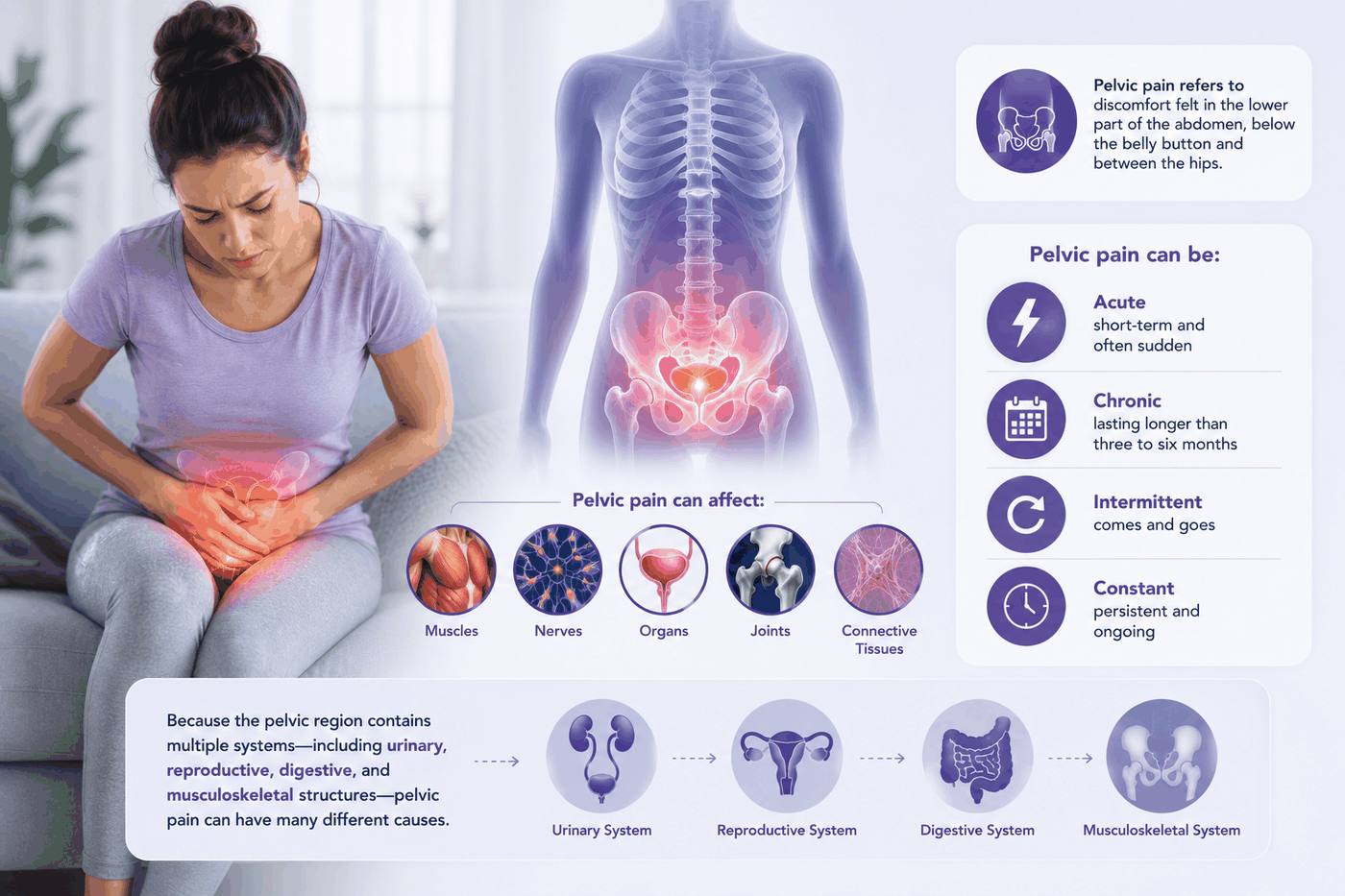
Pelvic pain refers to discomfort felt in the lower part of the abdomen, below the belly button and between the hips.
It can affect:
- Muscles
- Nerves
- Organs
- Joints
- Connective tissues
Pelvic pain can be:
- Acute – short-term and often sudden
- Chronic – lasting longer than three to six months; the Eunice Kennedy Shriver National Institute of Child Health and Human Development describes pelvic pain as chronic when it lasts more than 6 months and affects quality of life
- Intermittent – comes and goes
- Constant – persistent and ongoing
Pelvic pain is more common than many people realize. In one study cited by the NICHD, about 1 in 7 women of childbearing age in the United States reported pelvic pain lasting 6 months or longer, although researchers note that the exact number with chronic pelvic pain is not known.
Because the pelvic region contains multiple systems—including urinary, reproductive, digestive, and musculoskeletal structures—pelvic pain can have many different causes.
How Pelvic Pain Feels: Recognizing the Symptoms
Pelvic pain can present in many different ways, depending on the underlying cause.
You may experience:
- A dull, aching sensation in the lower abdomen
- Sharp or stabbing pain
- Pressure or heaviness in the pelvis
- Burning or nerve-like pain
- Pain that worsens with sitting or movement
- Pain during or after physical activity
Some people also experience:
- Pain during urination or bowel movements
- Pain during or after intimacy
- Lower back or hip pain
- Increased discomfort during certain times (such as menstrual cycles)
Pelvic pain can vary in intensity and may change over time.
Common Causes of Pelvic Pain
Pelvic pain can have many possible causes, and sometimes more than one factor is involved.
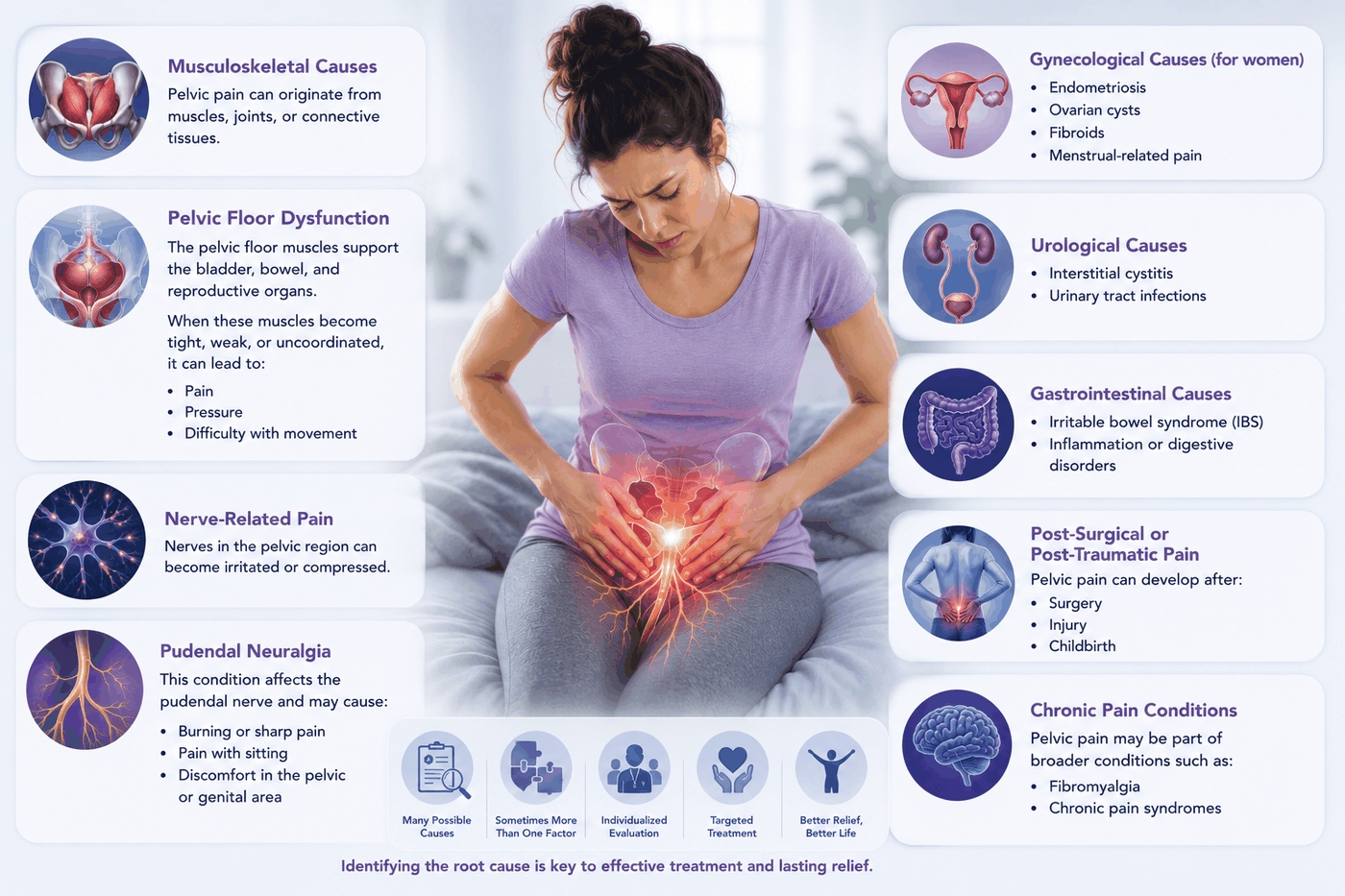
Musculoskeletal Causes
Pelvic pain can originate from muscles, joints, or connective tissues.
Pelvic Floor Dysfunction
The pelvic floor muscles support the bladder, bowel, and reproductive organs. When these muscles become tight, weak, or uncoordinated, it can lead to:
- Pain
- Pressure
- Difficulty with movement
Nerve-Related Pain
Nerves in the pelvic region can become irritated or compressed.
Pudendal Neuralgia
This condition affects the pudendal nerve and may cause:
- Burning or sharp pain
- Pain with sitting
- Discomfort in the pelvic or genital area
Gynecological Causes (For Women)
- Endometriosis
- Ovarian cysts
- Fibroids
- Menstrual-related pain
Urological Causes
- Interstitial cystitis
- Urinary tract infections
Gastrointestinal Causes
- Irritable bowel syndrome (IBS)
- Inflammation or digestive disorders
Post-Surgical or Post-Traumatic Pain
Pelvic pain can develop after:
- Surgery
- Injury
- Childbirth
Chronic Pain Conditions
Pelvic pain may be part of broader conditions such as:
- Fibromyalgia
- Chronic pain syndromes
More Than One Cause at Once
It is common for several conditions to overlap. The NICHD notes that a woman may have endometriosis, irritable bowel syndrome, and depression at the same time, and that effective treatment needs to address each contributor. This is why pelvic pain care often involves more than one specialist.
Diagnosing Pelvic Pain: Finding Clarity
Because pelvic pain can involve multiple systems, diagnosis often requires a comprehensive approach.
Medical History
Your provider will ask:
- When the pain started
- Where it is located
- What triggers or relieves it
- How it affects your daily life
Physical Examination
This may include:
- Evaluating muscle function
- Checking for tenderness
- Assessing range of motion
Imaging and Tests
- Ultrasound
- MRI
- CT scans
Diagnostic Injections
Used to identify nerve-related or musculoskeletal sources of pain.
Conservative Treatments
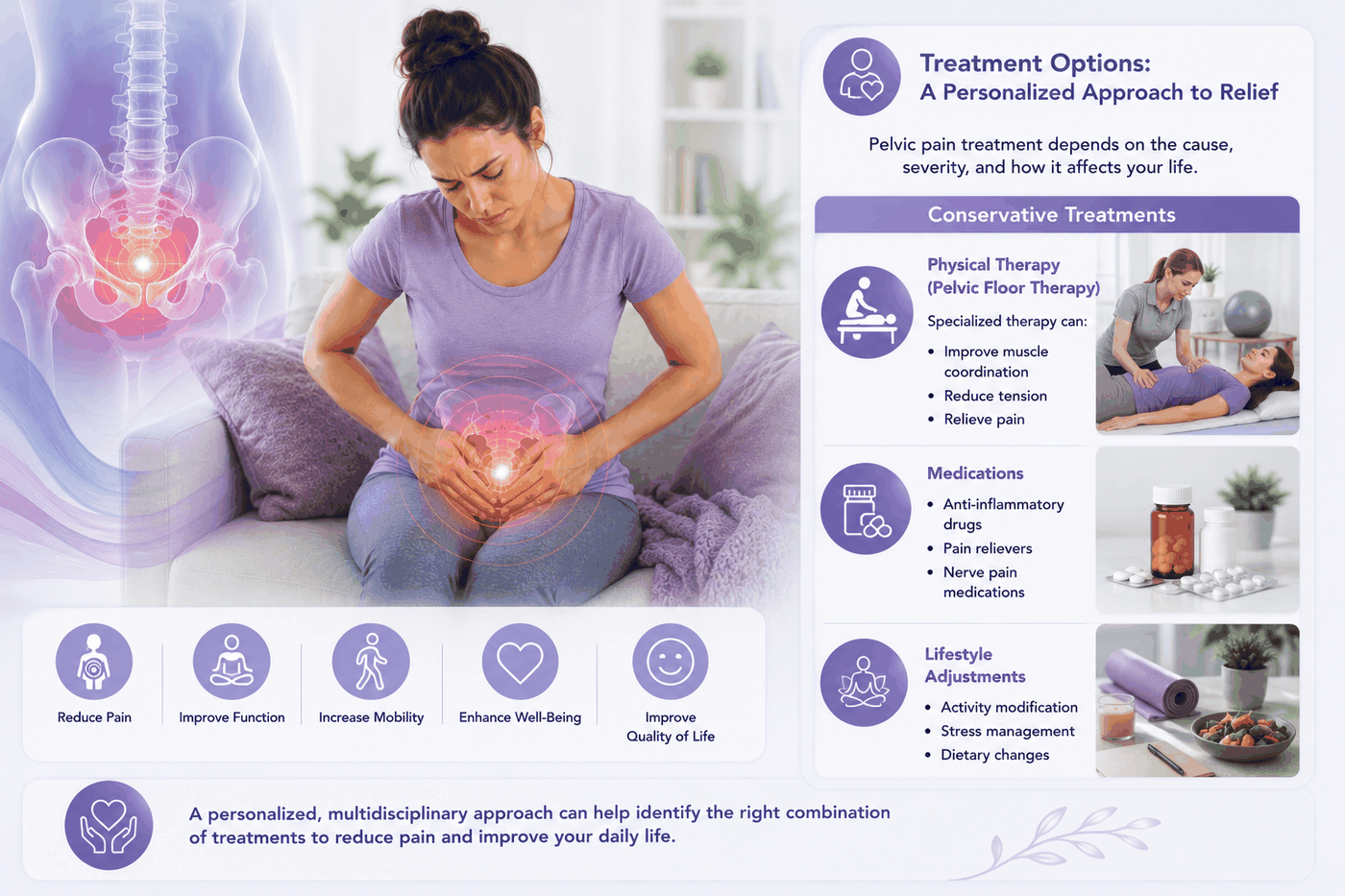
Pelvic pain treatment depends on the cause, severity, and how it affects your life.
Physical Therapy (Pelvic Floor Therapy)
Specialized therapy can:
- Improve muscle coordination
- Reduce tension
- Relieve pain
Medications
- Anti-inflammatory drugs
- Pain relievers
- Nerve pain medications
Lifestyle Adjustments
- Activity modification
- Stress management
- Dietary changes
Interventional Pain Management
Nerve Blocks
Target specific nerves to reduce pain signals. For pain centered deep in the pelvis, a superior hypogastric plexus block may be considered to interrupt pain signals carried by the nerves that serve the pelvic organs.
Trigger Point Injections
Relieve tight, painful muscle areas. Trigger point injections may be combined with pelvic floor therapy when muscle tension is a major contributor.
Neuromodulation: Advanced Pain Relief
For chronic or complex pelvic pain, neuromodulation therapies may be considered.
These therapies work by:
- Modifying how pain signals are processed
- Reducing pain perception
Patients often experience:
- Reduced pain
- Improved function
- Better quality of life
Treating the Root Cause
- Whenever possible, addressing the underlying issue is key
- Managing gynecological conditions
- Treating infections
- Addressing musculoskeletal imbalances
The Emotional Impact of Pelvic Pain
Pelvic pain can be deeply personal and emotionally challenging.
You may feel:
- Frustrated
- Isolated
- Anxious
- Uncomfortable discussing symptoms
Support—both medical and emotional—is an important part of healing.
Living with Pelvic Pain: Practical Tips
- Avoid prolonged sitting
- Practice relaxation techniques
- Follow therapy exercises
- Communicate openly with your care team
When Pelvic Pain Needs Prompt Care
Seek prompt medical evaluation for the following symptoms:
- Sudden, severe pelvic or lower-abdominal pain
- Pain with heavy bleeding, fainting, fever, or persistent vomiting
- Possible pregnancy with new pelvic pain or bleeding
- New weakness, numbness, or loss of bladder or bowel control
Call 911 for a life-threatening emergency. This list is not exhaustive; when symptoms feel severe or rapidly worsen, seek urgent care.
You Deserve Comfort and Confidence
Pelvic pain can affect every part of your life—but it does not have to define it.
With the right support, understanding, and treatment, you can move toward a life with less pain and more comfort. At California Pain, the focus is on helping you feel heard, supported, and cared for—every step of the way.
- Because you deserve relief
- You deserve comfort
- And you deserve to feel like yourself again
Find the Source of Pelvic Pain
California Pain Consultants evaluates complex pelvic pain patterns and coordinates care around the most likely source, daily function, and personal goals.
When to See a Pain Specialist for Pelvic Pain
Many people see a gynecologist, urologist, or primary care physician first, and that is often the right starting point. A pain specialist may help when:
- Pain has lasted six months or longer despite treatment of the suspected cause
- Tests have not found a clear explanation, or treating the identified cause did not relieve the pain
- Pain has burning, electric, or sitting-related qualities that suggest nerve involvement
- Pelvic pain began after surgery, childbirth, or injury
- Pain is affecting work, sleep, intimacy, or mood
Men also experience chronic pelvic pain, which may involve the pelvic floor muscles, nerves, or structures discussed on our testicular pain page.
Getting Pelvic Pain Care in San Diego
At California Pain Consultants, your first visit is a private, unhurried conversation about where your pain is, what makes it better or worse, and how it is affecting your life. Your care team reviews prior testing, performs a focused examination, and may recommend diagnostic nerve blocks to clarify which nerves or muscles are involved. From there, your plan may combine medication, pelvic floor therapy referrals, targeted injections, and, for selected patients with persistent pain, neuromodulation.
You can be seen at our San Diego County clinics in Kearny Mesa, Rancho Bernardo, La Mesa, and Chula Vista, and procedures are performed at the Comprehensive Pain ASC in Rancho Bernardo and the EPC Surgery Center in La Mesa. We accept most insurances. Call (858) 571-3630 to book your appointment.
Book Your AppointmentTrusted Information and Related Care
Medical reference: MedlinePlus: Pelvic Pain. Related California Pain resources: Conditions and treatments · Schedule an appointment. This article is for general education and does not replace an individualized medical evaluation. Treatment recommendations depend on diagnosis, health history, current medications, and personal goals.
Frequently Asked Questions
What kind of doctor treats chronic pelvic pain?
Chronic pelvic pain is often treated by a team rather than one doctor. Gynecologists, urologists, and gastroenterologists address organ-based causes, pelvic floor physical therapists treat muscle dysfunction, and pain specialists focus on nerve and muscle pain that persists. A pain specialist can coordinate with your other physicians so each contributor is addressed.
Can pelvic pain come from nerves?
Yes, nerves are a common source of persistent pelvic pain. Conditions such as pudendal neuralgia can cause burning, shooting, or sitting-related pain in the pelvis or genital area. Nerve pain may respond to nerve pain medications, physical therapy, and targeted nerve blocks, which can also help confirm which nerve is involved.
Is a pelvic nerve block painful?
Most patients describe a pelvic nerve block as brief pressure and stinging rather than severe pain. The skin is numbed with local anesthetic first, and image guidance helps the physician place the needle precisely. Some procedures are performed with light sedation. Mild soreness at the injection site for a day or two is common afterward.
Do men get chronic pelvic pain?
Yes, men can develop chronic pelvic pain, sometimes called chronic prostatitis or chronic pelvic pain syndrome. It may cause pain in the pelvis, perineum, testicles, or lower abdomen and can involve tight pelvic floor muscles or irritated nerves. Evaluation and treatment follow many of the same principles as pelvic pain in women.
Will I have to have surgery for pelvic pain?
Most people with chronic pelvic pain do not need surgery, though some underlying conditions such as certain cases of endometriosis or fibroids may be treated surgically by a gynecologist. Pain management focuses on nonsurgical options, including medication, physical therapy, injections, and nerve blocks. Your care team can help you weigh options and coordinate with surgeons if needed.
How do I describe my pelvic pain at my appointment?
It helps to note where the pain is, what it feels like, when it started, and what makes it better or worse. Tracking pain alongside your menstrual cycle, bowel and bladder habits, sitting, and activity for a few weeks can reveal useful patterns. Bring a list of past treatments and how well each worked.