
Peripheral nerve stimulation (PNS) is a minimally invasive neuromodulation treatment that places a thin lead near a specific nerve and uses mild electrical impulses to calm abnormal pain signals. It may help selected adults with chronic nerve-related pain in the shoulder, knee, head, limbs, or a surgical site when other treatments have not given enough relief. Board-certified pain specialists at California Pain Consultants in San Diego evaluate candidates and guide each step, from trial to follow-up.
For many people living with chronic pain, the hardest part is not only the discomfort itself.
Simple activities that once felt automatic suddenly become difficult. Walking hurts. Sitting too long becomes uncomfortable. Sleeping peacefully becomes rare. Some patients stop exercising, traveling, or participating in hobbies because pain follows them everywhere.
The purpose of Peripheral Nerve Stimulation is not to promise a cure. It is to address a carefully identified pain source, support function, and help the patient participate more comfortably in an individualized care plan.
What Is Peripheral Nerve Stimulation?
Understanding the diagnosis and treatment target helps set realistic expectations before Peripheral Nerve Stimulation is recommended.
The nervous system is responsible for carrying signals throughout the body.
Peripheral nerves connect the brain and spinal cord to the muscles, skin, joints, and tissues.
When nerves become injured, compressed, irritated, or hypersensitive, they may continue sending abnormal pain signals even after the original injury has healed.
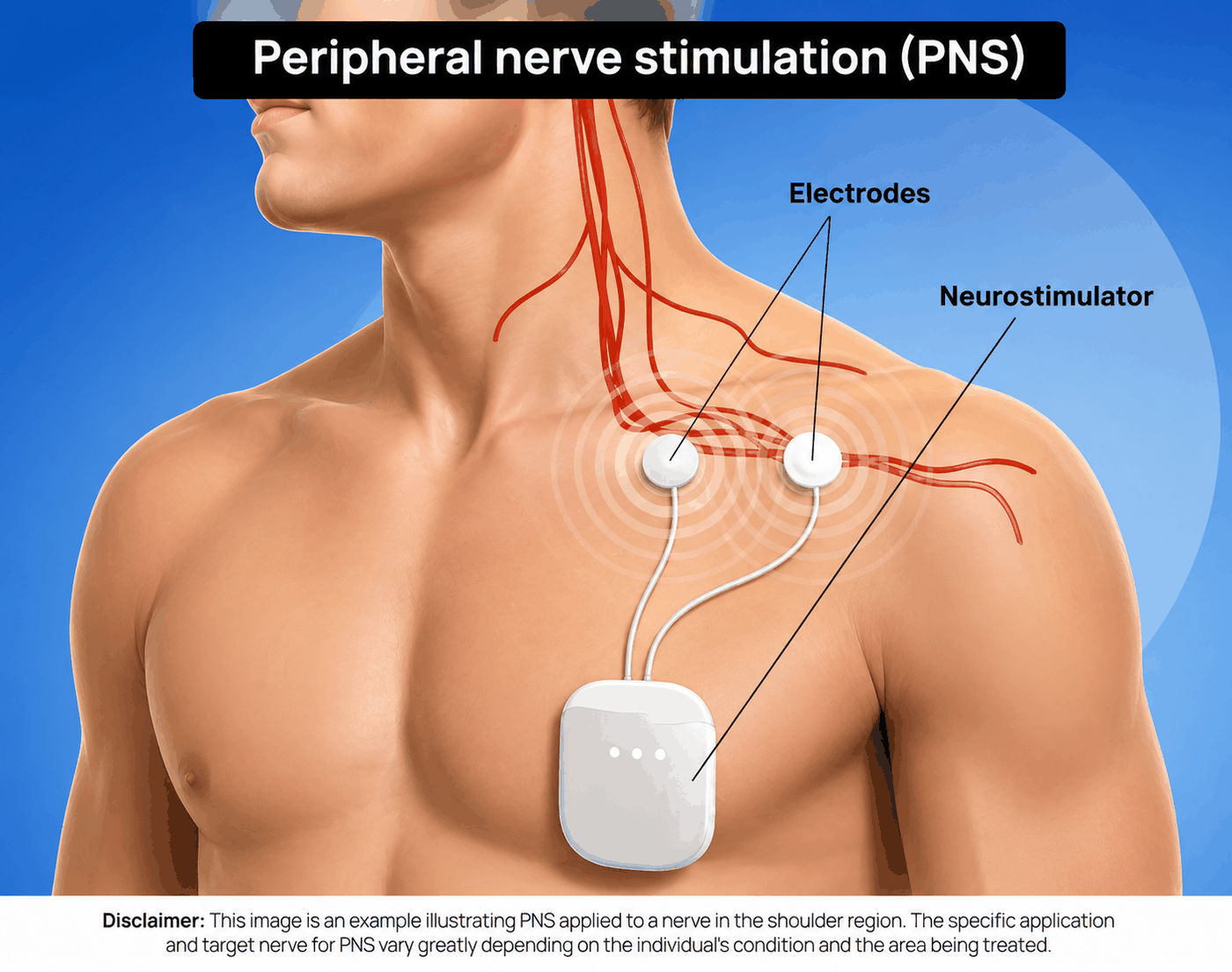
Peripheral Nerve Stimulation is a minimally invasive neuromodulation treatment that uses small electrical impulses to help regulate abnormal pain signals traveling through peripheral nerves.
Tiny leads are placed near the targeted nerve responsible for pain.
These leads deliver mild electrical stimulation designed to alter how pain signals are processed before they reach the brain.
Temporary and Longer-Term Approaches
PNS can be delivered in more than one way. Some patients complete a short trial followed by a longer-term implant, while others receive a temporary percutaneous treatment. A 2024 review in Pain Management describes a percutaneous approach in which a coiled lead may be placed for up to 60 days and then removed. Your pain specialist explains which approach fits your diagnosis.
When Peripheral Nerve Stimulation May Be Considered
A procedure or medication plan is chosen only after the likely pain source, prior care, health history, and personal goals have been reviewed.
Chronic Shoulder Pain
PNS may help certain patients with chronic shoulder pain involving nerves such as the suprascapular nerve.
Knee Pain
Genicular nerve-related knee pain may sometimes respond to peripheral nerve stimulation. A genicular nerve block may help confirm that these nerves are involved.
Occipital Neuralgia and Chronic Headaches
Occipital nerve stimulation may help selected patients with chronic headache conditions, often after a diagnostic occipital nerve block.
Peripheral Neuropathy
Some patients with chronic neuropathic pain may benefit from neuromodulation approaches. Neuropathy is common: the National Institute of Diabetes and Digestive and Kidney Diseases (NIDDK) estimates that about one-third to one-half of people with diabetes have peripheral neuropathy.
Post Surgical Nerve Pain
Persistent nerve pain after surgery may sometimes respond to PNS therapy.
Complex Regional Pain Syndrome (CRPS)
Selected CRPS patients may benefit from peripheral nerve-targeted stimulation.
Symptoms and Daily-Life Effects to Discuss
Tell your clinician where symptoms occur, what makes them better or worse, and how they affect function. That pattern can be as important as an imaging result.
- Burning discomfort
- Sharp shooting pain
- Tingling sensations
- Electric-like pain
- Skin sensitivity
- Persistent aching
- The pain may worsen during movement, activity, or even light touch
How Candidacy Is Evaluated
Not everyone with a related diagnosis is a candidate for Peripheral Nerve Stimulation. Evaluation is used to confirm the treatment target and compare reasonable alternatives.
Medical History
Your clinician reviews pain location, previous treatments, surgical history, activity limitations, and nerve-related symptoms.
Physical Examination
The examination looks for sensory changes, strength, nerve tenderness, and functional limitations.
Imaging and Care Planning
The goal is identifying the specific nerve contributing to pain. Imaging and records may help identify nerve injuries, structural compression, surgical changes, or chronic inflammation. A diagnostic nerve block is sometimes used to confirm that numbing a particular nerve reduces pain before stimulation is considered.
What to Expect During Peripheral Nerve Stimulation
Specific instructions vary. The care team explains preparation, anesthesia or medication decisions, what the patient may feel, and the follow-up plan before treatment.
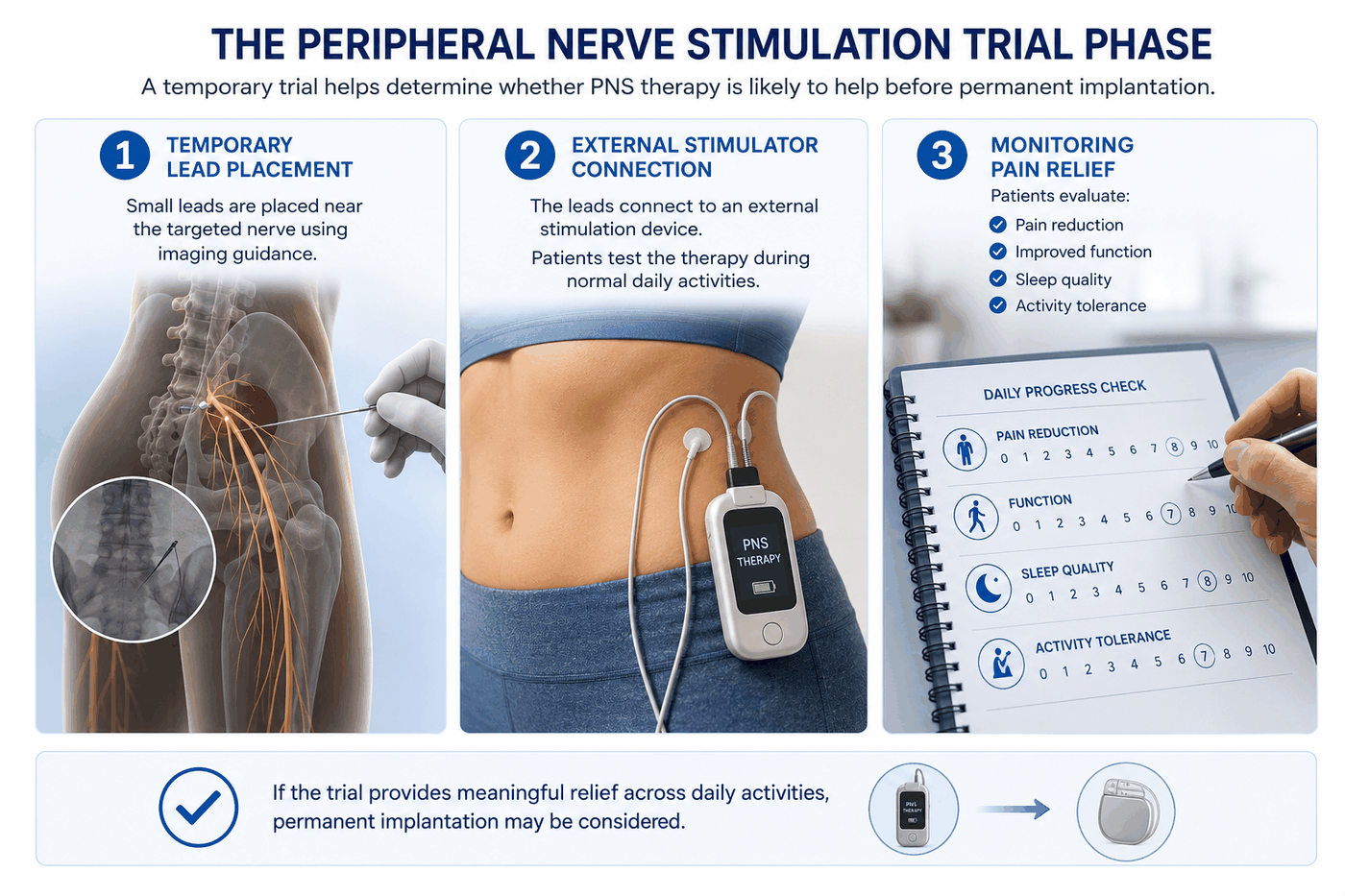
Step 1: Temporary Lead Placement
Small leads are placed near the targeted nerve using imaging guidance.
Step 2: External Stimulator Connection
The leads connect to an external stimulation device, and patients test the therapy during normal daily activities.
Step 3: Monitoring Pain Relief
During the trial, patients track pain reduction, function, sleep quality, and activity tolerance. If the trial provides meaningful relief, permanent implantation may be considered.
Recovery, Timing, and Follow-Up
Response to Peripheral Nerve Stimulation varies with the diagnosis, treatment technique, and individual health factors. Follow the specific instructions provided by your care team.
After Treatment
Recovery is generally shorter compared to larger surgical procedures. Patients are typically encouraged to gradually resume activity while avoiding excessive strain during healing. Some temporary soreness near the implant area is common initially.
Rehabilitation and Activity
Rehabilitation may focus on:
- Strengthening
- Flexibility
- Functional movement
- Stability
- Conditioning
Follow-Up
Follow-up is used to assess response, function, side effects, and whether the treatment plan should be continued or adjusted.
Potential Benefits of Peripheral Nerve Stimulation
The goal is meaningful improvement in comfort and function, not an unsupported promise that every symptom will disappear.
- Reduced chronic pain
- Improved mobility
- Better sleep
- Reduced medication dependence
- Improved activity tolerance
- Better quality of life
- Many patients report feeling more functional and hopeful after successful therapy
- A treatment plan matched to a defined pain source
What Research Shows
Evidence is still growing, and results vary. In the 2024 Pain Management review of prospective studies of percutaneous PNS, 73 percent of participants had at least a 50 percent reduction in pain intensity at the end of treatment, and 57 percent of participants with available data reported sustained improvement at 12 to 14 months. The authors reported no serious adverse events or unanticipated device-related complications across the included studies. Individual results depend on diagnosis, nerve target, and overall health.
Risks, Safety, and When to Call
All treatments have risks. The risks of Peripheral Nerve Stimulation depend on the technique, medication or device, anatomy, and individual health history.
- Infection
- Lead movement
- Device discomfort
- Skin irritation
Contact your care team for increasing incision redness, warmth, swelling, drainage, fever, unexpected device discomfort, or a sudden change in stimulation or symptom control. Seek urgent medical care for new or progressive weakness, loss of bowel or bladder control, trouble breathing, or rapidly worsening pain.
How This Treatment Fits into Comprehensive Care
Interventional care is most useful when it supports a broader plan built around diagnosis, movement, function, emotional well-being, and informed decision-making.
Part of a Broader Plan
The goal is comprehensive care focused on long-term function and quality of life, which may include physical therapy, rehabilitation, exercise programs, behavioral support, and medication management.
Movement and Rehabilitation
Strengthening, flexibility, functional movement, stability, and conditioning help turn reduced pain into lasting gains in activity.
Support for Daily Life
Over time, chronic pain may affect independence, confidence, and emotional well-being. Many patients slowly structure life around avoiding pain triggers, such as walking, exercising, driving, or sleeping in certain positions. Advanced nerve-targeted therapies may help restore comfort and function again.
Is Peripheral Nerve Stimulation Right for You?
Chronic nerve pain can slowly affect nearly every part of life. It interferes with movement, sleep, work, exercise, emotional health, and overall well-being. Over time, even simple activities may become physically and emotionally exhausting because the nervous system remains constantly irritated.
California Pain Consultants provides individualized evaluation and discusses the expected benefits, limitations, alternatives, and risks before recommending care.
Peripheral Nerve Stimulation at California Pain Consultants
Your care team at California Pain Consultants offers neuromodulation, including peripheral nerve stimulation and spinal cord stimulation, for patients across San Diego County, with clinics in Kearny Mesa, Rancho Bernardo, La Mesa, and Chula Vista. Procedures are performed at the Comprehensive Pain ASC in Rancho Bernardo or the EPC Surgery Center in La Mesa. We accept most insurances. You can request your appointment online or call (858) 571-3630.
Book Your AppointmentTrusted Information and Related Care
General medical references: MedlinePlus: Pain · National Institute of Neurological Disorders and Stroke: Pain.
Related California Pain resources: Neuropathy · Complex regional pain syndrome · Conditions and treatments.
This article is for general education and does not replace an individualized medical evaluation. Recommendations depend on the diagnosis, health history, current medications, examination, imaging or diagnostic testing, and personal goals.
Frequently Asked Questions About Peripheral Nerve Stimulation
Find clear, medically responsible answers about Peripheral Nerve Stimulation, who may be a candidate, what to expect, and when to contact your healthcare team.
What is peripheral nerve stimulation, and how does it work?
Peripheral nerve stimulation delivers mild electrical pulses near a specific nerve through a thin lead. The stimulation changes how pain signals are transmitted and can provide focused treatment without placing leads in the spinal canal.
How is peripheral nerve stimulation different from spinal cord stimulation?
Peripheral nerve stimulation targets a single nerve outside the spinal column, near where pain is felt, such as at the shoulder or knee. Spinal cord stimulation places leads in the epidural space along the spine and affects broader pain signals, often for back and leg pain. Both are neuromodulation therapies, and the choice depends on where pain originates.
What conditions can peripheral nerve stimulation treat?
Peripheral nerve stimulation may help selected patients with chronic shoulder pain, genicular nerve-related knee pain, occipital neuralgia and chronic headaches, peripheral neuropathy, persistent nerve pain after surgery, and complex regional pain syndrome. The key is identifying a specific nerve that contributes to pain. Your pain specialist confirms the target, often with a diagnostic nerve block, before recommending stimulation.
Who may be a candidate for peripheral nerve stimulation?
Potential candidates have a well-localized pain source, persistent functional limits despite appropriate care, and no active infection or other contraindication. Evaluation includes nerve anatomy, imaging or testing when needed, expectations, psychological factors, and the ability to manage the system.
How should I prepare for peripheral nerve stimulation?
Review blood thinners, infection, allergies, implanted devices, work demands, and MRI needs with the team. Follow fasting, transportation, and skin-preparation instructions for lead placement.
What happens during peripheral nerve stimulation?
Using ultrasound or fluoroscopic guidance, the clinician places a small lead near the target nerve and tests stimulation coverage. Depending on the system, treatment may involve a temporary lead, a trial, or an implanted receiver and external controller.
Does peripheral nerve stimulation hurt?
Most patients describe the placement as pressure and brief discomfort. Lead placement is guided by imaging, and the skin is numbed first. Afterward, some temporary soreness near the lead site is common. During therapy, stimulation is usually felt as a mild tingling or pulsing sensation, and settings can be adjusted for comfort.
What is recovery like after peripheral nerve stimulation?
Site soreness and temporary limits on lifting, stretching, or strenuous movement help reduce lead migration while tissues heal. Follow wound care, programming, charging, and device-use instructions closely.
What are the risks of peripheral nerve stimulation?
Risks include infection, lead movement, device discomfort, and skin irritation at the lead site. Call your care team for increasing redness, warmth, swelling, drainage, fever, or a sudden change in stimulation. Seek urgent care for new weakness, loss of bowel or bladder control, trouble breathing, or rapidly worsening pain. Revision or removal may sometimes be required.
Is peripheral nerve stimulation permanent?
Not necessarily. Some approaches use a temporary percutaneous lead that may stay in place for up to 60 days and is then removed. Other approaches begin with a trial and, if relief is meaningful, move to a longer-term implant. The lead can be removed if therapy no longer helps. Your care team explains which option fits you.
How well does peripheral nerve stimulation work?
Results vary. In a 2024 review of prospective studies of percutaneous PNS, 73 percent of participants had at least a 50 percent reduction in pain intensity at the end of treatment, and 57 percent with available data reported sustained improvement at 12 to 14 months. Your own result depends on the diagnosis, the nerve treated, and other health factors.
How soon might I notice a change, and how long might it last?
Some patients notice a change during programming or a trial, but benefit is measured over time using pain and functional goals. Response can change with lead position, programming, activity, and the underlying condition.
How does peripheral nerve stimulation fit into a broader treatment plan?
PNS is intended to support activity and quality of life and is usually combined with rehabilitation, medication review, sleep and behavioral care, and treatment of the underlying nerve problem.
When should I call my healthcare team or seek urgent care after peripheral nerve stimulation?
Call the implanting team for fever, drainage, increasing redness, severe site pain, sudden stimulation changes, or loss of function. Seek emergency care for progressive weakness, severe allergic symptoms, chest pain, or trouble breathing.