
For many people, chronic lower back pain becomes more than just occasional discomfort.
It slowly changes the way they move through everyday life.
The purpose of Sacroiliac Joint Injections is not to promise a cure. It is to address a carefully identified pain source, support function, and help the patient participate more comfortably in an individualized care plan.
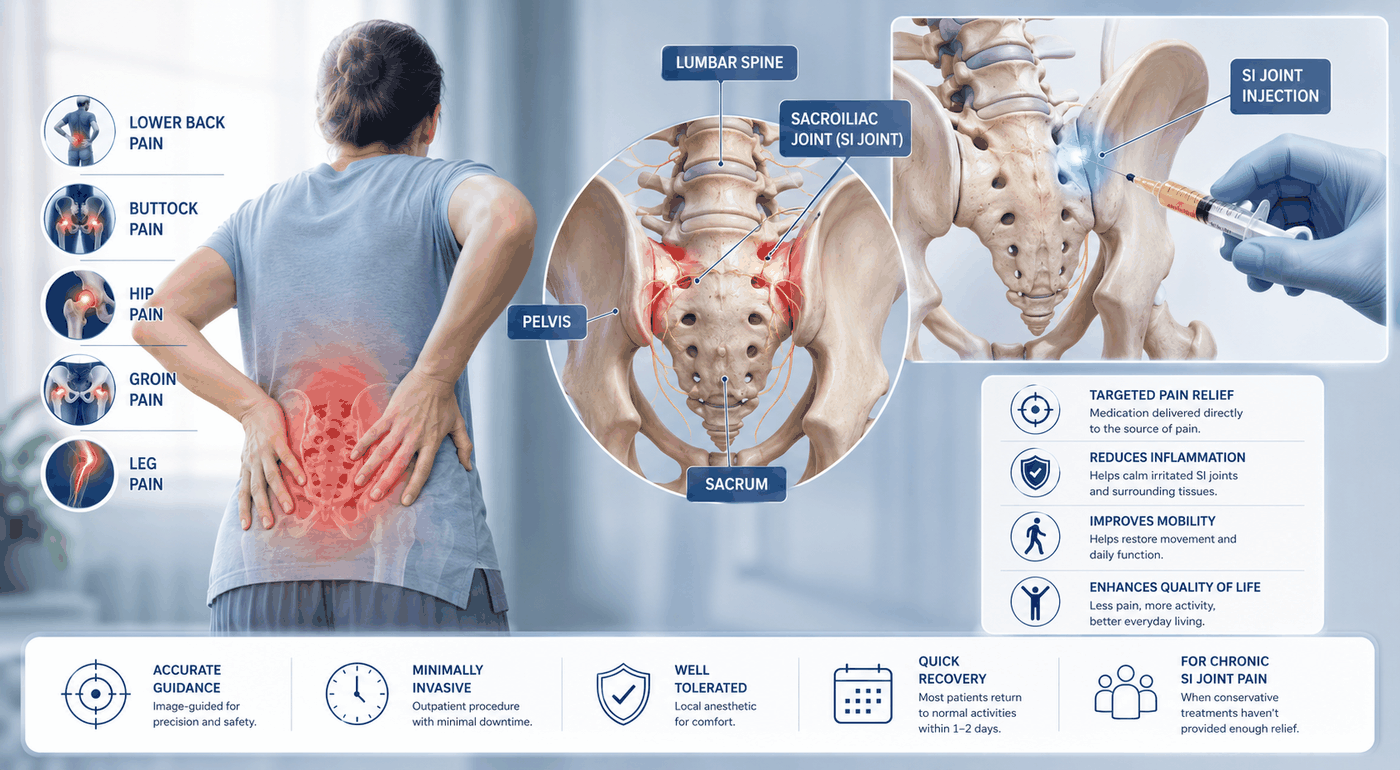
What Is Sacroiliac Joint Injections?
Understanding the diagnosis and treatment target helps set realistic expectations before Sacroiliac Joint Injections is recommended.
The sacroiliac joints are located where the sacrum meets the pelvis.
There is one SI joint on each side of the lower spine.
Although the SI joints move only slightly, they experience significant force during daily activity.
A Sacroiliac Joint Injection is a minimally invasive procedure used to deliver medication directly into the SI joint.
When Sacroiliac Joint Injections May Be Considered
A procedure or medication plan is chosen only after the likely pain source, prior care, health history, and personal goals have been reviewed.
Sacroiliitis
Sacroiliitis is inflammation within the SI joint itself.
Degenerative Arthritis
Age-related wear may affect the SI joints over time.
Pregnancy-Related Pelvic Changes
Hormonal and biomechanical changes during pregnancy may strain the SI joints.
Previous Lumbar Spine Surgery
Changes in spinal mechanics after surgery may increase stress on the SI joints.
Trauma or Injury
Falls, accidents, or repetitive stress may injure the SI joint.
Hypermobility or Instability
Abnormal movement patterns may contribute to chronic irritation.
Symptoms and Daily-Life Effects to Discuss
Tell your clinician where symptoms occur, what makes them better or worse, and how they affect function. That pattern can be as important as an imaging result.
- Pain in the lower back
- Pain near the buttocks
- Hip discomfort
- Groin pain
- Pain while standing
- Pain during walking or climbing stairs
- Some patients also feel symptoms radiating into the upper legs
- Prolonged standing
How Candidacy Is Evaluated
Not everyone with a related diagnosis is a candidate for Sacroiliac Joint Injections. Evaluation is used to confirm the treatment target and compare reasonable alternatives.
Medical History
Common considerations include:
- Pain location
- Movement limitations
- Previous injuries
- Surgical history
- Activities that worsen symptoms
Physical Examination
Common considerations include:
- Pelvic alignment
- Joint tenderness
- Pain reproduction tests
- Walking mechanics
- Spine movement
Imaging and Care Planning
However, diagnosis often combines imaging findings with symptoms and examination.
Common considerations include:
- Joint degeneration
- Arthritis
- Inflammation
- Structural abnormalities
What to Expect During Sacroiliac Joint Injections
Specific instructions vary. The care team explains preparation, anesthesia or medication decisions, what the patient may feel, and the follow-up plan before treatment.
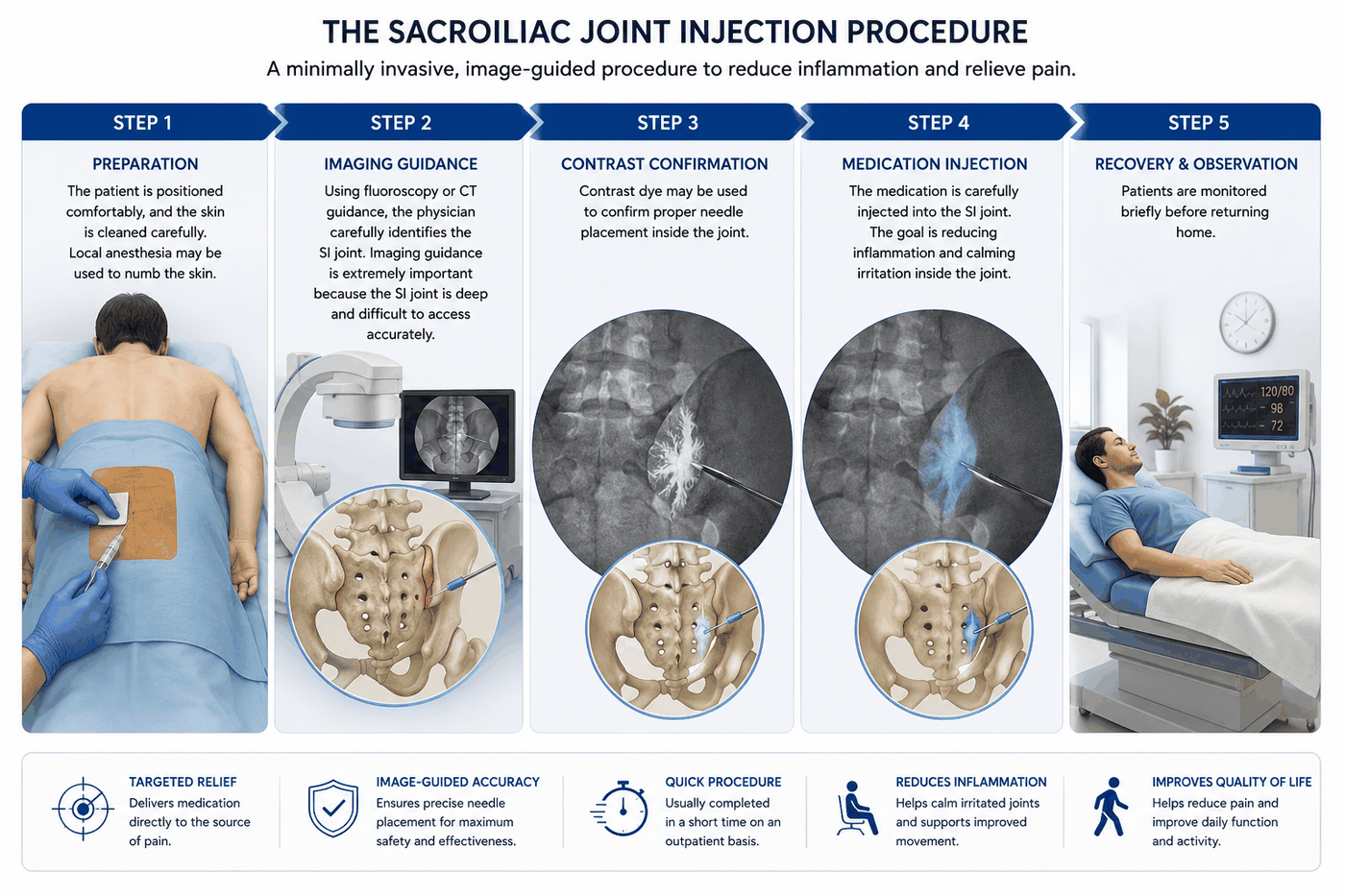
Step 1: Preparation
The patient is positioned comfortably, and the skin is cleaned carefully. Local anesthesia may be used to numb the skin.
Step 2: Imaging Guidance
Using fluoroscopy or CT guidance, the physician carefully identifies the SI joint. Imaging guidance is extremely important because the SI joint is deep and difficult to access accurately.
Step 3: Contrast Confirmation
Contrast dye may be used to confirm proper needle placement inside the joint.
Step 4: Medication Injection
The medication is carefully injected into the SI joint. The goal is reducing inflammation and calming irritation inside the joint.
Step 5: Recovery and Observation
Patients are monitored briefly before returning home.
Recovery, Timing, and Follow-Up
Response to Sacroiliac Joint Injections varies with the diagnosis, treatment technique, and individual health factors. Follow the specific instructions provided by your care team.
After Treatment
Recovery is generally relatively quick. Some patients experience mild soreness temporarily after treatment. Most individuals return home shortly after the procedure.
When Improvement May Begin
Some patients notice relief relatively quickly because of the anesthetic medication. Others experience gradual improvement over several days as inflammation decreases.
Common considerations include:
- Severity of inflammation
- Joint degeneration
- Duration of symptoms
How Long Effects May Last
Others may require repeat treatment or additional therapies depending on the progression of the condition. Pain relief duration varies between patients. Some individuals experience improvement lasting weeks or months.
Rehabilitation and Activity
Supporting surrounding muscles may help reduce long-term SI joint stress.
Common considerations include:
- Pelvic stabilization
- Core strengthening
- Flexibility
- Posture correction
- Movement mechanics
Potential Benefits of Sacroiliac Joint Injections
The goal is meaningful improvement in comfort and function, not an unsupported promise that every symptom will disappear.
- Reduced inflammation
- Improved mobility
- Reduced lower back pain
- Better walking tolerance
- Improved participation in physical therapy
- Better quality of life
- Many patients report feeling more functional and comfortable after treatment
- A treatment plan matched to a defined pain source
Risks, Safety, and When to Call
All treatments have risks. The risks of Sacroiliac Joint Injections depend on the technique, medication or device, anatomy, and individual health history.
- Temporary soreness
- Bleeding
- Infection
- Allergic reactions
- Temporary numbness
Contact your care team for increasing redness, warmth, swelling, drainage, fever, severe or worsening pain, or numbness or weakness that does not improve as expected. Seek emergency care for trouble breathing, fainting, or signs of a severe allergic reaction.
How This Treatment Fits into Comprehensive Care
Interventional care is most useful when it supports a broader plan built around diagnosis, movement, function, emotional well-being, and informed decision-making.
Part of a Broader Plan
The goal is individualized care focused on improving long-term mobility and quality of life.
Common considerations include:
- Physical therapy
- Weight management
- Exercise programs
- Radiofrequency Ablation
- Regenerative medicine
Support for Daily Life
Many patients slowly begin structuring life around avoiding painful movement. Over time, chronic pain may affect independence, emotional health, and overall quality of life.
Everyday activities that may become harder include:
- Standing for long periods
- Walking long distances
- Exercising
- Sleeping comfortably
Is Sacroiliac Joint Injections Right for You?
Chronic sacroiliac joint pain can slowly affect nearly every part of life. It interferes with movement, sleep, exercise, work, and emotional well-being. Over time, even simple activities may become exhausting because of constant lower back and pelvic discomfort.
California Pain Consultants provides individualized evaluation and discusses the expected benefits, limitations, alternatives, and risks before recommending care.
Book Your AppointmentTrusted Information and Related Care
General medical references: MedlinePlus: Pain · National Institute of Neurological Disorders and Stroke: Pain.
Related California Pain resources: Pelvic pain · Low back pain · Conditions and treatments.
This article is for general education and does not replace an individualized medical evaluation. Recommendations depend on the diagnosis, health history, current medications, examination, imaging or diagnostic testing, and personal goals.
A major weight-bearing joint, the sacroiliac joint supports weight from the upper body that is transferred into the pelvis, hips and legs. Like other joints in the body, the sacroiliac joint is inundated by nerve endings and spinal nerve roots, as well as surrounding muscles, tendons and ligaments. So not only is there a chance for skeletal wear and tear, there is also the possibility of nerve irritation and inflammation that can lead to feelings of pain in the sacroiliac joint in the lower back.
Pain is generally felt when ligaments in the pelvic area become too tight or too loose. This can occur from:
- Traumatic injury like a car accident or slip and fall
- Pregnancy and subsequent childbirth
- Osteoarthritis
- Hip or spine surgery
- Patients who have an abnormal gait or uneven wear or pelvic imbalance (i.e. one leg shorter than the other) can also aggravate the sacroiliac joint and lead to pain.
- Infection
- Tumors
- Ankylosing Spondylitis
- Demographics (older age, women with low body mass index
Most patients report pain sensations that worsens when sedentary, like sitting for long periods of time, and can lessen with exercise and stretching. These feelings of pain can include a numbness, tingling or feeling of weakness in the leg, or sharp, shooting pain that can spread across the hips and down the legs. Some patients even experience sciatic pain.
What are Sacroiliac Joint Pain Injections?
The sacroiliac joint injection procedure involves injecting a mixture of local anesthetic and/or corticosteroid medication directly into the sacroiliac joint, which is where the provider believes the source of pain is originating, based on the patient’s symptoms and feedback. These injections are used for two main reasons: as a diagnostic tool and to provide treatment. To confirm that the sacroiliac joint is the location of pain, a provider will inject an anesthetic treatment into the joint. If pain relief is experienced, then it’s a strong indicator that this joint is the source of pain. The injection itself as a recommended treatment method, which includes an anesthetic and possibly a corticosteroid, is to provide pain relief, which is always the goal. When used as a treatment method, patients can experience pain relief, are able to further their physical therapy goals, as well as improve their quality of life and mobility.
How Do Sacroiliac Joint Injections Help Relieve Pain?
The combination of two medications, including a local anesthetic and a corticosteroid, into the joint at the location of the inflamed nerves helps to both immediately relieve pain and also reduce inflammation. Not only does it affect the targeted nerves, it also spreads throughout the joint, reducing inflammation and irritation on a greater scale.
Most pain management specialists use sacroiliac joint injections as part of a comprehensive treatment plan with a goal to help the patient enjoy complete mobility and proper function of his/her body. In addition to sacroiliac joint injections, some providers might also recommend:
- Sacroiliac joint traumeel injections: a homeopathic natural anti-inflammatory medication that has very few side effects
- Medial and lateral branch blocks: the medial and lateral nerves run through the sacroiliac joint and injections help to block the feeling of pain from being sent to the brain. If these blocks successfully provide relief, the patient might be a candidate for radiofrequency ablation.
- Radiofrequency ablation: a procedure that involves burning or ablating the nerve that is believed to cause pain, resulting in long-lasting pain relief
- Transcutaneous electrical stimulation (TENS) unit: a TENS unit works to replace the feeling of pain with a mild electrical current, which feels like a tingling or buzzing sensation. Small patches are placed on the skin above the location of pain and the patient is able to control how strong the current is as well as how long it lasts.
- Spinal cord stimulation: a small electrode is place in the epidural space (below the skin) and delivers an electrical current that helps to reduce the feeling of pain
- Chiropractic care: keeping the spine and sacroiliac joints properly aligned can help reduce pain
- Acupuncture: while research continues for the many benefits of acupuncture, it has proven helpful for relieving pain associated with the sacroiliac joints
What Does a Sacroiliac Joint Injection Involve?
Sacroiliac joint injections are performed in your pain management specialist’s office. The patient will lie on their stomach and the provider will use fluoroscopy or ultrasound guidance to insert a thin needle into the sacroiliac joint and deliver the medication. The entire procedure takes about 15 minutes but the process could take up to an hour including the post-procedure observation portion. Most patients experience sacroiliac joint pain relief that lasts for up to a month.
Potential side effects could include pain at the injection site, numbness or weakness in the legs, or temporary increased lower back pain. While serious complications are rare, they include nerve damage, infection, poor reaction to the medication, and bleeding or bruising at the injection site.
Sacroiliac joint injections are a safe and effective pain management technique for helping patients who are dealing with chronic low back pain and sacroiliac joint pain find relief. Additionally, it gives patients the opportunity to practice other therapies, such as stretching and physical therapy, pain free. If you believe that sacroiliac joint injections can help you, please reach out to the California Pain Consultants team at our Kearny Mesa, Rancho Bernardo, La Mesa and Chula Vista clinics and schedule an appointment today.
Frequently Asked Questions About Sacroiliac Joint Injections
Find clear, medically responsible answers about Sacroiliac Joint Injections, who may be a candidate, what to expect, and when to contact your healthcare team.
What are sacroiliac joint injections, and how do they work?
A sacroiliac joint injection places local anesthetic, sometimes with steroid, into the joint connecting the sacrum and pelvis. It can help test whether the joint is a pain source and may reduce inflammation in selected patients.
What conditions or symptoms may sacroiliac joint injections help address?
It may be considered for pain felt near the low back, buttock, or upper leg when examination suggests the sacroiliac joint. Similar symptoms can come from the lumbar spine, hip, nerves, or muscles and should be evaluated.
Who may be a candidate for sacroiliac joint injections?
A candidate has a compatible pain pattern and provocative examination, with imaging used mainly to rule out other problems. Active infection, unsafe bleeding risk, pregnancy-related considerations, or an alternative dominant pain source may change the plan.
How should I prepare for sacroiliac joint injections?
Review blood thinners, diabetes, allergies, infection, pregnancy, and prior injection response with the team. Follow eating, transportation, and medication instructions, and identify safe movements to test after a diagnostic injection.
What happens during sacroiliac joint injections?
Using fluoroscopic or ultrasound guidance, the physician places a needle into the sacroiliac joint and confirms position before injecting medication. A small volume is used when diagnostic accuracy is important.
What is recovery like after sacroiliac joint injections?
Temporary soreness, numbness, or leg heaviness can occur. Track changes in pain during the activities specified by the clinician, use fall precautions, and resume activity gradually.
How soon might I notice a change, and how long might it last?
Local anesthetic may produce a short diagnostic response, while steroid benefit can take several days. The amount and duration of change help guide rehabilitation or consideration of other treatments.
What are the possible risks or side effects of sacroiliac joint injections?
Possible risks include bleeding, infection, temporary numbness or weakness, steroid effects, nerve irritation, and allergic reaction. Serious complications are uncommon but possible.
How do sacroiliac joint injections fit into a broader treatment plan?
An injection should support a clear diagnostic or therapeutic plan. Pelvic and core strengthening, movement retraining, medication review, and evaluation of hip or lumbar contributors remain important.
When should I call my healthcare team or seek urgent care after sacroiliac joint injections?
Call promptly for fever, drainage, increasing redness, severe headache, or symptoms that rapidly worsen. Seek emergency care for progressive weakness, new bowel or bladder dysfunction, saddle numbness, chest pain, or trouble breathing.