
Shingles pain is nerve pain caused when the chickenpox virus reawakens in a nerve, producing burning, tingling, or stabbing pain and a blistering rash on one side of the body. It is most common in adults over 50 and in people with weakened immune systems, and for some, the pain lingers long after the rash is gone. Board-certified pain specialists at California Pain Consultants in San Diego diagnose and treat both acute shingles pain and the lasting nerve pain that can follow it.
- A strange tingling
- A burning sensation on one side of the body
- A discomfort that doesn’t quite feel like anything you’ve experienced before
- Then comes the rash—often painful, sensitive, and difficult to ignore
Shingles can cause burning, tingling, itching, and a blistering rash along a nerve path. Pain that continues after the rash heals is called postherpetic neuralgia.
Shingles is common. The CDC estimates that about 1 in 3 people in the United States will have shingles in their lifetime and that about 1 million people get it each year. It also notes that more than 99% of Americans born before 1980 had chickenpox, even if they do not remember it, which means most adults carry the virus that can later cause shingles.
How Shingles Develops
The Beginning: What Is Shingles?
Shingles is caused by the varicella-zoster virus, the same virus that causes chickenpox. After you recover from chickenpox, the virus doesn’t fully leave your body. Instead, it stays dormant in your nerve tissue. Years later—sometimes decades—it can reactivate as shingles.
Why the Virus Reactivates
Shingles often appears when the immune system is weakened, such as:
- Aging
- Stress
- Illness
- Certain medications
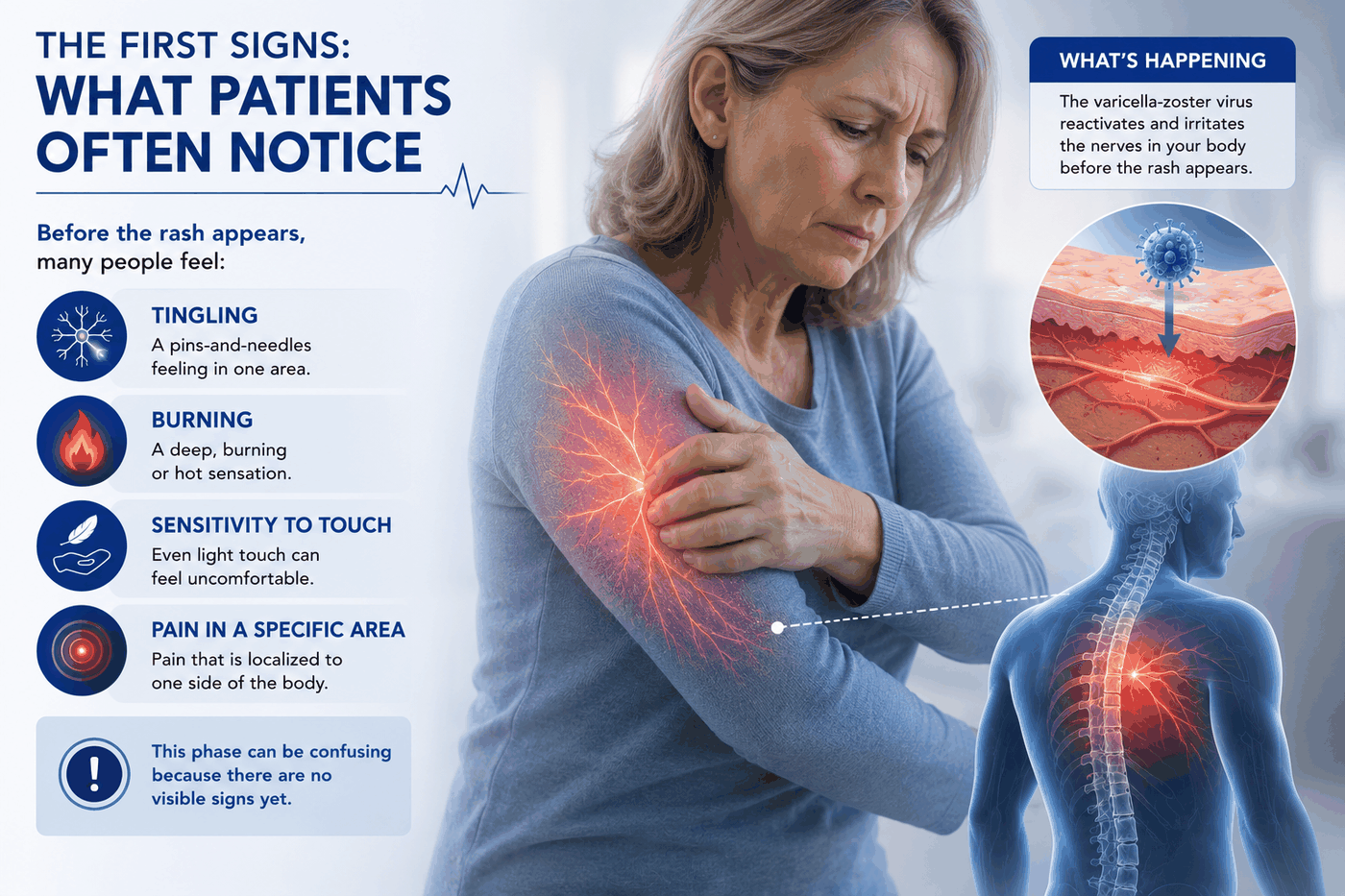
The First Signs: What Patients Often Notice
Before the rash appears, many people feel:
- Tingling
- Burning
- Sensitivity to touch
- Pain in a specific area
This phase can be confusing because there are no visible signs yet. The CDC notes that some people also have headache, sensitivity to light, or a general unwell feeling several days before the rash appears. Pain on one side of the chest, for example, can be mistaken for a heart, lung, or rib problem until the rash shows up.
The Rash Phase: When Shingles Becomes Visible
The shingles rash typically appears:
- On one side of the body
- Along a nerve pathway (called a dermatome)
It may look like:
- Red patches
- Blisters filled with fluid
- Skin that is painful to touch
During this phase, pain can be intense. According to the CDC’s clinical overview, new blisters keep forming over 3 to 5 days, then the rash dries and scabs over, usually healing in 2 to 4 weeks.
When the Rash Heals—But the Pain Stays
- For many patients, the rash heals within a few weeks
- But in some cases, the pain continues
This condition is called postherpetic neuralgia (PHN). The CDC defines PHN as pain that persists where the rash was and continues more than 90 days after the rash began, and estimates that about 10% to 18% of people with shingles will develop it. You can read more on our postherpetic neuralgia page.
Postherpetic Neuralgia
What Is Postherpetic Neuralgia?
Postherpetic neuralgia is a form of nerve pain that persists after shingles. It occurs because the virus damages the nerves, leading to ongoing pain signals.
How PHN Feels
Patients often describe:
- Burning pain
- Sharp, stabbing sensations
- Sensitivity to light touch
- Persistent discomfort
- Even clothing brushing against the skin can feel painful
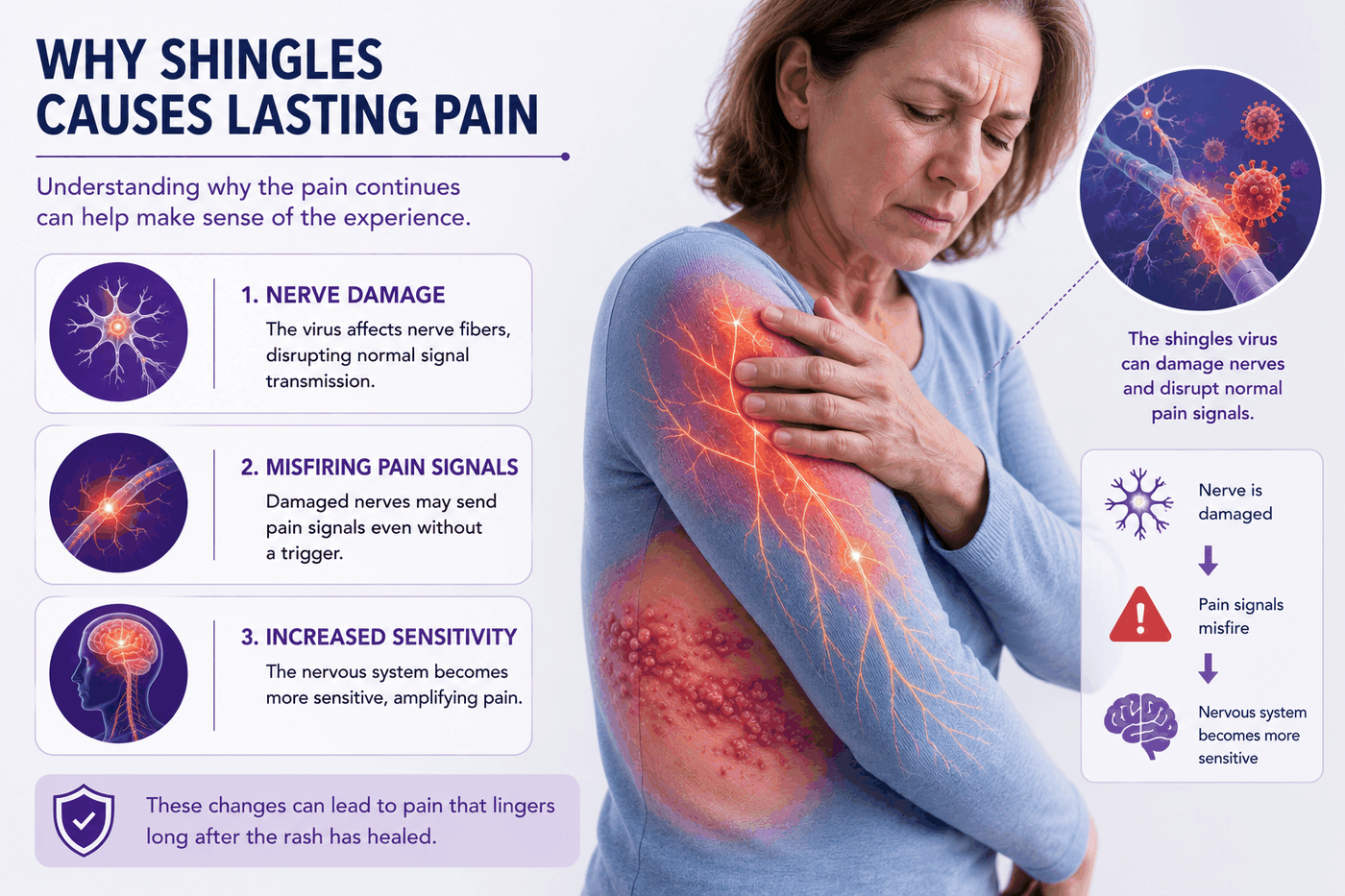
Why Shingles Causes Lasting Pain
Understanding why the pain continues can help make sense of the experience.
Nerve Damage
The virus affects nerve fibers, disrupting normal signal transmission.
Misfiring Pain Signals
Damaged nerves may send pain signals even without a trigger.
Increased Sensitivity
The nervous system becomes more sensitive, amplifying pain.
Who Is at Risk for Long-Term Shingles Pain?
- Older adults (especially over 50)
- Individuals with weakened immune systems
- Those with severe initial shingles symptoms
The CDC reports that the risk of PHN after shingles increases with age and that PHN is rare in people younger than 40.
The Impact on Daily Life
Shingles pain can affect more than just your body.
You may notice:
- Difficulty sleeping
- Reduced energy
- Changes in mood
- Avoidance of activities
This is especially true for patients with postherpetic neuralgia.
Diagnosing Shingles Pain
Diagnosis is often based on:
- Medical history
- Previous shingles infection
- Description of ongoing pain
Physical Examination
Your provider may assess:
- Skin sensitivity
- Pain patterns
- Nerve function
Telling Shingles Pain Apart from Other Problems
Before the rash appears, or when the rash was mild, shingles pain can resemble other conditions such as a pinched nerve in the spine, a rib or muscle injury, or neuropathy pain from diabetes or other causes. A careful history of when the pain started, where it travels, and whether it follows a single band of skin usually points to the diagnosis. Additional testing is rarely needed for typical cases, but it may be ordered when the picture is unclear.
Shingles Pain Treatment Options
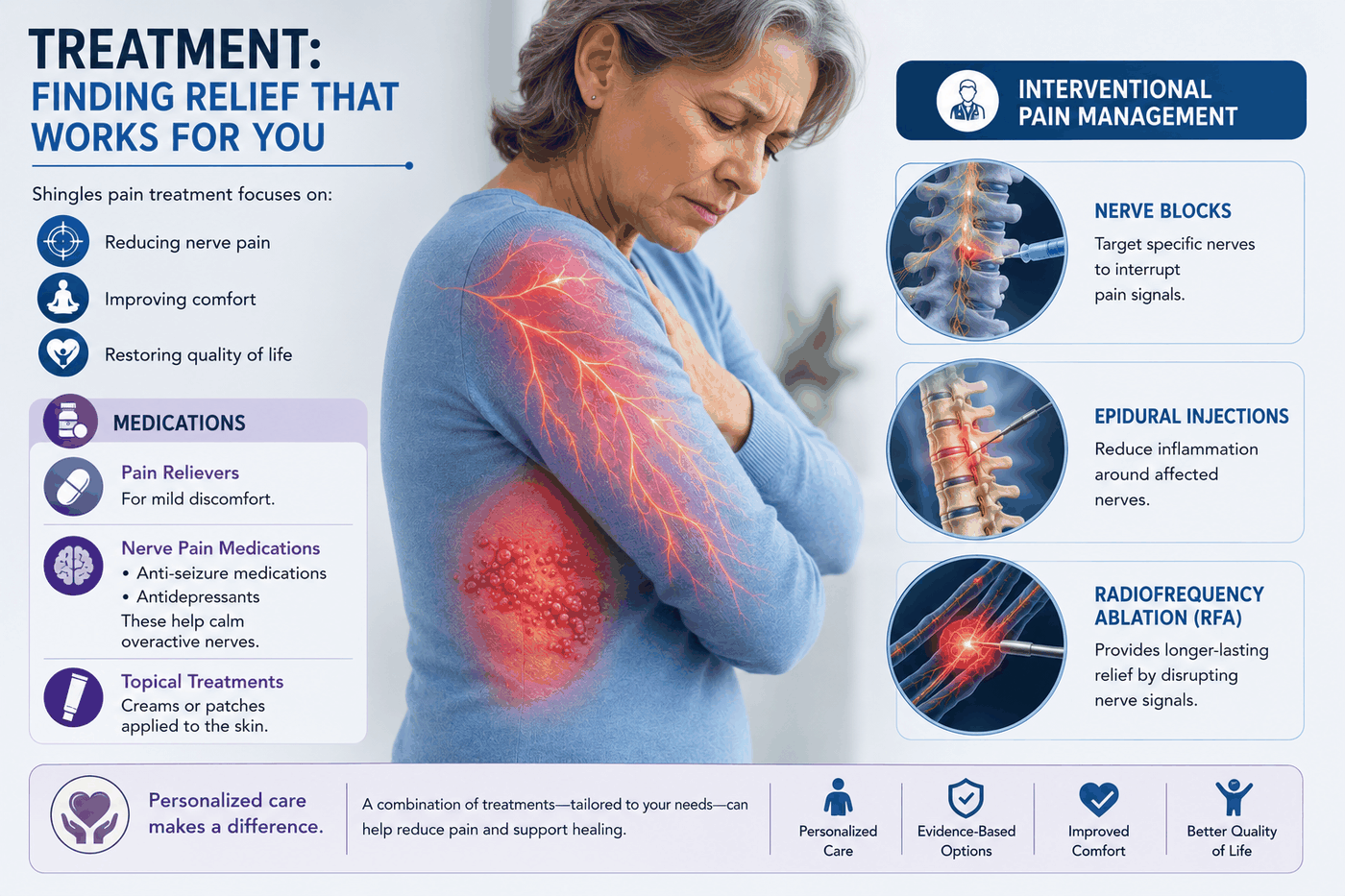
Treatment: Finding Relief That Works for You
Shingles pain treatment focuses on:
- Reducing nerve pain
- Improving comfort
- Restoring quality of life
Medications
Pain Relievers
For mild discomfort.
Nerve Pain Medications
- Anti-seizure medications
- Antidepressants
These help calm overactive nerves.
Topical Treatments
Creams or patches applied to the skin.
Interventional Pain Management
Nerve Blocks
Target specific nerves to interrupt pain signals.
Epidural Injections
Reduce inflammation around affected nerves.
Radiofrequency Ablation (RFA)
Provides longer-lasting relief by disrupting nerve signals.
Interventional options are generally considered when medications and topical treatments do not control pain well enough, or when side effects limit how much medication you can take. Results vary from person to person, and some patients need a combination of approaches.
Neuromodulation: Advanced Relief for Persistent Pain
For patients with chronic shingles pain, neuromodulation therapies may offer significant relief. Learn how a trial works on our spinal cord stimulation page.
Spinal Cord Stimulation (SCS)
SCS works by:
- Sending electrical signals to the spinal cord
- Changing how pain is perceived
Patients often report:
- Reduced pain intensity
- Improved sleep
- Better daily function
Why Neuromodulation Matters
- Targets nerve-related pain directly
- Minimally invasive
- Adjustable and reversible
Living with Shingles Pain: Practical Tips
Protect Sensitive Skin
- Wear soft, loose clothing
- Avoid harsh materials
Manage Stress
Stress can worsen nerve pain.
Maintain a Routine
Consistency helps the body adapt.
Stay Connected
Support from others can make a difference.
The Emotional Side: What Patients Often Feel
Shingles pain can feel isolating.
You may experience:
- Frustration
- Fatigue
- Anxiety about ongoing pain
When Shingles Needs Prompt Medical Care
Seek prompt medical evaluation for the following symptoms:
- A rash or pain near the eye, forehead, nose, or ear
- Facial weakness, hearing changes, severe headache, or confusion
- A widespread rash or symptoms with a weakened immune system
- Fever, spreading redness, drainage, or other signs of infection
Call 911 for a life-threatening emergency. This list is not exhaustive; when symptoms feel severe or rapidly worsen, seek urgent care.
Prevention: Reducing the Risk
Vaccination can help reduce the risk of shingles and its complications. The CDC recommends 2 doses of the recombinant shingles vaccine for adults 50 and older, and for adults 19 and older whose immune systems are weakened by disease or therapy.
Talk to your provider about whether this is right for you.
Address Shingles Pain Early
Prompt antiviral treatment is time-sensitive, while persistent nerve pain may require a separate plan focused on sleep, skin sensitivity, and daily function.
If you have a new rash, contact your primary care doctor or an urgent care clinic quickly so antiviral treatment can be considered. If the pain is still disrupting your life weeks after the rash has healed, that is the point where a pain specialist can add the most.
Treatment at California Pain Consultants
California Pain Consultants is a physician-led practice that treats shingles-related nerve pain at four clinics across San Diego County: Kearny Mesa, Rancho Bernardo, La Mesa, and Chula Vista. Your care team starts by listening to how the pain behaves, then matches treatment to your symptoms, your health history, and your other medications.
Your plan may include:
- Nerve pain medications and topical treatments, adjusted to limit side effects
- Nerve blocks or epidural injections to calm irritated nerves
- Radiofrequency ablation for longer-lasting relief in selected patients
- An evaluation for spinal cord stimulation when pain persists despite other care
Procedures are performed at the Comprehensive Pain ASC in Rancho Bernardo and the EPC Surgery Center in La Mesa. We accept most insurances. To book your appointment, call (858) 571-3630 or request your appointment online.
Book Your AppointmentTrusted Information and Related Care
Medical reference: CDC: Clinical Features of Shingles. Related California Pain resources: Neuropathy · Conditions and treatments · Postherpetic neuralgia. This article is for general education and does not replace an individualized medical evaluation. Treatment recommendations depend on diagnosis, health history, current medications, and personal goals.
Frequently Asked Questions
How long does shingles pain last?
For most people, shingles pain fades as the rash heals, which the CDC says usually takes 2 to 4 weeks. For about 10% to 18% of people, pain continues more than 90 days after the rash began, a condition called postherpetic neuralgia. That lingering pain may last months or longer and often benefits from a dedicated treatment plan.
Can you have shingles pain without a rash?
Yes, at least for a while. Burning, tingling, or sensitivity on one side of the body often starts several days before the rash appears. Rarely, people have nerve pain from the virus with little or no visible rash. Because early pain can mimic other problems, an evaluation helps confirm the cause and guide treatment.
What helps shingles nerve pain the most?
There is no single best treatment; what helps most depends on how severe the pain is and how long it has lasted. Options include pain relievers, nerve pain medications, topical creams or patches, nerve blocks, and epidural injections. For persistent pain, radiofrequency ablation or spinal cord stimulation may be considered. Results vary between patients.
Who is most likely to develop lasting pain after shingles?
Older adults are at highest risk. The CDC reports that the chance of postherpetic neuralgia increases with age and that it is rare before age 40. People with weakened immune systems and those with severe pain or a severe rash during the initial outbreak also appear more likely to have pain that lingers.
Can the shingles vaccine prevent shingles pain?
Vaccination can reduce your risk of shingles and its complications, including postherpetic neuralgia. The CDC recommends 2 doses of the recombinant shingles vaccine for adults 50 and older and for adults 19 and older with weakened immune systems. Ask your primary care doctor or pharmacist whether it is right for you.
When should I see a pain specialist for shingles pain?
See a pain specialist if pain is still affecting sleep, work, or daily activities weeks after the rash has healed, or if medications are not helping or cause troublesome side effects. Earlier evaluation may be reasonable when pain is severe. A rash near the eye or new facial weakness needs urgent medical care first.