
Shoulder pain is discomfort in or around the shoulder joint, most often coming from the rotator cuff tendons, the bursa, the joint itself, or nerves in the neck that refer pain into the shoulder. It affects desk workers, athletes, and older adults alike, and the American Academy of Orthopaedic Surgeons (AAOS) notes that the risk of rotator cuff tears rises after age 40. Board-certified pain specialists at California Pain Consultants in San Diego diagnose and treat shoulder pain with a plan matched to its source.
What begins as minor discomfort may become more persistent over time, limiting sleep, work, exercise, and everyday activities.
The shoulder relies on coordinated movement among bones, tendons, muscles, ligaments, and bursae. Pain may reflect overuse, injury, inflammation, arthritis, or a problem referred from the neck.
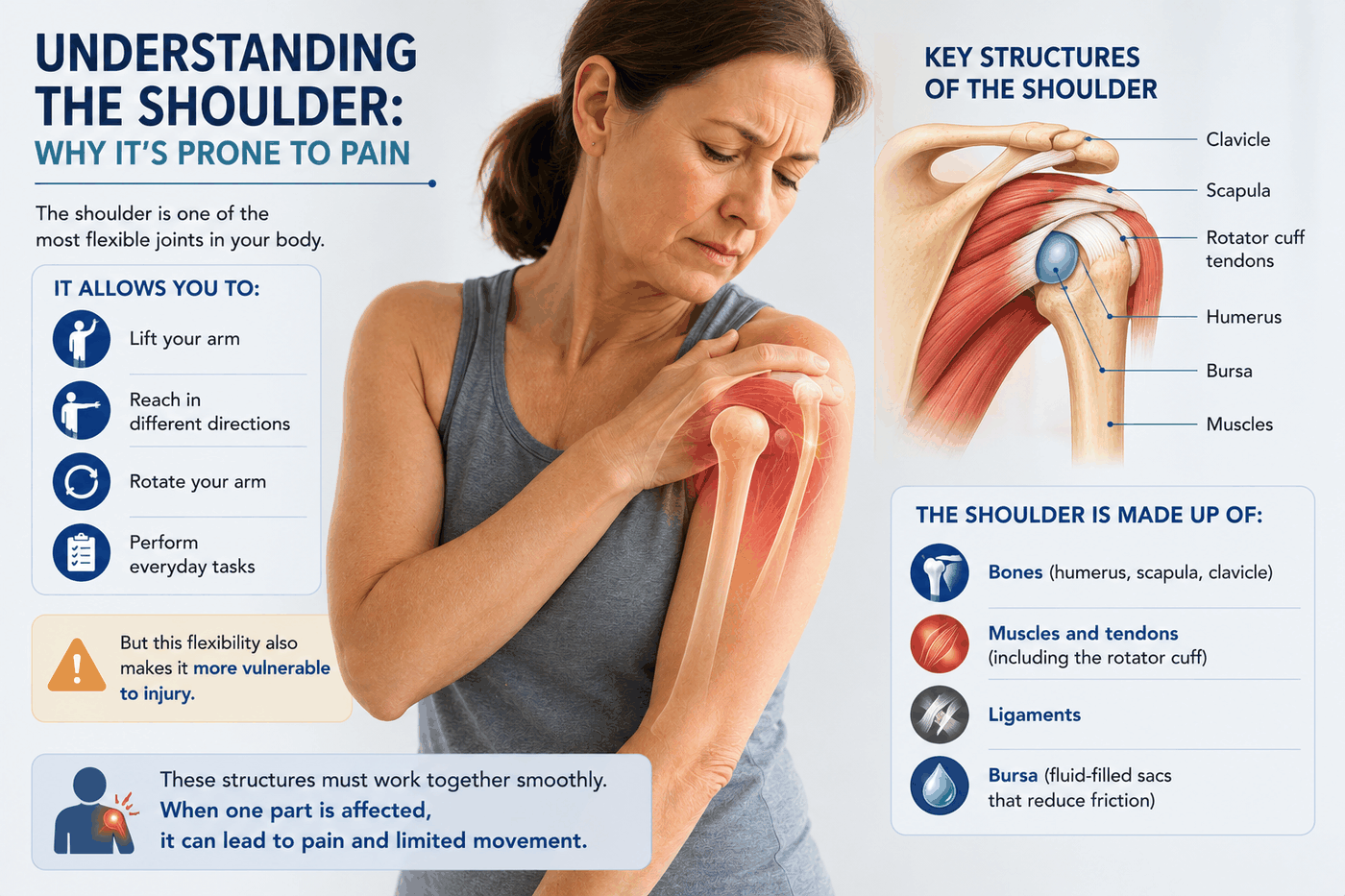
Understanding the Shoulder: Why It’s Prone to Pain
The shoulder is one of the most flexible joints in your body.
It allows you to:
- Lift your arm
- Reach in different directions
- Rotate your arm
- Perform everyday tasks
But this flexibility also makes it more vulnerable to injury.
Key Structures of the Shoulder
The shoulder is made up of:
- Bones (humerus, scapula, clavicle)
- Muscles and tendons (including the rotator cuff)
- Ligaments
- Bursa (fluid-filled sacs that reduce friction)
These structures must work together smoothly. When one part is affected, it can lead to pain and limited movement.
How Shoulder Pain Feels: Recognizing the Symptoms
Shoulder pain can present in many different ways.
You may experience:
- Dull, aching pain in the shoulder
- Sharp pain with movement
- Stiffness or reduced range of motion
- Weakness in the arm
- Pain that radiates down the arm
- Difficulty sleeping due to discomfort
Some patients also notice:
- Clicking or popping sounds
- Pain when reaching overhead
- Discomfort when lifting objects
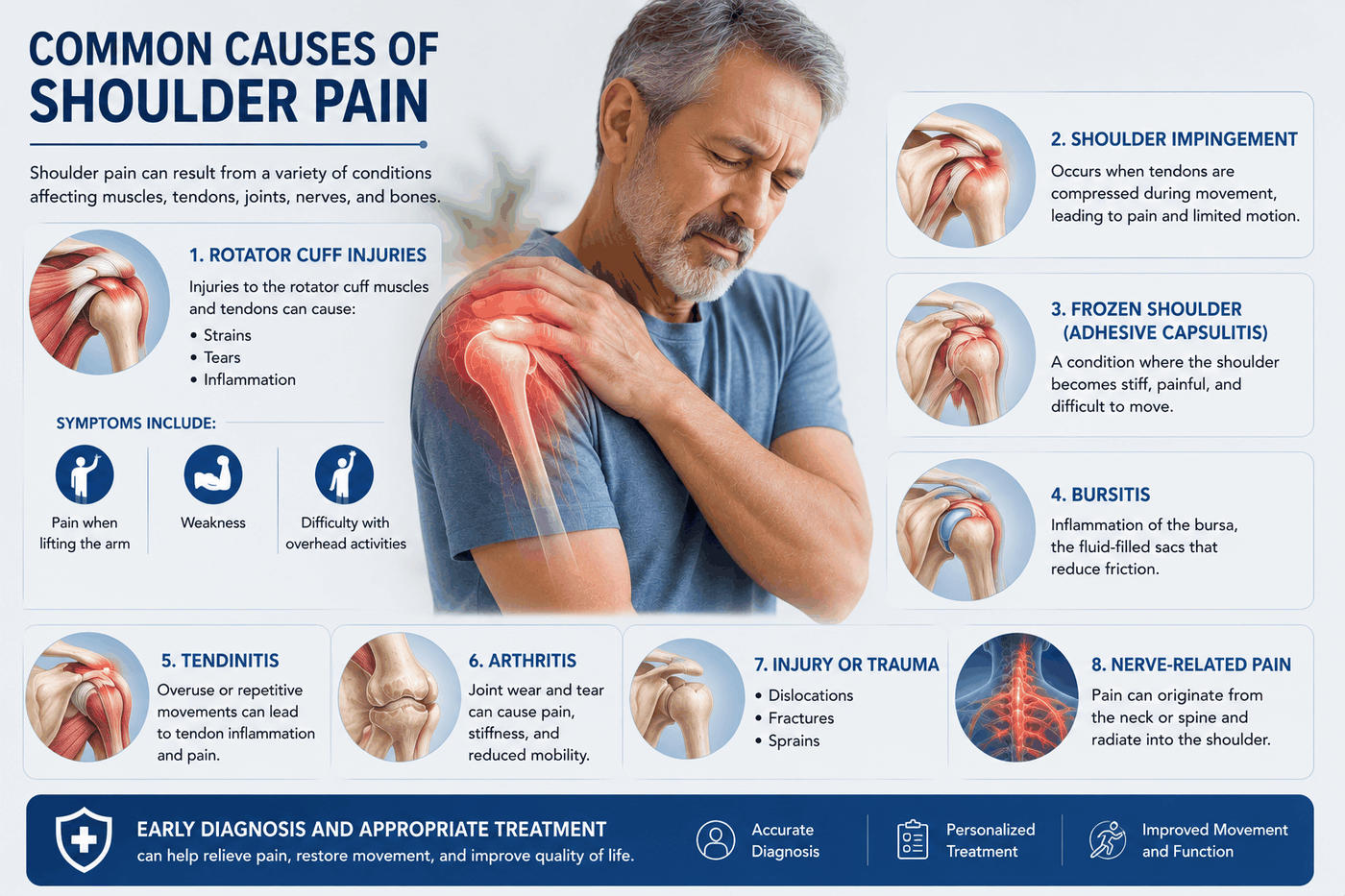
Common Causes of Shoulder Pain
Rotator Cuff Injuries
The rotator cuff is a group of muscles and tendons that stabilize the shoulder. Injuries can include:
- Strains
- Tears
- Inflammation
These problems are common. According to AAOS, almost 2 million people in the United States visit their doctors each year because of rotator cuff tears.
Symptoms include:
- Pain when lifting the arm
- Weakness
- Difficulty with overhead activities
Shoulder Impingement
Occurs when tendons are compressed during movement.
Frozen Shoulder (Adhesive Capsulitis)
A condition where the shoulder becomes stiff and difficult to move.
Bursitis
Inflammation of the bursa.
Tendinitis
Overuse can lead to tendon inflammation.
Arthritis
Joint wear and tear can cause pain and stiffness.
Injury or Trauma
- Dislocations
- Fractures
- Sprains
Nerve-Related Pain
Pain may originate from the neck and radiate into the shoulder.
Risk Factors
Several factors may make shoulder pain more likely:
- Age over 40, when rotator cuff tears become more common
- Repetitive overhead work or sports such as painting, construction, swimming, tennis, or throwing
- A previous shoulder injury, dislocation, or fracture
- Prolonged desk work with rounded shoulders and a forward head position
- Arthritis or other degenerative joint changes
Having a risk factor does not mean pain is inevitable, but it can help your care team understand why symptoms developed and how to prevent them from returning.
Diagnosing Shoulder Pain
Medical History
Your provider will ask about:
- Pain patterns
- Activities that trigger symptoms
Physical Examination
- Range of motion
- Strength testing
Imaging Studies
- X-rays
- MRI
- Ultrasound
Diagnostic Injections
When the exam and imaging leave the pain source unclear, a small, image-guided numbing injection into the bursa or joint may help confirm which structure is responsible. Meaningful short-term relief supports that structure as a pain generator and helps guide the next step.
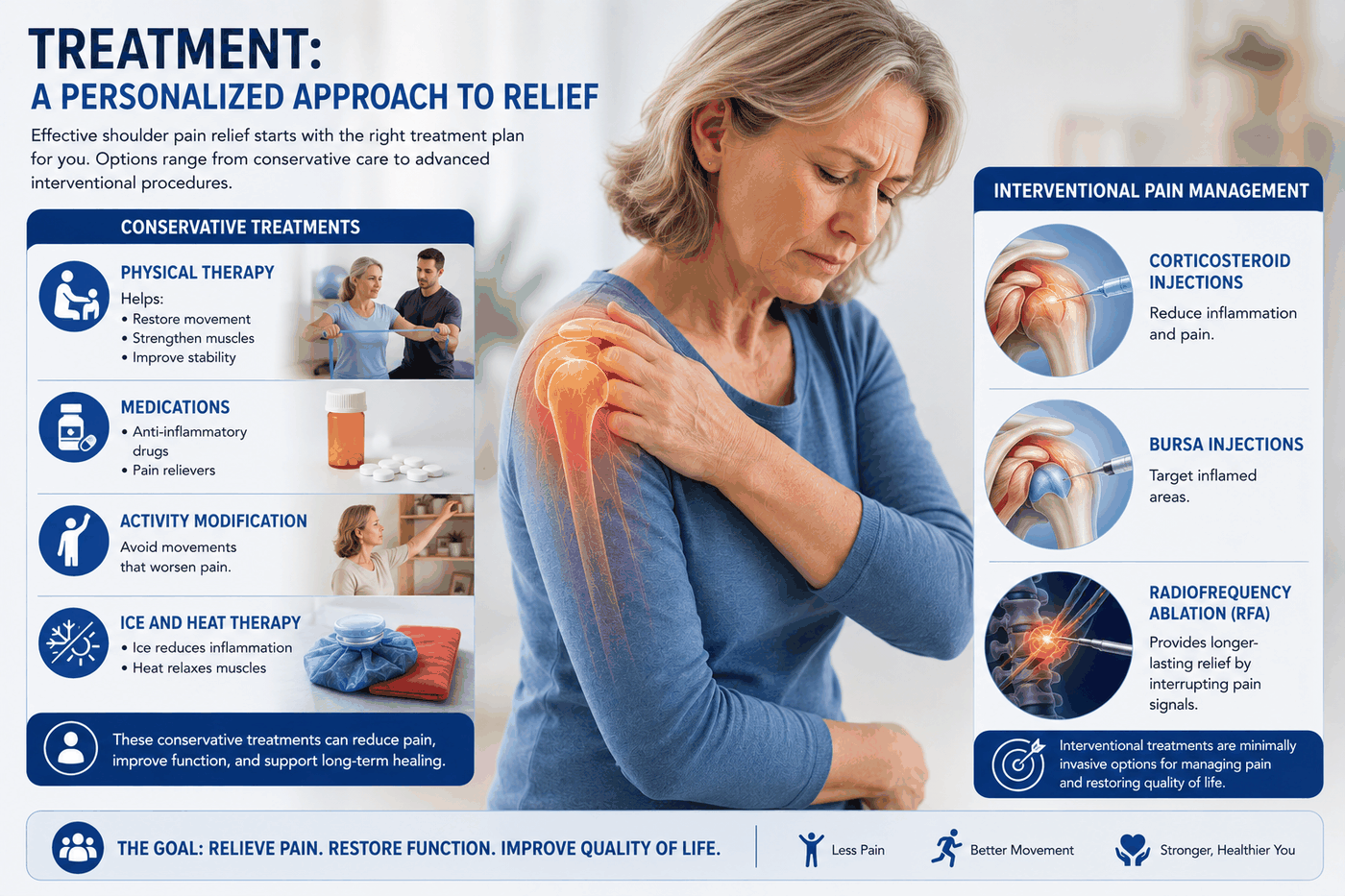
Conservative Treatments
Physical Therapy
Helps:
- Restore movement
- Strengthen muscles
- Improve stability
Rehabilitation is often effective. AAOS reports that nonsurgical treatment relieves pain and improves function in about 80 to 85% of patients with rotator cuff tears, and Cleveland Clinic notes that improvement without surgery can take up to a year, so steady, consistent effort matters.
Medications
- Anti-inflammatory drugs
- Pain relievers
Activity Modification
Avoid movements that worsen pain.
Ice and Heat Therapy
- Ice reduces inflammation
- Heat relaxes muscles
Interventional Pain Management
Corticosteroid Injections
May provide temporary symptom relief for selected patients.
Bursa Injections
Target inflamed areas.
Radiofrequency Ablation (RFA)
Provides longer-lasting relief.
Neuromodulation: Advanced Pain Relief
For chronic shoulder pain that has not improved with other treatments, neuromodulation therapies may be considered for carefully selected patients.
Spinal Cord Stimulation (SCS)
SCS delivers mild electrical stimulation to the spinal cord to help modify pain signals and relieve chronic, difficult-to-manage pain. A pain specialist can determine whether a trial is appropriate.
Surgical Options
Surgery may be recommended when an evaluation shows:
- Severe tears
- Structural damage
AAOS lists symptoms that have lasted 6 to 12 months and a large tear of more than 3 cm among the situations in which surgical repair may be recommended.
If surgery appears appropriate, your care team can coordinate referral to an orthopedic specialist.
Preventing Shoulder Pain
A few consistent habits can reduce strain and help protect comfortable shoulder movement.
Maintain good posture. Keep your shoulders relaxed and aligned, especially during desk work, driving, and prolonged screen time.
Strengthen shoulder muscles. Use gradual, provider-recommended exercises to support the rotator cuff and the muscles around the shoulder blade.
Avoid overuse. Increase activity gradually, vary repetitive movements, and allow time for recovery when the shoulder feels strained.
The Emotional Impact of Shoulder Pain
You may feel:
- Frustrated
- Limited
- Concerned about recovery
Living with Shoulder Pain: Practical Tips
- Avoid heavy lifting
- Stretch regularly
- Use proper ergonomics
When Shoulder Pain Needs Prompt Care
Seek prompt medical evaluation for the following symptoms:
- A visibly deformed shoulder after an injury
- Inability to raise the arm after trauma
- A hot, red, swollen joint with fever
- Shoulder pain with chest pressure, shortness of breath, sweating, or nausea
Call 911 for a life-threatening emergency. This list is not exhaustive; when symptoms feel severe or rapidly worsen, seek urgent care.
You Can Move Freely Again
Shoulder pain can limit you—but it doesn’t have to define your life.
With the right care, you can regain strength, mobility, and confidence.
Restore Comfortable Shoulder Movement
A focused shoulder evaluation can identify the most likely pain generator and guide rehabilitation, medication, activity changes, or targeted procedures.
Treatment at California Pain Consultants
Your shoulder evaluation at California Pain Consultants begins with a detailed history, a hands-on examination, and a review of any imaging you already have. Your care team works to separate rotator cuff, bursa, joint, and neck-related pain before recommending care, because each responds to different treatment. Depending on the diagnosis, options may include a guided rehabilitation plan, medication review, image-guided joint injections, PRP injection therapy for selected tendon problems, or, for persistent pain that has not responded to other care, an evaluation for spinal cord stimulation.
We see patients at four clinics across San Diego County:
San Diego, CA 92123Get Directions
San Diego, CA 92128Get Directions
La Mesa, CA 91942Get Directions
Chula Vista, CA 91911Get Directions
Procedures are performed at the Comprehensive Pain ASC in Rancho Bernardo and the EPC Surgery Center in La Mesa. We accept most insurances. Call (858) 571-3630 to book your appointment and take the first step toward comfortable shoulder movement.
Book Your AppointmentTrusted Information and Related Care
Medical reference: MedlinePlus: Shoulder Injuries and Disorders. Related California Pain resources: Neck pain · Conditions and treatments · Schedule an appointment. This article is for general education and does not replace an individualized medical evaluation. Treatment recommendations depend on diagnosis, health history, current medications, and personal goals.
Frequently Asked Questions
What is the most common cause of shoulder pain?
Rotator cuff problems, including tendinitis, impingement, and tears, are among the most common causes of shoulder pain in adults. Bursitis, frozen shoulder, arthritis, and pain referred from the neck are also frequent. Because these conditions can feel similar, an examination that tests strength, motion, and specific movements helps identify the most likely source before treatment begins.
Can a rotator cuff tear get better without surgery?
Many people with rotator cuff tears improve without surgery. AAOS reports that nonsurgical care relieves pain and improves function in about 80 to 85% of patients. Physical therapy, activity changes, medication, and selected injections are typical first steps. Progress can take several months, and surgery may be discussed when symptoms persist or the tear is large.
When should I see a pain specialist for shoulder pain?
Consider an evaluation when shoulder pain lasts more than a few weeks, disturbs your sleep, limits reaching or lifting, or keeps returning despite rest and home care. Arm weakness, numbness, or pain spreading from the neck also deserve attention. Seek urgent care for a deformed shoulder after injury, a hot swollen joint with fever, or chest pressure.
Do cortisone injections help shoulder pain?
A corticosteroid injection may provide temporary relief for selected patients with rotator cuff inflammation, bursitis, or arthritis. The goal is usually to calm pain enough to make physical therapy and daily activity easier. Results vary, relief is not lasting for everyone, and repeat injections are usually limited, so your care team weighs the benefits and risks for you.
How long does shoulder pain take to get better?
Recovery time depends on the cause. Minor strains may settle within weeks, while rotator cuff problems often take longer; Cleveland Clinic notes that improvement without surgery can take up to a year. Consistent rehabilitation, sensible activity changes, and follow-up visits help your care team adjust the plan if progress stalls or new symptoms appear.
Can shoulder pain come from the neck?
Yes. Irritated nerves in the cervical spine can send pain into the shoulder, shoulder blade, and arm, sometimes with tingling or weakness in the hand. Pain that changes with neck movement, or that comes with arm numbness, suggests a neck source. Your examination can assess both areas so treatment targets the true pain generator.