
Fast Relief Steps for a Pulled Muscle in Buttock
Dealing with this in San Diego? Same-day appointments are often available at our 4 clinics.
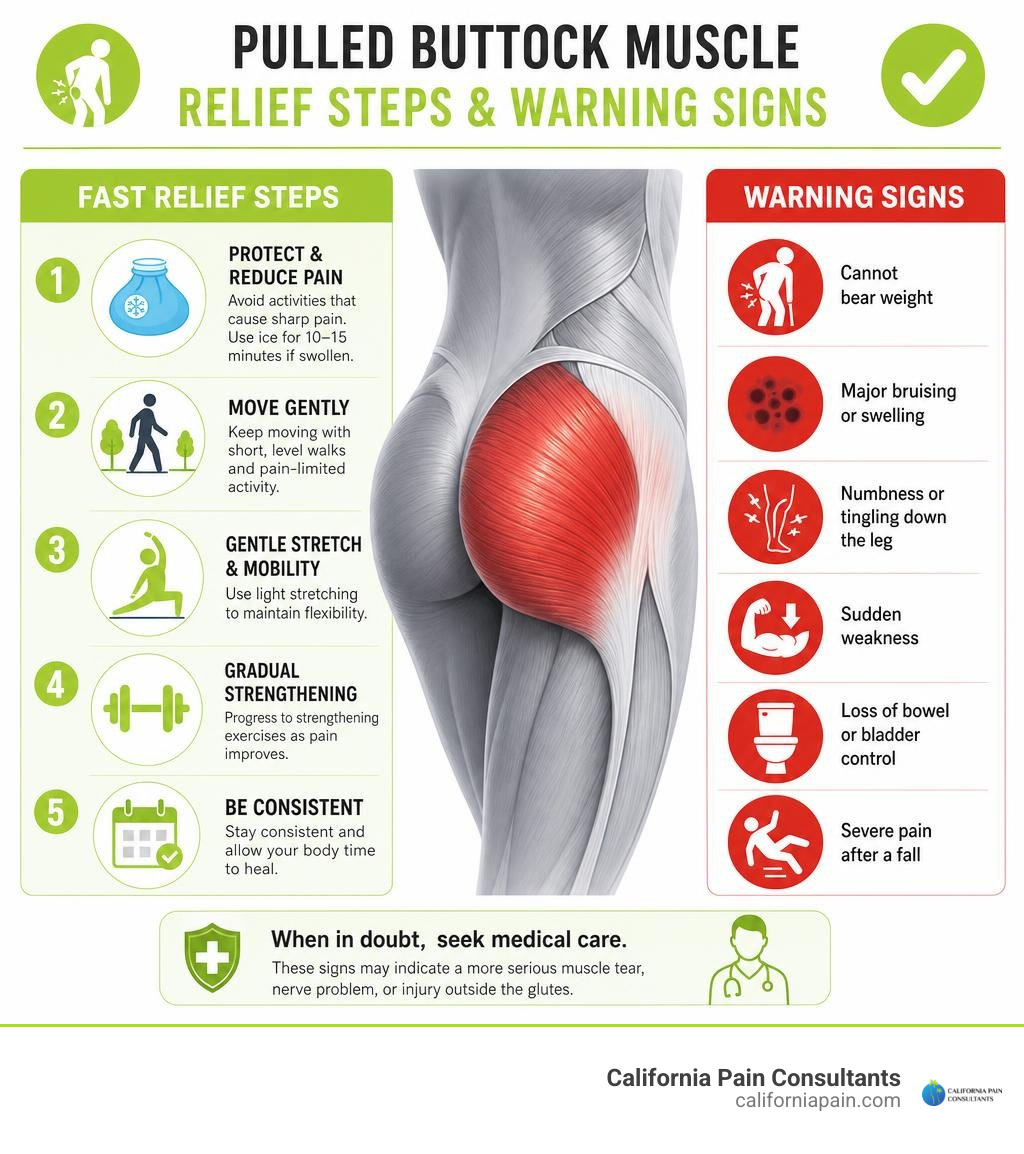
A pulled muscle in the buttock is usually a strain in one of the gluteal muscles. The first goal is to protect the area without staying completely still. Reduce activities that cause sharp pain, use brief ice sessions if there is swelling, and keep up gentle, pain-limited movement such as short, level walks.
Seek medical care promptly if you cannot bear weight, have major bruising or sudden weakness, feel numbness or tingling down the leg, lose bowel or bladder control, or develop severe pain after a fall. These signs can point to a more serious muscle tear, nerve problem, or injury outside the glutes.
Your glutes include the gluteus maximus, gluteus medius, and gluteus minimus. A strain happens when one is overloaded or stretched beyond its current capacity, often during lifting, a fast change of direction, a fall, sprinting, or a new exercise routine. Most mild strains improve with gradual activity changes and guided strengthening, but persistent buttock pain deserves a proper diagnosis because tendon, hip, spine, and sciatic nerve problems can feel similar.
I am Dr. Zach Cohen, a double board-certified physician in anesthesiology and chronic pain medicine with experience evaluating muscle, joint, spine, and nerve-related causes of a pulled muscle in buttock. At California Pain Consultants, I focus on clear diagnoses and personalized, non-surgical options that help patients safely return to daily movement.
Understanding a Pulled Muscle in Buttock: Anatomy and Causes
The human buttocks are built for power, balance, and endurance. They are anchored by three primary layers of muscle that allow us to stand upright, climb stairs, sprint, and stabilize our pelvis during movement. Because these tissues carry a massive mechanical load throughout the day, an unexpected force or repetitive overload can strain muscle fibers.
When the mechanical demand exceeds the tissue’s capacity, structural fibers stretch or tear. Understanding which muscle has been compromised is essential for developing a targeted recovery plan.
Gluteal Anatomy and Common Mechanisms of Injury
The gluteal complex consists of three distinct muscles working in synergy:
- Gluteus Maximus: The largest muscle in the human body. It serves as the primary hip extensor, driving forces when rising from a chair, ascending hills, running, or performing heavy lifts.
- Gluteus Medius: Situated on the lateral portion of the pelvis, this muscle acts as a primary hip abductor and pelvic stabilizer. It keeps the pelvis level during single-leg stance phases while walking or running.
- Gluteus Minimus: The deepest of the trio, resting beneath the medius. It aids in hip abduction, medial rotation, and femoral head stabilization within the acetabulum.
Acute gluteal strains commonly occur during high-velocity eccentric loading—when the muscle contracts while simultaneously lengthening. For example, during high-speed sprinting, deep squats, or sudden lateral cuts, the muscle attempts to brake deceleration forces. If the load spikes abruptly, micro-tears emerge within the muscle belly or the myotendinous junction.
Athletes frequently develop acute injuries during rapid sport movements, as detailed in research on the clinical evaluation of athletic buttock pain. Non-athletes frequently experience strains from sudden slips, awkward lifting, or biomechanical compensations related to a pulled muscle lower back and buttock.
Symptoms and Severity Grades of a Pulled Muscle in Buttock
Clinical symptoms range from a dull ache to an incapacitating tear. Common signs include localized tenderness upon direct palpation, stiffness during early morning movement, reduced hip range of motion, and pain that spikes when climbing stairs, sitting for prolonged periods, or walking up inclines.
Clinicians grade gluteal muscle strains from Grade 1 to Grade 3 based on structural disruption and functional limitation:
| Strain Grade | Fiber Disruption Severity | Clinical Presentation | Functional Impact & Strength Loss |
|---|---|---|---|
| Grade 1 (Mild) | Tearing of 5% to 10% of muscle fibers | Localized soreness; mild tightness; minimal to no swelling | Normal gait preserved; minimal loss of muscle power |
| Grade 2 (Moderate) | Tearing of roughly 10% to 80% of muscle fibers | Sharp pain on contraction; localized ecchymosis (bruising); tenderness | Noticeable antalgic gait (limp); clear strength reduction; difficulty on stairs |
| Grade 3 (Severe) | Tearing of 80% to 100% of muscle fibers (full rupture) | Severe pain; extensive swelling and hematoma; palpable muscle defect | Inability to bear weight; complete loss of functional hip movement |
Knowing the injury grade allows us to determine the right timeline for immediate pain relief for a pulled muscle and choose the safest rehabilitation path.
Clinical Diagnosis and Differentiating Other Causes of Buttock Pain
Accurate diagnosis is crucial because posterior pelvic and buttock pain can stem from muscles, joints, tendons, or referred lumbar nerves. In our clinical facilities across San Diego, Kearny Mesa, Chula Vista, Rancho Bernardo, La Mesa, and Miramar, we use a comprehensive diagnostic approach to isolate the precise source of pain.
A thorough physical exam includes gait assessment, palpation, hip range of motion tests, and resisted muscle activation. When soft-tissue architecture requires deeper evaluation, diagnostic musculoskeletal ultrasound provides dynamic, high-resolution views of muscle tears. If structural spinal pathology, deep labral tears, or occult fractures are suspected, magnetic resonance imaging (MRI) provides complete visualization.
Gluteal Strain vs. Tendinopathy and Bursitis
Gluteal strains are often confused with chronic conditions affecting the surrounding connective tissues:
- Gluteal Tendinopathy: Unlike an acute muscle strain from a sudden event, clinical overview of gluteal tendinopathy involves degenerative breakdown and collagen disorganization within the gluteus medius or minimus tendons. Up to 1 in 3 people with lower back pain also develop lateral hip pain from gluteal tendinopathy. It presents with lateral hip pain that worsens when lying on the affected side, and it typically does not resolve with simple rest.
- Trochanteric & Ischial Bursitis: Bursitis is the inflammation of the fluid-filled sacs that reduce friction between bone and tendon. The pathophysiology of ischial bursitis involves inflammation over the ischial tuberosity (the “sit bone”), often provoked by prolonged sitting on hard surfaces. Trochanteric bursitis causes pinpoint tenderness over the greater trochanter on the lateral hip.
- Hip Joint Pathology: Intra-articular issues such as osteoarthritis or acetabular labral tears refer pain to the groin and deep posterior pelvis, contributing to chronic hip pain.
Differentiating Lumbar Radiculopathy and Piriformis Syndrome
Differentiating gluteal muscle strains from nerve-related conditions prevents misdirected treatment:
- Lumbar Radiculopathy (Sciatica): Disc herniations, foraminal stenosis, or facet hypertrophy in the lower lumbar spine (L4–S1) can compress spinal nerve roots. This causes sharp, shooting pain traveling below the knee into the calf or foot, accompanied by dermatomal numbness or reflex changes.
- Piriformis Syndrome: The sciatic nerve passes adjacent to—or directly through—the piriformis muscle. As detailed in StatPearls research on piriformis syndrome, localized spasms or hypertrophy of this deep rotator can compress the sciatic nerve (Hicks et al., 2023). Pain worsens during internal hip rotation and prolonged sitting. Clinicians evaluate this using the FAIR maneuver (Flexion, Adduction, Internal Rotation).
When nerve root compression is confirmed, targeted sciatica pain treatment options and specialized piriformis syndrome treatment provide faster relief than standard muscle strain care.
Step-by-Step Treatment and Rehabilitation Protocols
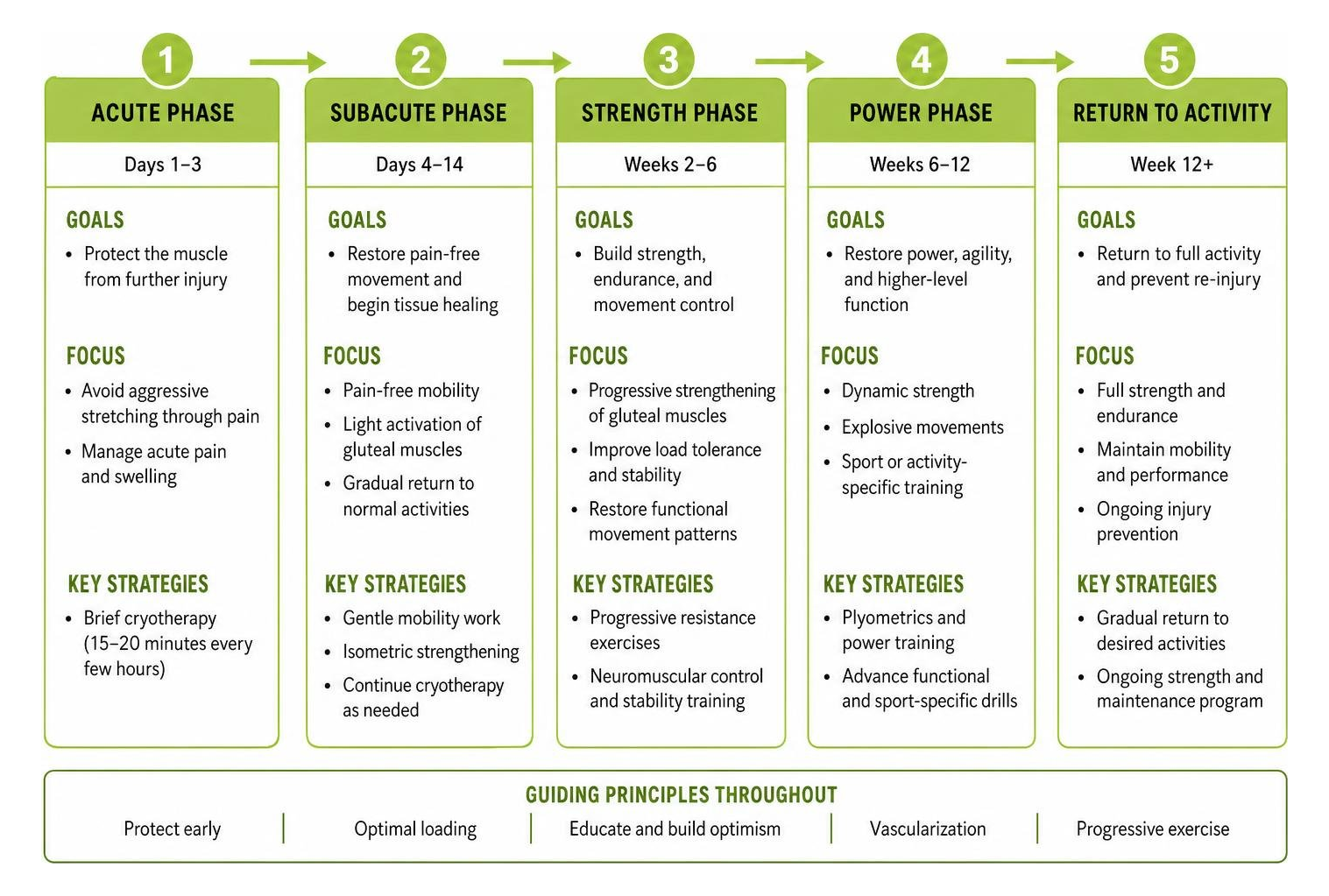
Modern sports medicine has evolved past rigid, prolonged rest. While the classic R.I.C.E. protocol (Rest, Ice, Compression, Elevation) remains familiar, clinical evidence favors contemporary protocols: P.O.L.I.C.E. (Protection, Optimal Loading, Ice, Compression, Elevation) during acute stages, transitioning to the P.E.A.C.E. & L.O.V.E. framework (Protect, Elevate, Avoid anti-inflammatories early, Compress, Educate & Load, Optimism, Vascularization, Exercise).
Progressive Physical Therapy and Pain Relief Techniques
A modern, non-surgical approach targets progressive tissue recovery:
- Acute Phase (Days 1–3): Protect the muscle from further injury. Avoid aggressive stretching through pain. Apply brief cryotherapy (15–20 minutes every few hours) to numb acute pain and manage swelling.
- Remobilization Phase (Days 4–10): Begin submaximal isometric contractions (activating the muscle without joint movement). Gentle muscle activation stimulates cellular repair and aligns healing collagen fibers.
- Dynamic Loading Phase (Weeks 2–6+): Advance to active range-of-motion work and eccentric strengthening. Eccentric exercises lengthen muscle fibers under controlled load, improving tensile capacity and preventing recurrence.
For structured step-by-step guidance, exploring comprehensive muscle strain treatment and specialized strategies like how to treat a pulled gluteus medius in 5 simple steps helps protect recovering tissues. Guided pain management physical therapy ensures exercises stay safe and progressive.
Exercises and Modifications for a Pulled Muscle in Buttock
Targeted rehabilitation restores strength and mobility through progressive steps:
- Glute Sets (Isometric): Lie supine or seated. Squeeze both buttock cheeks together firmly, hold for 5 to 6 seconds without moving your hips, and relax. Perform 2 to 3 sets of 10 repetitions to encourage local blood circulation.
- Supine Bridging: Lie on your back with knees bent at 90 degrees and feet flat on the floor. Engage your core, press through your heels, and raise your pelvis until thighs and torso align. Hold for 3 to 5 seconds, lower smoothly, and complete 2 to 3 sets of 8 to 12 repetitions.
- Seated Hip Rotator Stretch: Sit tall in an upright chair. Place the ankle of your injured side across the opposite knee (figure-four configuration). Keeping your back flat, hinge slightly forward from the hips until a gentle stretch is felt deep in the buttock. Hold for 20 to 30 seconds across 3 repetitions.
- Side-Lying Clamshells: Lie on your uninjured side with knees bent at 45 degrees. Keeping your heels together, raise your top knee without rotating your pelvis backward. Perform 2 sets of 10 to 12 repetitions to rebuild gluteus medius stabilization.
For additional stretches, incorporate hip pain relief exercises and gentle routines from our guide on top 7 piriformis syndrome stretches.
Recovery Timelines and Long-Term Prevention Strategies
Recovery depends on injury severity, tissue vascularity, and rehabilitation consistency:
- Grade 1 Strains: Generally recover within 1 to 3 weeks of modified activity and gradual reloading.
- Grade 2 Strains: Require 3 to 6 weeks of structured physical therapy to rebuild tensile strength.
- Grade 3 Tears: Require 8 to 12+ weeks, and in rare cases, orthopedic surgical evaluation if tendon avulsion occurs.
For detailed recovery milestones, review our guide on pulled muscle in buttock how long to heal.
Long-term prevention requires addressing root biomechanical causes:
- Dynamic Warm-ups: Spend 5 to 10 minutes performing leg swings, high knees, and bodyweight squats before high-intensity activity.
- Biomechanical Balance: Correct strength imbalances between hip flexors, hamstrings, and gluteal muscles.
- Core and Pelvic Stability: Integrate lumbo-pelvic exercises to minimize compensatory hip overload.
- Progressive Overload Principles: Increase running mileage, sprint velocity, and weightlifting volume gradually.
For persistent pain, our non-surgical pain relief ultimate guide outlines specialized modalities to restore function without surgery.
Frequently Asked Questions About Gluteal Strains
Can you continue walking or exercising with a glute strain?
Yes, low-impact walking is generally encouraged for Grade 1 and recovering Grade 2 strains once acute resting pain subsides. Gentle walking promotes blood circulation, delivers reparative nutrients, and prevents joint stiffness.
Keep walking sessions on flat, even terrain, avoiding steep inclines or rapid strides that excessively stretch the gluteal fibers. If your limp causes compensations in your back or opposite hip, shorten your stride or rest. Modify other exercises by swapping high-impact sprinting and heavy plyometrics for stationary cycling or swimming. Learn more about modifying routines in our overview on how to relieve muscle strain.
How can you distinguish between a glute pull and sciatica?
While both conditions cause discomfort in the rear pelvic region, their symptoms and underlying causes differ:
- Glute Pull: Characterized by localized muscle tenderness upon direct touch, stiffness during hip extension or abduction, and pain during muscle contraction or passive stretching. The pain stays confined to the buttock and upper posterior thigh.
- Sciatica (Lumbar Radiculopathy): Originates from compressed spinal nerves in the lower back. Pain is sharp, shooting, or electric, traveling past the knee into the lower leg and foot. It is often accompanied by neurological signs like tingling, numbness, or loss of motor reflexes.
If your buttock pain is accompanied by lower lumbar discomfort, review our resources on pulled muscle in back for diagnostic guidance.
When should you seek medical attention for buttock pain?
You should consult a healthcare provider if you experience:
- Inability to bear weight on the affected leg or severe limping.
- A visible gap or palpable defect in the muscle contour with significant bruising.
- Radiating pain, numbness, tingling, or weakness traveling down your leg.
- Fever, chills, or local warmth over the hip area.
- Sudden loss of bowel or bladder function (a medical emergency known as Cauda Equina Syndrome).
- Buttock pain that persists or worsens after 1 to 2 weeks of conservative self-care.
For ongoing or complicated pain patterns, our chronic pain treatment center guide outlines how multidisciplinary care helps uncover and resolve difficult pain sources.
Conclusion
A pulled muscle in the buttock can significantly disrupt daily movement, athletic performance, and sleep. However, with accurate diagnosis, optimal loading protocols, and progressive physical rehabilitation, most gluteal strains heal fully without surgery. Avoiding prolonged bed rest and progressively rebuilding muscular strength and flexibility are the most effective ways to recover and prevent recurring injuries.
At California Pain Consultants, our board-certified physicians specialize in comprehensive, non-surgical pain management and physical rehabilitation. We develop individualized care plans tailored to your specific biomechanical needs across our Southern California clinic locations.
If persistent buttock discomfort or limited mobility is holding you back, reach out to our medical team to schedule a comprehensive evaluation. Learn more about expected milestones and recovery in our detailed guide on pulled muscle in buttock how long to heal.
References
Brandon L. Hicks, Jason C. Lam, Matthew A. Varacallo. “Piriformis Syndrome.” StatPearls Publishing, 2023. NBK448172.