
Start With Gentle, Targeted Heel Stretches
Dealing with this in San Diego? Same-day appointments are often available at our 4 clinics.
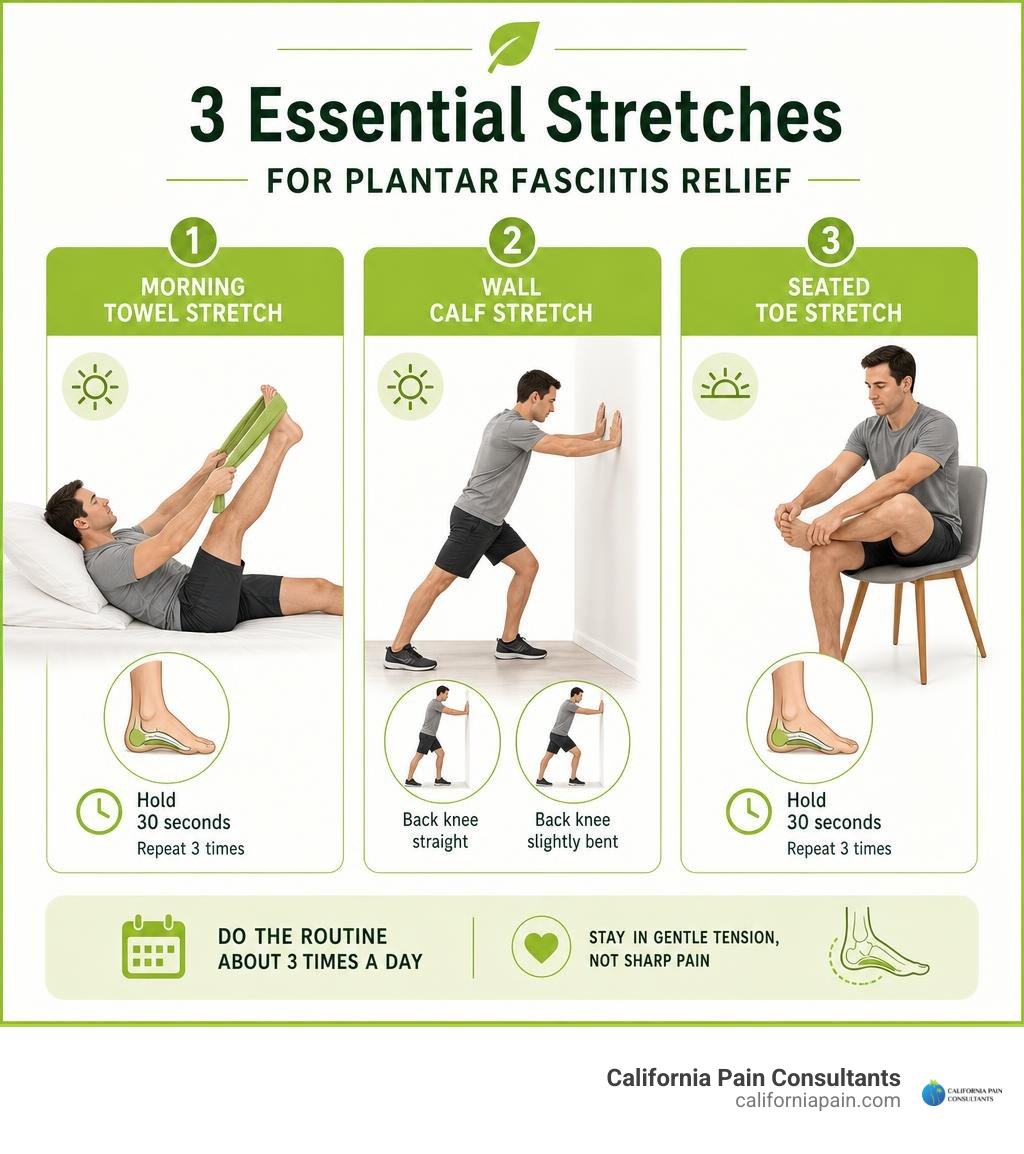
The most useful Stretching Exercises For Chronic Plantar Fasciitis Pain target both the bottom of the foot and the calf-Achilles complex. Start with these simple moves:
- Before getting out of bed: Pull your toes toward your shin with a towel around the ball of your foot. Hold for 30 seconds, 3 times.
- During the day: Do a wall calf stretch with the painful foot behind you and heel down. Repeat with the back knee straight, then slightly bent.
- After sitting or activity: Cross the painful foot over the opposite knee and gently pull the toes back to stretch the arch.
Do the routine about 3 times a day, staying in gentle tension rather than sharp pain. Morning pain is often worse because the plantar fascia and calf tissues stiffen overnight; stretching before the first step can make that first load less abrupt.
Chronic plantar fasciitis is not always just inflammation. Repeated strain can lead to small tissue changes and ongoing tightness, which is why a consistent routine, supportive shoes, activity changes, and progressive strengthening may work better than stretching alone.
I am Dr. Zach Cohen, a double board-certified physician in anesthesiology and chronic pain medicine. My approach to Stretching Exercises For Chronic Plantar Fasciitis Pain is to use clear, low-risk movement strategies as part of a personalized plan that addresses pain, function, and the reasons heel pain keeps returning.
Stretching Exercises For Chronic Plantar Fasciitis Pain terms simplified:
- Stretching Exercises For Chronic Nerve Pain
- Stretching Exercises For Chronic Osteoarthritis Pain
- Stretching Exercises For Chronic Peripheral Neuropathy Pain
Introduction: Understanding Chronic Plantar Fascia Tension
Heel pain occurs in roughly 10% of the population, and about 80% of these cases stem directly from plantar fasciitis. In the United States alone, more than 2 million patients seek medical evaluation and treatment each year for this persistent condition. While acute heel pain often presents as sudden soreness, chronic plantar fasciitis involves structural tissue changes, micro-tears, and progressive collagen degeneration at the calcaneal insertion (the base of your heel bone).
When you rest or sleep, your body attempts to heal these repetitive micro-injuries while your foot rests in a relaxed, downward position (plantarflexion). During these hours of inactivity, the thick fibrous band of connective tissue running along your sole—the plantar aponeurosis—shortens and tightens.
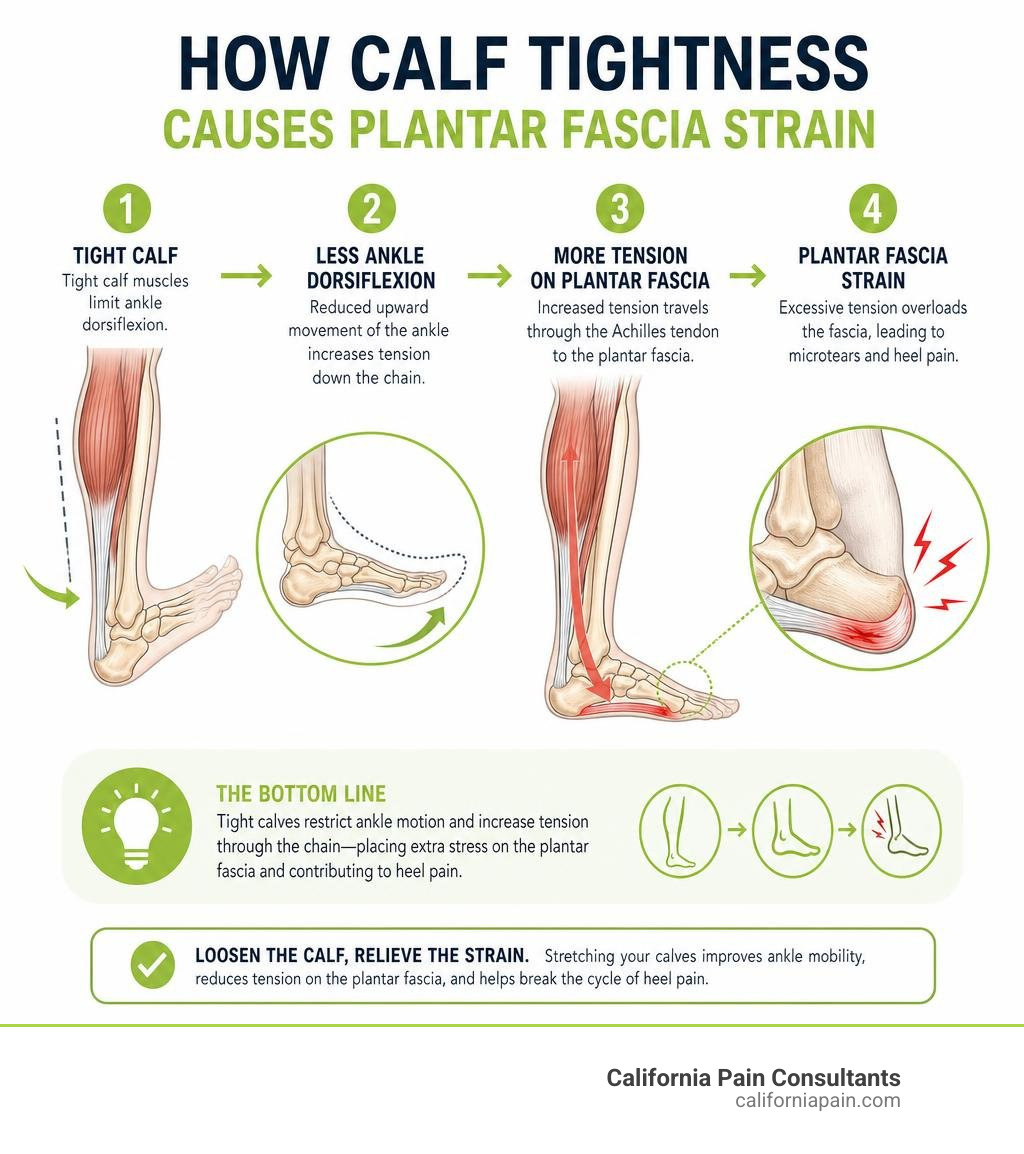
The moment your foot hits the floor in the morning, your full body weight forces that shortened tissue to stretch instantly. This sudden tensile load tugs aggressively at the calcaneus, creating the classic, sharp stabbing sensation measured on clinical Visual Analogue Scales (VAS). Without a strategic rehabilitation protocol, this daily cycle of nocturnal contraction and morning reinjury persists indefinitely.
Why Targeted Stretching Works for Relieving Heel Pain
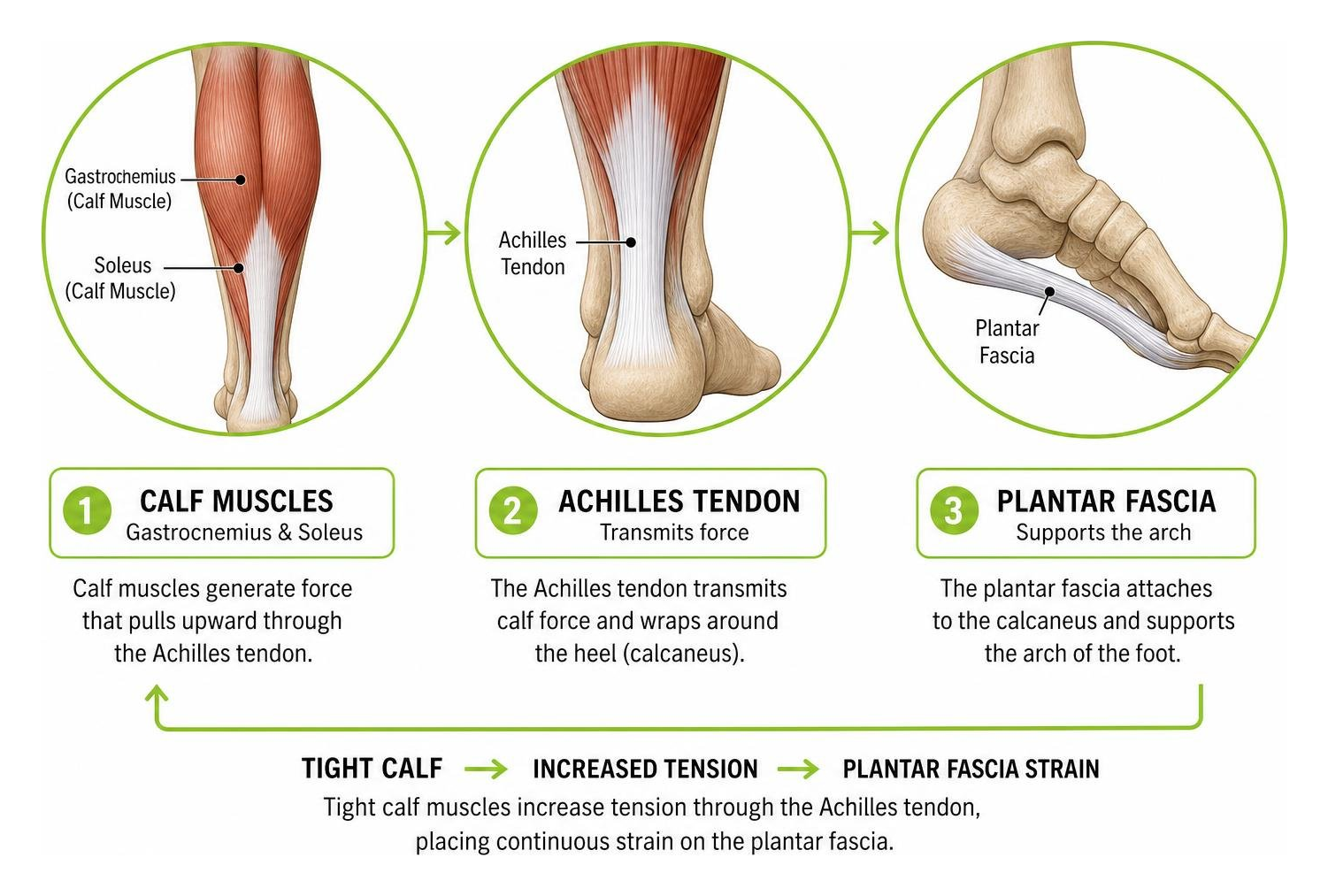
Your feet do not function in isolation; they are the foundational link in an interconnected posterior kinetic chain. The gastrocnemius and soleus muscles of your calf feed directly into the Achilles tendon. This robust tendon wraps seamlessly around the calcaneus and blends into the plantar fascia. When your calf complex is excessively tight, it exerts continuous upward mechanical traction on the heel, keeping the plantar fascia under perpetual high-tension strain.
Clinical trials show that targeted physical therapy and regular home stretching significantly reduce worst pain and morning pain scores while correcting an antalgic gait (the abnormal limping pattern your body adopts to avoid heel pressure). When paired with sensible home remedies for sore heels and clinical insights on plantar fascia stretches, stretching delivers several key physiological benefits:
- Increases Tissue Elasticity: Gradually elongates shortened collagen fibers in the arch and heel cord.
- Reduces Tensile Load: Relieves mechanical stress at the calcaneal attachment zone during initial heel strike.
- Normalizes Gait Parameters: Restores natural stride length, cadence, and walking speed by removing painful movement restrictions.
- Stimulates Cellular Repair: Promotes local blood flow to support long-term collagen remodeling.
7 Best Stretching Exercises For Chronic Plantar Fasciitis Pain
A structured, well-rounded stretching routine targets both the direct plantar tissues and the upstream calf-Achilles complex. Below is an overview of the core exercises:
| Exercise | Target Tissue | Hold Duration | Recommended Daily Frequency |
|---|---|---|---|
| Morning Towel Stretch | Plantar fascia & Achilles tendon | 30–45 seconds | 3 sets immediately upon waking |
| Standing Wall Calf Protocol | Gastrocnemius & Soleus muscles | 30–45 seconds per leg | 3 sets, 3–4 times daily |
| Seated Toe Extension | Plantar aponeurosis & Great toe flexors | 10–20 seconds | 3–5 reps, 2–3 times daily |
| Stair Heel Drop | Achilles tendon & Calcaneal insertion | 30–45 seconds | 2–3 sets, 2 times daily |
| Frozen Bottle Arch Massage | Plantar fascia & Intrinsic arch muscles | Continuous rolling (3–5 mins) | 1–2 times daily |
| Seated Straight-Leg Stretch | Hamstrings, Calves, & Plantar fascia | 30 seconds (3–5 deep breaths) | 2–3 sets, 2 times daily |
| Resisted Inversion & Towel Curls | Intrinsic foot stabilizers & Arch support | 10–15 scrunches / resisted reps | 2 sets, 1–2 times daily |
Morning Towel Technique: Stretching Exercises For Chronic Plantar Fasciitis Pain
The seated towel stretch is considered an essential first-line maneuver because it pre-loads the plantar fascia before you take a single weight-bearing step. By engaging the windlass mechanism (the natural tightening of the arch when your toes are drawn upward), it prevents sudden shock loading to the heel.
Proper Technique:
- While still sitting in bed with your legs extended straight, loop a folded bath towel or strap around the ball of your affected foot.
- Keep your knee completely straight and gently pull the towel toward your torso, flexing your ankle and drawing your toes backward toward your shin.
- Hold this position for 30 to 45 seconds, breathing smoothly.
- Relax for 10 seconds and repeat for 3 total sets before placing your feet onto the floor.
If you also experience deep calf aching, learning how to treat soleus muscle strain can provide added guidance alongside standard orthopedic stretching guidelines.
Standing Wall Calf Protocol: Stretching Exercises For Chronic Plantar Fasciitis Pain
Because the calf muscle group consists of both a superficial muscle (gastrocnemius) and a deeper muscle (soleus), you must position your knee at two different angles to achieve a complete release. Exploring our dynamic stretching exercises: the complete guide will help you seamlessly blend these static holds with full-body functional warm-ups.
Part 1: Gastrocnemius Isolation (Straight Knee)
- Stand facing a sturdy wall about an arm’s length away, resting your palms flat against the wall at chest level.
- Step your painful foot straight back, keeping your toes pointed forward and your back heel pressed firmly into the floor.
- Bend your front knee and lean your chest toward the wall until you feel a firm stretch through the upper half of your back calf. Hold for 30 to 45 seconds.
Part 2: Soleus Isolation (Bent Knee)
- From the same starting stance, shorten your stride slightly.
- Bend both knees simultaneously while keeping your back heel planted firmly on the ground.
- Sink your body weight downward and slightly forward until the stretch shifts lower down the leg, directly above your Achilles tendon. Hold for 30 to 45 seconds. Repeat 3 sets for each variation.
Seated Toe Extension and Deep Arch Mobilization
Direct great-toe (hallux) extension tensions the plantar aponeurosis across the bottom of the foot, making this an effective move after extended periods of sitting at a desk.
Proper Technique:
- Sit upright in a supportive chair and cross your affected foot over the opposite knee.
- Grasp the base of your toes (especially your big toe) with one hand and pull them gently backward toward your shin until you feel the band of tissue in your arch become taut.
- Use the thumb of your opposite hand to apply slow, gentle circular massage along the central band and inner border of your arch, moving from the ball of your foot toward the heel.
- Hold the stretch for 10 to 20 seconds while performing the gentle soft-tissue massage. Repeat 3 to 5 times per session.
Stair Heel Drop and Eccentric Achilles Stretch
Using the edge of a stair creates a deep stretch by dropping your heel below the plane of your forefoot. Yale Medicine research emphasizes that restoring flexibility in the heel cord is crucial for long-term recovery, as outlined in their proven stretches for heel pain relief.
Proper Technique:
- Stand on the edge of a step or stable platform on the balls of your feet, holding a sturdy handrail for balance.
- Shift your weight toward the affected foot and slowly lower your heel below the step level while keeping your knee straight.
- Lower until you feel a deep, controlled stretch along your calf, Achilles tendon, and heel base. Hold for 30 to 45 seconds.
- Step back onto the flat step surface to rest. Perform 2 to 3 repetitions.
Frozen Bottle Foot Arch Ice Massage
Combining mechanical myofascial mobilization with cryotherapy helps soothe local discomfort after a long day on your feet.
Proper Technique:
- Fill a standard plastic water bottle roughly three-quarters full and freeze it solid.
- Sit comfortably in a chair and place the frozen cylinder under the arch of your bare or sock-covered foot.
- Apply moderate downward pressure and slowly roll your foot back and forth from the base of the ball of your foot to the front of your heel.
- Continue rolling for 3 to 5 minutes per foot, once or twice daily.
Clinical Note: Avoid rolling aggressively into the sharpest point of the heel bone; focus your pressure primarily through the soft muscular arch to prevent aggravating sensitive periosteal tissues.
Seated Straight-Leg Hamstring and Calf Lengthening
Tightness in the upper posterior chain (hamstrings and gluteal muscles) forces the lower leg muscles to overcompensate, increasing strain on the foot during every push-off phase of walking.
Proper Technique:
- Sit on the edge of a firm chair or on the floor with your affected leg extended straight out in front of you, heel on the ground and toes pointing toward the ceiling.
- Keep your back straight and hinge forward from your hips (avoid rounding your upper back).
- Reach gently toward your toes, or loop a towel around the ball of your foot if your reach is limited.
- Hold the stretch for 30 seconds (or 3 to 5 slow, deep breaths). Perform 2 to 3 sets.
Resisted Ankle Inversion and Towel Curls
While flexibility is critical, building endurance in the intrinsic foot stabilizers and posterior tibial muscle helps maintain your medial longitudinal arch under heavy daily loads. If you also manage joint discomfort above the foot, reviewing our guide on chronic ankle pain treatment can help ensure balanced lower-extremity rehabilitation.
Part 1: Resisted Ankle Inversion
- Sit on the floor with your legs straight. Loop an elastic resistance band around your affected forefoot and secure the other end to a heavy table leg (or cross your legs and use your opposite foot as an anchor).
- Slowly turn your foot inward against the resistance of the band, pause for 1 second, and return slowly to the neutral position over 3 seconds. Perform 2 sets of 10 to 12 repetitions.
Part 2: Towel Toe Curls
- Sit in a chair with your bare foot resting flat on a hand towel placed on a smooth, hard floor.
- Keeping your heel planted firmly on the floor, use your toes to scrunch and pull the towel toward you.
- Repeat 10 to 15 times. As your strength builds, place a light weight (such as a 2-pound soup can) at the far end of the towel for added resistance.
Optimizing Your Daily Routine: Timing, Dosage, and Common Mistakes
A daily stretching program requires consistent practice and proper timing to produce lasting tissue remodeling:
The 3-Times-Daily Rule
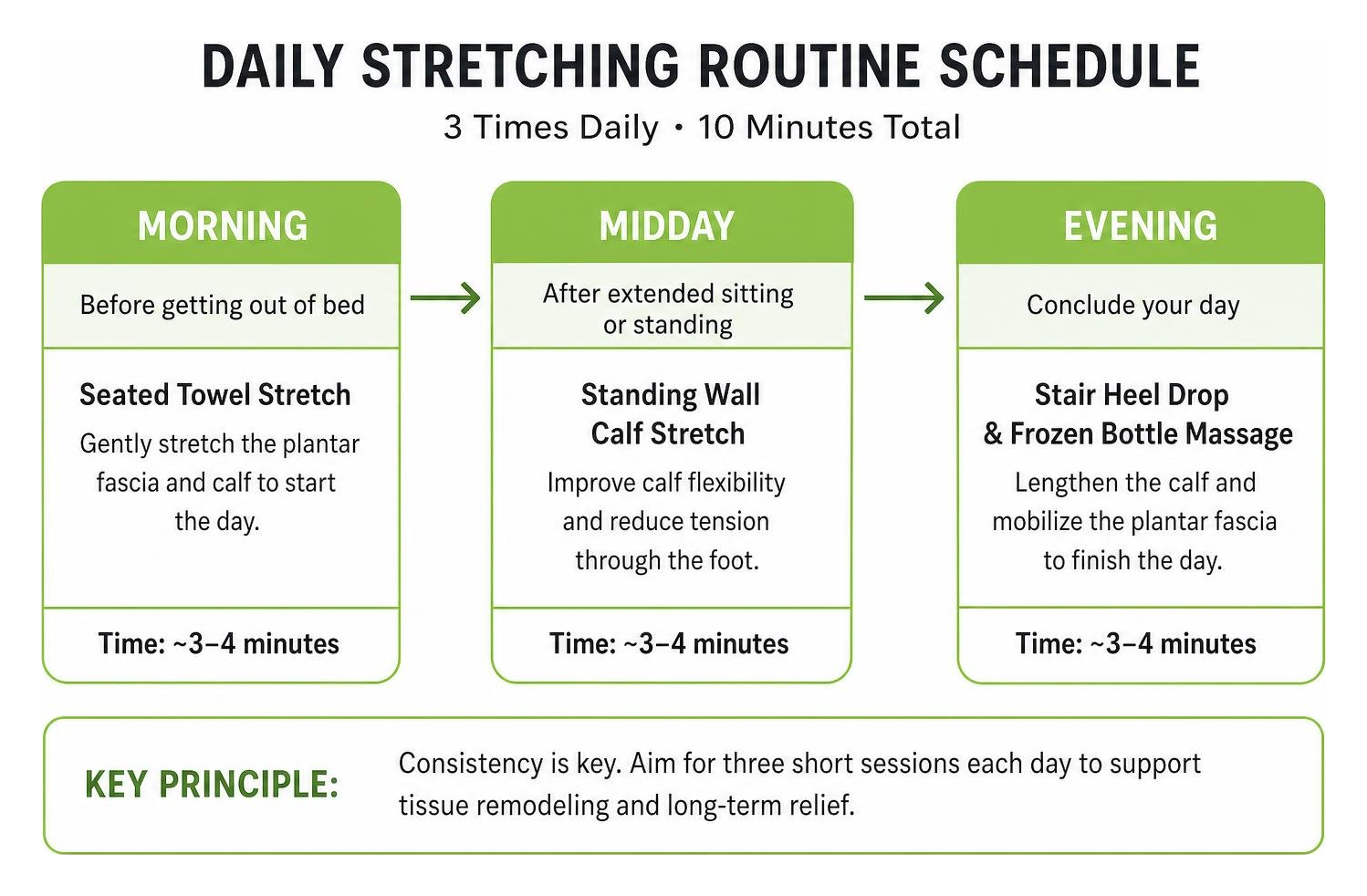
Clinical data indicates that approximately 83% of patients experience significant improvement within 8 weeks when following a consistent home exercise protocol. Dedicate at least 10 minutes total each day divided across three key times:
- Morning Routine: Perform the seated towel stretch before getting out of bed.
- Midday Transition: Complete standing wall calf stretches after extended sitting or standing.
- Evening Routine: Conclude your day with the stair heel drop and frozen bottle massage.
Avoiding Common Rehabilitation Pitfalls
- Overstretching into Severe Pain: More force does not equal faster healing. Keep stretch intensity at or below a mild 3/10 discomfort level. Bouncing or pulling aggressively can cause protective muscle guarding and create fresh micro-tears.
- Neglecting Direct Plantar Fascia Stretches: Many people only stretch their calves. You must also include direct toe extension stretches to target the calcaneal origin where most micro-tears occur.
- Walking Barefoot on Hard Floors: Stepping barefoot onto tile, hardwood, or laminate surfaces exposes the healing ligament to harsh ground reaction forces. Wear supportive indoor footwear with contoured arch support.
- Stopping Too Early: Continue your daily stretching routine for several months even after your pain completely resolves to prevent recurrence.
When Stretching Isn’t Enough: Comprehensive Care Options
If you have maintained a consistent home stretching program for several weeks without noticeable relief, your condition may involve deeper tissue thickening, structural biomechanical issues, or secondary nerve entrapment (such as tarsal tunnel syndrome).
At California Pain Consultants, our double board-certified physicians specialize in comprehensive, non-surgical pain management across Southern California, with clinics in San Diego, Kearny Mesa, Chula Vista, Rancho Bernardo, La Mesa, and Miramar. We provide thorough diagnostic evaluations—including high-resolution diagnostic ultrasound—to measure plantar fascia thickness and pinpoint the precise source of your chronic heel pain.
When conservative home care needs reinforcement, our clinics offer multimodal, personalized therapies:
- Chronic pain physical therapy treatment programs targeting kinetic chain imbalances and specialized stretching exercises
- Regenerative therapies (such as Platelet-Rich Plasma/PRP) to stimulate cellular repair in degenerated fascia
- Ultrasound-guided anti-inflammatory injections for acute flare-ups
- Advanced peripheral nerve hydrodissection and radiofrequency treatments for nerve-related heel pain
Our team is dedicated to helping you find lasting relief without relying on invasive surgery.
Frequently Asked Questions About Plantar Fasciitis Stretches
How long does it take for stretching to relieve plantar fasciitis?
Most patients notice a 40% to 60% reduction in first-step morning pain within 2 weeks of maintaining a consistent, 3-times-daily stretching routine. However, structural collagen remodeling and full recovery typically require 8 to 12 weeks of steady daily adherence.
Can stretching alone completely cure chronic plantar fasciitis?
Stretching resolves a vast majority of mild-to-moderate cases. However, for chronic conditions, stretching works best when combined with supportive footwear (featuring an 8–12mm heel drop), semi-rigid orthotics, activity modifications, and progressive high-load strengthening exercises.
Should I stretch if my heel pain is severe during the exercise?
No. You should never force your foot into sharp, stabbing pain during a stretch. If an exercise triggers intense discomfort, shorten your range of motion, reduce your hold time, or transition to gentler seated alternatives until the acute sensitivity calms down.
Conclusion: Long-Term Mobility and Relief
Chronic plantar fasciitis does not have to dictate your daily comfort or limit your mobility. By addressing the root biomechanical causes of tissue tightness—stretching before weight-bearing, releasing the calf-Achilles complex, and strengthening the supportive muscles of your arch—you can break the cycle of morning heel pain.
If your heel pain persists despite consistent daily stretching, our compassionate team at California Pain Consultants is here to help. Reach out to our clinics across San Diego, La Mesa, Chula Vista, Kearny Mesa, Rancho Bernardo, or Miramar to schedule a personalized evaluation and take the next step toward pain-free movement.