
Nerve Health Care
Neuropathy is damage to or malfunction of the peripheral nerves, the nerves outside the brain and spinal cord, and it often causes burning pain, tingling, and numbness that starts in the feet or hands. It is especially common in people with diabetes, but it can also follow injury, chemotherapy, infection, vitamin deficiency, or have no clear cause. Board-certified pain specialists at California Pain Consultants in San Diego diagnose neuropathy pain and treat it with medication, targeted procedures, and neuromodulation.
Sometimes, it starts with something subtle—a tingling in your toes, a slight numbness in your fingers, or a burning sensation that comes and goes. At first, it may not seem like much. Something you can brush off or ignore. The tingling may become more persistent. The numbness may spread. The burning may intensify. And before you know it, what once felt minor begins to interfere with your daily life. Walking may feel different. Holding objects may feel uncertain. Sleep may become more difficult. And you may begin to feel disconnected from your own body in ways that are hard to explain. If you’re experiencing these symptoms, you may be asking what is happening to your nerves, and what can be done about it.
Neuropathy occurs when peripheral nerves are damaged or do not signal normally. Symptoms may include burning pain, tingling, numbness, weakness, balance changes, or sensitivity to light touch.
What Is Neuropathy?
Peripheral neuropathy is a condition that occurs when nerves outside of the brain and spinal cord are damaged or not functioning properly.
These nerves are responsible for:
- Sending sensory signals (touch, pain, temperature)
- Controlling muscle movement
- Regulating certain automatic body functions
When these nerves are affected, communication between the body and the brain becomes disrupted. This can lead to:
- Pain
- Numbness
- Tingling
- Weakness
- Loss of coordination
Neuropathy is not one disease. The National Institute of Neurological Disorders and Stroke notes that more than 100 types of peripheral neuropathy have been identified and that the condition affects millions of people in the United States.
Nerve damage can affect:
- Feet and legs (most common)
- Hands and arms
- Other parts of the body in more severe cases
Symptoms vary according to which sensory, motor, or autonomic nerves are affected.
How Neuropathy Feels: Understanding Your Symptoms
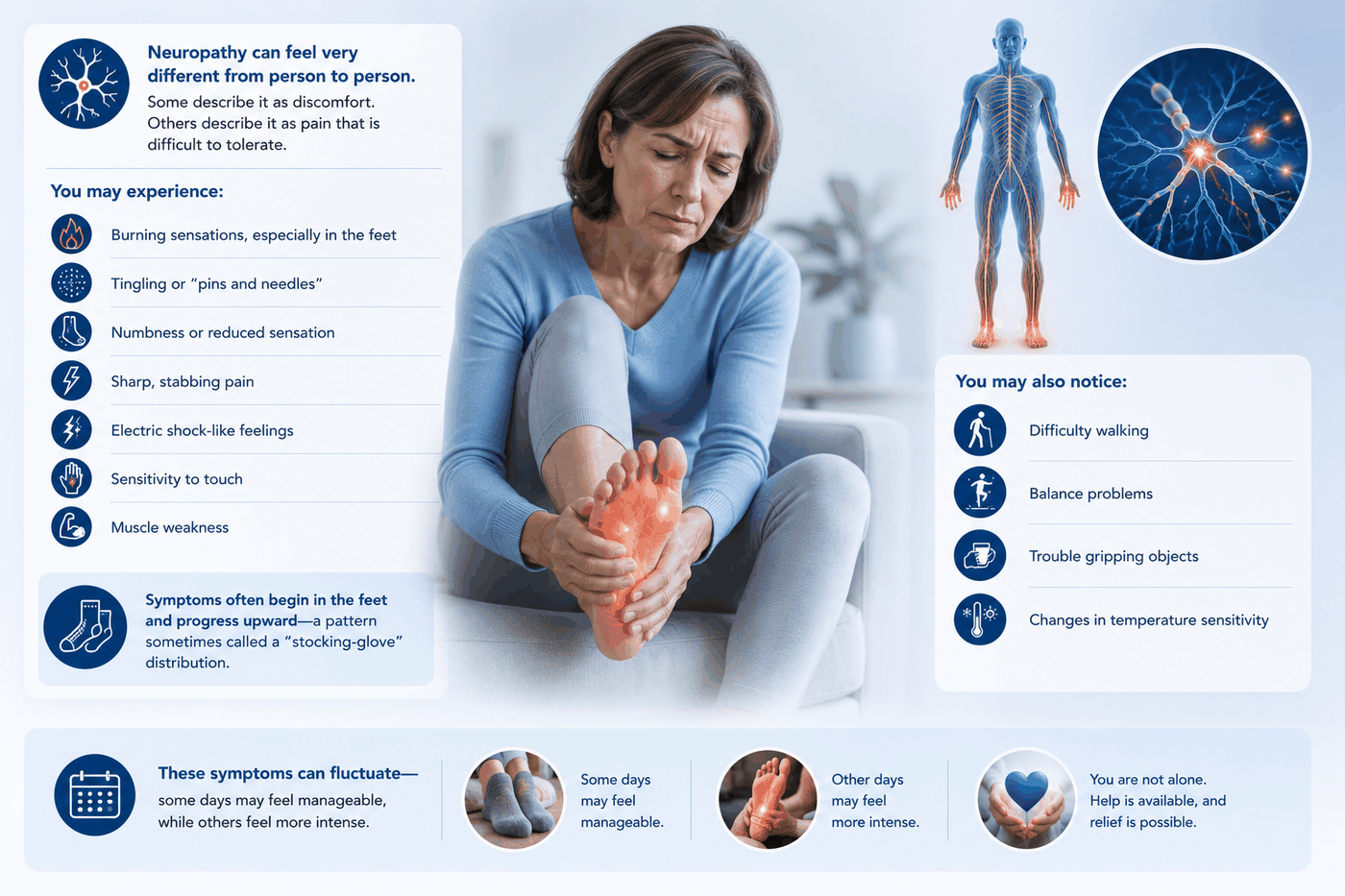
Nerve symptoms can feel very different from person to person.
Some describe it as discomfort. Others describe it as pain that is difficult to tolerate. You may experience:
- Burning sensations, especially in the feet
- Tingling or “pins and needles”
- Numbness or reduced sensation
- Sharp, stabbing pain
- Electric shock-like feelings
- Sensitivity to touch
- Muscle weakness
Symptoms often begin in the feet and progress upward—a pattern sometimes called a “stocking-glove” distribution. You may also notice:
- Difficulty walking
- Balance problems
- Trouble gripping objects
- Changes in temperature sensitivity
These symptoms can fluctuate—some days may feel manageable, while others feel more intense.

Testing focuses on identifying treatable contributors while addressing symptoms and safety.
What Causes Neuropathy?
Peripheral nerve damage can develop for many reasons. Identifying the cause is an important part of treatment.
Diabetes: The Most Common Cause
One of the leading causes of neuropathy is diabetes. High blood sugar levels over time can damage nerves, especially in the feet and legs. The National Institute of Diabetes and Digestive and Kidney Diseases reports that about one-third to one-half of people with diabetes have peripheral neuropathy, which is why blood sugar control and regular foot checks are central to care.
Nerve Injury or Trauma
Accidents, surgeries, or repetitive stress can damage nerves.
Infections
Certain infections can affect the nervous system.
Autoimmune Conditions
Conditions where the immune system attacks the body’s own nerves.
Chemotherapy-Induced Nerve Damage
Cancer treatments can sometimes damage nerves, leading to long-term symptoms.
Vitamin Deficiencies
Especially deficiencies in B vitamins.
Alcohol Use
Chronic alcohol use can lead to nerve damage.
Idiopathic Nerve Damage
In some cases, no clear cause is identified.
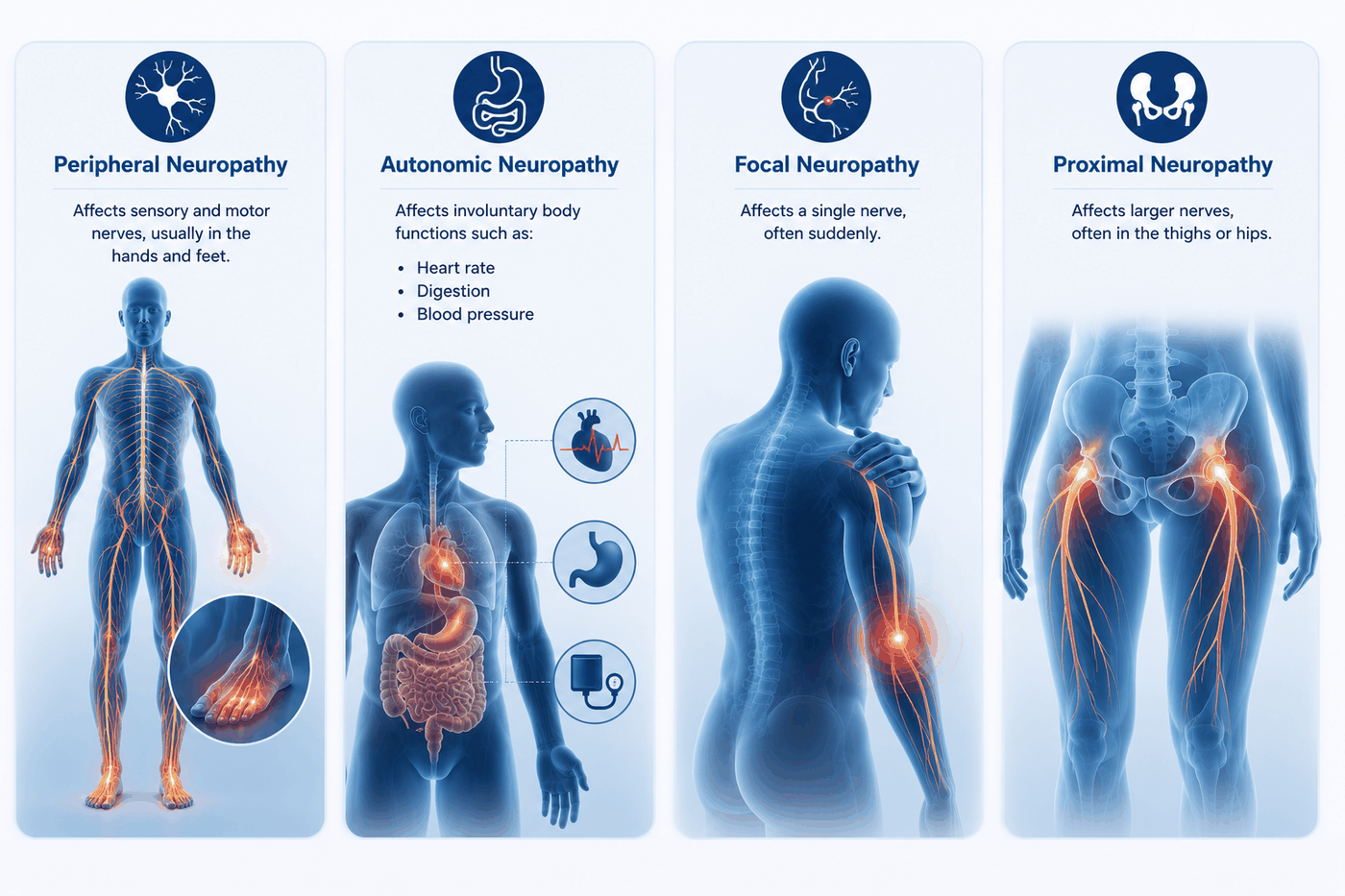
The distribution of nerve symptoms helps clinicians identify the pattern of nerve damage and appropriate testing.
Types of Neuropathy
Peripheral Neuropathy
Affects sensory and motor nerves, usually in the hands and feet.
Autonomic Neuropathy
Affects involuntary body functions such as:
- Heart rate
- Digestion
- Blood pressure
Focal Neuropathy
Affects a single nerve, often suddenly. According to NIDDK, the most common focal neuropathies are entrapment syndromes such as carpal tunnel syndrome, where a nerve is squeezed as it passes through a tight space.
Proximal Neuropathy
Affects larger nerves, often in the thighs or hips.
Diagnosing Neuropathy: Finding the Source
Medical History
Your provider will ask about:
- Symptoms and their progression
- Medical conditions (like diabetes)
- Medications and lifestyle
Physical Examination
- Sensory testing
- Reflex checks
- Strength evaluation
Diagnostic Tests
- Blood tests
- Nerve conduction studies
- Electromyography (EMG)
- Imaging if needed
Blood tests can look for treatable contributors such as high blood sugar, low vitamin B12, thyroid problems, or kidney disease. Nerve conduction studies measure how quickly and strongly signals travel along a nerve, and EMG records how muscles respond, which together help show whether nerves are damaged, which ones, and how severely. Imaging such as an MRI may be used when symptoms suggest a pinched nerve in the spine rather than nerve damage in the limbs.
Why the Pattern Matters
A symmetric, stocking-glove pattern in both feet points toward a body-wide cause such as diabetes. Symptoms in one hand, one leg, or along a single strip of skin may point to a compressed nerve or a spinal problem instead. Sorting this out helps your care team choose the right treatment rather than masking symptoms.
Treatment Options: A Personalized Approach
Treatment focuses on:
- Managing symptoms
- Treating the underlying cause
- Improving function
Medications
Pain Relievers
For mild symptoms.
Nerve Pain Medications
- Anti-seizure medications
- Antidepressants
These help calm nerve activity.
Interventional Pain Management
Nerve Blocks
Target specific nerves to reduce pain signals.
Radiofrequency Ablation (RFA)
Provides longer-lasting relief for certain nerve-related pain.
Procedures are generally considered when medications do not control pain well enough or cause side effects that limit daily life. They are not right for every type of neuropathy, and your specialist will explain expected benefits and risks before recommending one.
Neuromodulation for Nerve Pain
For patients with chronic or severe nerve pain, neuromodulation therapies may offer significant relief.
Spinal Cord Stimulation (SCS)
SCS works by:
- Sending electrical signals to the spinal cord
- Modifying how pain is perceived
Patients often experience:
- Reduced pain
- Improved mobility
- Better sleep
Dorsal Root Ganglion Stimulation
For nerve pain concentrated in a specific area, such as the foot, dorsal root ganglion stimulation targets a cluster of sensory nerve cells near the spine that relays signals from that region. Like spinal cord stimulation, it typically begins with a temporary trial so you can judge whether it helps before any permanent device is placed.
Why Neuromodulation Is Important
- Minimally invasive
- Adjustable and reversible
- Can reduce reliance on medications
Treating the Underlying Cause
- Managing blood sugar in diabetes
- Addressing vitamin deficiencies
- Adjusting medications if needed
Lifestyle and Supportive Care
Physical Activity
Improves circulation and nerve health.
Proper Foot Care
Especially important for diabetic neuropathy.
Nutrition
Supports nerve function.
Stress Management
Helps reduce symptom severity.
The Emotional Impact of Neuropathy
Chronic nerve symptoms can affect how you feel emotionally.
You may experience:
- Frustration
- Anxiety
- Fear about progression
- Sleep disruption
Living with Neuropathy: Practical Tips
- Wear supportive footwear
- Check your feet regularly
- Avoid extreme temperatures
- Stay consistent with treatment
When Neuropathy Symptoms Need Prompt Care
Arrange evaluation for new or progressive numbness, burning pain, weakness, or balance changes. Seek urgent care for:
- Rapidly progressing weakness, trouble walking, or difficulty breathing or swallowing
- Sudden one-sided weakness, facial droop, speech difficulty, or confusion
- Loss of bladder or bowel control or numbness in the groin area
- An infected wound, spreading redness, or a cold or discolored foot
People with diabetes or reduced foot sensation should inspect their feet daily and report skin breakdown promptly.
Reconnect With Comfort, Safety, and Function
A neuropathy evaluation can identify potential causes, assess nerve function, and build a plan that addresses symptoms, mobility, sleep, and protection from injury.
Treatment at California Pain Consultants
California Pain Consultants is a physician-led pain practice that cares for patients with neuropathy pain at four clinics across San Diego County: Kearny Mesa, Rancho Bernardo, La Mesa, and Chula Vista. Your care team works alongside your primary care doctor, endocrinologist, or oncologist, so that pain treatment and treatment of the underlying cause move forward together.
What your first visit typically covers:
- A detailed history of your symptoms, health conditions, and medications
- A sensory, reflex, and strength exam
- A review of prior labs, nerve studies, or imaging, with additional testing ordered if needed
- A treatment plan that may include medication, procedures, and neuromodulation when appropriate
Procedures and stimulator trials are performed at the Comprehensive Pain ASC in Rancho Bernardo and the EPC Surgery Center in La Mesa. Same-day appointments are often available, and we accept most insurances. Call (858) 571-3630 or request your appointment to book your appointment.
Frequently asked questions
Can neuropathy be reversed?
Sometimes, depending on the cause. Neuropathy linked to a vitamin deficiency, a medication, or a compressed nerve may improve when that cause is corrected. Nerve damage from long-standing diabetes is often harder to reverse, but controlling blood sugar may help slow progression. Even when nerves cannot fully recover, pain treatment can often improve comfort and function.
What is the most common cause of neuropathy?
Diabetes is one of the leading causes of peripheral neuropathy. NIDDK reports that about one-third to one-half of people with diabetes have peripheral neuropathy. Other causes include chemotherapy, nerve injury, autoimmune disease, infections, vitamin B deficiencies, and heavy alcohol use, and in some people no cause is ever identified.
Why is neuropathy pain worse at night?
Many people notice burning or tingling more at night, when there are fewer distractions and the feet may be in contact with sheets. Temperature changes and lying still may also play a role. If night pain is disrupting your sleep, tell your care team, because medication timing and other strategies can often be adjusted to help.
What medications help neuropathy pain?
Nerve pain is usually treated with medicines that calm overactive nerve signaling, such as certain anti-seizure medications and antidepressants, rather than standard pain relievers alone. The right choice depends on your other conditions, medications, and side effects. Topical treatments may be added, and procedures or neuromodulation are options when medication alone is not enough.
Does spinal cord stimulation work for neuropathy?
Spinal cord stimulation may help some people with persistent nerve pain in the legs and feet, including painful diabetic neuropathy, when other treatments have not worked well enough. A temporary trial comes first so you can see whether it reduces your pain. Results vary, and your specialist will discuss whether you are a candidate.
When should I see a pain specialist for neuropathy?
See a pain specialist when nerve pain is affecting your sleep, walking, or daily activities, or when medications are not helping or cause side effects you cannot tolerate. Seek urgent care right away for rapidly spreading weakness, trouble breathing or swallowing, loss of bladder or bowel control, or a foot wound that looks infected.
Trusted Information and Related Care
Medical reference: National Institute of Neurological Disorders and Stroke: Peripheral Neuropathy. Related California Pain resources: Conditions and treatments · Postherpetic neuralgia. This article is for general education and does not replace an individualized medical evaluation. Treatment recommendations depend on diagnosis, health history, current medications, and personal goals.