
Adhesiolysis, also called epidural lysis of adhesions, is a minimally invasive, image-guided procedure that uses a thin catheter to loosen scar tissue around spinal nerves and deliver medication to the irritated area. It may help adults with persistent back and leg pain after spine surgery, or with nerve pain from spinal stenosis, when standard epidural injections have not provided enough relief. Board-certified pain specialists at California Pain Consultants in San Diego evaluate candidacy and perform adhesiolysis for carefully selected patients.
It is most often considered after a careful evaluation and after less invasive treatments have not provided adequate improvement. The procedure is not a general treatment for every type of back pain.
At California Pain Consultants, candidacy is based on the symptom pattern, imaging and surgical history, prior treatment response, health risks, and functional goals.
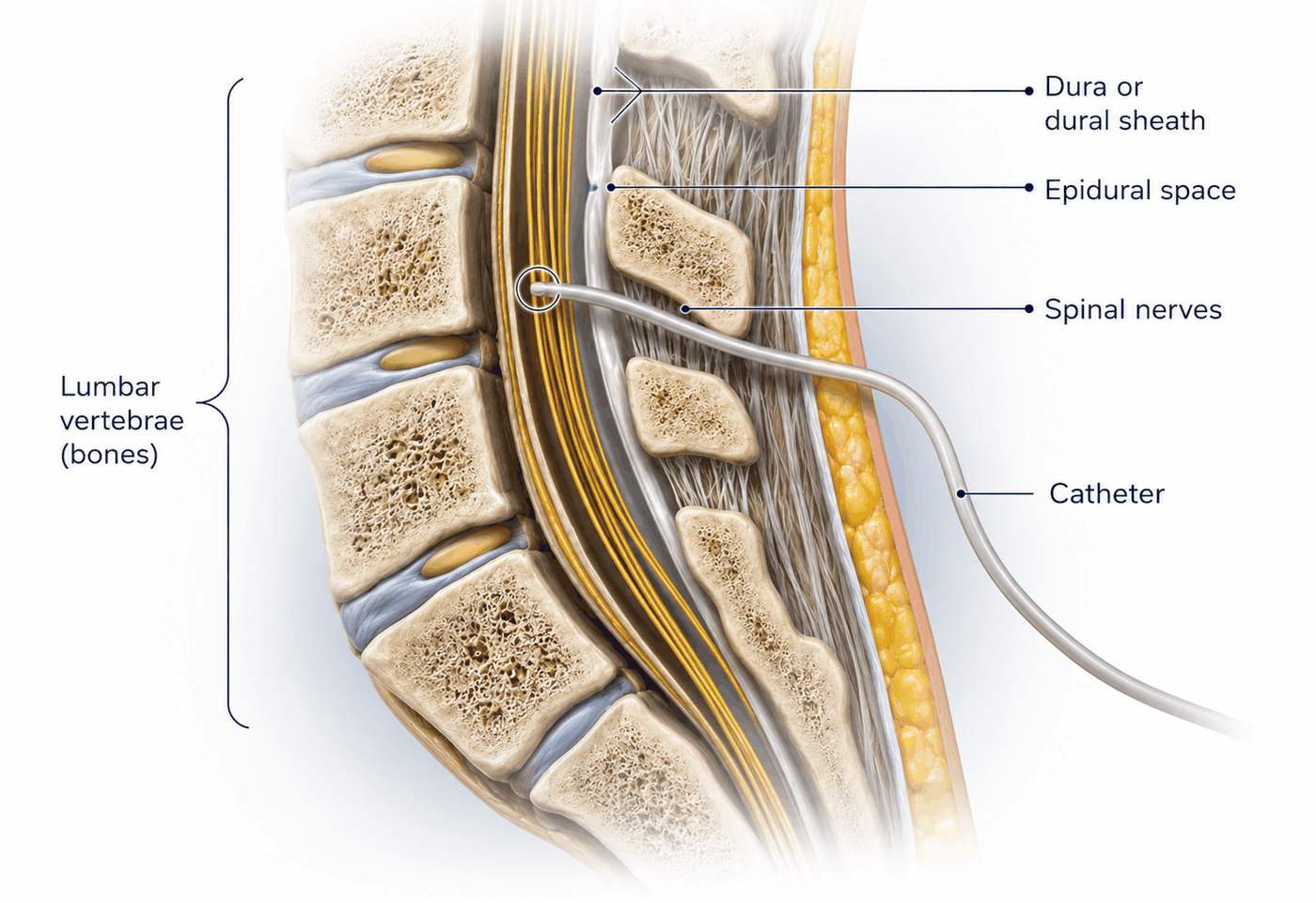
Epidural adhesiolysis uses image guidance and a specialized catheter to reach an area of suspected epidural scarring, mechanically or fluidly disrupt adhesions, and deliver medication near an irritated nerve.
What Is Adhesiolysis?
Also called epidural lysis of adhesions or epidural neuroplasty, adhesiolysis is designed to improve access to a specific epidural target when ordinary injection flow may be restricted by scar tissue.
The epidural space surrounds the spinal cord and nerve roots. Fibrous tissue can develop after spine surgery, inflammation, bleeding, or long-standing irritation. This tissue is not always painful, and its presence on imaging does not prove that it is the symptom source.
When the full clinical picture suggests that an adhesion is contributing, a flexible catheter may be advanced toward the affected level. Contrast dye maps the epidural space, and carefully delivered fluid or catheter movement may open a pathway before medication is placed near the target.
When Adhesiolysis May Be Considered
The procedure is usually reserved for persistent radicular or postsurgical pain with findings that support a specific epidural target.
Persistent Pain After Spine Surgery
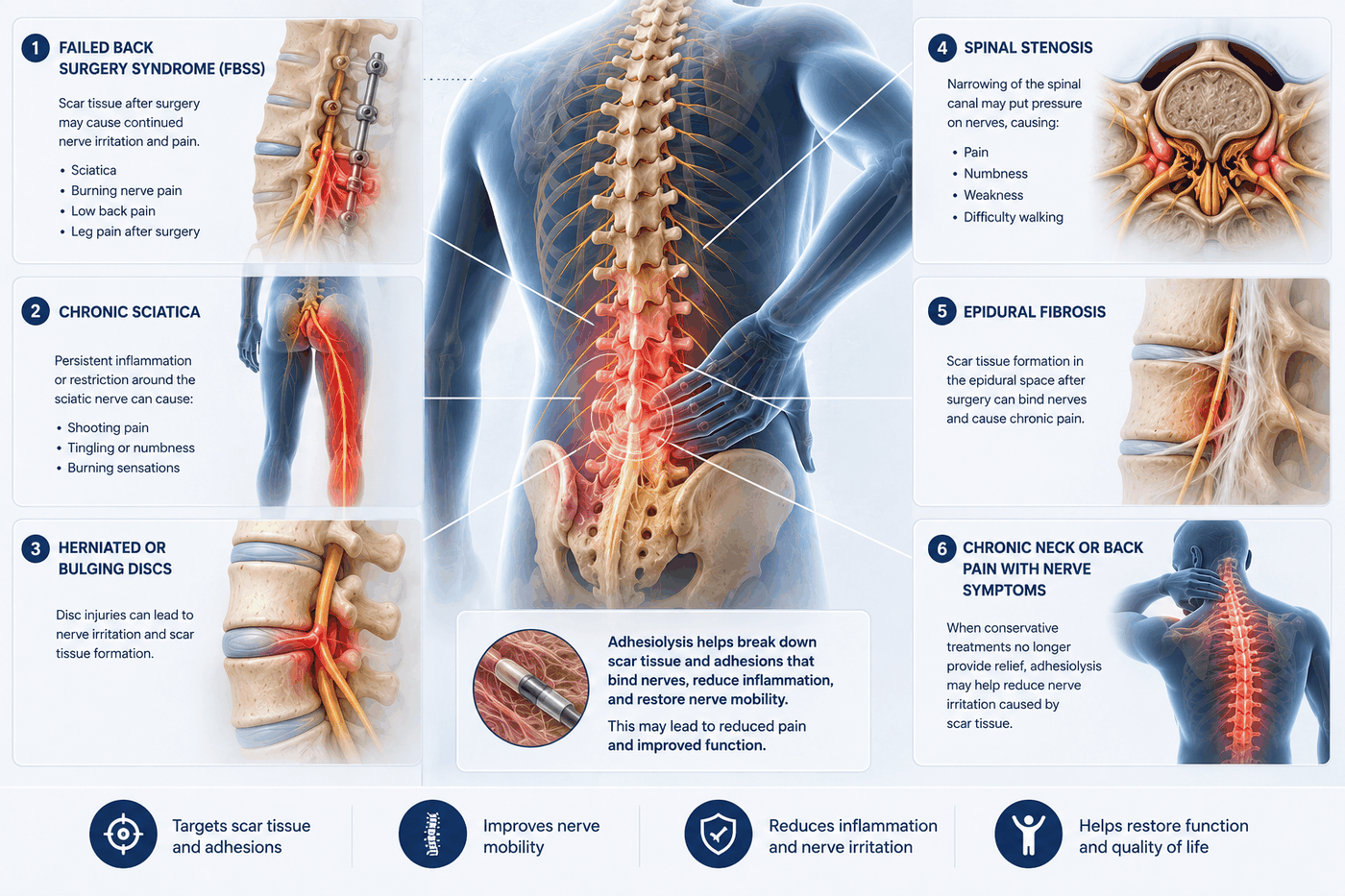
Epidural fibrosis may contribute to ongoing back or leg symptoms after lumbar surgery, particularly when pain follows a nerve-root pattern and other explanations have been assessed.
Persistent pain after spine surgery is not rare. A review in the Journal of Pain Research notes that conservative estimates of failed back surgery syndrome are around 20%, with other estimates as high as 40%, and that adhesions may contribute to or cause 20% to 36% of those cases.
Chronic Radicular Pain
Burning, electric, or shooting pain into an arm or leg may reflect persistent nerve irritation from disc disease, narrowing, inflammation, or scarring.
Spinal Stenosis or Disc Disease
For selected patients, narrowing around the nerves or a disc-related inflammatory process may make targeted epidural access difficult with a conventional approach.
Limited Response to Epidural Injection
Adhesiolysis may be discussed when a technically appropriate epidural injection did not provide useful improvement and restricted medication spread is suspected.
Symptoms That May Prompt Evaluation
Symptoms alone cannot diagnose epidural scarring, but these patterns may justify a focused spine evaluation.
- Back or neck pain with pain traveling into an arm or leg
- Burning, tingling, electric, or pins-and-needles sensations
- Persistent symptoms after spine surgery or an epidural procedure
- Pain that limits walking, sitting, sleep, work, or rehabilitation
- Numbness or altered sensation in a consistent nerve distribution
- Symptoms that have not improved enough with a structured conservative plan
How Candidacy Is Evaluated
Because adhesiolysis is invasive and evidence is condition-specific, a careful diagnostic review is essential before treatment.
History and Functional Goals
Your clinician reviews where symptoms begin, whether pain travels, how long it has been present, what worsens or relieves it, and how it affects walking, work, sleep, and daily activity.
Focused Physical Examination
Strength, sensation, reflexes, movement, tenderness, gait, and nerve-tension signs help distinguish joint, disc, nerve, muscle, and other potential pain sources.
Imaging and Prior Records
MRI, CT, or X-rays are reviewed when results are likely to clarify anatomy or change the plan. Prior procedure reports and treatment responses may also be important.
Medication and Health Review
Blood thinners, diabetes, allergies, infection risk, pregnancy, implanted devices, and other medical conditions are discussed so benefits and risks can be considered safely.
The Adhesiolysis Procedure: What to Expect
Technique varies with the spinal level, clinical goal, and individual anatomy. The following is a general overview rather than a substitute for your procedural instructions.
Step 1: Preparation
Medications and fasting instructions are reviewed in advance. On procedure day, monitoring is applied and the treatment area is cleaned and numbed.
Step 2: Epidural Access
Using fluoroscopic guidance, the physician enters the epidural space, commonly through the sacral hiatus for a lumbar target.
Step 3: Contrast Mapping
A small amount of contrast helps confirm position and shows how fluid spreads around the suspected area of restriction.
Step 4: Catheter Treatment
A specialized catheter is guided toward the target. Controlled catheter movement and fluid delivery are used to reduce adhesions or create a pathway.
Step 5: Medication Delivery
Medication may be delivered near the irritated nerve. The catheter is then removed or managed according to the planned technique, followed by observation.
Recovery After Adhesiolysis
Most patients need transportation home and should follow the written instructions from their treating team. Response may be immediate, delayed, partial, or absent.
The First Day
Temporary soreness, pressure, heaviness, or numbness may occur. Rest is appropriate, but prolonged bed rest is usually not the goal unless specifically instructed.
Activity Progression
Light activity is commonly resumed first. Driving, lifting, bathing, exercise, and work restrictions depend on the technique and medications used.
Rehabilitation
When symptoms are calmer, physical therapy or a graded home program may help rebuild mobility, strength, confidence, and tolerance for daily activity.
Follow-Up
Your clinician will assess pain location, neurologic symptoms, medication use, walking, sleep, and function rather than relying on one pain score alone.
Potential Benefits and Realistic Expectations
The goal is to improve targeted medication delivery and create an opportunity for better function. No procedure can guarantee a particular amount or duration of relief.
- Targets a specific epidural region under imaging guidance
- May reduce radicular or postsurgical nerve pain for selected patients
- Can provide diagnostic information about epidural flow and treatment response
- May make movement and rehabilitation more tolerable
- Uses a minimally invasive approach rather than open surgery
- Can be integrated with medication, rehabilitation, and lifestyle care
Results and How Long Relief May Last
Adhesiolysis aims to create a period of meaningful relief that supports rehabilitation, not to permanently remove every source of pain. Published results show that outcomes vary and that careful selection matters.
- In a multicenter study of 115 patients with failed back surgery syndrome or spinal stenosis, published in Anesthesia and Analgesia, 48.7% had a positive outcome, defined as at least 50% pain relief lasting at least one month.
- The Journal of Pain Research review summarizes a systematic review that rated the evidence for percutaneous lysis of adhesions as strong for chronic back and extremity pain, with weaker evidence for epiduroscopy.
- Relief may begin soon after the procedure or build over several weeks as nerve inflammation settles.
- Some patients do not improve, and others may need repeat treatment or a different approach.
Risks, Limitations, and When to Call
Possible complications include temporary pain flare, bleeding, infection, headache from a dural puncture, medication reaction, nerve injury, catheter problems, and failure to improve. Serious complications are uncommon but possible.
- Tell the team about blood thinners, infection, fever, pregnancy, allergies, or contrast reactions
- Follow medication, fasting, transportation, and wound-care instructions exactly
- Seek urgent help for new weakness, loss of bladder or bowel control, or saddle numbness
- Call promptly for fever, drainage, spreading redness, or rapidly worsening pain
- Report severe positional headache, breathing difficulty, or an allergic reaction
- Treatment should not proceed when the expected benefit does not justify the individual risk
Call 911 for breathing difficulty, signs of stroke, severe weakness, or another life-threatening emergency.
How Adhesiolysis Fits into a Broader Pain Plan
Adhesiolysis is one option within a staged treatment pathway, not an endpoint by itself.
Foundational Care
Education, pacing, sleep support, safe movement, medication review, and condition-specific rehabilitation remain important before and after a procedure.
Targeted Injections
A conventional epidural injection or selective block may be appropriate first when medication can reach the suspected pain source.
Neuromodulation
For carefully selected persistent neuropathic pain, spinal cord or dorsal root ganglion stimulation may be considered after a separate evaluation and trial.
Surgical or Specialty Review
Progressive neurologic loss, instability, infection, fracture, tumor, or major compression may require urgent or planned referral to another specialist.
Find Out Whether Adhesiolysis Fits Your Diagnosis
California Pain Consultants can review persistent postsurgical or radicular symptoms, prior imaging and procedures, and your functional goals to determine whether adhesiolysis or another treatment pathway is appropriate.
Treatment at California Pain Consultants
At California Pain Consultants, your evaluation starts with a careful review of your surgical history, imaging, and how you responded to earlier epidural injections. If a standard caudal steroid injection did not spread well or did not help, scar tissue may be part of the reason, and adhesiolysis may be considered. Your care team also weighs other options for persistent nerve pain, such as spinal cord stimulation or dorsal root ganglion stimulation, so your plan reflects the full range of choices.
We see patients at four clinics across San Diego County:
San Diego, CA 92123Get Directions
San Diego, CA 92128Get Directions
La Mesa, CA 91942Get Directions
Chula Vista, CA 91911Get Directions
Procedures are performed at the Comprehensive Pain ASC in Rancho Bernardo and the EPC Surgery Center in La Mesa. We accept most insurances. Call (858) 571-3630 or request your appointment to review whether adhesiolysis fits your diagnosis.
Book Your AppointmentTrusted Information and Related Care
Medical references: PubMed: Epidural adhesiolysis evidence review · NIH: Epidural lysis of adhesions review.
Related California Pain resources: Failed back surgery pain · Spinal stenosis · Conditions and treatments.
This article is for general education and does not replace an individualized medical evaluation. Recommendations depend on the diagnosis, health history, current medications, imaging, examination, and personal goals.
Frequently Asked Questions
What does adhesiolysis treat?
Adhesiolysis treats persistent back and leg pain when scar tissue in the epidural space may be irritating nerve roots or blocking medication from reaching them. It is most often considered for pain after lumbar spine surgery and for selected cases of spinal stenosis or chronic radicular pain that have not improved with standard epidural injections.
Is adhesiolysis the same as an epidural steroid injection?
No, although they are related. A standard epidural injection places medication into the epidural space through a needle. Adhesiolysis uses a steerable catheter, contrast mapping, and controlled fluid delivery to open a path through scar tissue first, so medication can reach a specific irritated nerve. It is generally considered after standard injections have not helped.
How long does relief from adhesiolysis last?
Results vary widely. In one multicenter study of 115 patients, 48.7% achieved at least 50% pain relief lasting at least one month. Some patients have longer benefit, others have little improvement. Your care team tracks pain, walking, sleep, and function afterward to judge the response and plan any next steps.
What is recovery like after adhesiolysis?
Most patients go home the same day with someone to drive them. Temporary soreness, pressure, or numbness is common for a short time. Light activity usually resumes first, with driving, lifting, and exercise restrictions based on your instructions. Physical therapy may begin once symptoms calm to rebuild strength and confidence.
Who is a good candidate for adhesiolysis?
Good candidates usually have persistent leg or back pain after spine surgery, or nerve pain from stenosis, that follows a consistent nerve pattern and has not improved with medication, therapy, and technically appropriate epidural injections. People with active infection, uncontrolled bleeding risk, or rapidly worsening neurologic symptoms need a different plan or urgent evaluation.
What are the risks of adhesiolysis?
Possible risks include a temporary pain flare, bleeding, infection, headache from a dural puncture, medication reaction, nerve injury, and catheter-related problems. Serious complications are uncommon but possible. Seek urgent care for new weakness, saddle numbness, or loss of bladder or bowel control, and call promptly for fever or spreading redness.