
Fast, Safe Relief for a Glute Muscle Pull
Dealing with this in San Diego? Same-day appointments are often available at our 4 clinics.
A glute muscle pull is a stretch or tear in one of the buttock muscles. Stop the activity that triggered the pain, use a cold pack for short periods during the first day or two, and keep moving gently within a pain-free range. Avoid deep stretching, sprinting, heavy lifting, or “pushing through” sharp pain, which can make the injury worse.
Many mild strains improve with relative rest and gradual rehab. But sudden severe pain, major bruising or swelling, weakness, numbness, pain shooting down the leg, or trouble bearing weight can signal a more serious muscle, hip, or nerve problem and should be checked promptly.
Your glutes help extend and stabilize the hip during walking, stairs, lifting, and standing up. A pull can happen after a sudden sprint, awkward twist, fall, or overloaded workout. It can also develop over time when weak or poorly activated glutes force the lower back and other muscles to compensate.
I am Dr. Zach Cohen, a double board-certified physician in anesthesiology and chronic pain medicine with experience treating muscle, joint, spine, and nerve-related pain. In this guide, I will explain how to manage a glute muscle pull at home, return to activity safely, and recognize when personalized medical care is needed.
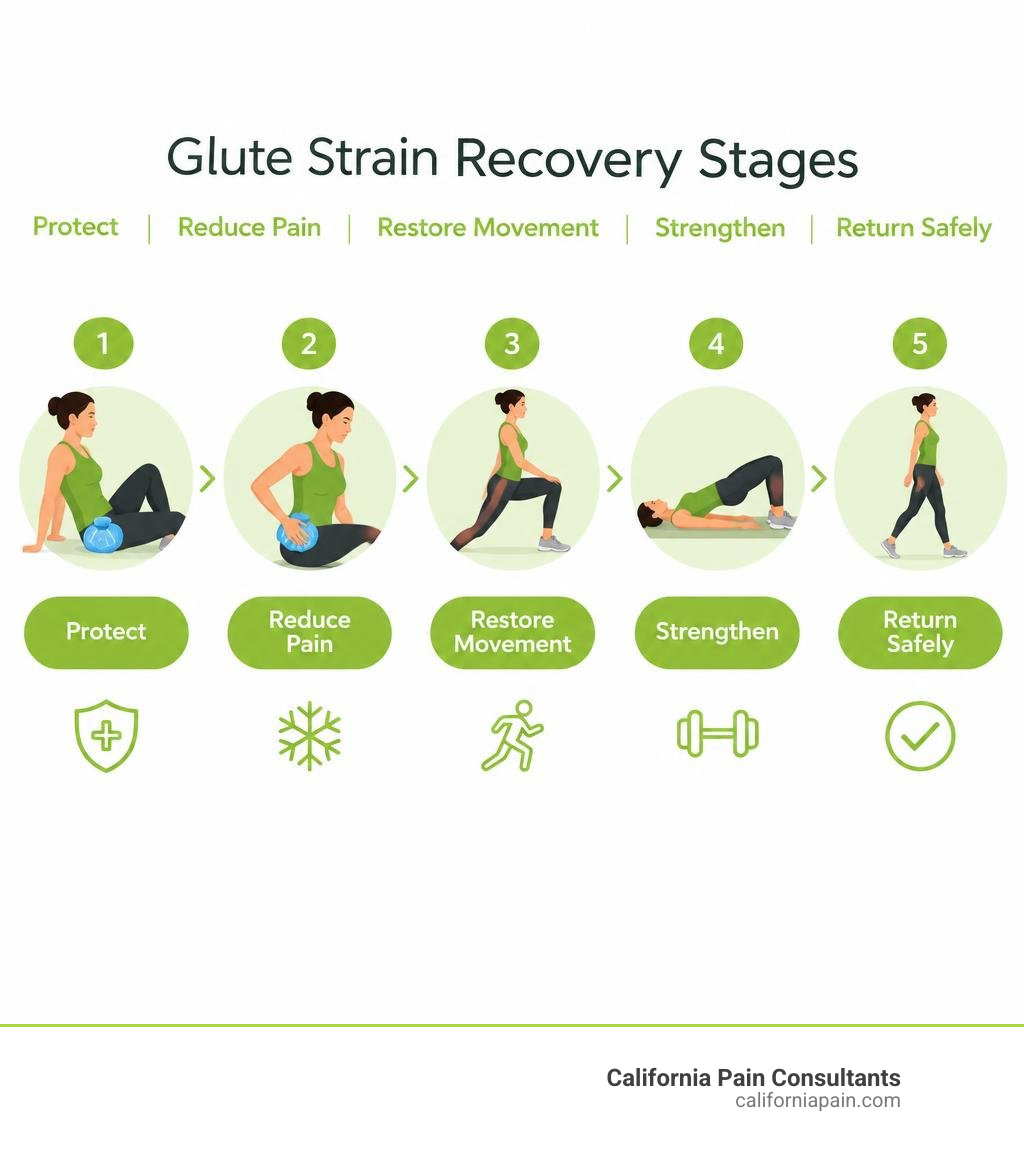
Glute muscle pull word roundup:
Understanding a Glute Muscle Pull: Causes, Anatomy, and Symptoms
The gluteal complex consists of three distinct muscles that work as the primary engine and stabilizer for your pelvis, hips, and spine: the gluteus maximus, gluteus medius, and gluteus minimus.
- Gluteus Maximus: The largest and most superficial muscle in the buttock region. It originates along the ilium, sacrum, and lumbar fascia, acting as the primary antigravity muscle during hip extension and external rotation (Elzanie & Borger, 2023). It is uniquely innervated by the inferior gluteal nerve.
- Gluteus Medius: Located on the outer pelvis, this muscle abducts the thigh and keeps the pelvis level when standing on one leg.
- Gluteus Minimus: The deepest of the trio, assisting with internal rotation, pelvic stabilization, and hip abduction.
When any of these muscle fibers are stretched beyond their mechanical limits, microscopic or macroscopic tearing occurs—a condition clinically defined as a gluteal strain.
A major contributor to glute injuries is “dead butt syndrome” (gluteal amnesia). When you sit for prolonged hours, hip flexors tighten and reciprocal inhibition causes the glutes to become inactive. When called upon during explosive movements, these underactive muscles fail to fire properly, transferring excessive load to the hamstring tendons or lower back.
Common Causes and Strain Grading
Glute strains typically occur during sudden, forceful hip extension (such as explosive sprinting, jumping, or heavy barbell squats) or due to chronic overuse without sufficient recovery. Glute strains are clinically classified into three distinct grades:
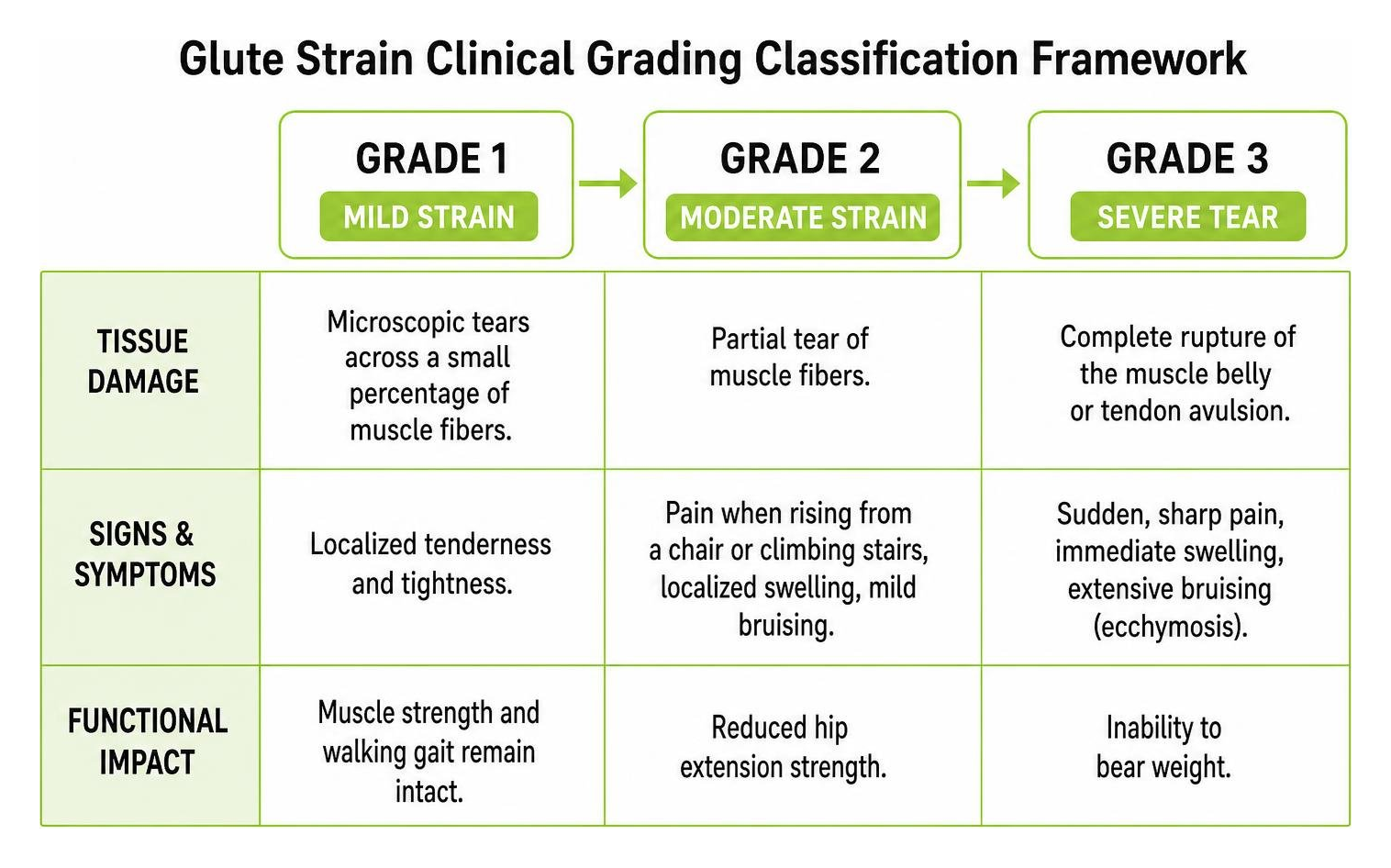
- Grade 1 (Mild Strain): Microscopic tears across a small percentage of muscle fibers. You will feel localized tenderness and tightness, but muscle strength and walking gait remain intact.
- Grade 2 (Moderate Strain): Partial tear of muscle fibers. Causes noticeable pain when rising from a chair or climbing stairs, localized swelling, mild bruising, and reduced hip extension strength.
- Grade 3 (Severe Tear): Complete rupture of the muscle belly or tendon avulsion. Characterized by sudden, sharp pain, immediate swelling, extensive ecchymosis (bruising), and an inability to bear weight.
Differentiating a Glute Muscle Pull from Sciatica and Hip Pain
Because the gluteal region shares pathways with major nerves, hip joints, and spinal roots, buttock discomfort is frequently misdiagnosed. Differentiating between a muscular pull, lumbar nerve root irritation, and deep pelvic conditions is crucial.
| Clinical Feature | Glute Muscle Pull | Piriformis Syndrome | Sciatica (Lumbar Radiculopathy) |
|---|---|---|---|
| Primary Location | Localized buttock muscle belly | Deep buttock, near the sciatic notch | Lower back radiating down past the knee |
| Pain Quality | Dull ache, sharp on contraction | Deep, burning, or aching pressure | Shooting, electric, tingling, numbness |
| Aggravating Factors | Resisted hip extension, direct palpation | Prolonged sitting, cross-legged sitting | Forward spine flexion, coughing, sneezing |
| Neurological Deficits | None | Rare (mild transient tingling) | Frequent (reflex loss, dermatomal numbness) |
If your buttock pain is accompanied by electric sensations traveling down the back of your leg, exploring sciatica pain treatment options can help address nerve root irritation at the spine. If deep buttock tightness pinches the sciatic nerve directly within the pelvis, targeted piriformis syndrome relief protocols are recommended. For broader aches spanning the lumbopelvic region, review our guidance on managing a pulled muscle in lower back and buttock.
Immediate At-Home Treatments for Fast Pain Relief
The first 24 to 72 hours after injury dictate your long-term recovery rate. Applying structured conservative care reduces tissue inflammation, controls spasm, and preserves local blood flow.
We recommend using the modern PEACE & LOVE protocol over outdated complete-rest approaches:
- Protect: Unload the glute by avoiding heavy lifting, sprinting, and deep squats for the first 48 hours.
- Elevate: While difficult with pelvic anatomy, resting supine with hips elevated on pillows helps lymphatic drainage.
- Avoid Anti-inflammatory Overuse: Avoid high-dose NSAIDs during the first 48 hours, as acute inflammatory signaling initiates tissue remodeling.
- Compress: Elastic wraps or supportive compression shorts limit intramuscular hematoma expansion.
- Educate: Understand that active rehabilitation produces superior outcomes compared to passive bed rest.
Applying cold packs for 15–20 minutes every 2 to 3 hours during the first 48 hours numbs acute pain. After 72 hours, transition to moist heat therapy to promote vascular perfusion and relax protective muscle spasms. If you need step-by-step guidance, explore our resource on immediate pain relief for a pulled muscle. For persistent inflammation, consult our guide on the best medicine for strained muscle pain.
Safe Movement Modifications and Resting Techniques
Complete immobilization causes muscle atrophy and scar tissue adhesions. Instead, maintain light, non-painful mobility:
- Sleep Ergonomics: Sleep on your unaffected side with a firm pillow between your knees to maintain neutral pelvic alignment. If sleeping on your back, place a bolster beneath your knees.
- Gait Adjustments: Shorten your stride to avoid over-stretching the glute at terminal hip extension.
- Sitting Support: Avoid hard chairs. Use an ergonomic cushion to eliminate direct pressure on the tender gluteal tuberosity.
For a comprehensive overview of early-stage healing, read our breakdown of effective solutions for pulled muscle in buttock relief.
Progressive Rehabilitation Exercises and Stretches for Recovery
Rebuilding a strained glute requires progressive mechanical loading. Muscle remodeling depends on mechanotransduction—the physiological process where cellular mechanical strain stimulates collagen synthesis and muscle fiber realignment.
Biomechanical research shows that hip-focused exercises produce varying levels of gluteus maximus and medius recruitment, allowing for precise rehabilitation progression.
Step-by-Step Rehabilitation for a Glute Muscle Pull
Begin these movements once walking is pain-free and acute swelling has resolved (typically days 3–7 for Grade 1 strains).
Phase 1: Gentle Mobility and Core Activation
- Abdominal Drawing-In Maneuver with Prone Hip Extension: Research demonstrates that combining the abdominal drawing-in maneuver (ADIM) with prior iliopsoas stretching significantly increases gluteus maximus activation while decreasing compensatory lumbar erector spinae and hamstring activity (Park et al., 2022). Lie face down, draw your navel toward your spine to brace your core, and gently lift your thigh 2–3 inches off the floor by squeezing the glute. Hold for 3 seconds; perform 2 sets of 10 repetitions.
- Supine Glute Bridge (Isometric Hold): Lie on your back with knees bent at 90 degrees and feet flat. Drive through your heels to lift your hips until your thighs and torso form a straight line. Squeeze your glutes at the top for 5 seconds without arching your lower back. Perform 3 sets of 8 repetitions.
For complementary stretches that unload the lumbar-pelvic junction, integrate our lower back stretches guide and our curated hip pain relief exercises.
Strengthening and Re-Injury Prevention
As tissue healing progresses (Weeks 2 to 6), systematically increase functional resistance.
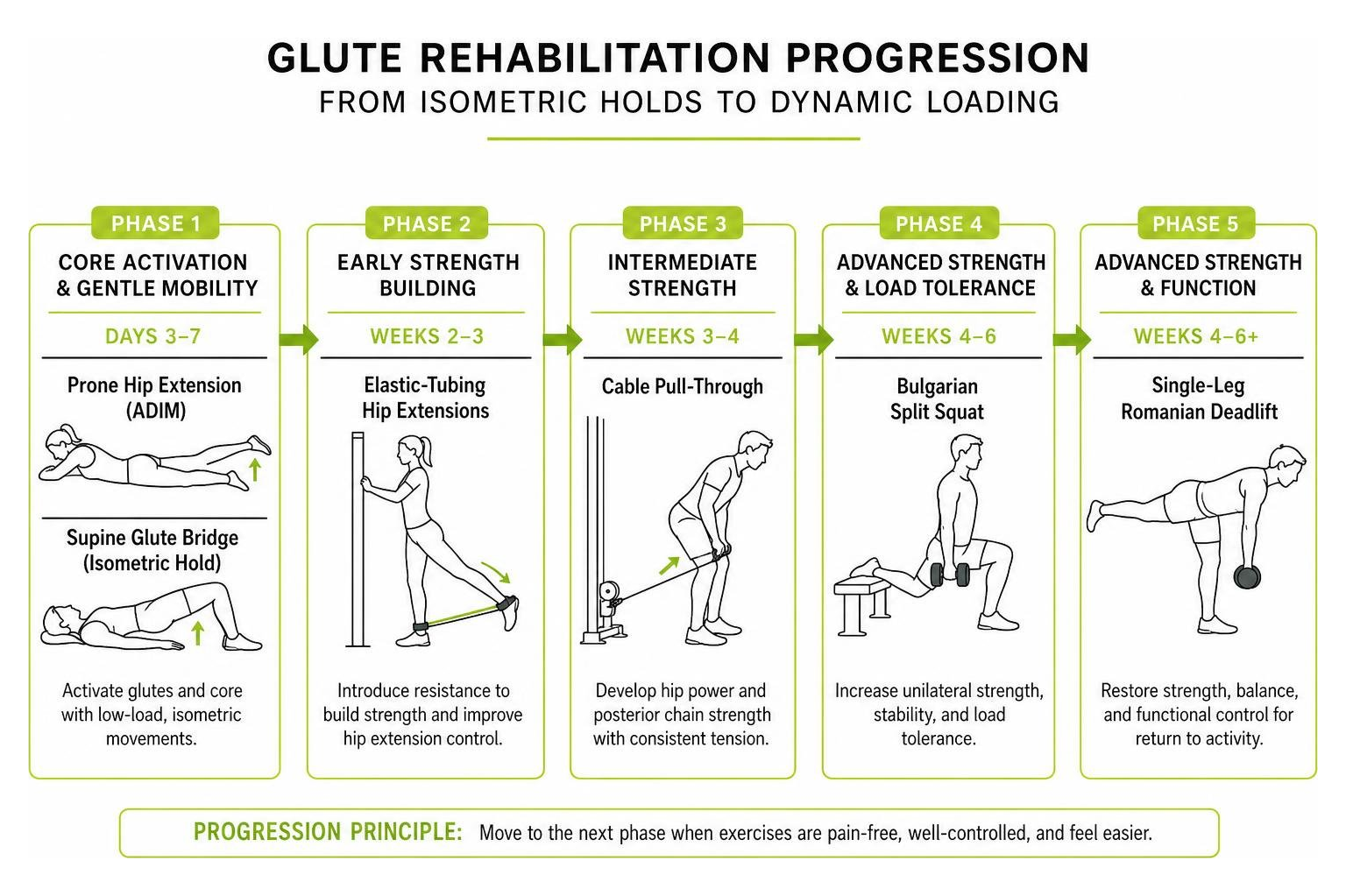
- Elastic-Tubing Hip Extensions: Research on standing elastic-tubing exercises confirms that back-pull movements produce the highest electromyographic activation of the moving gluteus maximus, while front-pull resistance maximally activates the stance-limb gluteus medius (Youdas et al., 2014). Anchor a band to a sturdy post, loop it around your ankle, and slowly extend your leg backward against resistance for 3 sets of 12 repetitions.
- Cable Pull-Through: Stand facing away from a low pulley, hinge at your hips while maintaining a neutral spine, and drive your hips forward to full lockout using glute power. This movement provides consistent horizontal tension throughout the hip extension arc while minimizing spinal shear forces.
- Bulgarian Split Squats and Single-Leg RDLs: Biomechanical data confirms that loaded split squats and single-leg Romanian deadlifts generate peak gluteus maximus forces (495–688 N), making them exceptional tools for late-stage athletic rehabilitation.
When to Seek Professional Medical Care
While most mild glute strains resolve with home care, certain signs indicate the need for formal clinical evaluation.
Consult a medical provider if you experience:
- An audible “pop” or tearing sensation followed by immediate weakness.
- Inability to bear weight on the affected leg or walk without a severe limp.
- Visible, expanding bruising that spreads down the posterior thigh.
- Numbness, tingling, or weakness radiating into the calf or foot.
- Symptoms that fail to improve after 10 to 14 days of conservative home care.
If your injury involves the lateral hip stabilizing muscles, review our step-by-step protocol on how to treat a pulled gluteus medius for targeted care.
At California Pain Consultants, we provide advanced diagnostics, including high-resolution musculoskeletal ultrasound, digital imaging, and targeted non-surgical therapies. Our board-certified physicians serve patients throughout San Diego, Kearny Mesa, Chula Vista, Rancho Bernardo, La Mesa, and Miramar, California.
Frequently Asked Questions About Glute Muscle Pulls
How long does a glute muscle pull take to heal?
A mild Grade 1 glute pull generally resolves within 1 to 3 weeks with appropriate rest and progressive loading. Moderate Grade 2 strains typically require 4 to 8 weeks of structured physical therapy. Severe Grade 3 tears or avulsions may take 3 to 6 months to achieve full functional restoration. Read our complete guide on the healing timeline for a pulled buttock muscle for details.
Can I walk or exercise with a strained glute?
You can walk if it does not alter your natural gait or cause sharp, pinching pain. Keep walks short and on flat, level surfaces. Avoid running, jumping, heavy lifting, or deep lunges until you can perform bodyweight glute bridges and single-leg balance drills without pain.
What is dead butt syndrome and how does it trigger muscle pulls?
Dead butt syndrome (gluteal amnesia) occurs when prolonged sitting keeps hip flexors short and tight, inhibiting the neuromuscular recruitment of the gluteus maximus and medius. When you engage in sudden exercise, these dormant muscles fail to fire efficiently, placing compensatory strain on the lower back, hamstrings, and hip joints.
Conclusion
A glute muscle pull can disrupt daily movements like walking, climbing stairs, and sitting comfortably. By utilizing early protection, targeted cold and heat therapy, and progressive loading exercises, you can restore full tissue integrity and prevent chronic reinjury.
If your glute pain persists, limits your mobility, or radiates down your leg, our team at California Pain Consultants is here to help. Our board-certified pain specialists deliver comprehensive, non-surgical pain management across our clinics in San Diego, Kearny Mesa, Chula Vista, Rancho Bernardo, La Mesa, and Miramar.
Contact us today to schedule your consultation and access expert treatment for buttock muscle injuries.
References
Adel Elzanie, Judith Borger. “Anatomy, Bony Pelvis and Lower Limb, Gluteus Maximus Muscle.” StatPearls Publishing, 2023. NBK538193. Park KY, Jeon IC, Hwang UJ, Jung SH, Ha SM, Yim SY. “Effects of abdominal drawing-in maneuver with or without prior iliopsoas stretching on gluteus maximus activity during prone hip extension..” Journal of back and musculoskeletal rehabilitation, 2022. PMID 34250929. Youdas JW, Adams KE, Bertucci JE, Brooks KJ, Nelson MM, Hollman JH. “Muscle activation levels of the gluteus maximus and medius during standing hip-joint strengthening exercises using elastic-tubing resistance..” Journal of sport rehabilitation, 2014. PMID 23921445.