Choosing the Best Medicine for Strained Muscle Pain
Dealing with this in San Diego? Same-day appointments are often available at our 4 clinics.
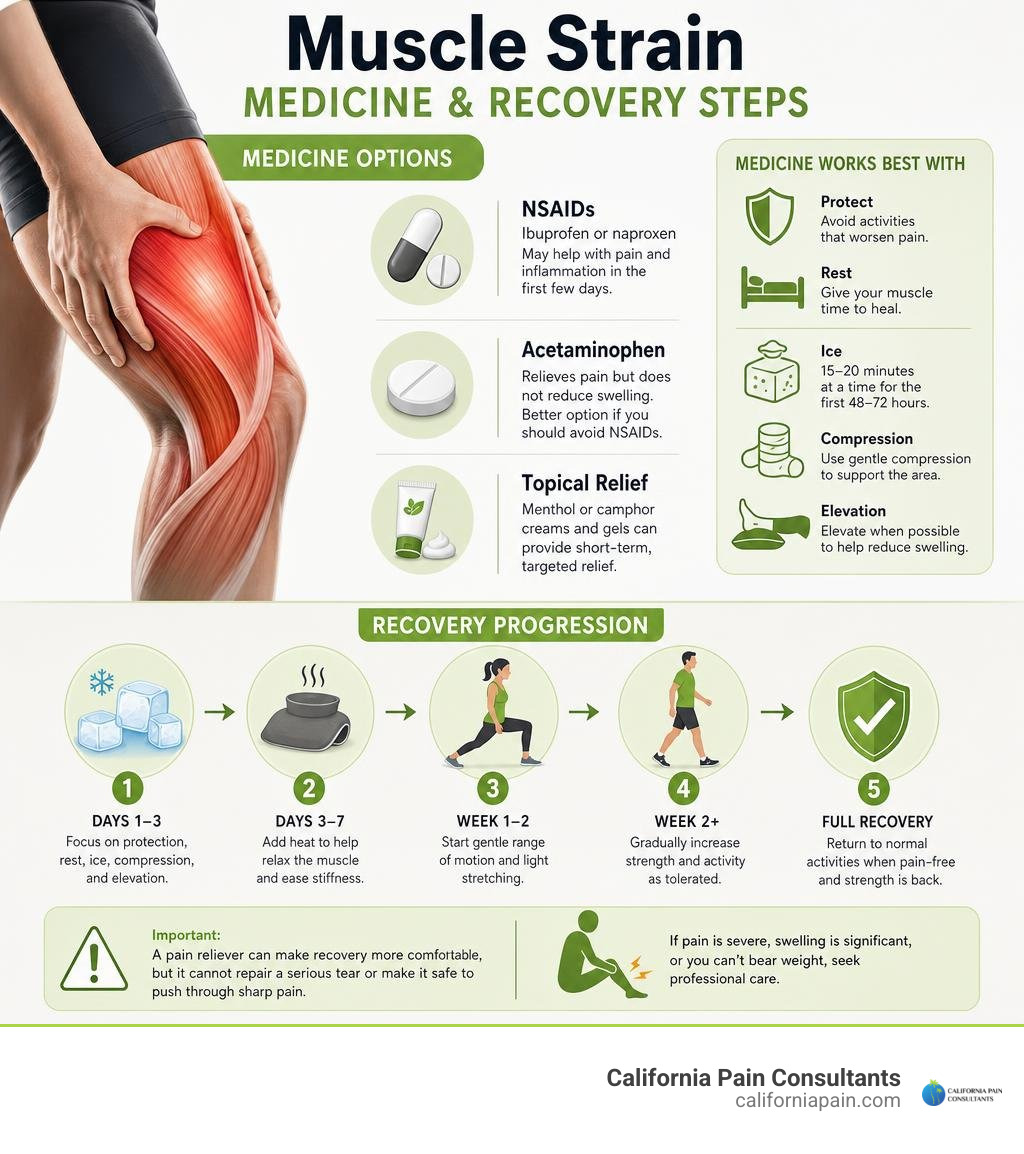
For most mild muscle strains, the best medicine for strained muscle pain depends on your health history and whether swelling is a major problem:
- Ibuprofen or naproxen may help with pain and inflammation in the first few days, if you can safely take NSAIDs.
- Acetaminophen relieves pain but does not reduce swelling. It can be a better option for people who should avoid NSAIDs.
- Menthol or camphor creams and gels can provide short-term, targeted relief with less whole-body medication exposure.
Medicine works best alongside early care: protect and rest the muscle, use ice for 15 to 20 minutes at a time during the first 48 to 72 hours, add gentle compression and elevation when helpful, then transition to heat and gradual movement as swelling settles. A pain reliever can make recovery more comfortable, but it cannot repair a serious tear or make it safe to push through sharp pain.
I am Dr. Zach Cohen, a double board-certified anesthesiologist and chronic pain physician with experience helping people choose safe, effective options for the best medicine for strained muscle pain and other musculoskeletal conditions. In this guide, I will help you compare your options, avoid common medication risks, and know when a strain needs professional care.
Best medicine for strained muscle word roundup:
Understanding Muscle Strain Severity and Choosing the Best Medicine for Strained Muscle Relief
A muscle strain occurs when muscle fibers or their attaching tendons are stretched beyond their functional capacity, leading to microscopic micro-tears or full ruptures. Muscle strains commonly involve type II (fast-twitch) muscle fibers during forceful eccentric contractions—such as sprinting, lifting heavy objects, or sudden twisting.
Finding the right Muscle Strain Treatment begins by assessing the clinical severity of your injury. Muscle strains are categorized into three distinct grades:
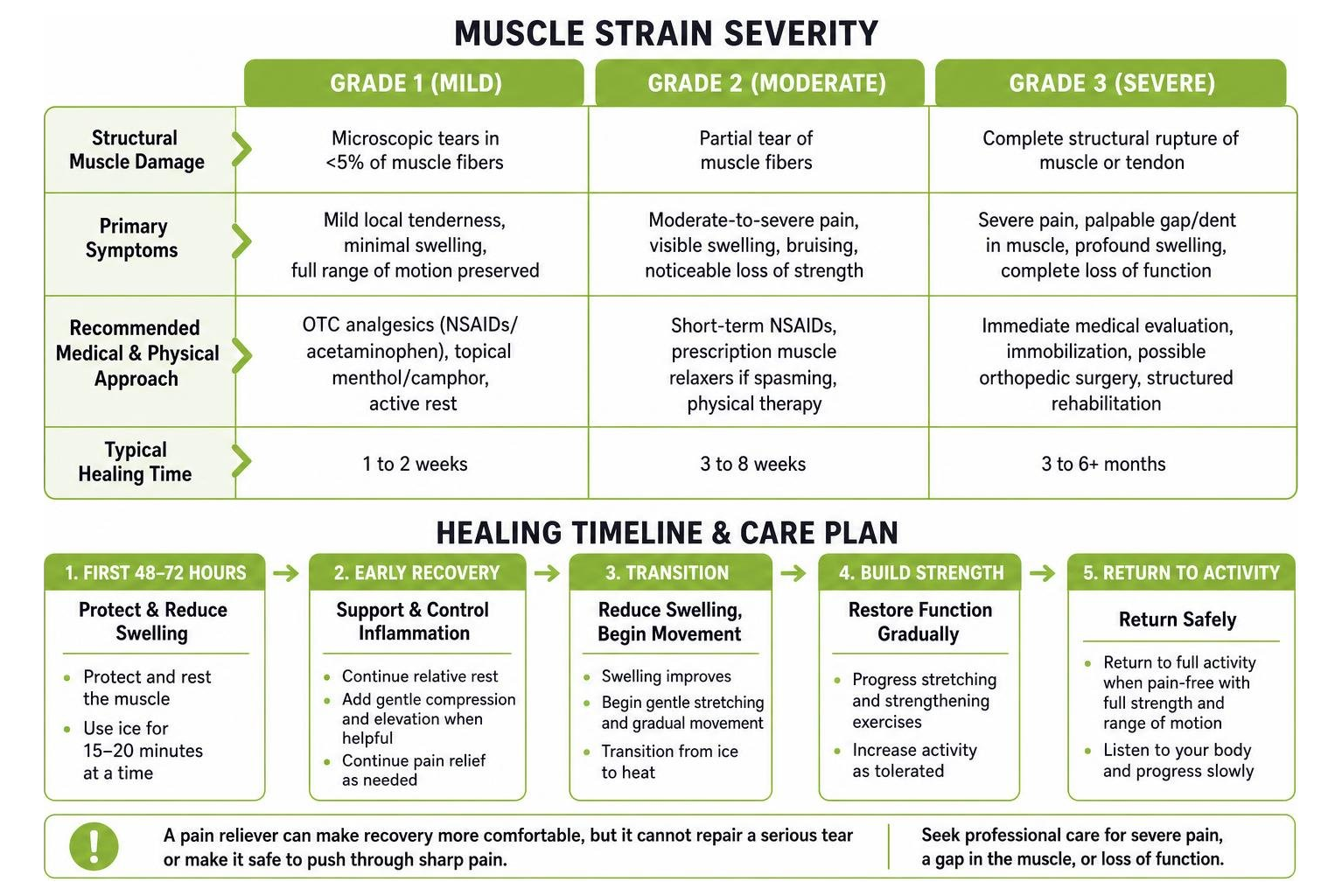
| Strain Grade | Structural Muscle Damage | Primary Symptoms | Recommended Medical & Physical Approach | Typical Healing Time |
|---|---|---|---|---|
| Grade 1 (Mild) | Microscopic tears in <5% of muscle fibers | Mild local tenderness, minimal swelling, full range of motion preserved | OTC analgesics (NSAIDs/acetaminophen), topical menthol/camphor, active rest | 1 to 2 weeks |
| Grade 2 (Moderate) | Partial tear of muscle fibers | Moderate-to-severe pain, visible swelling, bruising, noticeable loss of strength | Short-term NSAIDs, prescription muscle relaxers if spasming, physical therapy | 3 to 8 weeks |
| Grade 3 (Severe) | Complete structural rupture of muscle or tendon | Severe pain, palpable gap/dent in muscle, profound swelling, complete loss of function | Immediate medical evaluation, immobilization, possible orthopedic surgery, structured rehabilitation | 3 to 6+ months |
Grade 1 Mild Strains: Over-the-Counter Options
Grade 1 strains involve microscopic tears that create minor localized soreness without destabilizing the muscle belly. In these mild cases, starting with Immediate Pain Relief for a Pulled Muscle using over-the-counter (OTC) oral medications or topical counter-irritants is standard practice. Because functional capacity remains largely intact, early mobility, gentle stretching, and short-term medication can keep you comfortable while cellular repair occurs.
Grade 2 and Grade 3 Strains: Medical Intervention and Prescription Solutions
Grade 2 partial tears and Grade 3 complete ruptures involve significant structural damage, marked tissue swelling, and substantial functional disability. For these injuries, self-medication alone is insufficient.
A rigorous systematic review in the American Journal of Sports Medicine evaluated the Effect of NSAIDs on Recovery From Acute Skeletal Muscle Injury across 41 studies, noting a small-to-medium significant decrease in biological markers of injury (overall ES = +0.34; P = .0001), with pronounced benefits for lower-body skeletal injuries. However, extensive Grade 3 tears often require clinical immobilization, advanced imaging, and formal orthopedic evaluation.
Comparing Oral Pain Relievers: NSAIDs vs. Acetaminophen
When selecting systemic oral medications for musculoskeletal discomfort, patients generally choose between two primary pharmacological classes: Non-Steroidal Anti-Inflammatory Drugs (NSAIDs) and acetaminophen. While both mitigate pain perception, their mechanisms of action and physiological pathways differ. Reviewing options like Over the Counter Pain Killers for Back Pain helps match the right drug to your clinical situation.
Evaluating NSAIDs as the Best Medicine for Strained Muscle Inflammation
NSAIDs—including ibuprofen (Advil, Motrin) and naproxen sodium (Aleve)—work by inhibiting cyclooxygenase (COX-1 and COX-2) enzymes. These enzymes produce prostaglandins, the primary chemical mediators of acute inflammatory cascades, swelling, and nociceptive pain signaling.
- Ibuprofen: Offers rapid symptom relief with a standard dosing interval of every 4 to 6 hours.
- Naproxen Sodium: Provides extended duration, allowing convenient 12-hour dosing intervals that support overnight relief.
Clinical guidance on the Best ways to recover from a muscle strain – Harvard Health highlights that short-term NSAID therapy effectively reduces functional soreness.
Precautions: NSAIDs must be used at the lowest effective dose for the shortest necessary duration (typically 3 to 7 days). Prolonged use carries risks of gastric mucosal irritation, peptic ulceration, renal stress, and elevated cardiovascular risks. Patients with hypertension, kidney disease, or a history of gastrointestinal bleeding should exercise caution.
Acetaminophen for Pain Management Without Gastrointestinal Risk
Acetaminophen (Tylenol) functions primarily within the central nervous system to inhibit pain pathways and modulate thermal regulation, making it an effective antipyretic and analgesic.
Unlike NSAIDs, acetaminophen does not reduce peripheral tissue inflammation or swelling. However, because it does not interfere with systemic prostaglandin production in the stomach lining or platelets, it provides a safer side-effect profile for individuals with peptic ulcers, gastrointestinal sensitivity, cardiovascular disease, or kidney concerns.
Precautions: Acetaminophen is metabolized by the liver. To avoid hepatic injury, total daily consumption across all medication sources should never exceed 3,000 to 4,000 mg in healthy adults. Individuals with chronic liver disease, cirrhosis, or heavy alcohol intake should consult a physician before use.
Topical Analgesics and Complementary Therapies
For patients seeking localized comfort without systemic drug exposure, transdermal analgesics provide an effective option. Topical agents deliver therapeutic ingredients directly through the epidermal layers into superficial muscle tissues, offering Natural Pain Relief with minimal systemic absorption.
Selecting the Best Medicine for Strained Muscle Relief via Topical Gels and Creams
Topical analgesics frequently employ counter-irritants that stimulate sensory nerve endings in the skin, distracting the central nervous system from deeper muscle aching through the “gate control” theory of pain modulation.
- Menthol: Produces a cooling sensation that activates TRPM8 sensory receptors to numb focal pain. According to official DailyMed – MUSCLE RUB PAIN RELIEVER GEL- menthol, unspecified form gel drug labeling, 2.5% menthol formulations deliver temporary relief for simple backaches, strains, and joint pain when applied 3 to 4 times daily.
- Camphor: Complements menthol by generating a warm, soothing sensation that increases superficial microcirculation. Herbal counter-irritant blends, such as Tiger Balm Ultra Strength Ointment | Muscle Pain Relief , combine 11% camphor and 11% menthol in an ointment base that provides 3 to 4 hours of targeted pain relief per application.
Safety Note: Never apply topical counter-irritants to broken skin, open wounds, or underneath tight occlusive dressings or heating pads, as this can cause chemical burns.
Prescription Muscle Relaxers for Severe Spasms
When a severe muscle strain triggers secondary reactive muscle spasms, standard OTC analgesics may not fully relieve the tightness. In these acute cases, physicians may prescribe central-acting skeletal muscle relaxants:
- Cyclobenzaprine
- Methocarbamol
- Metaxalone
According to clinical overviews on Muscle Relaxers: Which Medication Is the Most Effective? , these medications do not act directly on the muscle fibers; rather, they depress polysynaptic reflexes within the central nervous system and brainstem. As a non-opioid, Non-Addictive Pain Medication option, they reduce painful guarding during the first 48 to 72 hours. Because sedation and dizziness are common side effects, they are typically prescribed for nighttime use.
Step-by-Step At-Home Treatment Protocol: Combining Medicine with Physical Care
Medication manages discomfort most effectively when paired with physical rehabilitation techniques. If you want to learn How to Relieve Muscle Strain Fast by Using Simple Techniques, follow this evidence-based recovery protocol.
The PRICE and RICE First-Aid Protocol
For the first 48 to 72 hours after injury, the gold standard self-care protocol outlined in the Muscle strains – Diagnosis and treatment – Mayo Clinic guide is the P.R.I.C.E. framework:
- Protect: Shield the injured muscle from additional trauma using braces, splints, or crutches.
- Rest: Stop athletic activities and avoid movements that cause sharp pain.
- Ice: Apply cold packs wrapped in a thin cloth towel for 15 to 20 minutes every 2 to 3 hours. Never place bare ice directly onto the skin.
- Compress: Wrap the area with an elastic bandage (such as an ACE wrap) from the distal point upward to minimize interstitial fluid accumulation. Ensure the wrap is snug but does not cause numbness or throbbing.
- Elevate: Prop the injured limb above heart level whenever resting to facilitate venous return and reduce localized swelling.
When to Transition from Ice to Heat Therapy
A frequent point of confusion during recovery is choosing between cold and thermal therapy:
- First 48 to 72 Hours (Ice Only): Cold triggers vasoconstriction, limiting local hemorrhage, secondary swelling, and acute inflammation.
- After 72 Hours (Introduce Heat): As established in Muscle strain treatment: MedlinePlus Medical Encyclopedia , once acute swelling subsides, transition to moist heat applications (warm baths, heating pads for 15-20 minutes). Heat causes vasodilation, increasing local blood flow, delivering oxygenated nutrients to repairing fibers, and relaxing stiff musculature prior to gentle stretching.
When to Seek Professional Medical Care for a Muscle Injury
While most mild strains resolve with self-care, certain symptoms warrant immediate clinical evaluation. Consult a physician if you experience:
- An audible “popping” or snapping sensation at the time of injury
- A visible gap, indentation, or deformity in the muscle contour
- Severe ecchymosis (dark bruising) or rapidly expanding swelling
- Total inability to bear weight or move the adjacent joint
- Radiating numbness, tingling, or weakness distal to the injury
- Severe pain that fails to improve after 5 to 7 days of conservative care
For severe back injuries, diagnosing whether symptoms stem from a simple pulled muscle in back or an underlying spinal issue is essential for preventing chronic complications.
Frequently Asked Questions About Strained Muscle Recovery
Can taking NSAIDs like ibuprofen delay long-term muscle healing?
While prostaglandins are involved in the initial muscle regeneration cascade, current clinical evidence indicates that short-term, low-dose NSAID use (3 to 5 days) does not impair functional recovery. Limiting NSAIDs to the acute phase effectively mitigates severe pain and secondary swelling without disrupting long-term cellular remodeling.
How do I know if I have a muscle strain or a sprain?
A strain is an injury to a muscle or tendon (the fibrous cords connecting muscle to bone), typically presenting with local tenderness, muscle cramping, or spasms. A sprain is an injury to a ligament (the dense tissue connecting bone to bone across a joint). Ligament sprains—such as ankle sprains, which affect roughly 25,000 individuals daily across the United States—result in joint instability, pinpoint ligament tenderness, and joint swelling.
How long does it take for a pulled muscle to heal completely?
Recovery timelines depend on initial tissue damage:
- Grade 1 Mild Strains: Typically heal within 1 to 2 weeks with rest and light stretching.
- Grade 2 Moderate Strains: Generally require 3 to 8 weeks of progressive rehabilitation.
- Grade 3 Severe Tears: May require 3 to 6 months or longer, particularly if surgical reattachment is necessary.
Conclusion
Successfully managing a pulled muscle requires matching the right medical therapy to your injury’s severity. Short-term NSAIDs like ibuprofen and naproxen address acute swelling, acetaminophen offers pain relief without gastrointestinal irritation, and topical menthol or camphor creams deliver targeted comfort. Paired with the PRICE protocol and gradual thermal therapy, these approaches support a safe, steady recovery.
At California Pain Consultants, our team provides comprehensive, non-surgical pain management across Southern California. Our board-certified physicians serve patients at state-of-the-art clinics in San Diego, Kearny Mesa, Chula Vista, Rancho Bernardo, La Mesa, and Miramar. We focus on evidence-based, personalized treatments to reduce musculoskeletal pain, restore functional mobility, and help you return safely to your daily life.