
Simple First Steps for Intercostal Muscle Strain Relief
Dealing with this in San Diego? Same-day appointments are often available at our 4 clinics.
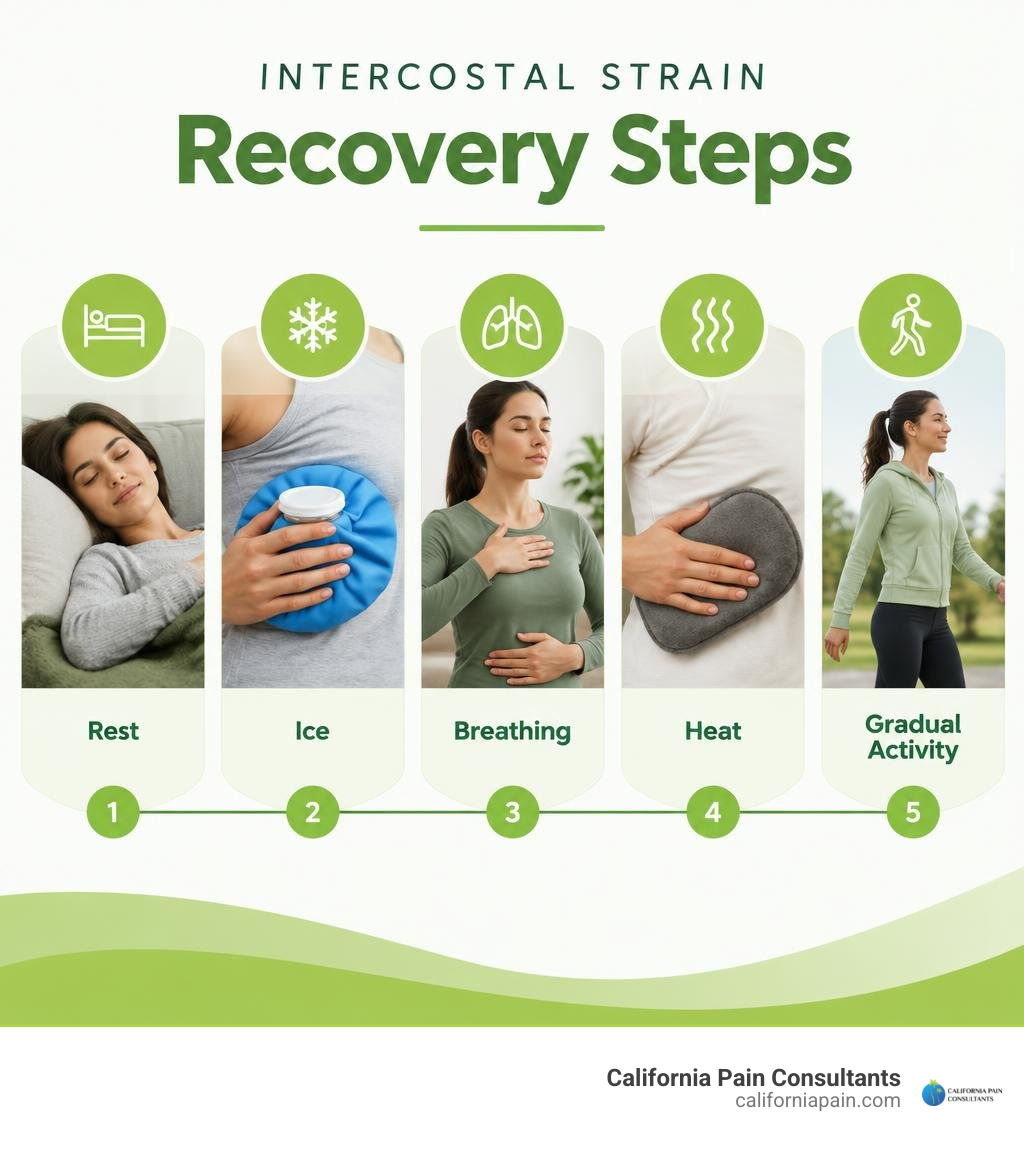
The best treatment for intercostal muscle strain starts with relative rest, cold therapy, gentle breathing, and pain control. For the first 24 to 72 hours, avoid twisting, heavy lifting, hard exercise, and any movement that causes sharp pain. Apply an ice pack wrapped in a thin towel for 15 to 20 minutes at a time, and take regular slow breaths rather than holding your breath because of pain.
- Use ice during the first day or two to ease pain and swelling.
- Support the sore area with a pillow when coughing or taking a deeper breath.
- Consider acetaminophen or an anti-inflammatory medicine if it is safe for you.
- Shift to gentle heat later if stiffness or muscle spasm remains.
- Get urgent care for severe chest pressure, major shortness of breath, coughing blood, fainting, or pain spreading to the arm, jaw, back, or neck.
A pulled rib muscle involves one or more small muscles between the ribs. It can make breathing, coughing, laughing, reaching, or turning your torso surprisingly painful. Most uncomplicated strains improve with conservative care, but chest pain has many possible causes, so do not assume every rib-area pain is a muscle injury.
I am Dr. Zach Cohen, a double board-certified anesthesiologist and chronic pain physician who uses conservative, medication-based, and non-surgical interventional approaches for musculoskeletal and nerve pain. In the sections ahead, I will explain treatment for intercostal muscle strain in clear, practical steps, including when home care is enough and when expert evaluation is important.
Treatment for intercostal muscle strain further reading:
Understanding Intercostal Strain vs. Other Rib Pain
Your chest wall is a dynamic structure engineered for two primary tasks: protecting vital organs and facilitating respiration. Positioned between each of your 12 pairs of ribs are three distinct layers of intercostal muscles: external, internal, and innermost. These muscles expand and contract your rib cage thousands of times every day. When these fibers are stretched beyond their capacity or torn, the resulting injury makes even normal daily movements uncomfortable.
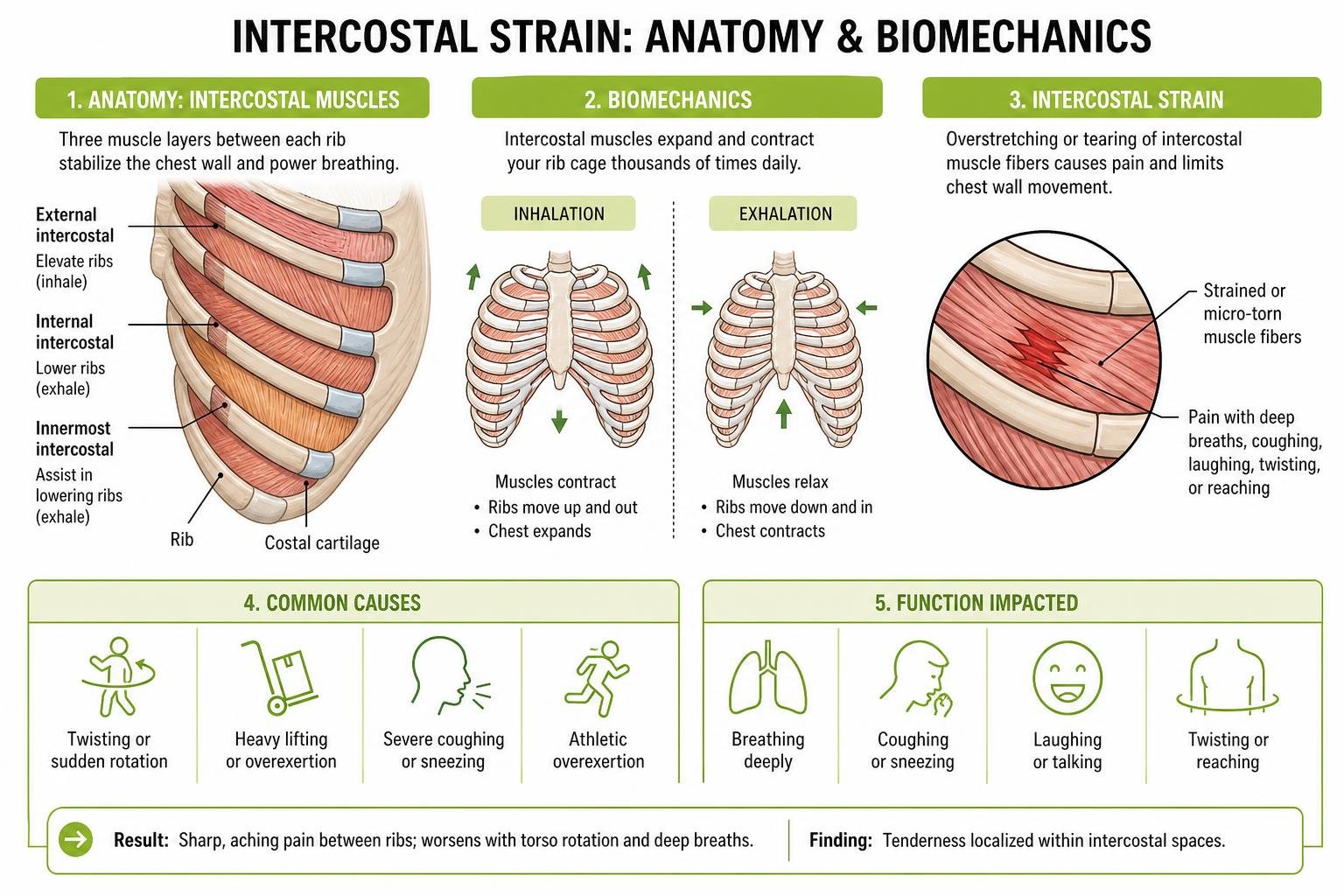
Because the chest wall houses the heart, lungs, thoracic spine, and rib cage joints, diagnosing the precise source of rib discomfort is essential. A strained muscle must be carefully differentiated from rib fractures, costochondritis, and intercostal nerve irritation.
| Condition | Primary Cause | Pain Characteristic | Key Diagnostic Indicator |
|---|---|---|---|
| Intercostal Muscle Strain | Twisting, heavy lifting, severe coughing, athletic overexertion | Sharp, aching pain between ribs; worsens with torso rotation and deep breaths | Tenderness localized within intercostal spaces; soft-tissue tension |
| Rib Fracture | Direct impact, blunt trauma, severe repetitive stress | Severe, unrelenting pain; sharp catch on any chest movement | Point tenderness directly over the bone; crepitus or visible defect on X-ray |
| Costochondritis | Joint inflammation, overuse, respiratory infection | Sharp or burning pain at the front of the chest wall | Exquisite tenderness when pressing the costochondral junction (sternum border) |
How to Recognize Rib Muscle Symptoms
When you experience an intercostal strain, symptoms generally present along a localized band on the chest wall or mid-back. Classic signs include:
- Sharp, localized rib pain: The pain is felt specifically in the muscular space between adjacent ribs rather than directly on the sternum or spine.
- Pain aggravated by breathing mechanics: Deep inhalations, sneezing, laughing, or coughing cause the rib cage to expand, stretching the torn fibers and triggering pain.
- Tenderness and muscle tightness: Pressing between the affected ribs reveals localized tenderness, often accompanied by protective muscle splinting or spasms.
- Restricted torso mobility: Rotating the trunk, bending sideways, or reaching overhead elicits a sharp pull across the thoracic wall.
If you are dealing with persistent discomfort along the ribs, exploring the complete guide to treatment for rib muscle strain can give you a clearer look at how these soft-tissue tears develop.
Differentiating Muscle Strain from Rib Fractures and Costochondritis
Distinguishing between a soft-tissue strain and skeletal trauma is critical for selecting the right care plan. A rib fracture typically follows significant trauma—such as an athletic collision, a car accident, or a hard fall—though high-stress repetitive sports like rowing can cause stress fractures. In a fracture, pressing directly on the bony surface of the rib reproduces intense, pinpoint pain.
Costochondritis, by contrast, is an inflammation of the cartilage connecting your ribs to your breastbone. The discomfort settles along the front of the chest and can mimic cardiac conditions. Meanwhile, if your pain originates closer to your spine, you may be experiencing a pulled muscle in back involving the rhomboids, latissimus dorsi, or thoracic erector spinae.
Step-by-Step Home Treatment for Intercostal Muscle Strain
The cornerstone of conservative management is creating an optimal environment for soft-tissue healing while preserving normal respiratory function. If you want to know how to treat muscle strain even if you’ve never tried it before, following a structured, progressive protocol helps prevent prolonged stiffness and chronic irritation.
First-Line Treatment for Intercostal Muscle Strain in the First 72 Hours
During the acute phase (the first 24 to 72 hours), your primary goals are managing inflammation and protecting the injured muscle fibers from further micro-tearing:
- Adopt Relative Rest: Avoid forceful rotational sports (golf, tennis, baseball), heavy lifting, and aggressive twisting. Complete bed rest is not recommended, as total inactivity stiffens the chest wall and limits lung capacity.
- Apply Cold Therapy: Place a cold pack or ice wrapped in a damp cloth over the painful intercostal space for 15 to 20 minutes every 2 to 3 hours. Cold constricts local blood vessels, blunting inflammation and dulling acute pain signals.
- Pillow Splinting: When you need to cough, sneeze, or take a deep therapeutic breath, hug a firm pillow against your sore rib cage. This external pressure supports the chest wall and significantly decreases sudden pulling on the healing muscle fibers.
Thermal Therapy: Transitioning from Ice to Heat
After the initial 72-hour window, local inflammation begins to subside, leaving behind muscle stiffness, protective guarding, and reduced elasticity. This is when you should transition from ice to moist heat.
Applying a warm compress, heating pad, or warm bath for 15 to 20 minutes enhances local blood flow, delivering oxygen and nutrients to damaged tissues. Learning how to relieve muscle strain fast by using simple techniques like alternating contrast therapy can help ease stubborn muscle spasms in the mid-back and ribs.
Over-the-Counter Medications for Inflammation and Pain
Oral analgesics and topical preparations are valuable for reducing discomfort so you can breathe comfortably without guarding.
- Nonsteroidal Anti-Inflammatory Drugs (NSAIDs): Medications such as ibuprofen and naproxen reduce both inflammatory swelling and pain. They should be used at the lowest effective dose for short periods, especially if you have a history of gastrointestinal or cardiovascular issues.
- Acetaminophen: A suitable alternative for pain relief if you cannot tolerate NSAIDs, though it does not target peripheral inflammation.
- Topical Analgesics: Lidocaine patches, menthol gels, or topical NSAID creams provide localized relief without systemic side effects.
For a broader overview of pharmacologic options, consult our breakdown on the ultimate guide to best medicine for strained muscle pain. When severe spasms persist, our board-certified physicians may prescribe short-course muscle relaxants to interrupt the pain-spasm cycle.
Rehabilitation Exercises, Breathing Techniques, and Safe Physical Activity
Rest is essential early on, but long-term recovery requires restoring full rib mobility, thoracic spine flexibility, and core stability. Active rehabilitation prevents chronic stiffness and strengthens the musculature supporting the rib cage.
Diaphragmatic Breathing to Prevent Lung Complications
When every breath hurts, the natural tendency is to take rapid, shallow breaths. This respiratory splinting carries a genuine medical risk: it can cause atelectasis (collapse of small air sacs in the lungs) and increase vulnerability to respiratory infections, such as pneumonia.
Diaphragmatic breathing (belly breathing) expands the lower lungs using the diaphragm rather than forcing irritated intercostal muscles to lift the rib cage.
Progressive Stretches and Core Strengthening
Once acute pain subsides (typically after 3 to 7 days), begin gentle mobility work to restore lateral trunk flexibility. Never push into sharp, stabbing pain; you should only feel a mild, comfortable stretch.
- Seated Lateral Reach: Sit upright in a sturdy chair. Raise the arm on the uninjured side overhead, then gently lean slightly toward the injured side to open the rib spaces, holding for 15 to 20 seconds. Reverse carefully as tolerated.
- Thoracic Extension and Rotation: Gentle cat-camel movements and side-lying thoracic openers help restore spinal mobility, relieving compensatory stress on the ribs. For additional upper-body stretches, see how to relieve a pulled mid back muscle fast by using simple stretches.
- Isometric Core Activation: Once basic mobility is pain-free, integrate planks, bird-dogs, and pallof presses to stabilize your lateral trunk and distribute mechanical loads evenly across the torso, supporting lasting muscle pain relief.
Safe Return to Exercise and Sports for Athletes
Athletes in rotational and overhead sports—such as golf, baseball, rowing, swimming, and tennis—face higher reinjury rates if they return to play prematurely.
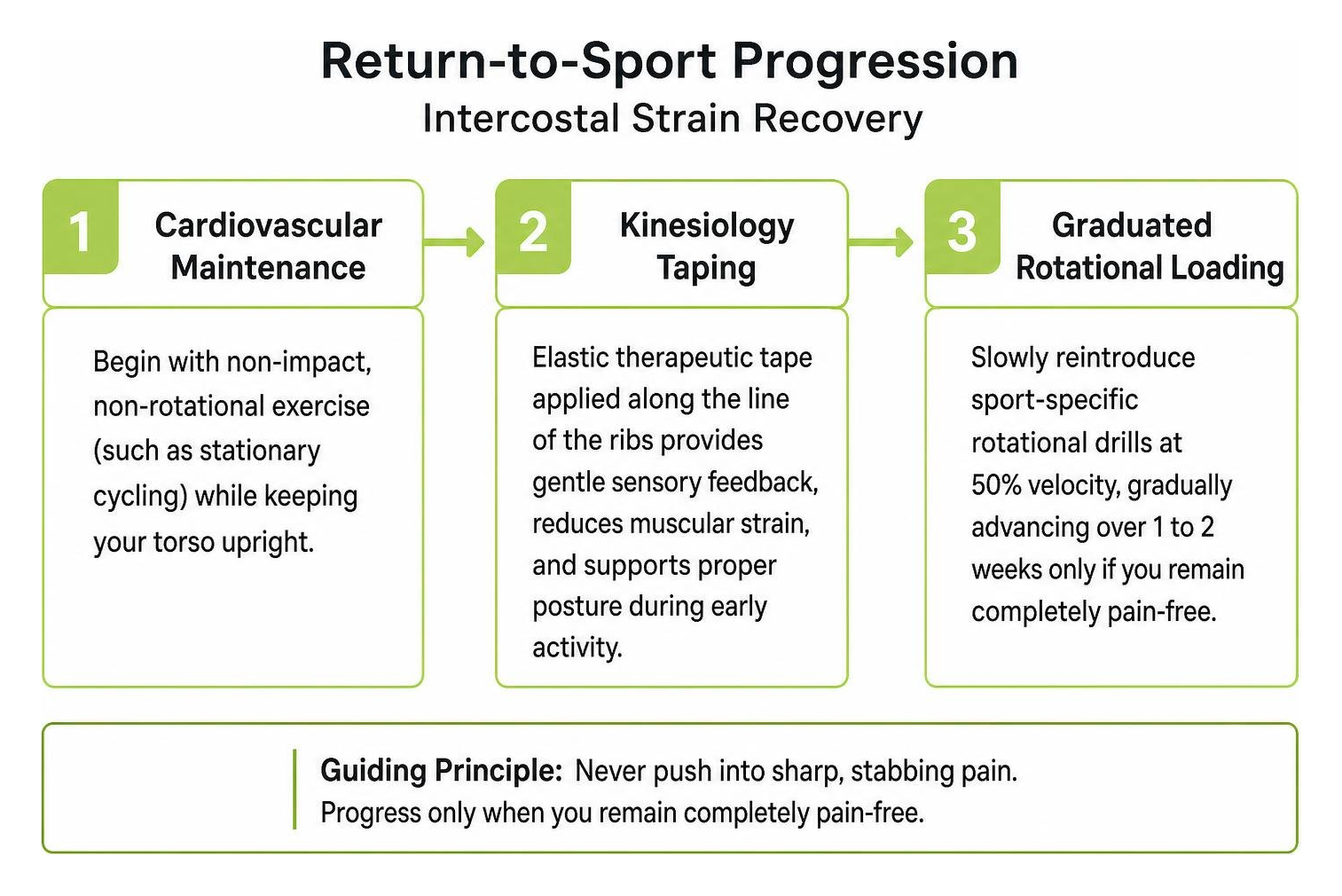
- Cardiovascular Maintenance: Begin with non-impact, non-rotational exercise (such as stationary cycling) while keeping your torso upright.
- Kinesiology Taping: Elastic therapeutic tape applied along the line of the ribs provides gentle sensory feedback, reduces muscular strain, and supports proper posture during early activity.
- Graduated Rotational Loading: Slowly reintroduce sport-specific rotational drills at 50% velocity, gradually advancing over 1 to 2 weeks only if you remain completely pain-free. If you are an athlete looking to recover efficiently, review how to get rid of upper back strain fast for sport-specific recovery principles.
Medical Interventions and When to See a Doctor
While most minor rib pulls resolve with home care, moderate-to-severe strains or persistent symptoms warrant expert clinical evaluation. At California Pain Consultants, our double board-certified pain specialists serve patients throughout San Diego, Kearny Mesa, Chula Vista, Rancho Bernardo, La Mesa, and Miramar, delivering advanced, non-surgical pain management tailored to your needs.
Advanced Clinical Treatment for Intercostal Muscle Strain When Rest Fails
If conservative therapy fails to provide adequate relief after 2 to 3 weeks, advanced interventional treatments can break the cycle of chronic pain and inflammation:
- Intercostal Nerve Blocks: Using precise ultrasound or fluoroscopic guidance, a local anesthetic and anti-inflammatory corticosteroid are placed near the intercostal nerve running beneath the rib. This interrupts pain pathways and delivers rapid, targeted relief for severe chest wall pain and secondary intercostal neuralgia (Fazekas et al., 2023).
- Trigger Point Injections: Localized knots and myofascial spasm in surrounding secondary muscles (such as the serratus anterior, latissimus dorsi, or pectoralis) can be deactivated via targeted trigger point injections.
- Serratus Anterior / Fascial Plane Blocks: For widespread lateral chest wall pain, fascial plane blocks disperse local anesthetic across multiple intercostal nerve branches, reducing muscle tension and reliance on oral medications.
- Specialized Physical Therapy: Partnering with an experienced physical therapist ensures hands-on soft-tissue mobilization, joint release of the costovertebral joints, and customized postural correction. Learn how to relieve upper back strain with these 3 quick changes to optimize your daily mechanics.
Emergency Red Flags: When Chest Pain Requires Urgent Care
Because chest pain can indicate life-threatening cardiac, pulmonary, or vascular emergencies, you must never ignore warning signs. Seek emergency medical evaluation immediately if you experience any of the following:
- Crushing, squeezing chest pressure or pain radiating to your left arm, neck, jaw, or shoulder blade
- Severe, worsening shortness of breath or sudden dizziness and lightheadedness
- Coughing up blood or pink-tinged sputum
- Direct, high-energy impact trauma accompanied by visible chest wall deformity or a feeling of crunching bone (crepitus)
- High fever, chills, or persistent productive cough accompanied by sharp chest pain
Frequently Asked Questions About Intercostal Muscle Strain
How long does an intercostal muscle strain take to heal?
Healing depends on the severity of the muscle injury:
- Grade 1 (Mild): Involves micro-tears of muscle fibers with minimal loss of function. Most people recover fully within 3 to 7 days, or at most 2 weeks with proper rest and ice.
- Grade 2 (Moderate): Involves significant fiber tearing, noticeable swelling, and painful chest expansion. Recovery typically spans 2 to 4 weeks, sometimes extending up to 6 weeks.
- Grade 3 (Severe): Involves a complete or near-complete muscle tear, often with hematoma formation. These injuries require 4 to 8+ weeks of structured rehabilitation and specialist oversight.
Can you still exercise or play sports with a strained rib muscle?
You should avoid strenuous workouts, rotational athletics, heavy lifting, and contact sports during the acute phase. Gentle movement, light walking, and stationary cycling are fine as long as they do not trigger pain. Pushing through a moderate-to-severe strain risks turning a simple micro-tear into a full muscle detachment or chronic chest wall pain.
Why does it hurt to breathe or cough with an intercostal strain?
Every time you inhale, your diaphragm moves downward and your external intercostals pull your ribs up and out to expand your thoracic volume. When these muscles are strained, this physical stretching pulls directly on injured, inflamed fibers. Coughing and sneezing generate sudden, forceful spikes in chest wall pressure, causing sharp, reactive spasms in the damaged muscle tissue.
Conclusion
An intercostal muscle strain can disrupt simple daily tasks—from taking a deep breath to sleeping comfortably. By promptly starting conservative care with relative rest, targeted ice and heat, diaphragmatic breathing, and gradual rehabilitation, you can support steady healing and reduce your risk of complications.
If your rib discomfort persists beyond a few weeks, worsens despite home care, or severely restricts your mobility, our expert clinical team is here to help. California Pain Consultants provides comprehensive, non-surgical pain management across our Southern California clinics, including San Diego, Kearny Mesa, Chula Vista, Rancho Bernardo, La Mesa, and Miramar. Our board-certified specialists use advanced diagnostics, image-guided nerve blocks, and customized rehabilitation programs to resolve underlying chest wall and pulled muscle in back issues safely and effectively.
References
Dalton Fazekas, Maksym Doroshenko, Danielle B. Horn. “Intercostal Neuralgia.” StatPearls Publishing, 2023. NBK560865.