
Fast Steps to Relieve Muscle Strain Pain
Dealing with this in San Diego? Same-day appointments are often available at our 4 clinics.
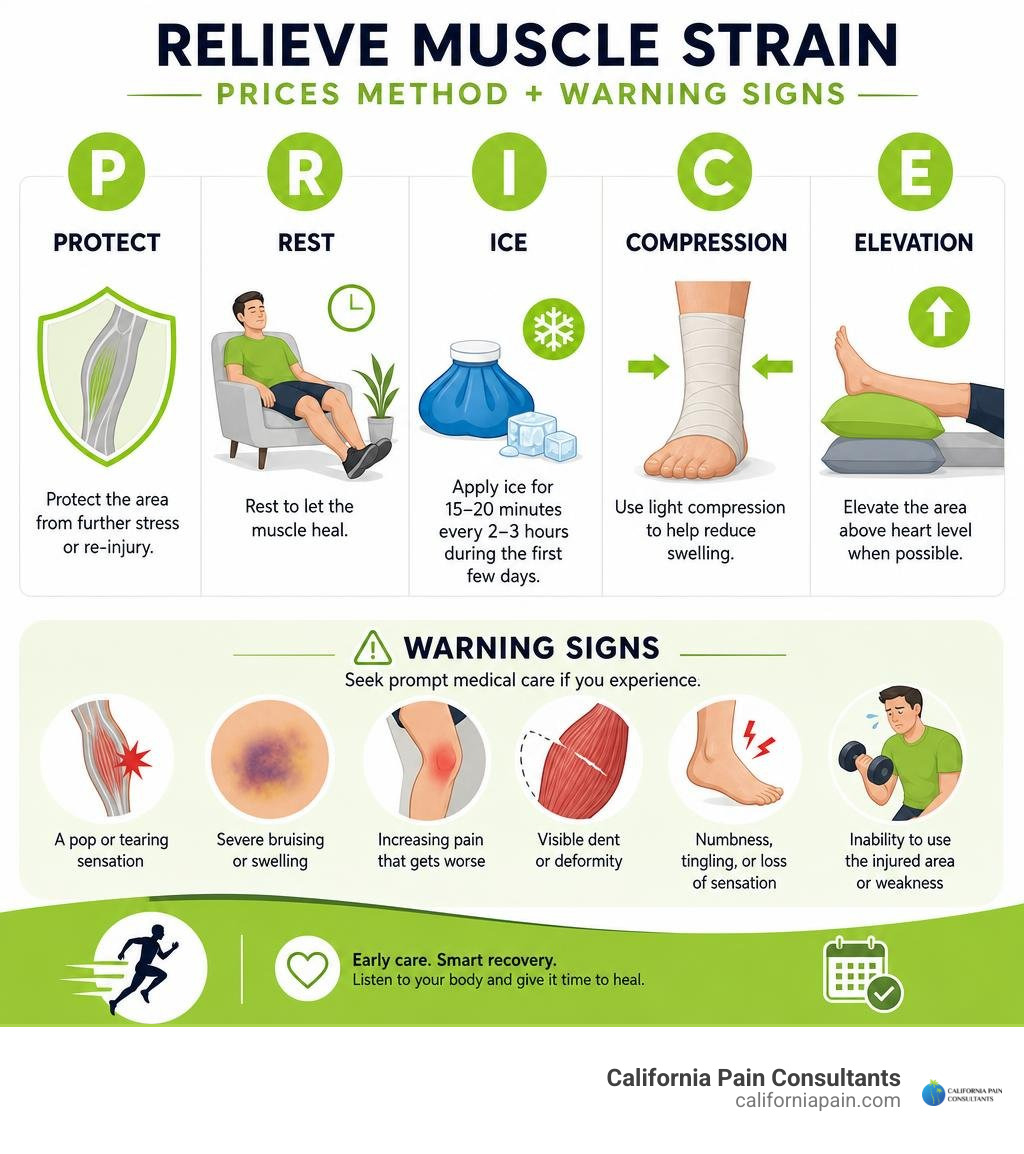
To relieve muscle strain pain quickly, stop the activity that caused it, protect the area from further stress, and use cold therapy early. Apply an ice pack wrapped in a thin towel for 15 to 20 minutes at a time, every 2 to 3 hours during the first few days. Light compression and elevation can also help limit swelling.
Avoid aggressive stretching or trying to “push through” sharp pain. Once swelling and acute pain begin to settle, gentle movement can help restore mobility without overloading the healing muscle.
A pulled muscle is more than normal post-workout soreness. Soreness is often broad and improves within a few days. A strain tends to cause focused tenderness, weakness, swelling, bruising, or pain that gets worse instead of better. A pop, visible dent, major bruising, numbness, or inability to use the limb needs prompt medical care.
I am Dr. Zach Cohen, a double board-certified physician in anesthesiology and chronic pain medicine. My work helping patients relieve muscle strain and other movement-limiting pain focuses on clear guidance, careful evaluation, and non-surgical options when appropriate.
Relieve muscle strain vocab to learn:
Understanding Muscle Strains: Causes, Symptoms, and Grades
When we push our bodies during intense athletics or everyday chores, our soft tissues take on mechanical loads. Challenging our muscles during regular exercise creates microscopic damage that prompts the body to rebuild muscle fibers stronger than before. However, when a muscle contracts forcefully while being stretched beyond its elastic capacity, structural tearing occurs. In the clinical world, this is a muscle strain.
Think of healthy muscle fibers like a brand-new, tightly woven bungee cord: pliable, elastic, and ready to snap back into position. When subjected to sudden trauma or chronic overuse, those fibers fray, stretch excessively, or tear apart.
Certain anatomical and biomechanical factors leave specific muscles more vulnerable to injury:
- Two-Joint Crossings: Muscles that cross two separate joints (such as the hamstrings, rectus femoris in the quadriceps, and gastrocnemius in the calf) undergo higher mechanical tension and shear stress during explosive activities.
- Eccentric Contractions: Forceful muscle contractions that occur while the muscle is actively lengthening—such as landing from a jump, lowering a heavy weight, or running downhill—place immense strain on soft tissues.
- Fiber Composition: Muscle groups rich in Type II (fast-twitch) fibers produce rapid power and explosive speed, but they fatigue faster and suffer tears more frequently than endurance-oriented Type I fibers.
A common question we hear in our clinics across San Diego and Chula Vista is: “How do I know if I’m just sore from a hard workout or if I actually pulled something?”
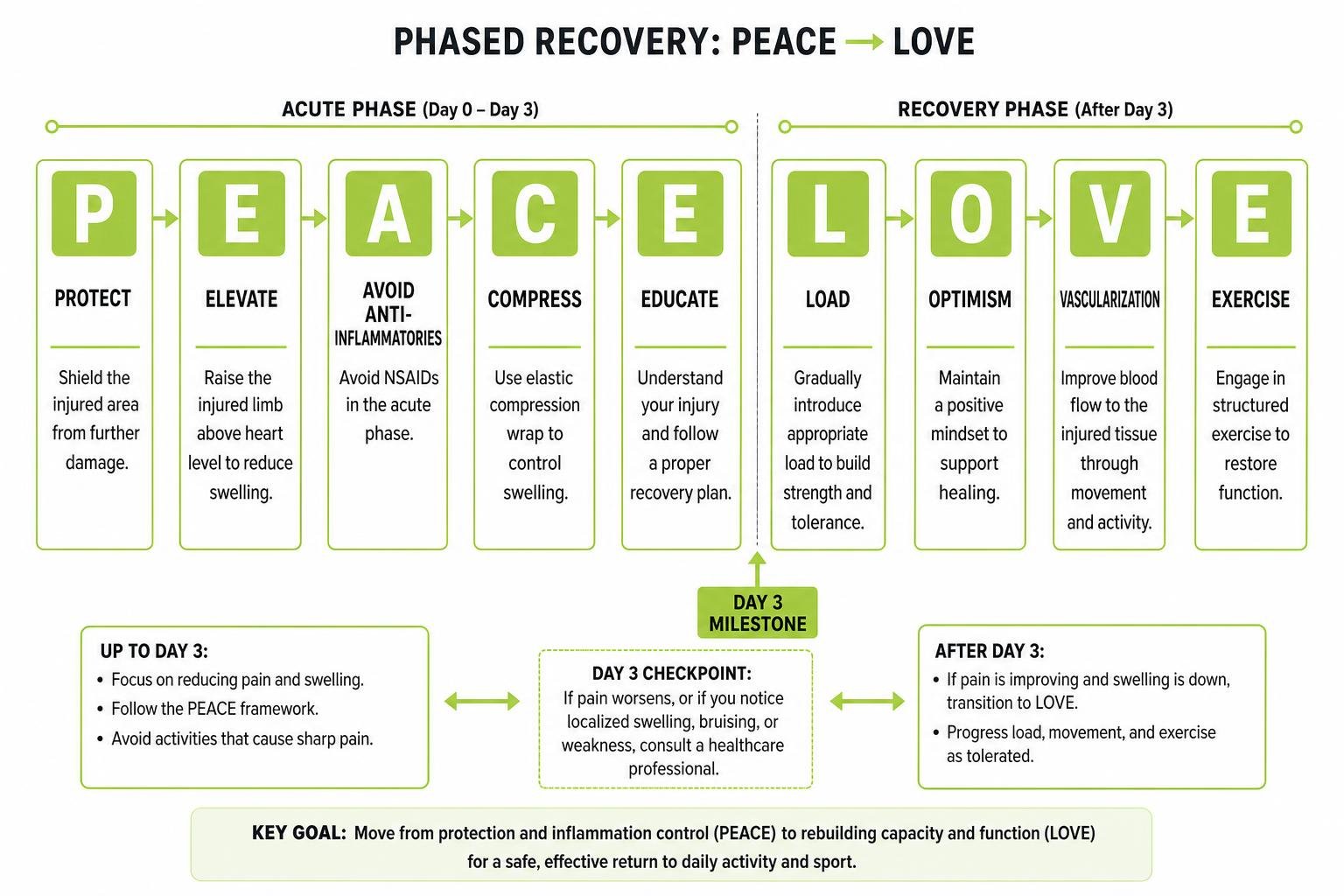
The key lies in the location and the Day 3 symptom milestone. Delayed-onset muscle soreness (DOMS) presents as a broad, diffuse ache spread evenly across an entire muscle group. It peaks around 24 to 48 hours post-exercise and noticeably eases by day three.
By contrast, an acute muscle strain causes sharp, localized tenderness at a specific focal point. If your discomfort intensifies by day three, or if you notice localized swelling, bruising, or muscle weakness, you are dealing with a genuine muscle tear. According to the Cleveland Clinic overview of muscle tears, understanding the mechanical nature of these injuries helps determine the proper clinical path forward.
| Severity Grade | Fiber Damage Severity | Core Symptoms | Average Healing Duration |
|---|---|---|---|
| Grade 1 (Mild) | Microscopic stretching or tearing (<5% of fibers) | Mild localized tenderness, minimal swelling, full structural strength intact | 1 to 2 weeks |
| Grade 2 (Moderate) | Partial structural tear of muscle or tendon | Noticeable focal pain, localized swelling, visible bruising, moderate loss of strength | 3 to 4 weeks (up to several months) |
| Grade 3 (Severe) | Complete muscle rupture or tendon avulsion | Sudden severe pain, audible popping sound, palpable gap/dent, complete loss of function | 4 to 6 months (often requires surgery) |
Muscle Strain Severity: Grade 1 to Grade 3 Tears
Musculoskeletal specialists classify muscle strains into three distinct clinical categories based on the extent of structural fiber separation.
Grade 1 Strains (Mild Pulls): Only a small percentage of muscle fibers suffer microscopic tearing. You might feel a dull ache or tightness during movement, but the muscle retains its structural integrity and normal power. Most Grade 1 pulls resolve with standard at-home care. If you are learning how to treat muscle strain even if you’ve never tried it before, starting with simple conservative steps will often have you back on track in one to two weeks.
Grade 2 Strains (Partial Ruptures): A significant number of muscle fibers are torn without a complete disruption of the muscle belly. This grade causes moderate-to-severe pain, localized swelling, and delayed ecchymosis (bruising) that surfaces 24 to 48 hours later. Engaging the affected muscle elicits sharp pain and demonstrable weakness. Recovery requires structured rest, progressive loading, and active physical rehabilitation over three to four weeks or longer.
Grade 3 Strains (Complete Tears): This is a complete anatomical rupture of the muscle belly or a full avulsion where the tendon tears cleanly away from the bone. Grade 3 injuries often produce an audible “pop” or snapping sensation at the moment of trauma, accompanied by immediate, severe pain and functional mobility loss. You may observe an indent or a palpable gap beneath the skin, sometimes with a bunched-up muscle belly. Grade 3 tears require clinical evaluation, diagnostic imaging, and potential surgical repair followed by four to six months of rehabilitation.
Immediate At-Home Steps to Relieve Muscle Strain
What you do during the first 48 to 72 hours after a soft-tissue injury directly influences your recovery speed and scar tissue formation. For decades, the standard first-aid framework has been the P.R.I.C.E. protocol (Protect, Rest, Ice, Compress, Elevate).
Modern sports medicine also incorporates the P.E.A.C.E. framework (Protect, Elevate, Avoid anti-inflammatories, Compress, Educate) for the acute phase, transitioning into L.O.V.E. (Load, Optimism, Vascularization, Exercise) for long-term functional recovery.
- Protect: Shield the injured area from mechanical overload. If you have strained a weight-bearing muscle in your leg, foot, or hip, use assistive devices like crutches or a cane to take weight off the healing tissue. Splints or braces can help stabilize upper-body injuries.
- Rest (Relative Rest): Total bed rest is rarely helpful. Avoid activities that provoke sharp, pinching, or throbbing pain, but maintain gentle, pain-free daily activities like walking around the house. Complete immobilization causes muscle atrophy and joint stiffness.
- Ice: Apply cold therapy during the acute inflammatory window to numb local nerve pathways and reduce secondary tissue swelling.
- Compress: Wrap the strained muscle snugly using an elastic bandage. Clinical wrapping rule: Always begin your wrap at the point farthest from your heart (distal) and wrap inwards toward the trunk (proximal). This directional pressure supports lymphatic drainage and prevents fluid buildup. If your fingers or toes feel numb, tingle, turn pale, or throb with increased pain, loosen the bandage immediately.
- Elevate: Prop the injured limb up on pillows above the level of your heart, especially while resting on the couch or sleeping at night. Elevation uses gravity to drain pooled interstitial fluids and control swelling.
Following the Mayo Clinic guidelines on muscle strain diagnosis ensures you balance protective rest with safe mobilization. For practical everyday steps, check out how to find immediate pain relief for a pulled muscle to speed up your recovery at home.
Using Ice vs Heat to Relieve Muscle Strain
Applying temperature therapy at the wrong time can delay healing. Here is the clinical timeline:
- Cryotherapy (Ice) — The First 72 Hours: Apply an ice pack wrapped in a thin towel for 15 to 20 minutes at a time, every 2 to 3 hours while awake. Never place raw ice directly on bare skin to prevent cold-induced skin injury. Cold therapy causes local vasoconstriction, narrowing small blood vessels to reduce excess fluid leakage and temporarily numb overactive pain receptors.
- Thermotherapy (Heat) — After 72 Hours: Switch to heat only after the first three days, once acute swelling and heat in the injured tissue have subsided. As detailed in the MedlinePlus guidance on muscle strain treatment, heat promotes vasodilation, increasing local blood circulation to deliver oxygen and nutrient-rich red blood cells to regenerating muscle fibers.
Apply warm heating pads or warm damp towels for 15 to 20 minutes before performing gentle stretching routines. If you engage in light exercise or physical therapy later in your recovery, apply heat before movement to improve muscle flexibility, and use ice after activity to soothe any lingering soreness.
Over-the-Counter Medications and Topical Relief to Relieve Muscle Strain
Over-the-counter (OTC) medications and topical products can help manage discomfort so you can sleep and perform basic daily movements.
- Nonsteroidal Anti-Inflammatory Drugs (NSAIDs): Medications such as ibuprofen (Advil, Motrin) and naproxen sodium (Aleve) target the enzymatic pathways responsible for generating prostaglandins, reducing both pain and acute swelling. Use NSAIDs at the lowest effective dose for short periods, as prolonged use can cause gastrointestinal distress or cardiovascular strain.
- Acetaminophen (Tylenol): If you have a sensitive stomach, kidney concerns, or a history of ulcers, acetaminophen provides central pain relief without gastrointestinal irritation, though it does not reduce peripheral tissue swelling.
- Topical Analgesics and Menthol Creams: Over-the-counter creams, gels, and patches containing menthol, camphor, or capsaicin provide fast, localized relief through a neurological mechanism called sensory gating.
The central nervous system has difficulty processing multiple competing sensory inputs at the exact same anatomical location. Introducing a cool or warming sensation through a menthol cream or light topical massage overstimulates non-pain sensory fibers. This effectively “closes the gate” in the spinal cord, interrupting nociceptive pain signals on their way to the brain.
Active Rehabilitation: Movement, Nutrition, and Long-Term Prevention
Once acute swelling and sharp pain resolve, the focus shifts to active tissue remodeling. Laying in bed for weeks will only produce stiff, disorganized scar tissue that is brittle and vulnerable to re-injury. Guided movement encourages muscle fibers to align along natural lines of mechanical stress.
According to Harvard Health research on soft tissue recovery, integrating light isometric contractions and supportive lifestyle habits helps accelerate tissue repair:
- 30-Second Gentle Isometric Holds: Without moving the adjacent joint through a wide range of motion, gently contract the injured muscle at roughly 20% to 30% of maximum effort and hold for 30 seconds. Isometric holds stimulate the cellular reknitting of muscle fibers without irritating fragile scar tissue.
- Low-Impact Cardiovascular Vascularization: Gentle activities like stationary cycling, pool walking, or casual flat-surface walking elevate your heart rate and boost systemic circulation, clearing out cellular metabolic waste.
- Optimal Nutritional Intake for Soft Tissue Repair: Soft tissue healing requires adequate dietary protein to rebuild structural actin and myosin filaments. Calculate your baseline daily protein requirement by multiplying your body weight in pounds by 0.36 grams (e.g., a 160-pound individual requires at least 57.6 grams of protein daily, with active athletic recovery often benefiting from higher amounts). Stay well-hydrated, and eat potassium- and magnesium-rich foods like bananas, spinach, and avocados to support healthy muscle contractility.
- Restorative Sleep Cycles: Aim for 7 to 9 hours of uninterrupted sleep each night. Deep non-REM sleep triggers the release of human growth hormone, which drives cellular tissue synthesis and repair.
If your injury involves the spinal stabilizers, our guide on managing a pulled muscle in back provides practical mechanics for safe movement and spinal protection.
Gentle Mobility and Target Area Stretching
Targeted rehabilitation must address the unique demands of the specific muscle group involved:
- Upper Back and Neck: If poor posture or sudden twisting has strained your upper back, our specialized protocols for upper back strain outline gentle postural resets and scapular retractions. For tension across the neck and shoulder line, see our step-by-step approach to managing trapezius muscle strain.
- Calf and Lower Leg: Straining the deep postural muscles of the lower leg requires careful calf stretches that do not overload the Achilles tendon. You can follow our guide on how to treat a soleus muscle strain for safe lower-leg mobility exercises.
- Hips and Gluteal Region: Deep pelvic and gluteal strains can mimic nerve irritation. Our clinical recovery guide on a pulled muscle in buttock explains how to safely stretch the piriformis and gluteal complex without irritating the nearby sciatic nerve.
Clinical Treatments and When to See a Doctor
While most mild-to-moderate strains heal well with home care, severe structural tears or unresolving pain require medical evaluation. At California Pain Consultants, our double board-certified physicians specialize in comprehensive, non-surgical pain management across our clinics in San Diego, Kearny Mesa, Chula Vista, Rancho Bernardo, La Mesa, and Miramar.
Urgent Symptoms Requiring Immediate Medical Attention:
- You heard or felt a distinct, audible “pop” or “snap” during the injury.
- You see an obvious indentation, gap, or bulging defect in the muscle belly.
- You cannot bear weight on the injured leg or move the affected joint.
- You experience numbness, tingling, coolness, or skin discoloration below the injury site.
- Your pain is severe (rated 7 or 8 out of 10) and does not improve after 48 to 72 hours of rest.
- Severe localized swelling continues to worsen past day three.
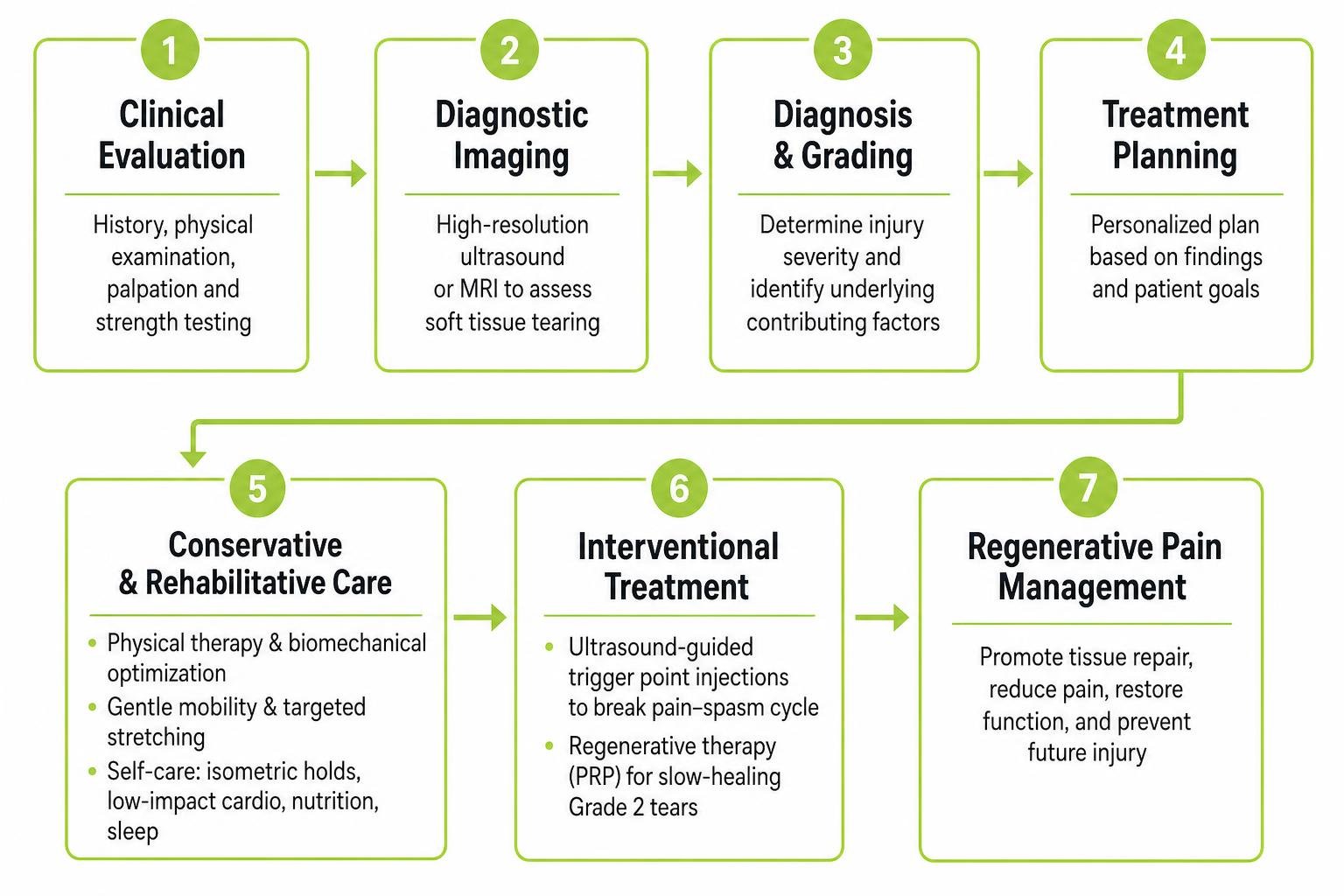
During a clinical evaluation, we perform physical palpation and strength assessments, and may use high-resolution diagnostic ultrasound or an MRI to evaluate the extent of soft tissue tearing:
- Physical Therapy & Biomechanical Optimization: Targeted physical therapy restores balanced joint mechanics, resolves underlying strength imbalances (such as weak hamstrings overpowered by quadriceps), and breaks down restrictive scar tissue.
- Ultrasound-Guided Trigger Point Injections: When a chronic muscle strain leads to persistent muscle spasms and painful myofascial trigger points, targeted injections of local anesthetics can break the pain-spasm cycle and restore normal blood flow.
- Regenerative Medicine (Platelet-Rich Plasma – PRP): For slow-healing Grade 2 tears, PRP therapy uses a concentrated sample of your own blood platelets. These platelets release growth factors directly into the torn soft tissue under ultrasound guidance, stimulating cellular repair and accelerating tissue regeneration.
- Surgical Consultation: If diagnostic imaging reveals a Grade 3 rupture with complete tendon avulsion from the bone, we coordinate with orthopedic surgical colleagues for anatomical reattachment, typically followed by specialized bracing or casting for up to six weeks.
Frequently Asked Questions About Relieving Muscle Strains
How long does a pulled muscle take to heal?
Healing timelines depend primarily on the severity grade of the strain and your adherence to early active recovery:
- Grade 1 (Mild): Most patients feel significantly better within 1 to 2 weeks of conservative self-care.
- Grade 2 (Moderate): Partial tears typically require 3 to 4 weeks of structured care, with complete functional recovery taking several weeks to months.
- Grade 3 (Severe): Complete tears or surgical repairs require an extensive recovery process, taking 4 to 6 months of combined immobilization, targeted physical therapy, and gradual strength rebuilding.
What is the fastest way to relieve muscle strain pain?
The fastest way to manage acute strain pain is to implement the P.R.I.C.E. protocol within the first hour of injury. Rest the muscle from painful movements, apply an ice pack wrapped in a cloth for 15 to 20 minutes every 2 to 3 hours, apply an elastic compression wrap starting from the point farthest from the heart, and elevate the limb above your chest.
Using topical menthol creams or light massage can disrupt pain signaling through sensory gating, while short-term over-the-counter NSAIDs (like ibuprofen) or acetaminophen can help reduce acute pain and swelling.
Can stretching make a newly strained muscle worse?
Yes. Aggressively stretching a newly strained muscle during the acute phase (the first 48 to 72 hours) can pull apart healing muscle fibers and worsen the tear. During the initial inflammatory stage, the body creates a delicate fibrin mesh to bridge the damaged tissue.
Forceful, static overstretching pulls this healing bridge apart, increasing internal bleeding, inflammation, and scar tissue. Limit early movement to pain-free active range of motion and gentle 30-second isometric holds. Save progressive static stretching for later in your recovery once acute pain and swelling have fully resolved.
Conclusion
Recovering from a pulled muscle requires patience and a structured, phased approach. By moving from initial protection and cold therapy to targeted heat, balanced nutrition, and active mobility, you can safely relieve muscle strain pain, rebuild resilient muscle tissue, and prevent future injuries.
If your muscle strain is accompanied by severe weakness, a popping sensation, visible structural changes, or pain that does not improve after a few days of home care, do not wait for the injury to worsen.
At California Pain Consultants, our compassionate, board-certified pain specialists provide personalized, non-surgical treatment programs to help restore your mobility. We invite you to contact one of our convenient Southern California offices in San Diego, Kearny Mesa, Chula Vista, Rancho Bernardo, La Mesa, or Miramar to schedule a comprehensive evaluation and get back to moving comfortably.