
An intercostal nerve block is an image-guided injection of numbing medication, often with a steroid, near the nerves that run beneath the ribs. It may help adults with rib fracture pain, intercostal neuralgia, shingles-related nerve pain, or persistent chest wall pain after surgery. Board-certified pain specialists at California Pain Consultants in San Diego evaluate the source of chest wall pain and perform intercostal nerve blocks for carefully selected patients.
Most people do not think about the muscles and nerves between the ribs until pain suddenly makes every movement noticeable.
A simple breath may hurt. Coughing may trigger sharp pain. Turning in bed may become difficult. Even laughing, stretching, or reaching overhead may feel uncomfortable.
The purpose of Intercostal Nerve Block is not to promise a cure. It is to address a carefully identified pain source, support function, and help the patient participate more comfortably in an individualized care plan.
What Is Intercostal Nerve Block?
Understanding the diagnosis and treatment target helps set realistic expectations before Intercostal Nerve Block is recommended.
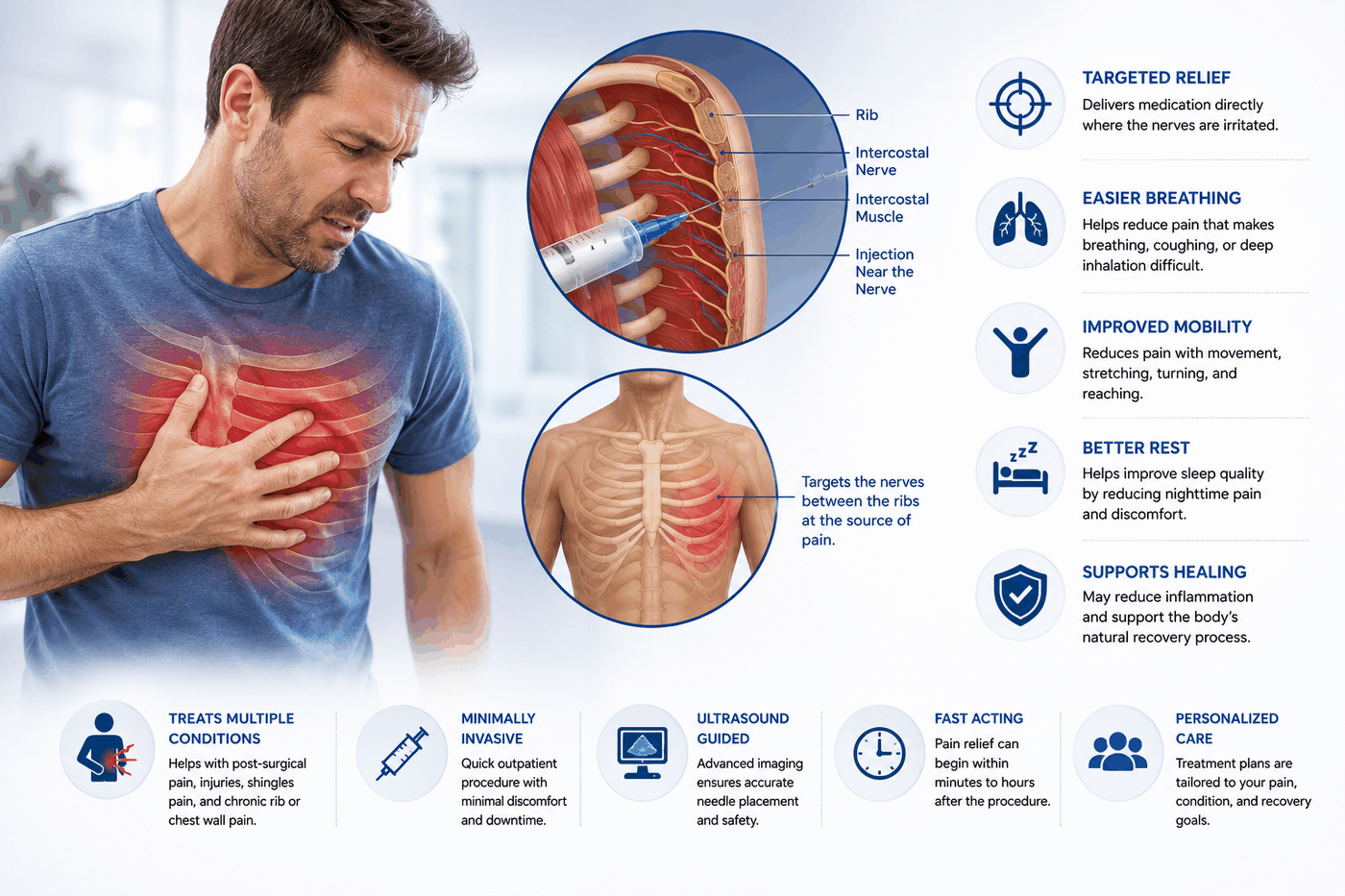
The intercostal nerves run between the ribs along the chest wall.
When these nerves become inflamed or damaged, even simple movements may trigger significant pain.
An intercostal nerve block is a minimally invasive procedure used to deliver medication near the intercostal nerves.
The purpose is to reduce inflammation and interrupt pain signals traveling through the irritated nerve.
This may help decrease pain while improving movement and breathing comfort.
According to Cleveland Clinic, intercostal nerve blocks are used for pain from rib fractures, shingles and postherpetic neuralgia, chest and breast surgery, chest tube placement, and upper abdominal surgery. A block can also help distinguish pain coming from an internal organ from pain coming from the muscles, skin, or ribs.
When Intercostal Nerve Block May Be Considered
A procedure or medication plan is chosen only after the likely pain source, prior care, health history, and personal goals have been reviewed.
Intercostal Neuralgia
Intercostal neuralgia occurs when the intercostal nerves become inflamed or irritated.
Common considerations include:
- Burning pain
- Sharp stabbing sensations
- Tingling
- Hypersensitivity along the ribs
Rib Fracture Pain
Broken or bruised ribs may create severe pain that interferes with breathing and mobility.
Post Surgical Chest Pain
Pain may continue after surgeries involving the chest, lungs, ribs, or upper abdomen.
Shingles-Related Nerve Pain
Shingles may inflame nerves and create severe burning pain along the chest wall.
Chronic Thoracic Pain
Persistent pain involving the thoracic spine and surrounding rib nerves may sometimes benefit from targeted nerve treatment.
Cancer-Related Chest Wall Pain
Certain cancer-related pain conditions involving the ribs or chest wall may also respond to intercostal nerve blocks.
Symptoms and Daily-Life Effects to Discuss
Tell your clinician where symptoms occur, what makes them better or worse, and how they affect function. That pattern can be as important as an imaging result.
- Sharp pain between the ribs
- Burning sensations
- Pain wrapping around the chest or back
- Extreme tenderness
- Pain worsened by breathing or movement
- Electric-like sensations
- Some patients become fearful of deep breathing because it triggers pain so consistently
How Candidacy Is Evaluated
Not everyone with a related diagnosis is a candidate for Intercostal Nerve Block. Evaluation is used to confirm the treatment target and compare reasonable alternatives.
Medical History
Common considerations include:
- Pain location
- Injury history
- Surgical procedures
- Breathing-related symptoms
- Duration of pain
Physical Examination
Common considerations include:
- Tenderness between the ribs
- Pain during breathing
- Sensory changes
- Movement-related discomfort
Imaging and Care Planning
The goal is confirming that intercostal nerve irritation is contributing to symptoms.
Common considerations include:
- Rib fractures
- Thoracic spine conditions
- Surgical changes
- Other structural causes of pain
What to Expect During Intercostal Nerve Block
Specific instructions vary. The care team explains preparation, anesthesia or medication decisions, what the patient may feel, and the follow-up plan before treatment.
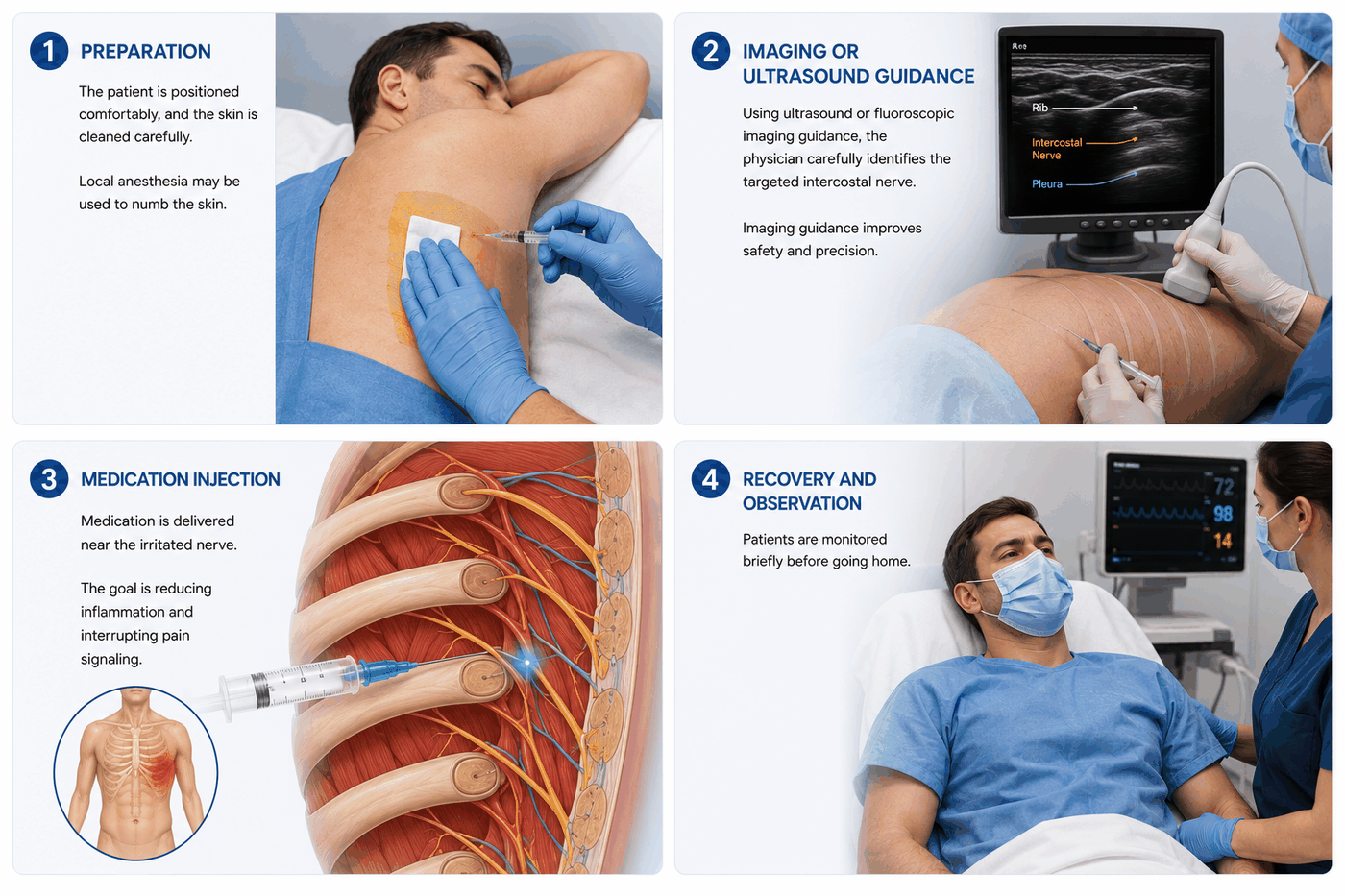
Step 1: Preparation
The patient is positioned comfortably, and the skin is cleaned carefully. Local anesthesia may be used to numb the skin.
If sedation is planned, Cleveland Clinic notes that you will need to fast for six to eight hours beforehand.
Step 2: Imaging or Ultrasound Guidance
Using ultrasound or fluoroscopic imaging guidance, the physician carefully identifies the targeted intercostal nerve. Imaging guidance improves safety and precision.
Step 3: Medication Injection
Medication is delivered near the irritated nerve. The goal is reducing inflammation and interrupting pain signaling.
Step 4: Recovery and Observation
Patients are monitored briefly before going home.
Recovery, Timing, and Follow-Up
Response to Intercostal Nerve Block varies with the diagnosis, treatment technique, and individual health factors. Follow the specific instructions provided by your care team.
After Treatment
Some patients experience mild soreness at the injection site temporarily. Recovery is usually relatively quick. Most individuals return home shortly after treatment.
When Improvement May Begin
Some patients experience improvement within hours because of the local anesthetic. Others notice more gradual relief over several days as inflammation decreases.
Common considerations include:
- Severity of nerve irritation
- Underlying condition
- Duration of symptoms
How Long Effects May Last
Others may require additional treatments depending on the underlying cause of pain. Pain relief duration varies from person to person. Some patients experience relief lasting weeks or months.
Rehabilitation and Activity
Improving movement patterns may help reduce ongoing strain around the chest wall and ribs.
Common considerations include:
- Gentle stretching
- Breathing mechanics
- Thoracic mobility
- Postural improvement
Potential Benefits of Intercostal Nerve Block
The goal is meaningful improvement in comfort and function, not an unsupported promise that every symptom will disappear.
- Reduced rib and chest wall pain
- Improved breathing comfort
- Better sleep
- Reduced nerve irritation
- Improved mobility and activity tolerance
- Greater comfort during recovery after injury or surgery
- Many patients also report less anxiety around movement once pain improves
- A treatment plan matched to a defined pain source
Results and How Long Relief May Last
An intercostal nerve block works in two phases. The local anesthetic acts quickly, and the steroid, when used, works more slowly.
- After the injection, Cleveland Clinic notes that you typically rest for 15 to 30 minutes while the medication takes effect.
- Longer-term relief usually begins in two to three days once the steroid starts to work, according to the same source.
- For some people, relief lasts several months; for others it is shorter, and some people do not respond.
- If a block helps but relief fades, your care team may discuss repeat blocks or longer-acting options such as radiofrequency ablation or peripheral nerve stimulation.
Keeping a simple log of breathing comfort, sleep, and activity in the days after the block helps your care team judge the response.
Risks, Safety, and When to Call
All treatments have risks. The risks of Intercostal Nerve Block depend on the technique, medication or device, anatomy, and individual health history.
- Temporary soreness
- Bleeding
- Infection
- Temporary numbness
- Rare lung irritation or pneumothorax
Contact your care team for increasing redness, swelling, drainage, fever, or severe or worsening pain. Seek urgent medical care for new or worsening shortness of breath, significant chest pain, fainting, or signs of a severe allergic reaction.
How This Treatment Fits into Comprehensive Care
Interventional care is most useful when it supports a broader plan built around diagnosis, movement, function, emotional well-being, and informed decision-making.
Part of a Broader Plan
The goal is individualized care focused on improving comfort and quality of life.
Common considerations include:
- Physical therapy
- Medication management
- Rehabilitation
- Neuromodulation in severe chronic pain cases
- Lifestyle adjustments
Support for Daily Life
Many patients with chronic chest wall pain slowly begin limiting movement without realizing how much the pain affects daily life. Targeted treatment may help patients regain comfort and movement again.
Common considerations include:
- Sleeping comfortably
- Exercising
- Reaching overhead
- Deep breathing
- Driving
Is Intercostal Nerve Block Right for You?
Chronic rib and chest wall pain can affect nearly every part of life. It interferes with breathing, sleeping, movement, exercise, and emotional well-being. Over time, even simple activities may become exhausting because of constant discomfort.
California Pain Consultants provides individualized evaluation and discusses the expected benefits, limitations, alternatives, and risks before recommending care.
Treatment at California Pain Consultants
At California Pain Consultants, your care team first makes sure chest wall pain is not coming from the heart, lungs, or another condition that needs different care. We then review your injury or surgical history, examine the ribs and thoracic spine, and look for the band-like pattern that suggests an irritated intercostal nerve. Your plan may include an intercostal nerve block, medication for nerve pain, gentle breathing and mobility work, and, for persistent pain after shingles, treatment focused on postherpetic neuralgia.
We see patients at four clinics across San Diego County:
San Diego, CA 92123Get Directions
San Diego, CA 92128Get Directions
La Mesa, CA 91942Get Directions
Chula Vista, CA 91911Get Directions
Procedures are performed at the Comprehensive Pain ASC in Rancho Bernardo and the EPC Surgery Center in La Mesa. We accept most insurances. Call (858) 571-3630 or request your appointment to find out whether an intercostal nerve block fits your rib or chest wall pain.
Book Your AppointmentTrusted Information and Related Care
General medical references: MedlinePlus: Pain · National Institute of Neurological Disorders and Stroke: Pain.
Related California Pain resources: Upper back pain · Shingles pain · Conditions and treatments.
This article is for general education and does not replace an individualized medical evaluation. Recommendations depend on the diagnosis, health history, current medications, examination, imaging or diagnostic testing, and personal goals.
Frequently Asked Questions About Intercostal Nerve Block
Find clear, medically responsible answers about Intercostal Nerve Block, who may be a candidate, what to expect, and when to contact your healthcare team.
What is an intercostal nerve block, and how does it work?
An intercostal nerve block delivers local anesthetic, sometimes with steroid, near a nerve that runs beneath a rib. It temporarily interrupts pain signals from a defined band of the chest or upper abdominal wall.
What does an intercostal nerve block treat?
An intercostal nerve block treats pain carried by the nerves that run beneath the ribs. Common reasons include rib fractures, intercostal neuralgia, shingles and postherpetic neuralgia, and persistent pain after chest, breast, or upper abdominal surgery. It may also help your care team determine whether pain comes from the chest wall or from an internal organ. Chest pain must first be evaluated for heart, lung, vascular, and other urgent causes.
Can an intercostal nerve block help shingles pain?
Yes, for selected patients. Shingles can inflame nerves along the chest wall and leave burning pain that persists after the rash heals, called postherpetic neuralgia. Cleveland Clinic lists shingles and postherpetic neuralgia among the uses of intercostal nerve blocks. Results vary, and blocks are often combined with nerve pain medication and other therapies.
Who may be a candidate for an intercostal nerve block?
A candidate has a localized pain pattern that follows an intercostal nerve and a diagnosis supporting chest-wall or nerve pain. Lung disease, infection, bleeding risk, anatomy, and the number of levels involved affect safety and treatment planning.
How should I prepare for an intercostal nerve block?
Tell the team about blood thinners, breathing problems, allergies, infection, and pregnancy. Follow eating, medication, and transportation instructions, and report any new chest pressure, shortness of breath, or illness before the procedure.
What happens during an intercostal nerve block?
With ultrasound or fluoroscopic guidance, the physician places a needle near the targeted intercostal nerve and carefully injects medication while avoiding the lung and nearby blood vessels. More than one rib level may be treated when appropriate.
Is an intercostal nerve block painful?
Most people feel a brief sting from the numbing medicine and some pressure during the injection. Imaging guidance helps the physician place the needle accurately near the nerve. Mild soreness or bruising at the injection site may last a couple of days. Many patients find that breathing and movement feel easier soon after the block.
What should I do after an intercostal nerve block?
Arrange a ride home, especially if you received sedation, and rest for the remainder of the day. Resume light activity as instructed, and practice gentle deep breathing to keep your lungs clear. Track your pain and breathing comfort over the next several days, and call your care team for fever, redness, or worsening pain. Temporary numbness, soreness, or weakness in the chest-wall muscles can occur.
What are the risks of an intercostal nerve block?
Risks include soreness, bruising, bleeding, infection, temporary numbness, and rarely nerve damage or a collapsed lung (pneumothorax), because the nerves lie close to the lung. Imaging guidance helps reduce these risks. Seek urgent care for new or worsening shortness of breath, significant chest pain, or fainting after the procedure. Local-anesthetic toxicity is also possible.
How long does an intercostal nerve block last?
The local anesthetic may ease pain within hours, and Cleveland Clinic notes that longer-term relief usually begins in two to three days once the steroid takes effect. For some people relief lasts several months, while others have shorter benefit or need repeat treatment. The duration depends on the underlying cause and how long symptoms have been present. Duration also varies with whether the block is diagnostic or therapeutic.
How does an intercostal nerve block fit into a broader treatment plan?
The block may clarify the pain source, support breathing and movement, or reduce pain during recovery. It is usually combined with treatment of the underlying condition, rehabilitation, and medication review.
When should I call my healthcare team or seek urgent care after an intercostal nerve block?
Seek emergency care immediately for new shortness of breath, chest pressure, fainting, blue lips, severe dizziness, or rapidly worsening chest pain. Also call promptly for fever, drainage, increasing redness, weakness, or signs of a medication reaction.