
Knee joint injections deliver anti-inflammatory or lubricating medication directly into the knee to ease pain from osteoarthritis, inflammation, and other joint problems when exercise and medication have not been enough. They are most often considered for adults with persistent knee pain who want to stay active or delay surgery. The board-certified pain specialists at California Pain Consultants in San Diego perform knee joint injections, using image guidance when needed for accurate placement.
Most people never think about their knees until pain begins following them through everyday life.
At first, the discomfort may only appear occasionally. Maybe the knees feel stiff after waking up in the morning. Maybe climbing stairs becomes more difficult than it used to be. Some people notice aching after long walks or soreness after standing all day.
The purpose of Knee Joint Injections is not to promise a cure. It is to address a carefully identified pain source, support function, and help the patient participate more comfortably in an individualized care plan.
What Are Knee Joint Injections?
Understanding the diagnosis and treatment target helps set realistic expectations before Knee Joint Injections is recommended.
The knee is one of the largest and most important joints in the body.
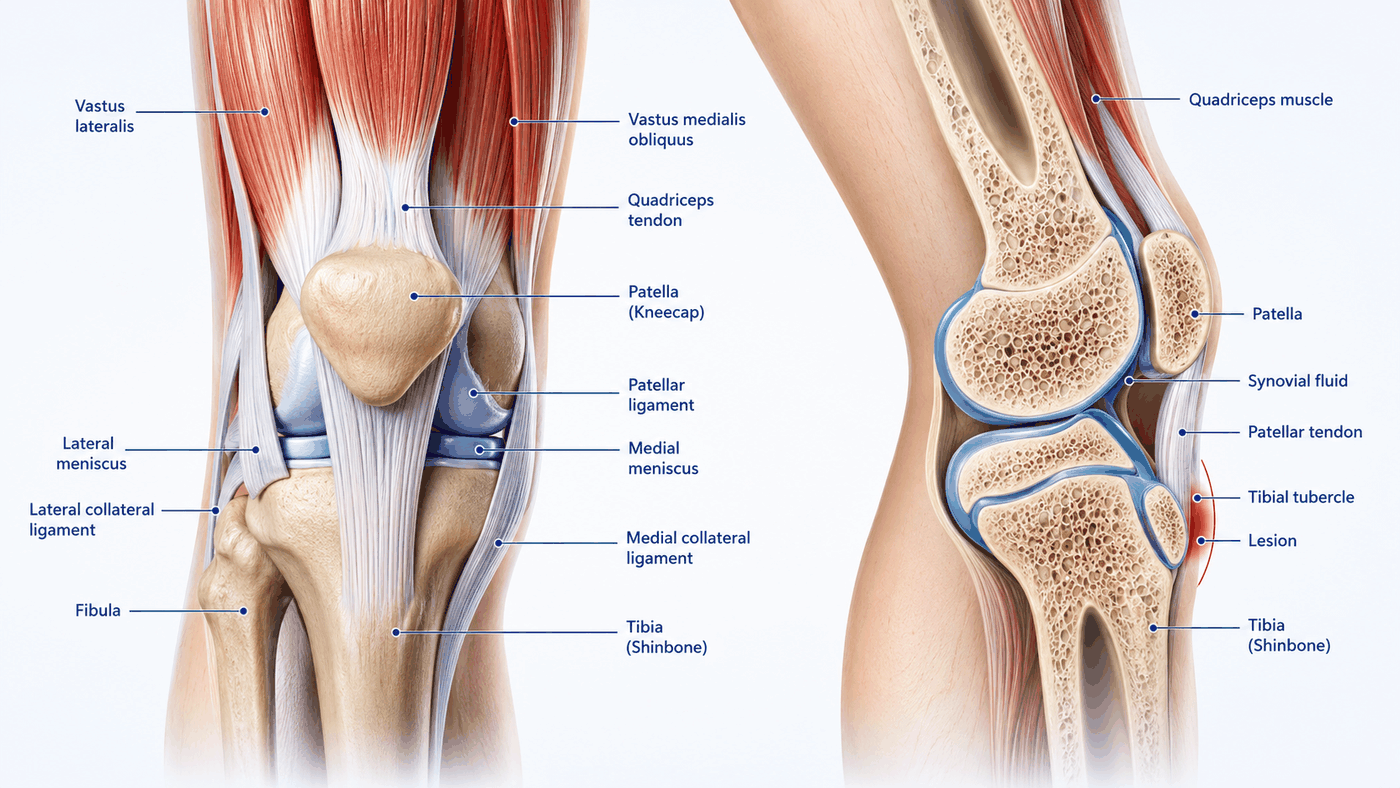
Inside it, smooth cartilage covers the ends of the thighbone, shinbone, and kneecap, the menisci cushion the joint, and synovial fluid lubricates it. These structures help absorb shock and reduce friction during movement. When cartilage thins from osteoarthritis, the joint lining can become inflamed and painful.
Knee joint injections are minimally invasive procedures used to deliver medication directly into the knee joint.
The goal is to reduce inflammation, improve joint function, and help relieve pain.
Types of Knee Joint Injections
Several medications may be used, and the choice depends on your diagnosis, prior response, and health history:
- Corticosteroid injections, which OrthoInfo from the American Academy of Orthopaedic Surgeons describes as powerful anti-inflammatory agents injected into the joint
- Hyaluronic acid injections, also called viscosupplementation or gel injections, which add lubricating fluid to the joint
- Platelet-rich plasma (PRP) injections, a regenerative approach that uses a concentrate prepared from your own blood
- Local anesthetic, sometimes combined with a steroid, which can also help confirm that the joint itself is the pain source
When Knee Joint Injections May Be Considered
A procedure or medication plan is chosen only after the likely pain source, prior care, health history, and personal goals have been reviewed.
Persistent symptoms
Symptoms continue despite an appropriate trial of conservative care.
A defined pain source
History, examination, and imaging or diagnostic testing identify a plausible treatment target.
Function-focused goals
The patient and clinician establish realistic goals related to movement, sleep, work, or rehabilitation.
Symptoms and Daily-Life Effects to Discuss
Tell your clinician where symptoms occur, what makes them better or worse, and how they affect function. That pattern can be as important as an imaging result.
- Deep aching pain
- Stiffness after resting
- Swelling
- Pain climbing stairs
- Grinding sensations
- Difficulty standing from sitting positions
- Walking
- Standing
How Candidacy Is Evaluated
Not everyone with a related diagnosis is a candidate for Knee Joint Injections. Evaluation is used to confirm the treatment target and compare reasonable alternatives.
Medical history
Your clinician will ask about pain severity, walking limitations, previous injuries, surgical history, and the activities affected by pain.
Physical examination
The examination checks for swelling, range of motion, tenderness, joint stability, and walking mechanics.
Imaging and care planning
X-rays or other imaging may show arthritis, cartilage loss, joint space narrowing, bone spurs, or meniscus problems, which helps confirm whether an injection is a reasonable next step.
What to Expect During Knee Joint Injections
Specific instructions vary. The care team explains preparation, anesthesia or medication decisions, what the patient may feel, and the follow-up plan before treatment.
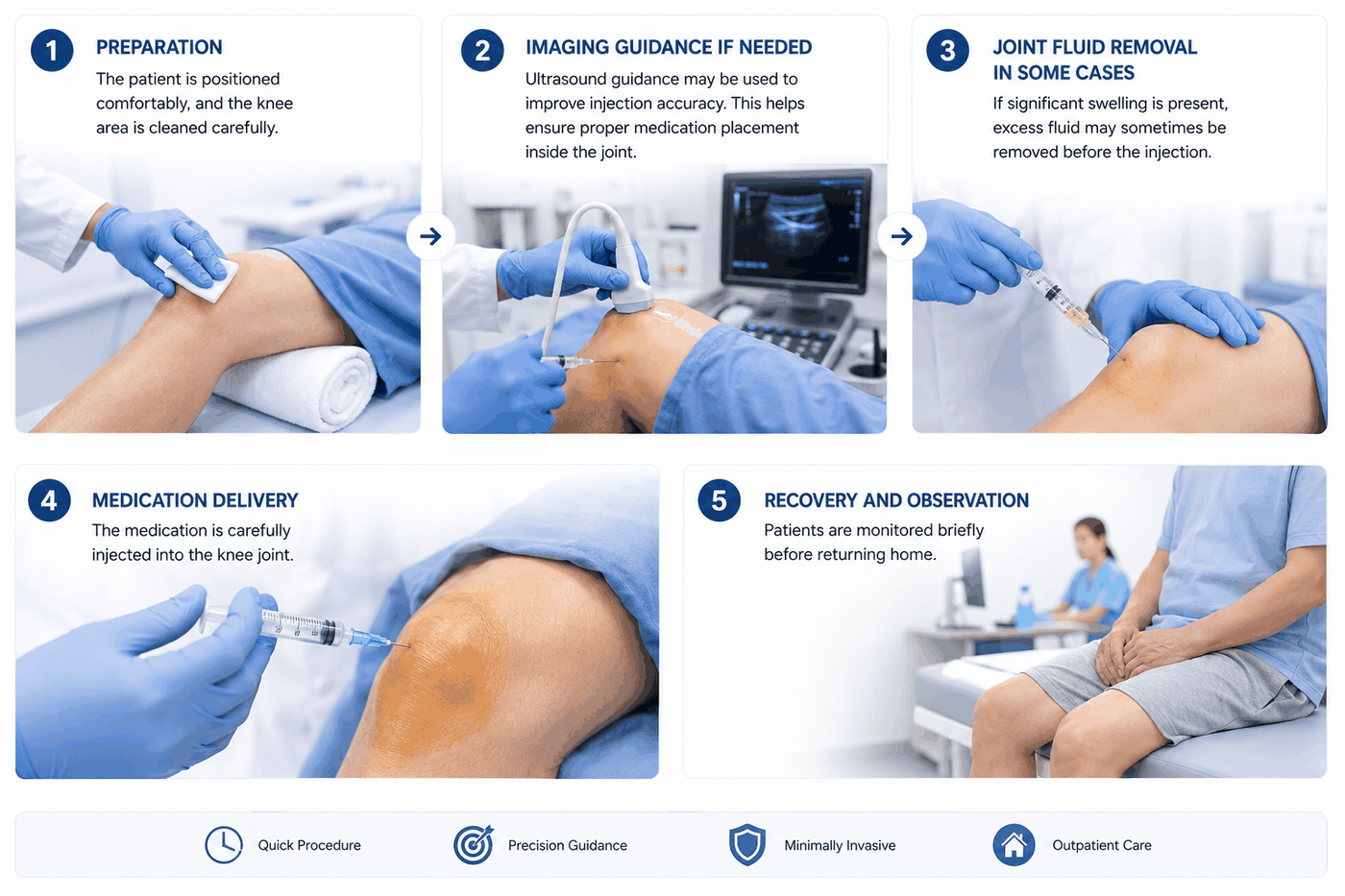
Step 1: Preparation
The patient is positioned comfortably, and the knee area is cleaned carefully with an antiseptic. Local anesthetic may be used to numb the skin.
Step 2: Imaging Guidance if Needed
Ultrasound guidance may be used to improve injection accuracy. This helps ensure proper medication placement inside the joint.
Step 3: Joint Fluid Removal in Some Cases
If significant swelling is present, excess fluid may sometimes be removed before the injection.
Step 4: Medication Delivery
The medication is carefully injected into the knee joint. The injection itself usually takes only a few minutes.
Step 5: Recovery and Observation
Patients are monitored briefly before returning home.
Recovery, Timing, and Follow-Up
Response to Knee Joint Injections varies with the diagnosis, treatment technique, and individual health factors. Follow the specific instructions provided by your care team.
After treatment
Recovery is generally simple. Some patients experience mild soreness temporarily after treatment, and patients are often advised to avoid strenuous activity briefly after the injection. Most individuals return to normal daily activity relatively quickly. OrthoInfo notes that pain and swelling may flare immediately after a corticosteroid injection before improving.
When improvement may begin
The timeline depends on the type of injection used, the severity of arthritis, and the degree of inflammation. Steroid injections may begin helping within several days, while gel injections often work more gradually. According to OrthoInfo, a hyaluronic acid course involves 1 to 5 shots over several weeks depending on the product, and patients who respond may need several weeks to notice improvement.
How long effects may last
Pain relief duration varies significantly between patients. Some individuals experience relief lasting weeks or months, while others may require repeat injections or additional therapies as arthritis progresses.
- Corticosteroid injections: the effects do not last indefinitely, and OrthoInfo notes that doctors may limit them to three or four per year, per joint, because frequent or prolonged use may contribute to joint damage
- Hyaluronic acid injections: some patients report relief for several months, and a repeat course may be considered after about 6 months if the first one helped, according to OrthoInfo; research on how much they help remains mixed, so individual response varies
Rehabilitation and activity
Strong muscles surrounding the knee help support the joint and reduce stress during movement. Many patients use the window of improved comfort after an injection to work on leg strengthening, knee stability, walking mechanics, flexibility, and balance.
Potential Benefits of Knee Joint Injections
The goal is meaningful improvement in comfort and function, not an unsupported promise that every symptom will disappear.
- Reduced inflammation
- Improved mobility
- Better walking tolerance
- Reduced stiffness
- Improved sleep
- Increased activity levels
- Many patients also report feeling more confident moving again after pain improves
- A treatment plan matched to a defined pain source
Risks, Safety, and When to Call
All treatments have risks. The risks of Knee Joint Injections depend on the technique, medication or device, anatomy, and individual health history.
- Temporary soreness
- Swelling
- Infection
- Bleeding
- Allergic reactions
Contact your care team for increasing redness, warmth, swelling, drainage, fever, severe or worsening pain, or numbness or weakness that does not improve as expected. Seek emergency care for trouble breathing, fainting, or signs of a severe allergic reaction.
How This Treatment Fits Into Comprehensive Care
Interventional care is most useful when it supports a broader plan built around diagnosis, movement, function, emotional well-being, and informed decision-making.
Part of a broader plan
The goal is individualized treatment focused on improving mobility and quality of life. Injections are often combined with physical therapy, weight management, exercise programs, bracing, and regenerative medicine approaches. When pain continues despite joint injections, a genicular nerve block and radiofrequency ablation target the sensory nerves of the knee instead of the joint itself.
Movement and rehabilitation
Strong muscles surrounding the knee help support the joint and reduce stress during movement. Rehabilitation typically emphasizes leg strengthening, knee stability, walking mechanics, flexibility, and balance improvement.
Support for daily life
Many patients slowly adapt their lives around knee pain without realizing how much it affects their overall well-being. Targeted treatment may help restore mobility and improve daily comfort again, including walking longer distances, climbing stairs, exercising, traveling, and standing comfortably.
Are Knee Joint Injections Right for You?
Chronic knee pain can slowly affect nearly every part of life. It changes movement, exercise, independence, sleep, and emotional well-being. Over time, even simple daily activities may become physically exhausting because of stiffness and pain.
California Pain Consultants provides individualized evaluation and discusses the expected benefits, limitations, alternatives, and risks before recommending care.
Knee Joint Injections at California Pain Consultants
Your visit begins with a focused knee evaluation: a conversation about how pain affects your day, a hands-on examination, and a review of any X-rays or MRI results. If an injection is a good fit, your physician explains which medication is recommended and why, how many injections may be appropriate over a year, and what you can expect afterward. Your care team also helps you plan the rehabilitation and activity changes that make relief more meaningful.
California Pain Consultants serves patients across San Diego County from clinics in Kearny Mesa, Rancho Bernardo, La Mesa, and Chula Vista. We accept most insurances. Request your appointment online or call (858) 571-3630 to talk with your care team.
Book Your AppointmentTrusted Information and Related Care
General medical references: MedlinePlus: Pain · National Institute of Neurological Disorders and Stroke: Pain.
Related California Pain resources: Knee pain · Genicular nerve block · Conditions and treatments.
This article is for general education and does not replace an individualized medical evaluation. Recommendations depend on the diagnosis, health history, current medications, examination, imaging or diagnostic testing, and personal goals.
Frequently Asked Questions
Do knee injections hurt?
Most patients feel a brief pinch and pressure rather than significant pain during a knee injection. The skin may be numbed first, and the injection itself takes only a few minutes. Some people notice soreness or a temporary flare of pain for a day or two afterward, which can usually be managed with ice and rest.
How long does a cortisone shot in the knee last?
Relief from a cortisone shot varies, lasting a few weeks for some patients and several months for others, and some notice little change. The effects do not last indefinitely. Because frequent steroid injections may harm the joint, physicians commonly limit them to three or four per year in the same knee.
What is the difference between a cortisone shot and a gel injection?
A cortisone shot uses a steroid to calm inflammation and often works within days. A gel injection uses hyaluronic acid to supplement the joint’s natural lubricating fluid and tends to work more gradually over several weeks. Your physician will recommend one or the other based on your arthritis, past response, and health conditions.
Can I walk after a knee injection?
Yes, you can usually walk out of the clinic on your own right after a knee injection. Your care team may recommend avoiding strenuous activity, such as running or heavy lifting, for a short period afterward. Most people return to normal daily activities quickly, and follow-up instructions are tailored to the type of injection given.
Are knee injections safe for people with diabetes?
Knee injections can often be performed safely in people with diabetes, with extra planning. Corticosteroids may temporarily raise blood sugar, so you may be asked to monitor your levels more closely for a few days. Tell your care team about diabetes and any blood thinners before the procedure so the safest medication can be chosen.
Will knee injections help me avoid knee replacement?
Knee injections may help some patients manage pain and stay active longer, which can delay the need for surgery, but they do not repair worn cartilage. When arthritis is advanced and pain remains disabling despite injections and therapy, a referral to an orthopedic surgeon to discuss knee replacement may be the next step.