
Opioid therapy is the carefully monitored use of opioid medication for severe pain that has not responded well enough to other treatment. It may help selected patients with cancer-related pain, severe pain after surgery, or complex chronic pain, always within a broader plan focused on function and safety. Board-certified pain specialists at California Pain Consultants in San Diego evaluate whether opioid therapy is appropriate and manage it with structured follow-up.
Living with severe chronic pain can change nearly every part of life.
Simple movements become difficult. Sleep becomes interrupted. Energy levels drop. Work, relationships, hobbies, and daily routines may slowly become harder to manage because pain never fully goes away.
The purpose of Opioid Therapy is not to promise a cure. It is to address a carefully identified pain source, support function, and help the patient participate more comfortably in an individualized care plan.
What Is Opioid Therapy?
Understanding the diagnosis and treatment target helps set realistic expectations before Opioid Therapy is recommended.
Chronic pain is pain that continues beyond the normal healing period.
Unlike temporary pain, chronic pain often affects the nervous system itself over time.
This may make symptoms more complex and difficult to treat.
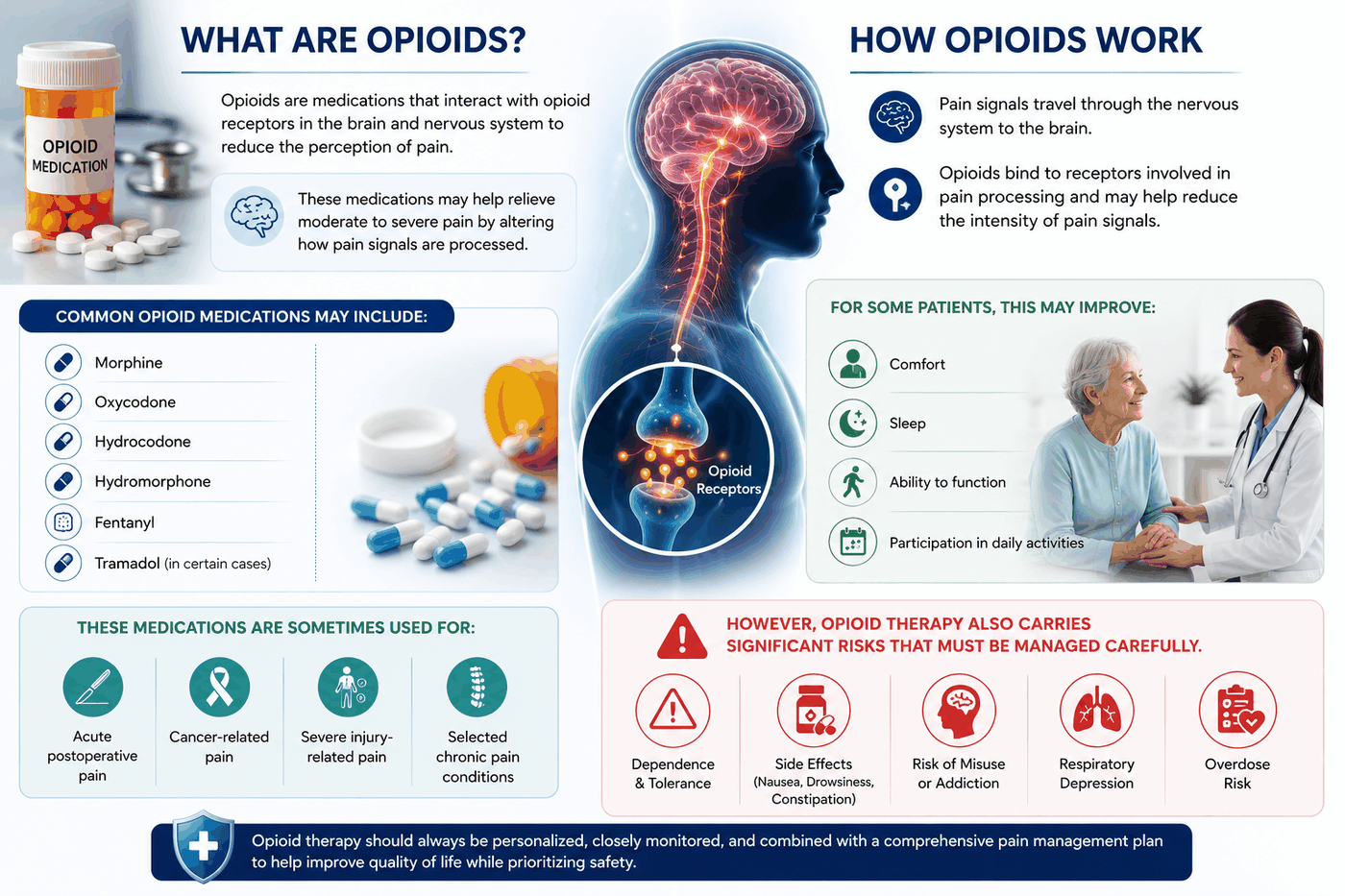
Opioids are medications that interact with opioid receptors in the brain and nervous system to reduce the perception of pain.
These medications may help relieve moderate to severe pain by altering how pain signals are processed.
How National Guidelines Frame Opioid Use
The Centers for Disease Control and Prevention (CDC) groups pain by duration: acute pain lasts less than 1 month, subacute pain lasts 1 to 3 months, and chronic pain lasts longer than 3 months. The CDC advises that opioids should not be considered first-line or routine therapy for subacute or chronic pain, and its 2022 guideline update notes that nonopioid therapies are at least as effective as opioids for many common types of acute pain. These principles guide how opioid therapy is considered at California Pain Consultants.
When Opioid Therapy May Be Considered
A procedure or medication plan is chosen only after the likely pain source, prior care, health history, and personal goals have been reviewed.
Cancer-Related Pain
Cancer pain may sometimes require stronger pain control to improve comfort and quality of life.
Severe Post Surgical Pain
Certain surgeries may involve significant temporary pain during recovery, and a short, closely supervised course may be considered.
Complex Chronic Pain Conditions
Some patients with severe chronic pain may require carefully monitored opioid therapy when other treatments have failed.
Palliative and End-Of-Life Care
Pain management is an essential part of compassionate palliative care.
Severe Neuropathic or Musculoskeletal Pain
Selected patients with debilitating pain may occasionally benefit from opioid therapy as part of a broader treatment strategy.
Why Function Matters More Than Pain Scores Alone
Modern pain management focuses heavily on improving function—not just reducing pain numbers. Successful pain management is not simply about eliminating all discomfort. It is about helping patients regain meaningful function and stability.
Symptoms and Daily-Life Effects to Discuss
Tell your clinician where symptoms occur, what makes them better or worse, and how they affect function. That pattern can be as important as an imaging result.
- Pain that limits routine activity
- Symptoms that interrupt sleep
- Reduced confidence with movement
- Difficulty participating in work or rehabilitation
How Candidacy Is Evaluated
Not everyone with a related diagnosis is a candidate for Opioid Therapy. Evaluation is used to confirm the treatment target and compare reasonable alternatives.
Medical History
Your clinician reviews pain severity, previous treatments, functional limitations, surgical history, and medication history.
Imaging and Care Planning
The care plan also considers factors that affect safety and response, including anxiety, depression, sleep disorders, stress levels, and any history of substance use disorders.
Shared Decision-Making
Your clinician reviews alternatives, expected benefits, uncertainties, aftercare, and treatment-specific risks before a procedure or medication plan is chosen.
How Opioid Therapy Is Managed
Specific instructions vary. The care team explains preparation, anesthesia or medication decisions, what the patient may feel, and the follow-up plan before treatment.
Comprehensive Evaluation
Before prescribing opioids, providers carefully evaluate the patient’s condition and overall risk profile.
Multimodal Treatment Plan
At California Pain Consultants, opioid therapy is generally not viewed as a standalone solution. It is typically combined with:
- Physical therapy
- Injections, such as an epidural steroid injection when a nerve-root source is identified
- Neuromodulation, such as spinal cord stimulation
- Behavioral support
- Exercise programs
Ongoing Monitoring
Ongoing follow-up and reassessment are essential parts of responsible opioid management, because long-term use can bring increased tolerance, hormonal changes, reduced effectiveness, dependence, and increased overdose risk. CDC guidance advises prescribing immediate-release rather than extended-release or long-acting opioids when starting treatment, using the lowest effective dosage, and, for acute pain, evaluating the benefits and risks of opioids at least every 2 weeks.
Safe Use and Communication
Patients prescribed opioids should follow instructions carefully, including:
- Taking medications exactly as prescribed
- Avoiding medication sharing
- Avoiding alcohol or dangerous medication combinations
- Storing medications securely
Monitoring and Follow-Up
Response to Opioid Therapy varies with the diagnosis, treatment technique, and individual health factors. Follow the specific instructions provided by your care team.
Follow-Up
Follow-up is used to assess response, function, side effects, and whether the treatment plan should be continued or adjusted.
What Is Reviewed at Each Visit
- Pain levels and how pain affects daily activities
- Progress toward functional goals such as walking, work, or sleep
- Side effects, including constipation, drowsiness, and confusion
- Whether the dose remains the lowest effective dose
- Whether a nonopioid treatment could reduce reliance on medication
Potential Benefits of Opioid Therapy
The goal is meaningful improvement in comfort and function, not an unsupported promise that every symptom will disappear.
- A treatment plan matched to a defined pain source
- Potential improvement in comfort and everyday function
- An opportunity to participate more fully in rehabilitation
- A monitored option within comprehensive pain care
- Clear follow-up based on the patient’s response
Risks, Safety, and When to Call
Opioids can cause side effects and serious harm, particularly when the dose, other medications, alcohol use, breathing conditions, or individual health risks are not carefully considered.
- Constipation
- Nausea
- Drowsiness or dizziness
- Confusion or impaired coordination
- Slowed breathing and overdose risk
- Physical dependence and withdrawal if medication is stopped abruptly
- Risk of opioid use disorder
Contact the prescribing team for troublesome side effects, confusion, falls, or difficulty taking medication safely. Call emergency services for slow or shallow breathing, blue lips, extreme sleepiness, inability to wake, or a suspected overdose. Do not stop long-term opioid medication abruptly unless a clinician directs you to do so.
How This Treatment Fits into Comprehensive Care
Interventional care is most useful when it supports a broader plan built around diagnosis, movement, function, emotional well-being, and informed decision-making.
Support for Daily Life
Many patients living with severe chronic pain feel isolated or misunderstood. Compassionate pain management means recognizing the full human impact of chronic pain—on relationships, employment, financial stability, and self-confidence—not just treating symptoms alone.
Ongoing Reassessment
Pain care is adjusted over time according to function, response, side effects, and the patient’s priorities.
Is Opioid Therapy Right for You?
Living with severe chronic pain can feel physically and emotionally exhausting. It affects movement, sleep, relationships, independence, and emotional well-being. Over time, patients may begin feeling as though pain controls every part of life.
California Pain Consultants provides individualized evaluation and discusses the expected benefits, limitations, alternatives, and risks before recommending care.
Medication Management at California Pain Consultants
Your care team at California Pain Consultants provides medication management as part of comprehensive pain care across San Diego County, with clinics in Kearny Mesa, Rancho Bernardo, La Mesa, and Chula Vista. Your first visit reviews your diagnosis, prior treatments, current medications, and goals, and explores nonopioid and interventional options alongside any medication plan. We accept most insurances. You can request your appointment online or call (858) 571-3630.
Book Your AppointmentTrusted Information and Related Care
General medical references: MedlinePlus: Pain · National Institute of Neurological Disorders and Stroke: Pain.
Related California Pain resources: Chronic pain · Conditions and treatments · Conditions and treatments.
This article is for general education and does not replace an individualized medical evaluation. Recommendations depend on the diagnosis, health history, current medications, examination, imaging or diagnostic testing, and personal goals.
Frequently Asked Questions About Opioid Therapy
Find clear, medically responsible answers about Opioid Therapy, who may be a candidate, what to expect, and when to contact your healthcare team.
What are opioids, and when may they be used for pain?
Opioids are prescription medicines that reduce the perception of pain by acting on opioid receptors in the brain and body. They may be used for acute pain, cancer-related pain, palliative care, or carefully selected chronic pain situations when expected functional benefit outweighs known risks.
Are opioids used for chronic pain?
Opioids are sometimes used for chronic pain, but they are not first-line or routine therapy. CDC guidance advises considering opioids only when expected benefits outweigh risks and after nonopioid options have been explored. When they are used, they are typically part of a broader plan that includes physical therapy, injections, neuromodulation, behavioral support, and close follow-up.
How does a clinician decide whether opioid therapy is appropriate?
The decision considers the pain diagnosis, severity, function, prior treatments, medical and mental health history, substance-use risk, other medicines, and patient goals. A plan should define measurable benefit, safety monitoring, and circumstances for changing or stopping treatment.
What are alternatives to opioids for severe pain?
Alternatives depend on the pain source and may include physical therapy, nonopioid medications, epidural steroid injections, nerve blocks, radiofrequency ablation, and spinal cord stimulation. The CDC notes that nonopioid therapies are at least as effective as opioids for many common types of acute pain. A pain specialist can match these options to your diagnosis.
What safety checks may be part of ongoing opioid care?
Care may include regular visits, review of prescription-monitoring data, medication reconciliation, urine drug testing, a treatment agreement, and assessment of pain, function, side effects, and risky combinations. Monitoring is intended to reduce harm and keep decisions transparent.
How often will I be seen while taking opioids?
You will be seen regularly to review pain, function, side effects, and safety. CDC guidance advises clinicians to evaluate the benefits and risks of opioids at least every 2 weeks when they are started for acute pain, and to reassess periodically during longer treatment. Your care team sets a schedule based on your diagnosis, dose, and response.
What side effects can opioids cause?
Common effects include constipation, nausea, sleepiness, dizziness, itching, and slowed thinking or coordination. More serious risks include breathing suppression, overdose, falls, hormone changes, increased pain sensitivity, tolerance, physical dependence, and opioid use disorder.
Why are opioids dangerous with alcohol, benzodiazepines, or sedating medicines?
Combining opioids with alcohol, benzodiazepines, sleep medicines, muscle relaxants, or other sedatives can greatly increase drowsiness and breathing suppression. Use only combinations that the prescribing clinicians know about and have judged appropriate.
What is the difference between tolerance, dependence, and addiction?
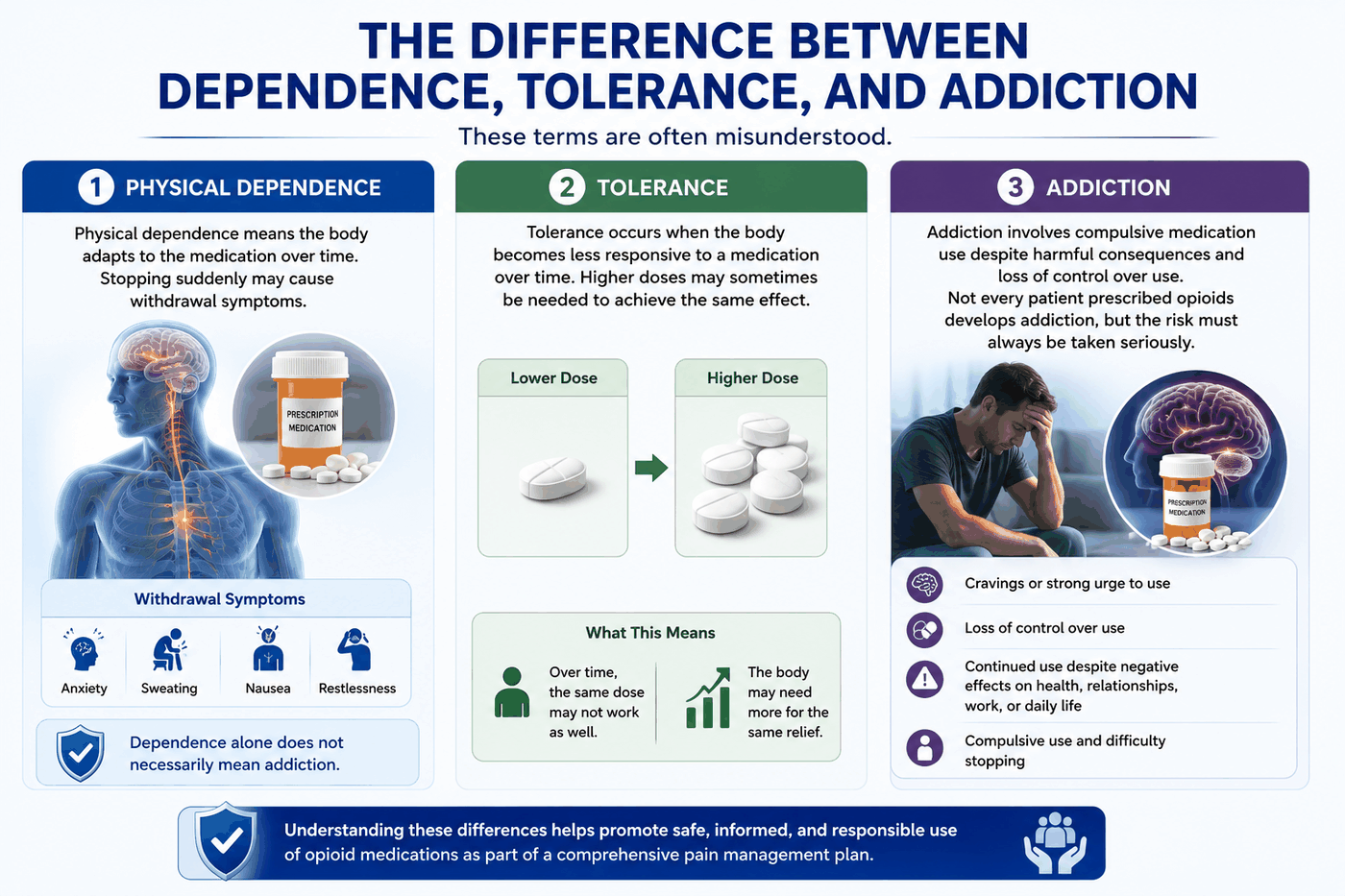
Tolerance means a dose has less effect over time; physical dependence means abrupt stopping can cause withdrawal; neither alone is the same as addiction. Opioid use disorder involves impaired control, craving, continued use despite harm, or other problematic patterns and requires compassionate medical care.
Should naloxone be available during opioid therapy?
Naloxone can temporarily reverse an opioid overdose and may be recommended for patients, household members, or caregivers. Availability does not make opioid use risk-free, but training and ready access can save a life while emergency help is called.
What are the signs of an opioid overdose?
Call emergency services immediately for very slow, shallow, or stopped breathing; inability to wake; blue or gray lips; pinpoint pupils; choking or gurgling sounds; or a limp body. Give naloxone if available, follow dispatcher instructions, and stay with the person because more than one dose may be needed.
What should I do if someone taking opioids will not wake up?
Call 911 immediately. Slow or shallow breathing, blue lips, extreme sleepiness, or inability to wake are signs of a possible overdose and are a medical emergency. Stay with the person until help arrives and follow the dispatcher’s instructions. Afterward, the prescribing team should review the medication plan.
Can I stop taking opioids on my own?
You should not stop long-term opioid medication abruptly unless a clinician directs you to. Stopping suddenly may cause withdrawal and a rebound in pain. If you want to reduce or stop, talk with your prescribing team, which can plan a gradual taper and add other treatments to support your comfort and function during the change.