
When pain continues, it can begin to shape nearly every part of the day. Sleep may become less restorative, movement can feel less predictable, and work, relationships, and favorite activities may require more planning than they once did.
Chronic pain is real, even when an imaging study does not fully explain its intensity. It may reflect an ongoing medical condition, a prior injury or procedure, changes in the nervous system, or several factors working together.
Effective care starts by listening to the full story: where pain occurs, how it feels, what changes it, and how it affects function and quality of life.
Chronic pain generally lasts longer than three months. A personalized plan may combine rehabilitation, medication, behavioral and sleep support, lifestyle strategies, and carefully selected procedures.
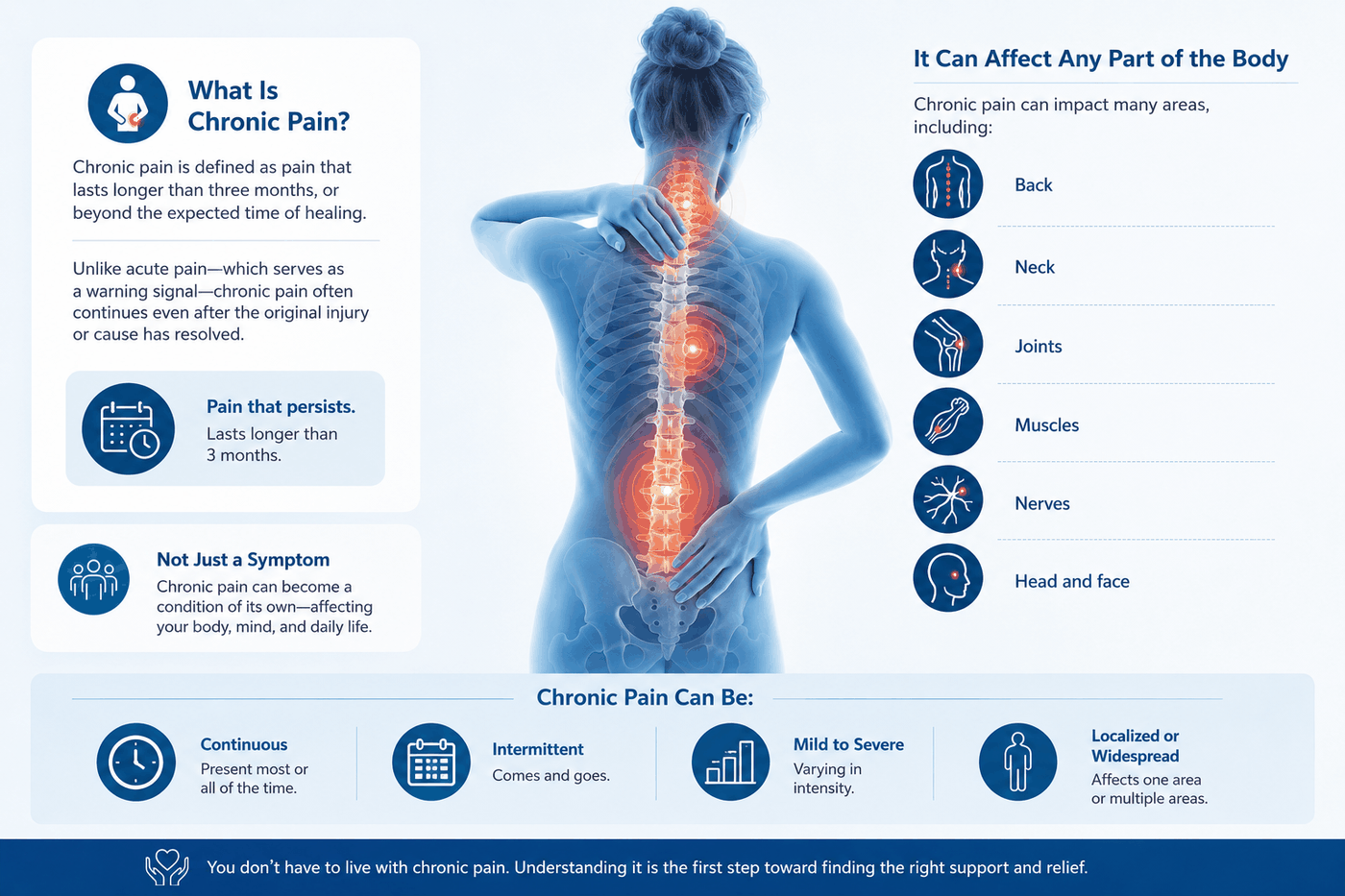
What Is Chronic Pain?
The Centers for Disease Control and Prevention defines chronic pain as pain that typically lasts longer than three months. Unlike acute pain, which usually improves as an injury heals, chronic pain may continue after tissues have recovered or remain active because of an ongoing condition.
Pain is shaped by signals from injured or inflamed tissue, the nerves that carry those signals, and the brain and spinal cord systems that interpret them. This is why two people with similar test results may experience different symptoms and need different treatment plans.
- Continuous: present most or all of the time
- Intermittent: appears in flares or recurring episodes
- Localized: centered in one region, joint, or nerve pathway
- Widespread: affects several areas of the body
How Chronic Pain Can Feel
Chronic pain is more than a number on a scale. The quality, location, timing, and functional impact of symptoms provide useful diagnostic clues.
Common Sensations
Symptoms may include aching, pressure, stiffness, throbbing, sharp or stabbing pain, burning, tingling, numbness, or increased sensitivity to light touch.
Changes in Function
Pain may make it harder to walk, sit, lift, work, exercise, complete household tasks, or participate in social and family activities.
Sleep and Energy
Pain can interrupt sleep, while poor sleep can increase pain sensitivity. This cycle may contribute to fatigue, slower recovery, and reduced stamina.
Mood and Concentration
Persistent symptoms can affect attention, confidence, stress, anxiety, or mood. These effects do not make the pain less physical; they are part of a whole-person experience.
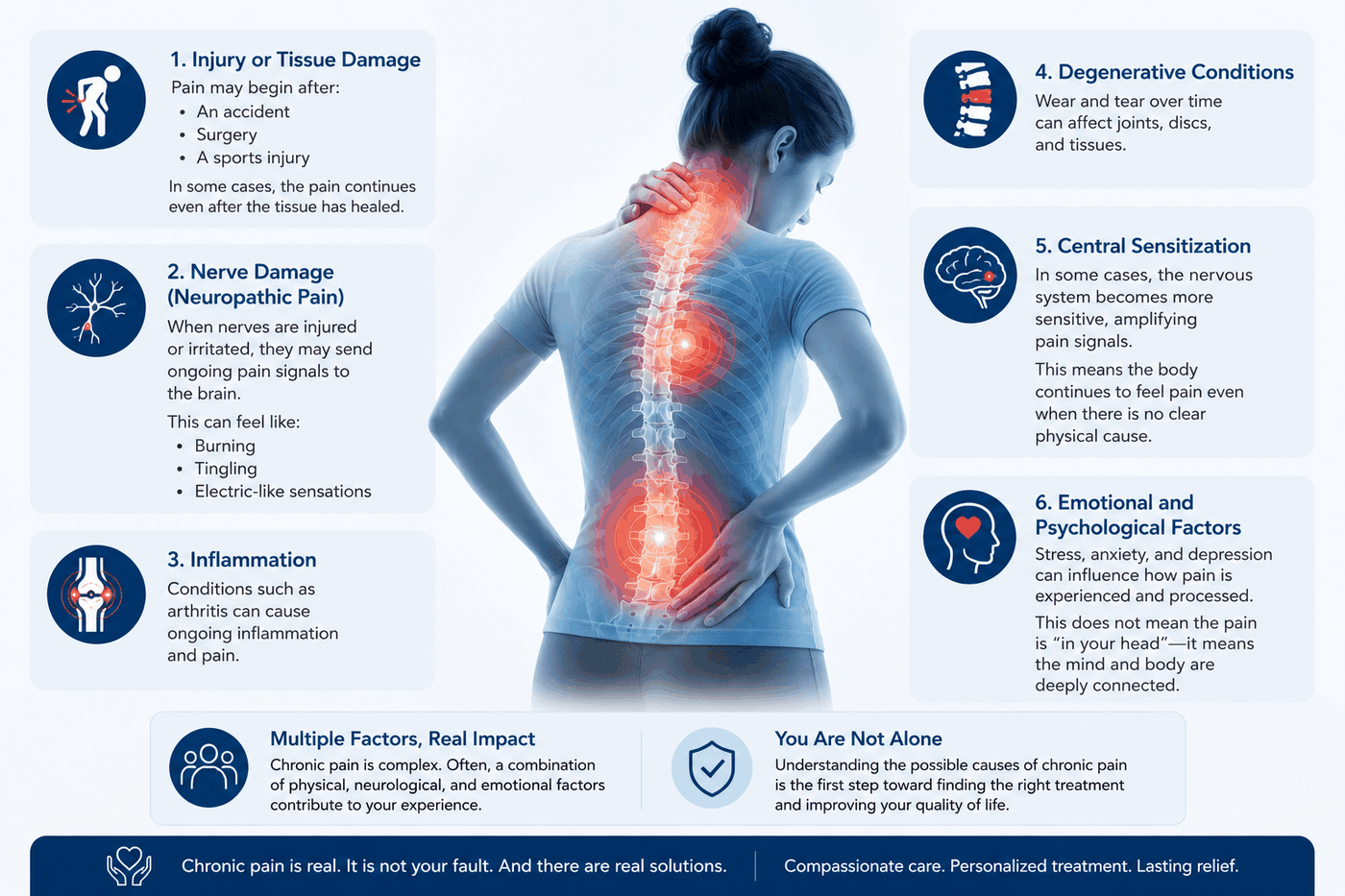
Why Does Chronic Pain Happen?
A clinician looks for treatable contributors while also considering how the nervous system, health history, movement, sleep, stress, and daily demands may be influencing symptoms.
Injury or Tissue Changes
Pain may begin after an accident, surgery, repetitive strain, or sports injury. It can continue when tissues remain irritated or when pain pathways stay active after healing.
Inflammation and Arthritis
Inflammatory conditions and degenerative joint changes may cause ongoing stiffness, swelling, and pain with movement or load.
Nerve Injury or Irritation
Neuropathic pain develops when nerves are damaged, compressed, or signaling abnormally. Burning, electric sensations, tingling, and numbness are common clues.
Central Sensitization
The brain and spinal cord can become more responsive to incoming signals. This amplification helps explain why pain may persist or spread even when no new injury is occurring.
Degenerative Conditions
Age-related changes in discs, joints, tendons, and other tissues may contribute to pain, although imaging findings do not always match symptom severity.
Medical Treatment or Illness
Cancer, infection, autoimmune disease, diabetes, shingles, and some surgeries or medications can lead to persistent pain that needs condition-specific care.
Conditions Commonly Associated with Chronic Pain
Chronic pain is an umbrella term, not one diagnosis. Identifying the underlying condition and pain mechanism helps guide appropriate treatment.
- Back pain and neck pain
- Arthritis pain and osteoarthritis
- Neuropathy and other nerve pain
- Fibromyalgia and widespread pain
- Migraine and other recurring headache disorders
- Complex regional pain syndrome
- Persistent pain after surgery or injury
- Cancer-related and treatment-related pain
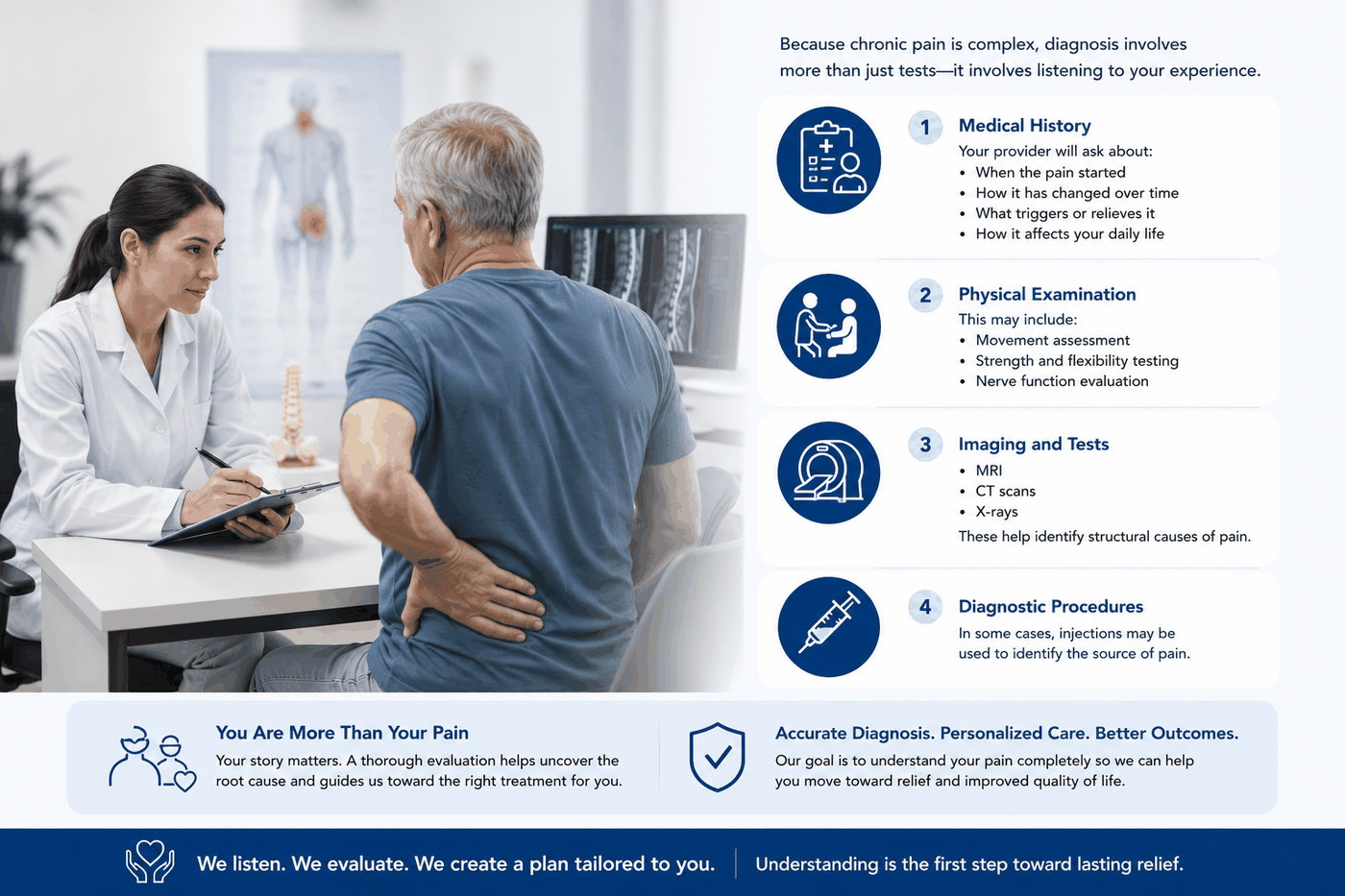
How Chronic Pain Is Evaluated
The goal of evaluation is to understand the likely pain source, identify urgent or treatable conditions, and establish practical goals for movement, sleep, work, and daily life.
Detailed Medical History
Your clinician may ask when symptoms began, how they have changed, what triggers or relieves them, which treatments you have tried, and how pain affects daily function.
Physical and Neurological Exam
The examination may assess movement, strength, reflexes, sensation, balance, joint function, tenderness, and patterns that suggest a specific nerve or structure.
Imaging or Laboratory Testing
X-rays, MRI, CT, blood tests, or other studies are ordered when the results are likely to clarify the diagnosis or change treatment.
Diagnostic Procedures
For selected patients, a targeted injection or nerve block may help determine whether a particular joint, nerve, or region is contributing to pain.
Chronic Pain Treatment: A Personalized, Multimodal Plan
Chronic pain treatment is rarely one-size-fits-all. A multimodal plan combines treatments that address different contributors while measuring progress through function, comfort, sleep, and participation in meaningful activities.
Education and Shared Goals
Understanding the diagnosis and setting realistic, measurable goals helps patients and clinicians choose treatments based on likely benefits, risks, and personal priorities.
Physical Therapy and Movement
Progressive exercise, mobility work, pacing, posture, and strength training may improve confidence and function. The program should be adjusted to the condition and current tolerance.
Medication Strategies
Depending on the diagnosis, nonopioid pain relievers, anti-inflammatory medicines, topical treatments, or medications that modify nerve signaling may be considered. Every medication plan should account for health conditions, interactions, and side effects.
Sleep and Behavioral Support
Cognitive behavioral strategies, relaxation skills, counseling, and sleep treatment can reduce distress and improve coping without suggesting that pain is imaginary.
Daily Health Foundations
Regular movement, consistent sleep routines, nutrition, hydration, social connection, and reducing tobacco or excess alcohol may support overall health and treatment participation.
Medication Safety
When opioids are considered, benefits and risks should be reviewed individually, with clear goals and follow-up. They are not the only option and are not appropriate for every chronic pain condition.
Interventional Pain Management Options
Procedures may be considered when evaluation identifies a specific pain generator and conservative care has not provided adequate improvement.
Targeted Injections and Nerve Blocks
Epidural, joint, bursa, or selective nerve injections may reduce inflammation, provide temporary symptom relief, or help clarify the pain source.
Radiofrequency Ablation
Radiofrequency ablation uses controlled energy to reduce signaling from selected sensory nerves. Results and duration vary by diagnosis and response.
Neuromodulation
Spinal cord stimulation or peripheral nerve stimulation may be discussed for carefully selected chronic nerve pain conditions after an appropriate evaluation and trial process.
Coordinated Specialty Care
Some patients benefit from collaboration with primary care, neurology, rheumatology, orthopedics, behavioral health, rehabilitation, or surgery, depending on the diagnosis.
Living with Chronic Pain: Practical Daily Strategies
- Use activity pacing rather than alternating between overactivity and prolonged rest
- Track symptoms, function, sleep, and treatment response
- Break large tasks into smaller, manageable steps
- Build movement gradually with guidance when needed
- Plan restorative breaks without giving up all activity
- Tell your care team about mood or sleep changes
- Review medications and supplements for safety
- Measure progress by what you can do, not only by a pain score
When Pain Needs Prompt or Emergency Care
Chronic pain itself is not always an emergency, but new or rapidly changing symptoms may signal a separate problem. Seek urgent medical attention for:
- Sudden weakness, facial droop, confusion, or trouble speaking
- New loss of bladder or bowel control or numbness in the groin area
- Chest pain, severe shortness of breath, fainting, or a sudden severe headache
- Fever with a hot swollen joint, spreading redness, or signs of infection
- Severe pain after major trauma or with a visibly deformed limb
- Thoughts of self-harm or an immediate mental-health crisis
Call 911 for a life-threatening emergency. In the United States, call or text 988 for immediate mental-health crisis support.
Build a Chronic Pain Plan Around Your Life
California Pain Consultants evaluates chronic pain in the context of your diagnosis, health history, daily function, and goals. A personalized plan can connect rehabilitation, medication, supportive care, and targeted procedures when appropriate.
Book Your AppointmentTrusted Information and Related Care
Medical references: CDC Clinical Practice Guideline for Prescribing Opioids for Pain and NCCIH: Chronic Pain and Complementary Health Approaches.
Related California Pain resources: Conditions and treatments · Neuropathy · Fibromyalgia · Schedule an appointment.
This article is for general education and does not replace an individualized medical evaluation. Treatment recommendations depend on diagnosis, health history, current medications, and personal goals.
Frequently Asked Questions About Chronic Pain
Chronic pain can affect movement, sleep, mood, work, and relationships. These answers explain comprehensive evaluation, treatment planning, medication safety, and warning signs.
What is chronic pain?
Chronic pain persists or recurs beyond the expected healing period, often for three months or longer. It may continue because of an ongoing condition, nerve changes, altered pain processing, or several factors together.
Why can chronic pain continue after an injury heals?
The nervous system can remain sensitized, and weakness, sleep disruption, stress, or protective movement patterns may keep amplifying pain. Persistent pain is real even when imaging does not show ongoing tissue damage.
How is chronic pain evaluated?
Evaluation considers the pain pattern, underlying diagnoses, medications, sleep, mood, activity, work, and personal goals. Examination and selective tests help identify treatable contributors while avoiding unnecessary procedures.
What does a comprehensive pain plan include?
A plan may combine education, physical rehabilitation, pacing, sleep and behavioral support, medications, and targeted procedures. The best mix depends on diagnosis, risks, preferences, and meaningful functional goals.
Can chronic pain improve even if it does not disappear?
Yes. Treatment may reduce pain intensity or flares while improving sleep, mobility, independence, and participation in valued activities. Functional gains are important outcomes even when some pain remains.
When should I see a pain management specialist?
Specialist care may help when pain persists despite initial treatment, the diagnosis or medication plan is complex, or pain significantly limits function. A specialist can coordinate multimodal care with other clinicians.
Are procedures always needed for chronic pain?
No. Procedures are useful only when symptoms and findings indicate a specific target and likely benefit. Rehabilitation, medical management, and self-management skills remain central even when a procedure is appropriate.
Are opioids the only option for severe chronic pain?
No. Opioids may be appropriate in selected situations, but treatment can also include nonopioid medications, rehabilitation, behavioral strategies, and procedures. Any opioid plan should use shared goals and ongoing benefit-and-risk monitoring.
Can stress or depression affect chronic pain?
Pain, stress, sleep, and mood influence one another through nervous-system pathways. Addressing emotional health does not dismiss physical pain; it can improve coping, function, and response to the overall treatment plan.
When do chronic pain symptoms require urgent care?
Seek urgent care for sudden new weakness, bowel or bladder changes, chest pain, breathing difficulty, fever with severe pain, major trauma, suicidal thoughts, or symptoms that are rapidly worsening or distinctly different from the usual pattern.