
Percutaneous discectomy is a minimally invasive, image-guided procedure that removes or decompresses a small amount of disc material through a needle-sized opening to relieve pressure on a spinal nerve. It may help adults with a contained disc herniation causing sciatica or arm pain that has not improved with conservative care. Board-certified pain specialists at California Pain Consultants in San Diego evaluate candidates and perform this outpatient procedure.
For many people, back pain does not stay in the back.
What may begin as discomfort in the lower spine can eventually travel into the hips, buttocks, or legs. Some patients describe burning pain running down the leg. Others experience numbness, tingling, weakness, or sharp electric sensations that make walking, standing, or even sitting uncomfortable.
The purpose of Percutaneous Discectomy is not to promise a cure. It is to address a carefully identified pain source, support function, and help the patient participate more comfortably in an individualized care plan.
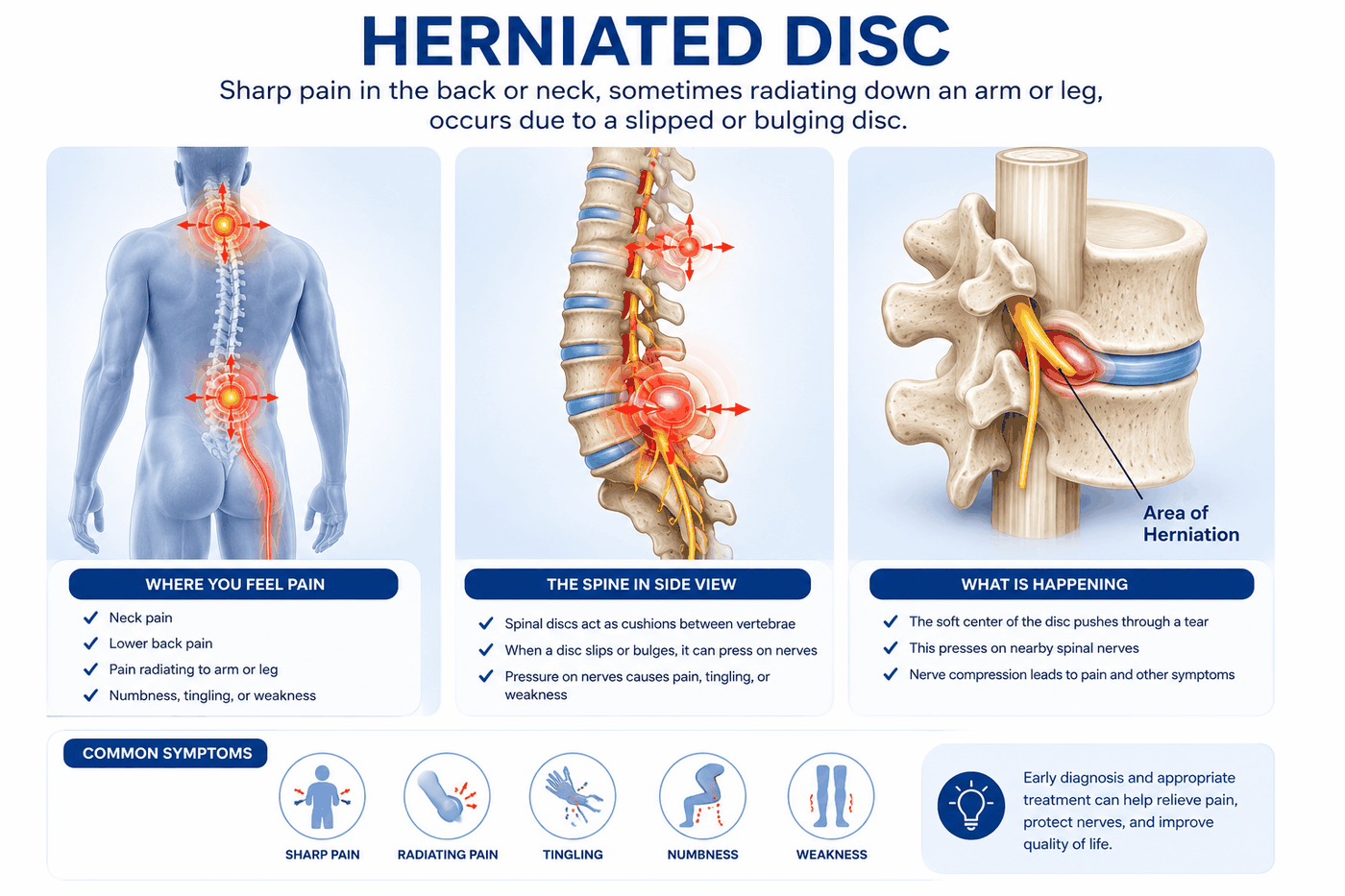
What Is Percutaneous Discectomy?
Understanding the diagnosis and treatment target helps set realistic expectations before Percutaneous Discectomy is recommended.
Between the bones of the spine are soft cushioning structures called spinal discs.
Healthy discs help the spine move comfortably and protect nearby nerves.
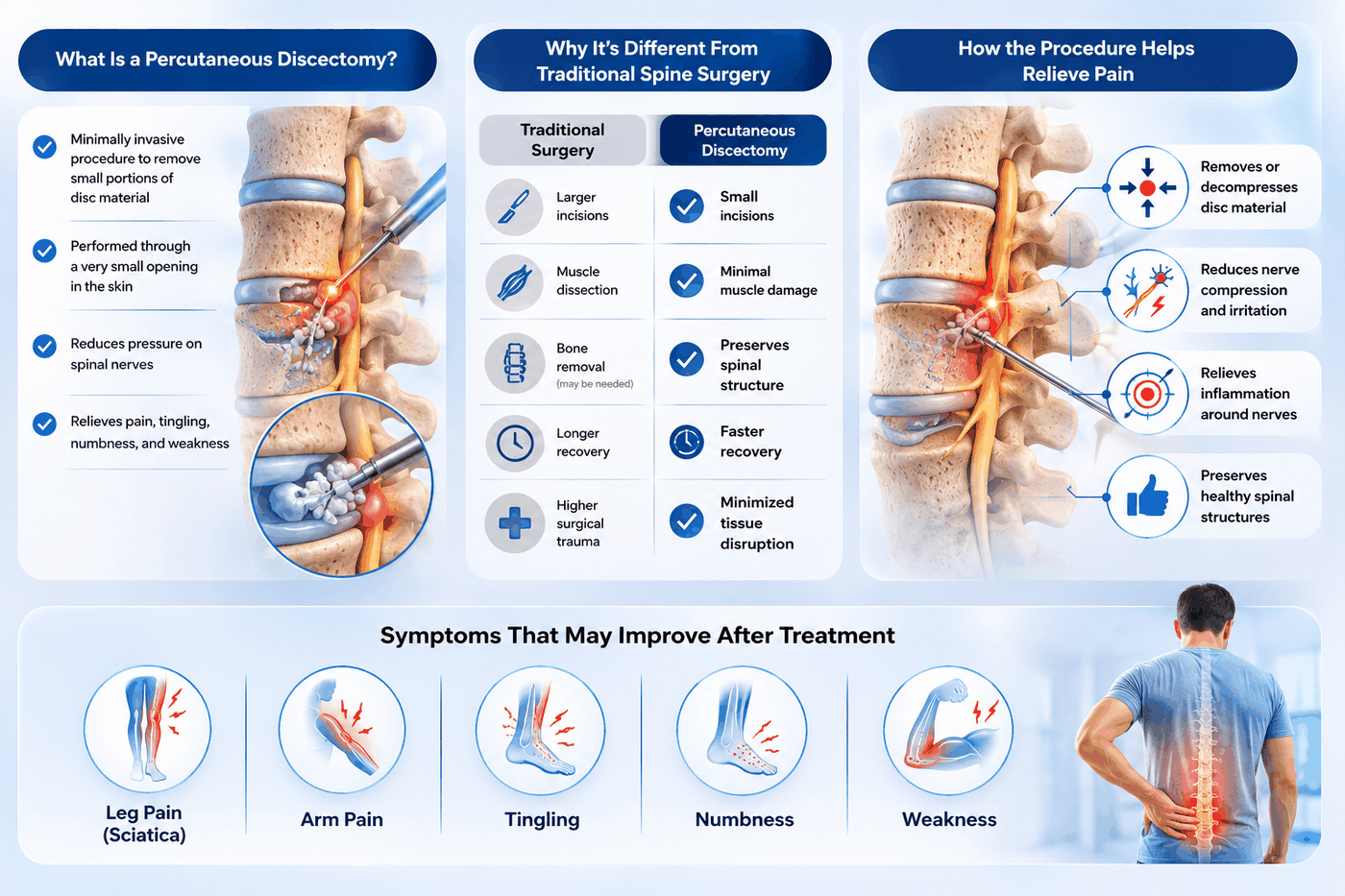
A percutaneous discectomy is a minimally invasive spine procedure used to remove small portions of disc material pressing on spinal nerves.
The term “percutaneous” means the procedure is performed through a very small opening in the skin rather than a large surgical incision.
Using specialized instruments and imaging guidance, physicians reduce pressure inside the damaged disc and relieve compression affecting nearby nerves.
How Common Disc Herniations Are
Disc herniations are common, and most improve without a procedure. Cleveland Clinic reports that more than 3 million people in the U.S. get a herniated disk every year, that people ages 30 to 50 are most likely to be affected, and that herniated disks get better on their own or with nonsurgical treatment for 9 out of 10 people. Percutaneous discectomy is aimed at the smaller group whose symptoms persist.
When Percutaneous Discectomy May Be Considered
A procedure or medication plan is chosen only after the likely pain source, prior care, health history, and personal goals have been reviewed.
Lumbar Disc Herniation
Lumbar disc herniation is one of the most common reasons for treatment and may cause sciatica, leg pain, tingling, or weakness.
Cervical Disc Herniation
A herniated disc in the neck may cause neck pain, arm pain, and numbness in the hands or arms.
Radiculopathy
Nerve irritation caused by disc compression may create radiating pain symptoms.
Persistent Disc-Related Pain Despite Conservative Care
Some patients continue experiencing symptoms despite medications, therapy, and injections such as an epidural steroid injection.
What Herniated Disc Symptoms Feel Like
- Sharp lower back pain
- Shooting leg pain
- Burning sensations
- Tingling or numbness
- Muscle weakness
Symptoms and Daily-Life Effects to Discuss
Tell your clinician where symptoms occur, what makes them better or worse, and how they affect function. That pattern can be as important as an imaging result.
- Pain that limits routine activity
- Symptoms that interrupt sleep
- Reduced confidence with movement
- Difficulty participating in work or rehabilitation
How Candidacy Is Evaluated
Not everyone with a related diagnosis is a candidate for Percutaneous Discectomy. Evaluation is used to confirm the treatment target and compare reasonable alternatives.
Medical History
Your clinician reviews pain location, leg or arm symptoms, weakness or numbness, activity limitations, and previous treatments.
Physical Examination
The examination assesses strength, reflexes, sensory changes, walking ability, and nerve tension signs.
Imaging and Care Planning
Imaging helps determine whether the patient is an appropriate candidate by showing herniated discs, nerve compression, disc degeneration, and spinal narrowing. The American Association of Neurological Surgeons (AANS) notes that imaging such as MRI is generally not recommended unless symptoms have been present for six weeks, and that referral to a specialist is recommended if symptoms persist for more than four weeks.
Who May Not Be a Good Candidate
Percutaneous techniques are designed for selected, contained herniations. A different approach may be needed when imaging shows a large or fragmented herniation, severe degenerative disc disease, spinal instability, or significant narrowing, or when there is rapidly progressing weakness.
What to Expect During Percutaneous Discectomy
Specific instructions vary. The care team explains preparation, anesthesia or medication decisions, what the patient may feel, and the follow-up plan before treatment.
Step 1: Preparation and Sedation
Patients receive sedation or local anesthesia for comfort, and the procedure area is cleaned carefully.
Step 2: Small Needle or Instrument Placement
Using fluoroscopic imaging guidance, the physician inserts specialized instruments through a small opening.
Step 3: Disc Decompression
Small portions of disc material are removed or decompressed to reduce pressure inside the disc and around the affected nerve.
Step 4: Final Imaging Confirmation
Imaging is used to confirm proper treatment positioning.
Step 5: Recovery and Observation
Patients are monitored briefly before returning home.
Recovery, Timing, and Follow-Up
Response to Percutaneous Discectomy varies with the diagnosis, treatment technique, and individual health factors. Follow the specific instructions provided by your care team.
After Treatment
Recovery is often shorter compared to traditional open spine surgery, and many patients return home the same day. Some temporary soreness at the treatment site is common initially. The pace of recovery depends on the severity of disc disease, overall health, and physical activity demands.
When Improvement May Begin
Some patients notice improvement relatively quickly after nerve pressure decreases. Others experience more gradual improvement as nerve inflammation settles over time. Nerves that have been compressed for extended periods may require additional healing time.
Rehabilitation and Activity
Physical therapy helps support long-term spinal health and reduce future injury risk. A program commonly focuses on:
- Core strengthening
- Posture improvement
- Flexibility
- Body mechanics
- Spine stabilization
Potential Benefits of Percutaneous Discectomy
The goal is meaningful improvement in comfort and function, not an unsupported promise that every symptom will disappear.
- Reduced nerve compression
- Relief of leg or arm pain
- Smaller incision
- Reduced tissue disruption
- Faster recovery compared to larger surgery
- Improved mobility and function
- Many patients report improved quality of life after nerve pressure is relieved
- A treatment plan matched to a defined pain source
Risks, Safety, and When to Call
All treatments have risks. The risks of Percutaneous Discectomy depend on the technique, medication or device, anatomy, and individual health history.
- Infection
- Bleeding
- Nerve irritation
- Disc re-herniation
Contact your care team for increasing redness, warmth, swelling, drainage, fever, severe or worsening spinal pain, or numbness or weakness that does not improve as expected. Seek urgent medical care for new or progressive weakness, loss of bowel or bladder control, trouble breathing, or rapidly worsening neurologic symptoms.
How This Treatment Fits into Comprehensive Care
Interventional care is most useful when it supports a broader plan built around diagnosis, movement, function, emotional well-being, and informed decision-making.
Part of a Broader Plan
The goal is individualized care focused on long-term mobility and quality of life, which may include physical therapy, epidural steroid injections, exercise programs, weight management, and lifestyle modifications.
Movement and Rehabilitation
Core strengthening, posture, flexibility, body mechanics, and spine stabilization support long-term spinal health after nerve pressure is relieved.
Support for Daily Life
Many patients gradually begin structuring their lives around avoiding pain triggers such as sitting, driving, exercising, or lifting. Over time, chronic nerve pain may affect confidence, independence, and emotional well-being. Targeted treatment may help restore mobility and improve comfort again.
Is Percutaneous Discectomy Right for You?
Herniated disc pain can slowly affect nearly every part of life. It interferes with movement, sleep, work, exercise, and emotional well-being. Over time, even simple activities may become exhausting because of constant nerve irritation and pain.
California Pain Consultants provides individualized evaluation and discusses the expected benefits, limitations, alternatives, and risks before recommending care.
Percutaneous Discectomy at California Pain Consultants
Your care team at California Pain Consultants treats disc-related back, neck, arm, and leg pain for patients across San Diego County, with clinics in Kearny Mesa, Rancho Bernardo, La Mesa, and Chula Vista. Bring any MRI reports and a list of prior treatments to your visit. When a procedure is appropriate, it can be performed at the Comprehensive Pain ASC in Rancho Bernardo or the EPC Surgery Center in La Mesa. We accept most insurances. You can request your appointment online or call (858) 571-3630.
Book Your AppointmentTrusted Information and Related Care
General medical references: MedlinePlus: Pain · National Institute of Neurological Disorders and Stroke: Pain.
Related California Pain resources: Degenerative disc disease · Low back pain · Conditions and treatments.
This article is for general education and does not replace an individualized medical evaluation. Recommendations depend on the diagnosis, health history, current medications, examination, imaging or diagnostic testing, and personal goals.
Frequently Asked Questions About Percutaneous Discectomy
Find clear, medically responsible answers about Percutaneous Discectomy, who may be a candidate, what to expect, and when to contact your healthcare team.
What is percutaneous discectomy, and how does it work?
Percutaneous discectomy is a minimally invasive procedure that removes a small amount of disc material through a needle-sized access path. The goal is to reduce pressure within a contained disc and lessen irritation of a nearby nerve.
What conditions or symptoms may percutaneous discectomy help address?
It may be considered for selected contained lumbar disc herniations causing persistent radicular leg pain despite conservative care. Large extrusions, severe stenosis, instability, progressive neurologic loss, or pain from another structure may require a different approach.
Who is a candidate for percutaneous discectomy?
Candidates are typically adults with a contained disc herniation that matches their leg or arm symptoms on imaging and that has not improved with conservative care such as physical therapy, medication, and injections. Large or fragmented herniations, instability, severe degeneration, or rapidly worsening weakness may call for a different approach. Your evaluation confirms the fit. The procedure is not chosen from MRI findings alone.
How should I prepare for percutaneous discectomy?
Your team will review imaging, medications, allergies, infection risk, and anesthesia instructions. Follow fasting, blood-thinner, and transportation guidance exactly.
What happens during percutaneous discectomy?
With imaging guidance, the physician advances a small cannula into the targeted disc and removes or reduces a controlled amount of nucleus material. The instruments are withdrawn and the small access site is covered.
How is percutaneous discectomy different from open surgery?
Percutaneous discectomy works through a very small opening in the skin under imaging guidance, removing or decompressing a limited amount of disc material. Open surgery uses a larger incision to directly expose the disc and nerve. The percutaneous approach generally involves less tissue disruption and a shorter recovery, but it is suited only to selected herniations. Walking is usually encouraged, while lifting, bending, twisting, and strenuous activity are restricted during early healing.
How long does recovery take after percutaneous discectomy?
Recovery is often shorter than after traditional open spine surgery, and many patients go home the same day. Temporary soreness at the site is common. Some people feel leg or arm relief quickly, while nerves that were compressed for a long time may take longer to settle. Physical therapy usually follows to support lasting results.
What are the possible risks or side effects of percutaneous discectomy?
Possible risks include bleeding, infection or discitis, nerve injury, dural puncture, worsening pain, recurrent herniation, and inadequate relief. Additional treatment or surgery may still be needed.
How soon might I notice a change, and how long might it last?
Nerve symptoms may improve as irritation settles, but recovery is assessed over days to weeks rather than immediately. The amount and durability of benefit depend on disc anatomy, nerve health, rehabilitation, and other pain sources.
Can a disc herniate again after percutaneous discectomy?
Yes, re-herniation is a known risk after any disc procedure. Physical therapy focused on core strength, posture, and body mechanics may help lower strain on the spine. Contact your care team if leg or arm pain returns, and seek urgent care for new weakness or loss of bowel or bladder control.
Do most herniated discs need surgery or a procedure?
No. Cleveland Clinic reports that herniated disks get better on their own or with nonsurgical treatment for 9 out of 10 people, often within four to six weeks. A procedure such as percutaneous discectomy is considered only when symptoms persist, limit function, and match a contained herniation on imaging after conservative care has been tried.
How does percutaneous discectomy fit into a broader treatment plan?
The procedure is one option between conservative care and open surgery for carefully selected disc problems. Postprocedure rehabilitation, body mechanics, medication review, and monitoring of neurologic symptoms remain essential.
When should I see a specialist for a herniated disc?
The AANS recommends referral to a specialist if symptoms persist for more than four weeks. See a pain specialist sooner if pain is severe, keeps you from sleeping or working, or comes with numbness or weakness. Seek emergency care for loss of bladder or bowel control or rapidly worsening weakness in the legs.
When should I call my healthcare team or seek urgent care after percutaneous discectomy?
Call promptly for fever, drainage, severe or steadily worsening back or leg pain, or new numbness. Seek emergency care for progressive weakness, new bowel or bladder dysfunction, saddle numbness, chest pain, or trouble breathing.