
A sympathetic block is an image-guided injection of numbing medication near the sympathetic nerves, the part of the nervous system that can drive burning pain, swelling, and skin color or temperature changes. It may help people with complex regional pain syndrome, certain nerve pain conditions, phantom limb pain, and some circulation-related pain in the arms, legs, or trunk. The board-certified pain specialists at California Pain Consultants in San Diego perform sympathetic blocks as part of a broader plan for nerve pain.
For many people living with chronic pain, the discomfort goes far beyond soreness or stiffness.
A gentle touch may suddenly feel painful. A small change in temperature may trigger burning sensations. Some patients experience swelling, color changes in the skin, or nerve pain that feels constant and overwhelming.
The purpose of Sympathetic Block is not to promise a cure. It is to address a carefully identified pain source, support function, and help the patient participate more comfortably in an individualized care plan.
What Is a Sympathetic Block?
Understanding the diagnosis and treatment target helps set realistic expectations before Sympathetic Block is recommended.
The nervous system controls many automatic functions that happen without conscious effort.
One important part of this system is called the sympathetic nervous system.
The sympathetic nervous system is responsible for the body’s “fight or flight” response during stressful situations.
A Sympathetic Block is a minimally invasive injection procedure designed to temporarily interrupt abnormal sympathetic nerve signaling.
The procedure delivers anesthetic medication near sympathetic nerve structures responsible for transmitting pain signals and regulating nervous system activity.
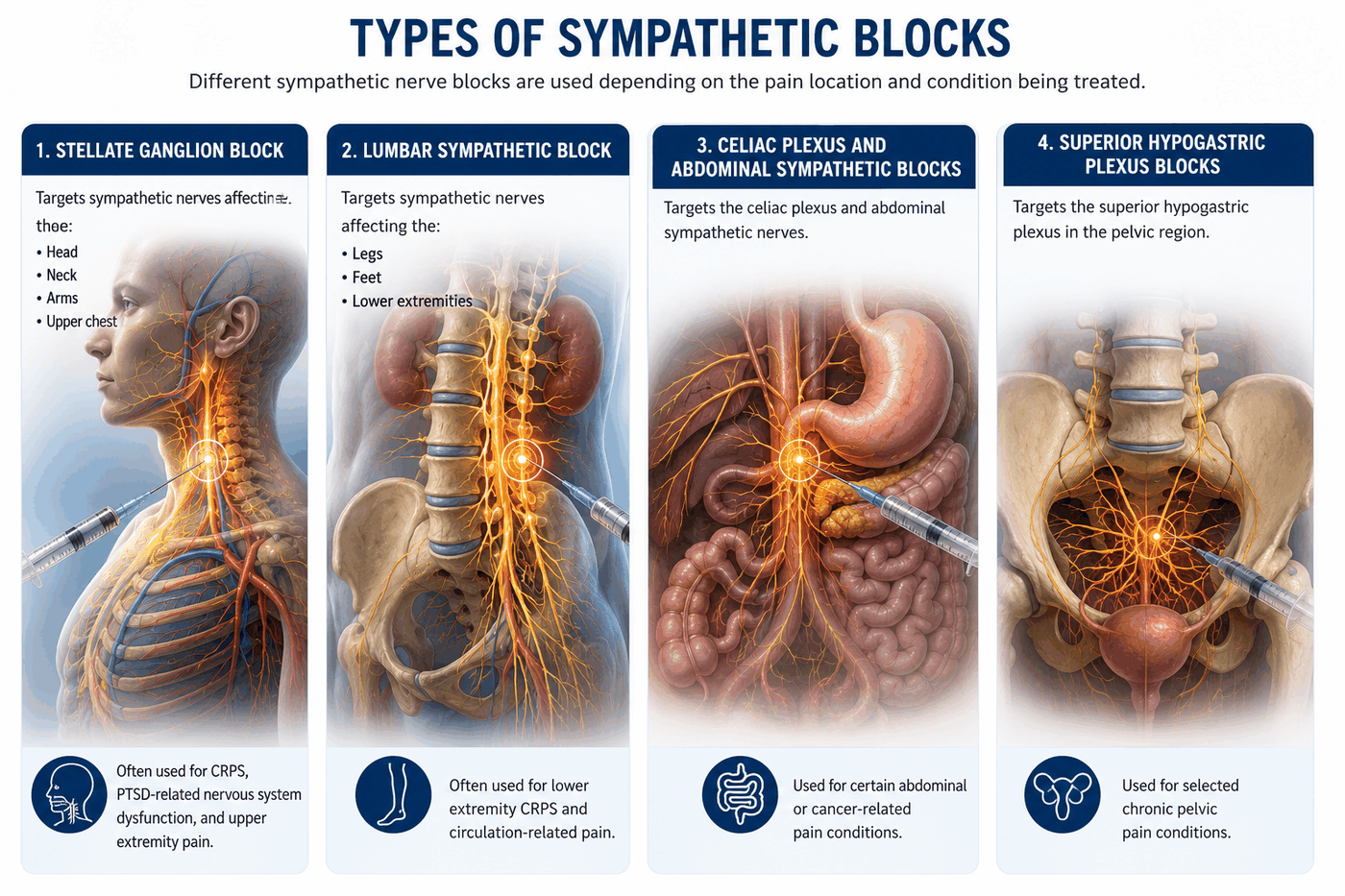
The exact type and location of the block depends on the area of the body being treated. Common types include:
- Stellate ganglion block, performed at the front of the lower neck for pain in the face, arm, or hand
- Lumbar sympathetic block, performed beside the lower spine for pain in the leg or foot
- Celiac plexus block, used for selected upper abdominal pain
- Superior hypogastric plexus block, used for selected pelvic pain
When Sympathetic Block May Be Considered
A procedure or medication plan is chosen only after the likely pain source, prior care, health history, and personal goals have been reviewed.
Complex Regional Pain Syndrome (CRPS)
One of the most common reasons for sympathetic nerve block treatment. CRPS may cause severe burning pain, swelling, color changes, and hypersensitivity.
Chronic Neuropathic Pain
Persistent nerve pain involving the arms, legs, hands, or feet may sometimes involve sympathetic overactivity.
Phantom Limb Pain
Some patients with phantom limb pain may benefit from sympathetic nerve-targeted treatment.
Circulation-Related Pain Conditions
Certain vascular or circulation-related disorders may respond to sympathetic blockade. Cleveland Clinic lists conditions such as critical limb ischemia, Raynaud’s disease, diabetes-related neuropathy, postherpetic neuralgia after shingles, and cancer pain among the possible reasons for a lumbar sympathetic block.
Post Surgical Nerve Pain
Persistent pain after surgery may occasionally involve chronic sympathetic nerve dysfunction.
Trauma-Related Nervous System Disorders
Selected patients with chronic nervous system overactivation may also benefit from sympathetic modulation therapies.
Symptoms and Daily-Life Effects to Discuss
Tell your clinician where symptoms occur, what makes them better or worse, and how they affect function. That pattern can be as important as an imaging result.
- Burning pain
- Tingling
- Severe skin sensitivity
- Swelling
- Color changes in the skin
- Temperature changes
- Deep nerve discomfort
- Walking
How Candidacy Is Evaluated
Not everyone with a related diagnosis is a candidate for Sympathetic Block. Evaluation is used to confirm the treatment target and compare reasonable alternatives.
Medical history
Your clinician asks about pain severity, burning sensations, temperature changes, swelling, and injury history.
Physical examination
The examination compares skin color, temperature, sensation, swelling, and function between the affected and unaffected sides.
Imaging and care planning
Imaging may help rule out structural conditions contributing to symptoms. The decision also weighs symptom patterns, physical findings, nervous system involvement, and treatment history.
What to Expect During Sympathetic Block
Specific instructions vary. The care team explains preparation, anesthesia or medication decisions, what the patient may feel, and the follow-up plan before treatment.
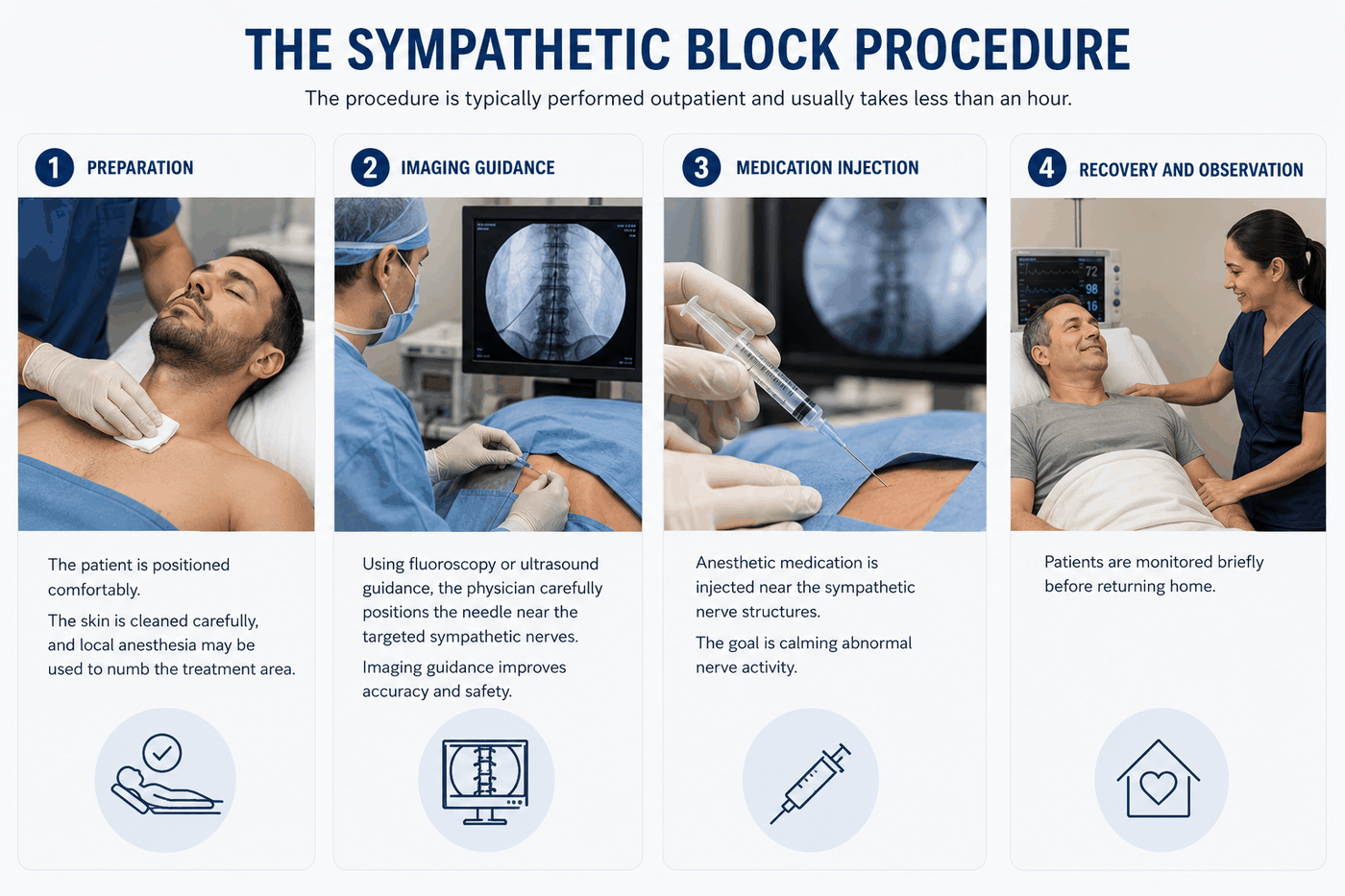
Step 1: Preparation
The patient is positioned comfortably. The skin is cleaned carefully, and local anesthesia may be used to numb the treatment area.
Step 2: Imaging Guidance
Using fluoroscopy or ultrasound guidance, the physician carefully positions the needle near the targeted sympathetic nerves. Imaging guidance improves accuracy and safety. Cleveland Clinic notes that the procedure usually takes fewer than 30 minutes.
Step 3: Medication Injection
Anesthetic medication is injected near the sympathetic nerve structures, sometimes with a steroid. The goal is calming abnormal nerve activity.
Step 4: Recovery and Observation
Patients are monitored briefly before returning home. After a lumbar block, Cleveland Clinic explains, the lower back and leg may feel warm, a sign that the sympathetic nerves have been reached. After a stellate ganglion block, temporary effects such as a hoarse voice usually fade within a few hours.
Recovery, Timing, and Follow-Up
Response to Sympathetic Block varies with the diagnosis, treatment technique, and individual health factors. Follow the specific instructions provided by your care team.
After treatment
Recovery is generally relatively quick, and most patients return home the same day. Temporary soreness near the injection site may occur briefly afterward. Plan for someone else to drive you home.
When improvement may begin
Some patients experience relief relatively quickly. Others notice gradual changes over several days as the nervous system begins calming down. Timing depends on the condition being treated, the severity of nerve dysfunction, and how long symptoms have been present.
How long effects may last
Relief duration varies between patients. Some people have temporary symptom reduction, others longer-lasting improvement, and some notice progressive relief after repeat treatments. Cleveland Clinic reports that relief from a lumbar sympathetic block can last from a few days to several weeks, and that a series may take as few as two injections or more than 10 over time. Repeat procedures may occasionally become part of an ongoing treatment plan.
Potential Benefits of Sympathetic Block
The goal is meaningful improvement in comfort and function, not an unsupported promise that every symptom will disappear.
- Reduced burning pain
- Improved circulation
- Reduced hypersensitivity
- Better mobility
- Improved sleep
- Reduced nervous system overactivity
- Many patients report feeling calmer, more comfortable, and more functional after successful treatment
- A treatment plan matched to a defined pain source
Risks, Safety, and When to Call
All treatments have risks. The risks of Sympathetic Block depend on the technique, medication or device, anatomy, and individual health history.
- Temporary soreness
- Bleeding
- Infection
- Temporary numbness
- Nerve irritation
Contact your care team for increasing redness, warmth, swelling, drainage, fever, severe or worsening pain, or numbness or weakness that does not improve as expected. Seek emergency care for trouble breathing, fainting, or signs of a severe allergic reaction.
How This Treatment Fits Into Comprehensive Care
Interventional care is most useful when it supports a broader plan built around diagnosis, movement, function, emotional well-being, and informed decision-making.
Part of a broader plan
The goal is improving overall function and quality of life. Blocks are often timed to open a window for physical therapy and rehabilitation, alongside neuromodulation such as spinal cord stimulation when appropriate, behavioral therapy, and medication management.
Support for daily life
Many patients slowly begin organizing life around avoiding symptom triggers. Over time, chronic nerve pain may affect confidence, independence, and emotional well-being. Targeted treatment may help restore balance, comfort, and quality of life again, including walking, exercising, sleeping comfortably, and working.
Ongoing reassessment
Pain care is adjusted over time according to function, response, side effects, and the patient’s priorities.
Is a Sympathetic Block Right for You?
Chronic sympathetic nerve pain can slowly affect every part of life. It interferes with movement, sleep, emotional health, circulation, stress regulation, and overall well-being. Over time, patients may feel physically and emotionally exhausted because the nervous system never fully relaxes.
California Pain Consultants provides individualized evaluation and discusses the expected benefits, limitations, alternatives, and risks before recommending care.
Sympathetic Blocks at California Pain Consultants
At California Pain Consultants, your care team begins by confirming whether your symptoms fit a sympathetically maintained pain pattern, using your history and a side-by-side examination of the affected limb or region. If a block is recommended, your physician explains which nerves will be targeted, what you may feel afterward, and how the result will shape the next step, whether that is a series of blocks, focused rehabilitation, or neuromodulation. Procedures are performed with image guidance at the Comprehensive Pain ASC in Rancho Bernardo and the EPC Surgery Center in La Mesa.
We see patients at clinics in Kearny Mesa, Rancho Bernardo, La Mesa, and Chula Vista. We accept most insurances. Request your appointment or call (858) 571-3630 to talk with your care team.
Book Your AppointmentTrusted Information and Related Care
General medical references: MedlinePlus: Pain · National Institute of Neurological Disorders and Stroke: Pain.
Related California Pain resources: Complex regional pain syndrome · Phantom limb pain · Conditions and treatments.
This article is for general education and does not replace an individualized medical evaluation. Recommendations depend on the diagnosis, health history, current medications, examination, imaging or diagnostic testing, and personal goals.
Frequently Asked Questions
What does a sympathetic nerve block treat?
A sympathetic nerve block is most often used for complex regional pain syndrome, but it may also help some people with phantom limb pain, shingles-related nerve pain, certain circulation problems, and cancer pain. The block calms overactive sympathetic nerves that can drive burning pain, swelling, and color or temperature changes in the affected area.
How long does a sympathetic block last?
Relief varies, lasting from a few hours to several weeks, and sometimes longer after a series. The numbing medicine wears off within hours, but the calming effect on the nerves can outlast it. Cleveland Clinic reports that relief after a lumbar sympathetic block can last from a few days to several weeks.
How many sympathetic blocks will I need?
The number depends on your response. Some patients need only one or two blocks, while others benefit from a series, and Cleveland Clinic notes that a series may involve anywhere from two to more than 10 injections over time. Your care team reassesses after each block before recommending another.
Is it normal for my leg or arm to feel warm afterward?
Yes, warmth in the treated limb is common and expected after a sympathetic block. It happens because blocking the sympathetic nerves allows blood vessels to relax and increases blood flow. Temporary numbness or heaviness can also occur until the anesthetic wears off. Report weakness or numbness that does not fade as expected.
Can a sympathetic block cure CRPS?
A sympathetic block does not cure CRPS, but it may reduce pain enough to allow physical therapy and normal use of the limb, which are central to recovery. Earlier treatment tends to be associated with a better outlook. Blocks are usually one part of a broader plan that also includes medication, rehabilitation, and psychological support.
What are the risks of a sympathetic block?
The most common side effects are mild soreness, bruising, or swelling at the injection site. Less common risks include bleeding, infection, dizziness, headache, and temporary numbness or weakness. With a stellate ganglion block, a temporary hoarse voice is common, and a briefly droopy eyelid can rarely occur. Serious complications are rare when the block is performed with image guidance.