
Facet injections are image-guided injections into, or next to, the small joints at the back of the spine to find out whether those joints are causing chronic neck or back pain, and to relieve it. They may help adults with long-lasting axial neck or low back pain from arthritis, injury, or wear that has not improved with physical therapy and medication. Board-certified pain specialists at California Pain Consultants in San Diego perform facet injections and medial branch blocks and use the results to guide longer-lasting treatment.
Facet injections and medial branch blocks are image-guided procedures used to evaluate or treat selected pain arising from the small paired joints at the back of the spine. These joints guide motion and can become painful from arthritis, injury, or mechanical stress.
For facet injections used diagnostically, a medial branch block numbs the small nerves that carry facet-joint pain signals. An intra-articular injection places medication inside the joint. These procedures have different purposes and should not be treated as interchangeable.
Candidates for facet injections typically have predominantly axial neck or low back pain, an examination that supports a facet source, no better explanation such as fracture or tumor, and inadequate improvement with conservative care.
Facet injections and medial branch blocks use fluoroscopy and contrast to evaluate or treat suspected facet-joint pain and may help determine whether radiofrequency ablation is appropriate.
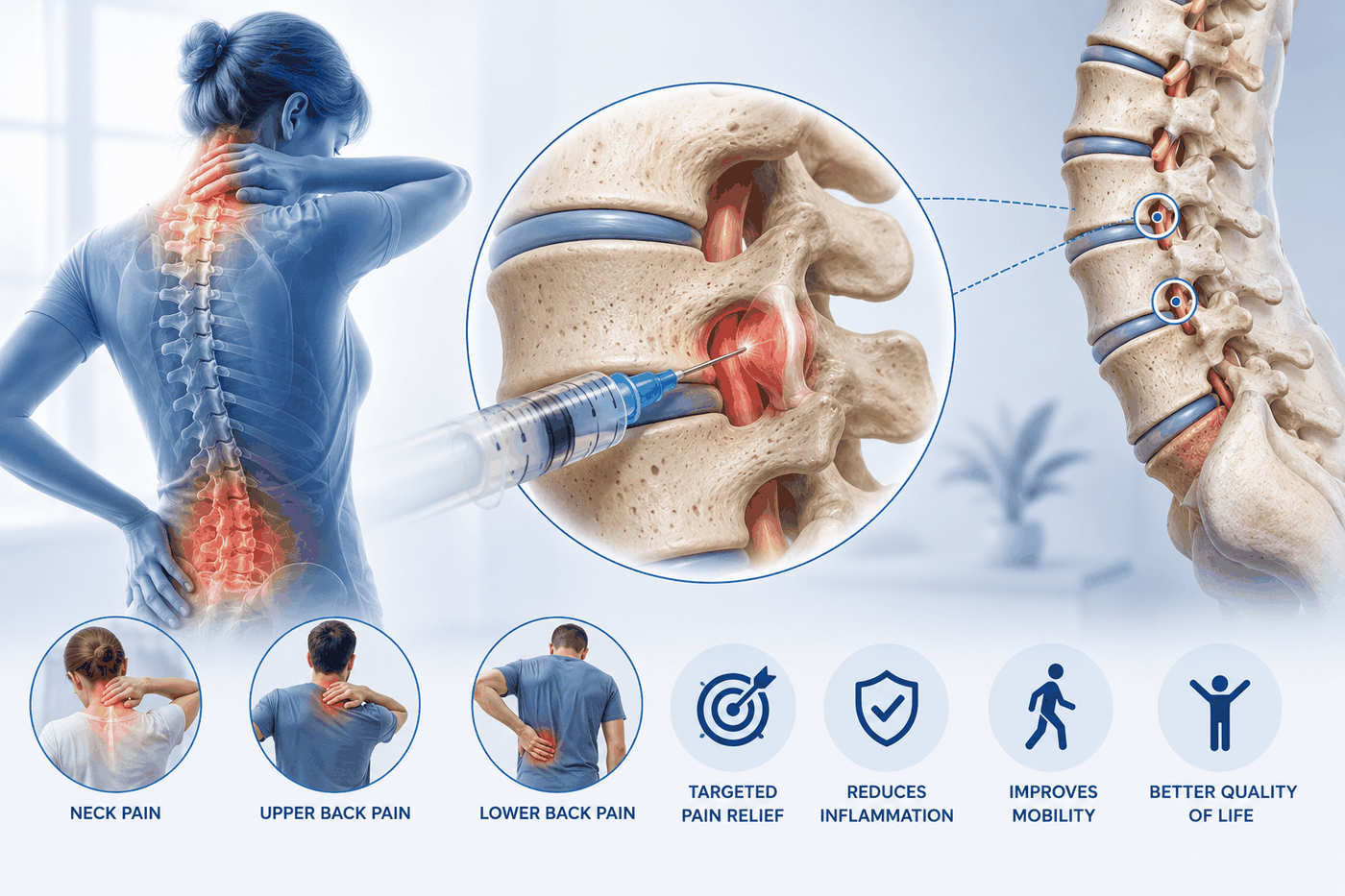
What Are Facet Injections and Medial Branch Blocks?
Facet-mediated pain is usually axial and may be referred into the head, shoulder, buttock, or upper thigh without following a classic nerve-root pattern.
Facet pain is a meaningful share of chronic back pain. A study published in a National Library of Medicine archive notes that facet joint pain has been estimated to account for as many as 30% of chronic low back pain cases. The National Institute of Arthritis and Musculoskeletal and Skin Diseases defines chronic back pain as pain that lasts longer than 12 weeks and notes that back pain becomes more common with age, particularly after 45.
For diagnostic testing, local anesthetic is placed near the medial branch nerves. The patient then performs normally painful, safe activities and records whether familiar pain changes during the anesthetic’s expected duration.
An intra-articular facet injection can include local anesthetic and corticosteroid. It may be considered selectively, but medial branch blocks are commonly preferred when the purpose is to determine candidacy for radiofrequency ablation. For a closer look at the nerve-targeted version, see our page on medial branch blocks.
Facet Injection Versus Medial Branch Block
- Intra-articular facet injection: medication goes inside the joint, often to calm inflammation for a period of time
- Medial branch block: local anesthetic is placed beside the small nerves that supply the joint, mainly to test whether they carry the pain
- Radiofrequency ablation: a later, separate step that uses controlled heat on those same nerves for longer relief when blocks are positive
When Facet Procedures May Be Considered
Selection focuses on a chronic axial pain pattern, functional limitation, conservative treatment history, and exclusion of a more likely source.
Cervical Facet Pain
Arthritic or post-traumatic cervical facets may contribute to neck pain, referred shoulder pain, or cervicogenic headache in selected patients.
Lumbar Facet Pain
Low back pain that worsens with extension, rotation, standing, or transitions may prompt evaluation of the lumbar facet joints.
Degenerative Facet Arthritis
Cartilage loss, joint enlargement, and inflammation can contribute to pain, although imaging changes alone do not prove a painful joint.
Diagnostic Planning for RFA
A controlled medial branch block can test whether the target nerves carry a meaningful portion of the familiar pain before radiofrequency ablation.
What Facet-Joint Pain May Feel Like
Symptoms overlap with disc, muscle, sacroiliac, hip, and nerve-root conditions, so no single movement or scan is diagnostic. Pain centered low in the buttock, for example, may come from the sacroiliac joint instead, which is evaluated and treated differently with sacroiliac joint injections.
- Predominantly axial neck or low back pain
- Pain with extension, rotation, prolonged standing, or looking upward
- Morning stiffness or pain during transitions
- Referred pain to the head, shoulder, buttock, or upper thigh
- Localized tenderness near the spinal joints
- Pain without dominant untreated radiculopathy or neurogenic claudication
- Symptoms lasting at least several months despite conservative care
- Functional limitations that can be tested before and after a block
How Candidacy Is Evaluated
The clinician identifies safe target levels and establishes a baseline pain and disability measure so the diagnostic response can be interpreted.
History and Functional Goals
Your clinician reviews where symptoms begin, whether pain travels, how long it has been present, what worsens or relieves it, and how it affects walking, work, sleep, and daily activity.
Focused Physical Examination
Strength, sensation, reflexes, movement, tenderness, gait, and nerve-tension signs help distinguish joint, disc, nerve, muscle, and other potential pain sources.
Imaging and Prior Records
MRI, CT, or X-rays are reviewed when results are likely to clarify anatomy or change the plan. Prior procedure reports and treatment responses may also be important.
Medication and Health Review
Blood thinners, diabetes, allergies, infection risk, pregnancy, implanted devices, and other medical conditions are discussed so benefits and risks can be considered safely.
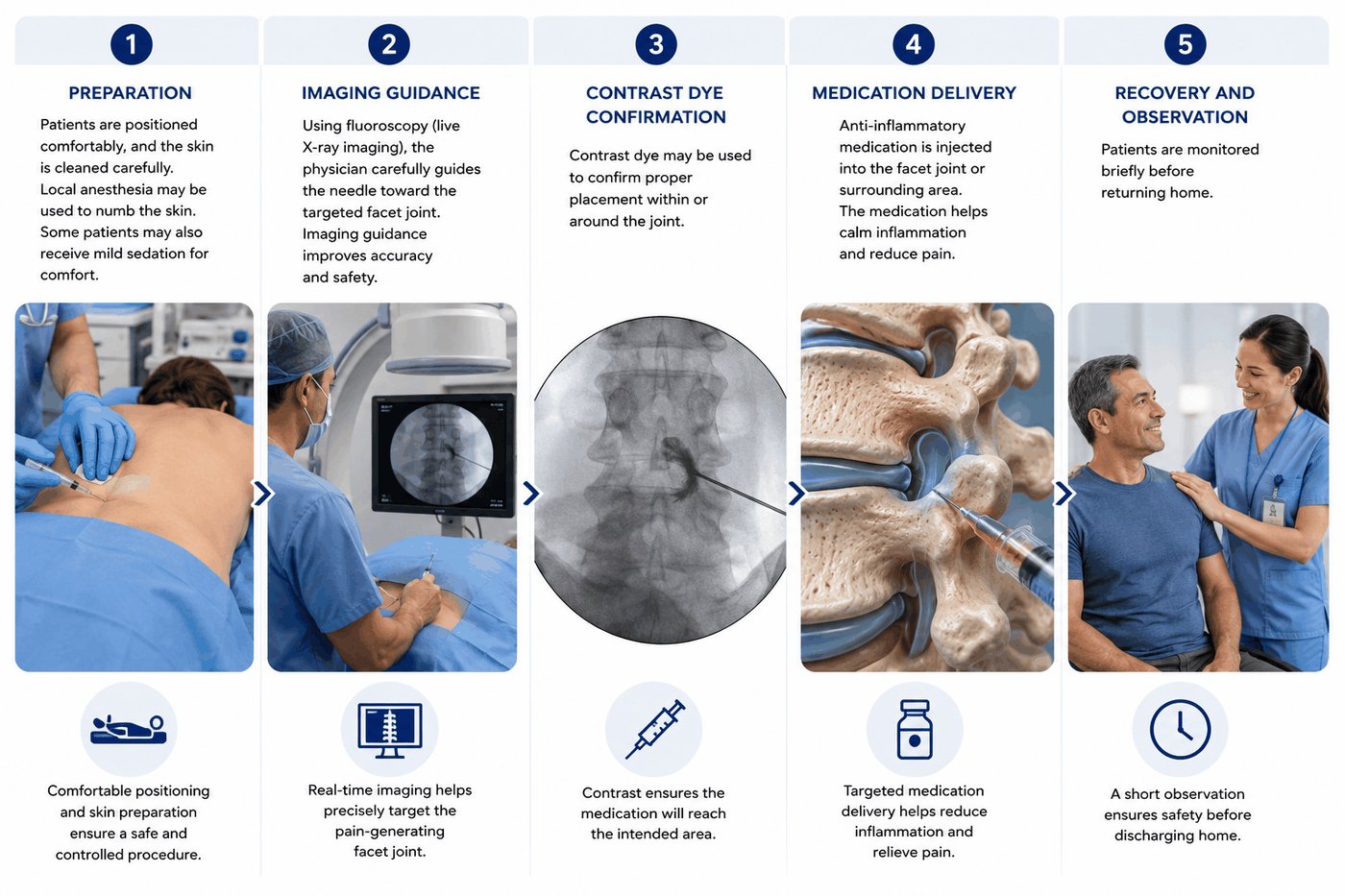
The Facet Injection or Medial Branch Block Procedure
The medication and target depend on whether the purpose is diagnosis, temporary treatment, or preparation for possible radiofrequency ablation.
Step 1: Baseline and Preparation
Pain and function are recorded, medications are reviewed, and the treatment area is cleaned and numbed after positioning.
Step 2: Fluoroscopic Targeting
The physician identifies the facet joint or medial branch nerve location under fluoroscopy.
Step 3: Contrast Confirmation
A small amount of contrast confirms the expected position and helps avoid intravascular injection.
Step 4: Small-Volume Medication
Local anesthetic is placed near the medial branch for diagnosis, or medication is delivered into the joint for a selected therapeutic plan.
Step 5: Functional Testing
During the expected anesthetic window, the patient repeats safe activities that usually cause pain and records the degree and duration of change.
After a Facet Procedure
A diagnostic block is time limited by design. Accurate activity testing and a written pain diary are more useful than resting for the entire day.
Short-Term Effects
Temporary numbness, soreness, bruising, or a brief pain flare may occur. Arrange transportation when sedation or weakness could affect safety.
Pain Diary
Record pain before the block, during normally painful activities, when symptoms return, and any medication or activity changes.
Next-Step Review
A positive diagnostic response may support a confirmatory block or radiofrequency ablation according to the clinician’s criteria and current coverage rules.
Rehabilitation
Regardless of the result, movement, strength, posture, pacing, and other conservative strategies remain part of long-term spine care.
Potential Benefits and Realistic Expectations
Facet procedures can clarify a difficult diagnosis and guide a more durable nerve-targeted treatment. Temporary relief from a diagnostic block is expected and is not a failure.
- Tests whether medial branch nerves carry familiar axial pain
- Uses image guidance and small medication volumes
- May provide temporary joint-pain relief in selected cases
- Can help select patients for radiofrequency ablation
- Provides a structured way to compare pain and function
- Avoids assuming that all facet arthritis seen on imaging is painful
Facet Procedure Risks and Limitations
Risks include bleeding, infection, medication reaction, temporary numbness or weakness, pain flare, nerve injury, and inaccurate interpretation of the diagnostic response.
- Report blood thinners, infection, pregnancy, allergies, diabetes, and contrast reactions
- Do not change anticoagulant medication without coordinated instructions
- Call for fever, drainage, severe headache, or rapidly worsening pain
- Seek urgent care for new weakness, saddle numbness, or bladder or bowel loss
- Excess sedation and unrelated pain medication can make a diagnostic block harder to interpret
- A positive block suggests a pain pathway; it does not guarantee radiofrequency ablation success
Call 911 for severe weakness, breathing difficulty, a major allergic reaction, or another life-threatening emergency.
Facet Injections and Radiofrequency Ablation
The diagnostic block and the longer-lasting ablation are separate steps with different goals.
Diagnostic Medial Branch Block
Temporary nerve numbing tests whether specific medial branches carry a meaningful portion of the familiar pain.
Radiofrequency Ablation
When selection criteria are met, controlled energy can interrupt signaling from the same medial branch nerves for a longer, variable period. The NLM-archived study above summarizes prior research showing clinical benefit from facet radiofrequency ablation for 6 to 12 months and possibly up to 2 years, and in its own group of patients followed for a median of 39 months, 53% reported at least 50% pain improvement. Results vary, and nerves can regrow over time.
Physical Therapy
Improved symptom control may support mobility, strength, posture, endurance, and return to valued activities.
Reevaluation
A negative block can be useful. It may redirect attention to discs, sacroiliac joints, muscles, hips, nerve roots, or another pain mechanism.
Find Out Whether Your Spine Pain Is Facet-Mediated
California Pain Consultants can evaluate axial neck or back pain, review imaging and prior treatment, and explain whether a diagnostic medial branch block or facet injections are appropriate.
Treatment at California Pain Consultants
Your care team sees patients with neck and back pain at four San Diego County clinics: Kearny Mesa, Rancho Bernardo, La Mesa, and Chula Vista. Facet injections and medial branch blocks are performed under fluoroscopy at the Comprehensive Pain ASC in Rancho Bernardo and the EPC Surgery Center in La Mesa. At your visit, we review your imaging and prior care, examine your spine, and explain whether a diagnostic block, a therapeutic injection, or a different approach fits your pain pattern.
We accept most insurances. Call (858) 571-3630 or request your appointment to book your appointment.
Book Your AppointmentTrusted Information and Related Care
Medical references: CMS: Facet joint interventions for pain management · NIAMS: Back pain diagnosis and treatment.
Related California Pain resources: Radiofrequency ablation · Low back pain · Neck pain.
This article is for general education and does not replace an individualized medical evaluation. Recommendations depend on the diagnosis, health history, current medications, imaging, examination, and personal goals.
Frequently Asked Questions About Facet Injections
Find clear, medically responsible answers about Facet Injections, who may be a candidate, what to expect, and when to contact your healthcare team.
What are facet injections, and how do they work?
Facet injections place local anesthetic, sometimes with steroid, into or around the small joints at the back of the spine. They may be used to investigate whether a facet joint is contributing to pain and, in selected cases, to reduce local inflammation.
What is the difference between a facet injection and an epidural?
A facet injection targets the small joints at the back of the spine, or the nerves supplying them, and is mainly used for axial neck or back pain. An epidural steroid injection places medication around inflamed spinal nerve roots and is generally used for pain that travels into the arm or leg. Your exam and imaging help determine which fits your symptoms.
How do I know if my back pain is coming from the facet joints?
Facet pain often sits in the neck or low back rather than traveling down a limb, and it may worsen with leaning back, twisting, or standing for long periods. No single exam finding or scan proves it, which is why a diagnostic medial branch block is used. Relief during the block is the most reliable way to confirm a facet source. Pain traveling along a compressed nerve may require a different treatment.
Who may be a candidate for facet injections?
Candidacy is based on the pain pattern, examination, imaging context, and response to prior care. Imaging alone cannot prove a facet joint is painful, so a diagnostic block may be used when the result would guide the next step.
How should I prepare for facet injections?
Review blood thinners, infection, allergies, diabetes, and pregnancy with the team. Follow fasting or transportation instructions, and ask how to record pain and activity before and after a diagnostic injection.
What happens during facet injections?
Using imaging guidance, the physician places a small needle into the facet joint or near its nerve supply and injects a measured amount of medication. For diagnostic testing, keeping the anesthetic volume small helps preserve accuracy.
Are facet injections painful?
The skin is numbed before the needle is placed, and fluoroscopy helps the physician reach the target efficiently. You may feel pressure and brief discomfort as the needle is positioned. Mild soreness at the injection site for a day or two is common. Sedation, when used, is kept light for diagnostic blocks so it does not cloud the test results.
What is recovery like after facet injections?
Mild soreness or a temporary increase in pain can occur. If the injection is diagnostic, test the usual painful movements safely and document the percentage and duration of change as instructed.
Can I go back to work after a facet injection?
Timing depends on your job, how you feel, and whether you received sedation, in which case you should arrange a ride home. After a diagnostic block, your care team may ask you to try normally painful activities and record your response. Follow your specific instructions, and call if you develop fever, new weakness, or rapidly worsening pain.
What are the possible risks or side effects of facet injections?
Possible risks include bleeding, infection, medication reaction, temporary numbness or weakness, steroid effects, and nerve irritation. Serious complications are uncommon but possible.
How long does a facet injection last?
It depends on the type. A diagnostic medial branch block is designed to wear off within hours, because its job is to test whether the nerves carry your pain. A therapeutic injection with a steroid may relieve pain for a variable period. When blocks are positive, radiofrequency ablation may extend relief to roughly 6 to 12 months or longer. A steroid effect, when used, may take several days.
Why did my pain come back after the medial branch block?
That is expected. A diagnostic medial branch block uses local anesthetic that wears off, usually within hours. What matters is how much your familiar pain improved while it was working. Strong temporary relief suggests the facet joints are a major source and may support moving toward radiofrequency ablation, which is designed to last longer.
How do facet injections fit into a broader treatment plan?
Facet injections are most useful when linked to a clear decision pathway rather than repeated without measurable benefit. Rehabilitation, posture and movement work, medication review, and evaluation of other pain sources remain important.
When should I call my healthcare team or seek urgent care after facet injections?
Contact the care team for fever, drainage, increasing redness, severe headache, or pain that is rapidly worsening. Seek emergency care for new bowel or bladder changes, progressive weakness, saddle numbness, chest pain, or trouble breathing.