
Why Lower Back Support Matters More Than You Think
Dealing with this in San Diego? Same-day appointments are often available at our 4 clinics.
Lower back support is one of the most searched-for solutions among adults dealing with daily back pain — and for good reason.
Here are the best types of lower back support at a glance:
| Type | Best For | Example Products |
|---|---|---|
| Flexible belt/corset | Mild pain, daily wear, posture | Elastic lumbar belts, compression wraps |
| Semi-rigid brace | Moderate pain, lifting, sciatica | Braces with metal stays or firm panels |
| Rigid orthosis | Severe injury, post-surgery, fractures | Molded plastic LSO braces |
| Lumbar cushion | Office sitting, driving, passive support | Memory foam seat cushions |
Nearly 80% of adults will experience lower back pain at least once in their lives. It’s the most common cause of job-related disability in the United States — and a leading reason people visit a doctor.
Yet many people are unsure which type of support actually helps.
The science is nuanced. Research shows that lumbar supports can improve short-term function and reduce pain — but they work best as part of a broader plan, not as a standalone fix.
That’s exactly what this guide breaks down: what works, what doesn’t, and how to choose the right support for your situation.
I’m Dr. Zach Cohen, double board-certified in Anesthesiology and Chronic Pain, and I’ve helped hundreds of patients find the right lower back support strategies as part of personalized, non-surgical treatment plans. In the sections below, I’ll walk you through everything you need to know — from brace types to clinical evidence to real-world usage tips.
Lower back support terms to learn:
Choosing the Best Lower Back Support: Types and Mechanisms
When you are dealing with spinal pain, finding the right lower back support can feel like trying to navigate a maze of medical jargon. The sheer variety of options on the market—ranging from simple elastic bands to heavy-duty, medical-grade orthoses—can be overwhelming. However, selecting the best support starts with understanding how these devices work mechanically to stabilize your spine and relieve pressure.

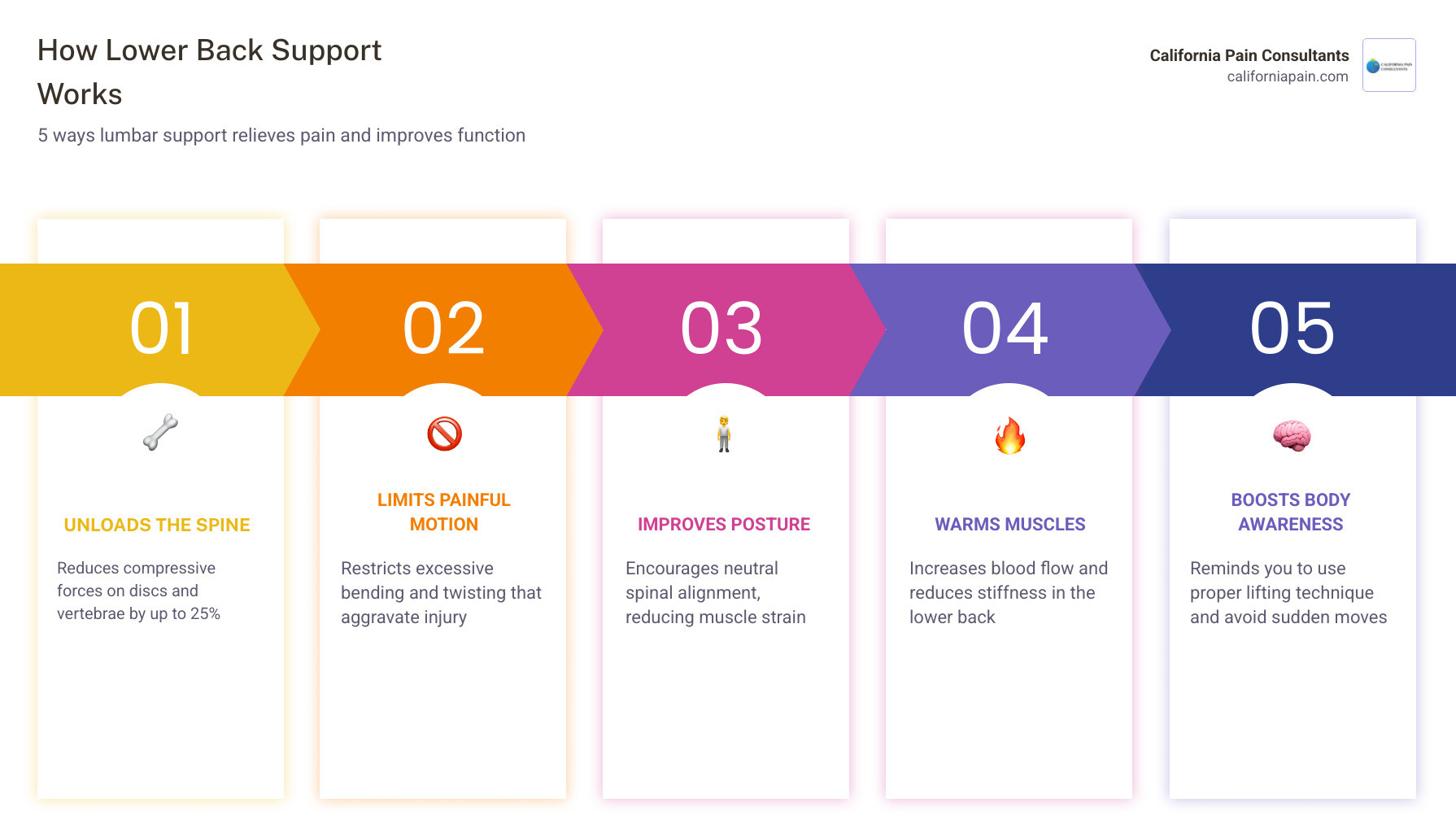
At its core, a back brace provides support through three main mechanisms:
- Spinal Stabilization: By applying external pressure to the abdominal cavity and torso, a brace helps unload some of the weight that your spine normally carries.
- Motion Restriction: Limiting extreme movements (such as excessive bending, twisting, or hyperextension) prevents further irritation to injured spinal discs, muscles, and ligaments.
- Muscle Warmth and Proprioception: The physical warmth retained by wearing a snug brace helps relax tense muscles, while the gentle compression increases your body’s awareness of its posture (proprioception).
To help you understand your options, we have compiled a quick comparison of the three primary categories of wearable supports based on our in-depth guide to choosing the right back brace.
| Brace Category | Rigidity Level | Primary Materials | Best Suited For | Key Mechanical Action |
|---|---|---|---|---|
| Flexible | Low | Elastic, canvas, neoprene, breathable mesh | Mild muscle strains, everyday posture, light activity, desk jobs | Mild compression, heat retention, light motion restriction |
| Semi-Rigid | Moderate | Fabric with built-in metal/plastic stays or removable pads | Moderate sciatica, herniated discs, repetitive lifting, moderate strains | Moderate stabilization, prevents rolling/bunching, unloads discs |
| Rigid | High | Molded plastic panels, heavy metal uprights, pulley cords | Post-operative healing, spinal fractures, severe spinal stenosis | Strict motion restriction, significant spinal unloading, abdominal pressure |
Understanding which category matches your clinical needs is the first step toward lasting relief. Let’s look closer at how each type functions in daily life.
Flexible Garments for Everyday Lower Back Support
Flexible back supports are the most common and accessible options available. Typically constructed from lightweight, elasticized fabrics, cotton-elastic blends, canvas, or neoprene, these garments are designed to fit snugly around your waist and hips.
Rather than completely immobilizing your spine, flexible compression belts and elastic corsets work by applying gentle, consistent pressure to your abdominal cavity. This intra-abdominal pressure acts as an external balloon, sharing the load of your upper body and taking some of the mechanical stress off your lumbar vertebrae.
Another subtle but highly therapeutic benefit of flexible supports is the retention of muscle warmth. The insulated materials help increase local blood flow, which naturally relaxes tight, spasming muscles. If you are looking for a highly adjustable, everyday option, products like the Adjustable Lumbar Back Support Belt offer customized compression that can be tightened during physical activities and loosened when sitting.
For those whose jobs require prolonged standing, walking, or light bending, finding a reliable back brace for work can make the difference between ending a shift in agony or finishing it with energy to spare. Flexible braces are ideal for these scenarios because they allow you to bend forward to touch your knees while preventing you from bending past them into high-risk angles.
Rigid and Semi-Rigid Orthoses
When a patient presents with severe spinal instability, a healing fracture, or is recovering from a surgical procedure, flexible supports are simply not enough. This is where rigid and semi-rigid orthoses (often referred to as LSOs, or lumbosacral orthoses) become necessary.
Semi-rigid braces combine a flexible fabric base with vertical support stays made of metal (such as spring steel or aluminum) or hard plastic. These stays are built directly into the back panel to prevent the material from rolling, bunching, or riding up during active movement. They offer a middle ground: substantial structural support without completely freezing your ability to move.
Rigid braces, on the other hand, feature large, molded plastic panels that cover the front and back of the torso. These panels act like a temporary cast for your torso. By strictly restricting motion in all directions—bending, arching, and twisting—rigid braces ensure that injured tissues or surgical sites remain perfectly aligned to heal.
If you are recovering from a moderate to severe lumbar strain or require structured compression, the CorFit Advantage AP Spinal Support is an excellent example of a semi-rigid system. It utilizes independent dual-zone pull straps to leverage support exactly where you need it most.
Furthermore, if your daily routine involves heavy manual labor, using a specialized heavy lifting brace with rigid panels can provide the structural reinforcement necessary to shield your intervertebral discs from extreme forces.
Key Features to Look For in a Back Brace
Not all back braces are created equal. If you are shopping for a brace, it is easy to get distracted by flashy marketing claims. To find a device that actually delivers relief and remains comfortable for more than ten minutes, you must look for specific quality features.
When selecting a back brace, look for these key features:
- Breathable Fabrics: Standard neoprene braces can trap heat and sweat, leading to skin irritation and general discomfort. Look for high-tech, breathable mesh fabrics or compression knits that allow heat to escape.
- Vertical Support Stays: Look for braces with built-in plastic or metal stays. These vertical reinforcements keep the brace flat against your back, preventing it from rolling down or bunching up when you sit or bend.
- Dual-Tension Adjustable Straps: A single Velcro closure rarely provides a perfect fit. Dual-tension straps allow you to wrap the main belt comfortably, then pull secondary elastic straps to dial in targeted compression.
Adjustable Compression and Fit
The secret to an effective back brace lies in its adjustability. Your support needs change throughout the day; you may need maximum tightness while lifting groceries, but a looser, more relaxed fit when driving or sitting at a desk.
Modern high-quality braces often feature advanced pulley systems or dual-pull straps that utilize mechanical advantage. This design allows you to achieve a highly secure, custom fit with minimal physical effort—a lifesaver for individuals with limited hand strength or arthritis.
For example, the IYDoaMea Lumbar Support Belt utilizes a dual pull strap system that lets you adjust the compression level in seconds. This flexibility is incredibly useful when determining do back braces work for lifting, as you can easily tighten the belt before a heavy lift and loosen it immediately afterward to restore natural circulation.
To ensure your adjustable brace works as intended, you must get the sizing right. Never rely on your standard pants or clothing size. Always use a flexible tape measure to measure your waist circumference directly at the level of your navel (belly button).
Ergonomic Cushions for Passive Lower Back Support
While wearable braces are fantastic for active movement, they are not always practical for long hours spent sitting in an office chair or car seat. For passive support, ergonomic lumbar cushions are the ideal solution.
When you sit, your pelvis naturally tilts backward, which flattens the natural inward curve (lordosis) of your lower back. This slouching posture puts immense pressure on your spinal discs and stretches the surrounding muscles, leading to stiffness and “desk job fatigue.”
An ergonomic cushion, such as the Lower Back Lumbar Support Cushion, sits behind you to physically preserve that natural spinal alignment. By gently nudging your lower spine forward, it takes the strain off tired muscles and helps you sit upright without active effort.
If you spend your days at a computer, pairing a supportive lumbar cushion with regular movement is essential. We highly recommend checking out our guide on desk job relief 7 essential lower back stretches for office workers to keep your spine fluid and pain-free throughout the workday.
Clinical Efficacy, Proper Usage, and Potential Risks
Is strapping on a back brace actually backed by science? As pain management specialists, we believe in looking strictly at clinical evidence. The reality is that lumbar supports are highly effective when used correctly—but they are not a magic cure-all on their own.
A comprehensive Cochrane systematic review analyzed the clinical data surrounding lumbar supports. The findings were clear:
- For Prevention: There is moderate evidence that wearing a lumbar support is not more effective than no intervention in preventing lower back pain in healthy individuals. In other words, you cannot simply wear a brace to prevent injury if you are using poor lifting form or have a weak core.
- For Treatment: There is moderate evidence that lumbar supports are effective at improving short-term functional status and reducing pain for patients experiencing a mix of acute, subacute, and chronic lower back pain.
- Real-World Impact: When medical-grade braces (such as the LumboTrain) were integrated into return-to-work programs, studies showed a 52% reduction in dependency on pain medication and 4.8 fewer sick days per year due to back pain.
If you are looking for a reliable, everyday therapeutic brace that balances support with comfort, the Lower Back Brace by FlexGuard Support is a popular, HSA/FSA-eligible option that combines physical stabilization with pockets for hot or cold therapy packs. To better understand these clinical dynamics, read our guide on understanding low back pain what you need to know.
Support for Specific Spinal Conditions
Different spinal issues require different support strategies. A brace that helps with a pulled muscle might not provide the right kind of relief for a pinched nerve.
- Sciatica and Herniated Discs: When a disc herniates, it can bulge outward and press against the sciatic nerve, causing sharp, radiating pain down the leg. A supportive lumbar belt helps by gently compressing the torso, shifting weight off the affected disc, and reducing the micro-movements that irritate the nerve.
- Spinal Stenosis: This condition involves a narrowing of the spinal canal, which pinches the nerves. Patients with stenosis often find relief when bending slightly forward (the “shopping cart sign”). A semi-rigid brace can be adjusted to support a slightly flexed posture, keeping the spinal canal as open as possible.
- Scoliosis: For progressive spinal curves, specialized rigid braces are custom-molded by orthotists to apply targeted lateral pressure, holding the spine in a straighter position during growth.
For a deeper dive into managing these complex conditions, explore our ultimate lower back pain guide.
Avoiding Muscle Dependency and Risks
The most significant risk of wearing a back brace is over-reliance. Your body has its own natural, built-in back brace: your core muscles (including the transverse abdominis and multifidus).
When you wear a highly supportive brace 24/7, your brain realizes that an external device is doing all the work. Consequently, your core muscles can begin to weaken and atrophy from underuse. This creates a dangerous cycle of dependency—your back feels weaker without the brace, so you wear it more, making your muscles even weaker.
To avoid this, use your brace strategically:
- Wear it during high-strain tasks (lifting, packing, prolonged standing).
- Take it off during periods of rest or light activity.
- Never use a brace as a substitute for active rehabilitation.
To maintain your natural core strength and flexibility, incorporate gentle, targeted movement into your routine. Learn how to stretch lower back safely, and practice board-certified exercises for low back pain relief to rebuild your spine’s natural support network.
Frequently Asked Questions about Back Braces
We hear many of the same questions from our patients in San Diego, Chula Vista, and La Mesa. Here are the clear, evidence-based answers to help you make informed decisions.
Can I wear a back brace all day?
Generally, no. Unless specifically prescribed by your doctor (such as during post-operative recovery or to stabilize a spinal fracture), you should not wear a back brace all day.
For standard muscle strains or everyday pain, limit brace use to a few hours at a time, or specifically during activities that trigger your pain. Wearing a brace continuously can lead to muscle wasting, skin irritation, and even elevated blood pressure due to prolonged chest compression. If you are dealing with a sudden, painful spasm, read our guide on how to handle a pulled muscle lower back and buttock for immediate recovery steps.
How do I choose the right size for a back brace?
To find a brace that actually fits and provides effective support, follow these steps:
- Grab a flexible tape measure.
- Measure your waist circumference at the level of your navel (belly button), not where your pants sit.
- Compare your measurement to the manufacturer’s specific size chart.
If you are a woman looking for a contoured, low-profile fit that accommodates a smaller frame, we recommend reading our a comprehensive guide to back support for women. For a lightweight, shorter-profile option designed specifically for a petite female figure, the OTC Lumbosacral Support for Women (7-Inch Panel) offers customized compression without feeling bulky under clothing.
Are back braces eligible for HSA/FSA reimbursement?
Yes! Because back braces are recognized as medical devices designed to treat or mitigate physical pain, many high-quality supports are fully eligible for reimbursement through Health Savings Accounts (HSA) and Flexible Spending Accounts (FSA).
This allows you to use tax-free funds to purchase the orthotic support you need. We always recommend checking with your specific plan administrator to confirm eligibility requirements before purchasing any back pain relief products.
Conclusion
A high-quality lower back support can be a game-changer when you are recovering from an injury or trying to get through a demanding work shift. By stabilizing the spine, reducing painful micro-movements, and unloading pressure from your discs, a brace provides the physical breathing room your body needs to heal.
However, a brace is only one piece of the puzzle. True, long-term recovery requires addressing the root cause of your pain, rebuilding your core strength, and restoring your natural mobility.
At California Pain Consultants, our board-certified doctors specialize in comprehensive, non-surgical pain management. Serving communities across Southern California—including San Diego, Kearny Mesa, Chula Vista, Rancho Bernardo, La Mesa, and Miramar—we offer personalized, multifaceted treatment programs tailored to your unique lifestyle.
If you are struggling with persistent pain and want to find a lasting solution, do not rely on a brace alone. Contact us today to schedule a consultation, and let us help you find the perfect balance of medical-grade support, physical therapy, and advanced pain relief.
To learn more about finding the right orthotic device for your daily routine, explore our comprehensive guide on choosing a back brace.