
An interscalene block is an ultrasound-guided injection of local anesthetic near the brachial plexus nerves in the side of the neck that numbs the shoulder and upper arm. It is most often used for adults having shoulder surgery, such as rotator cuff repair or shoulder replacement, and occasionally for severe shoulder pain from injury. The board-certified pain specialists at California Pain Consultants in San Diego can explain whether this regional anesthesia technique fits your procedure and recovery.
Shoulder pain can affect almost every movement people make throughout the day.
Simple actions like reaching overhead, getting dressed, lifting groceries, or even turning in bed may suddenly become difficult and painful. For many patients preparing for shoulder surgery or recovering from a major injury, one of the biggest concerns is not only the procedure itself—but the pain afterward.
The purpose of Interscalene Block is not to promise a cure. It is to address a carefully identified pain source, support function, and help the patient participate more comfortably in an individualized care plan.
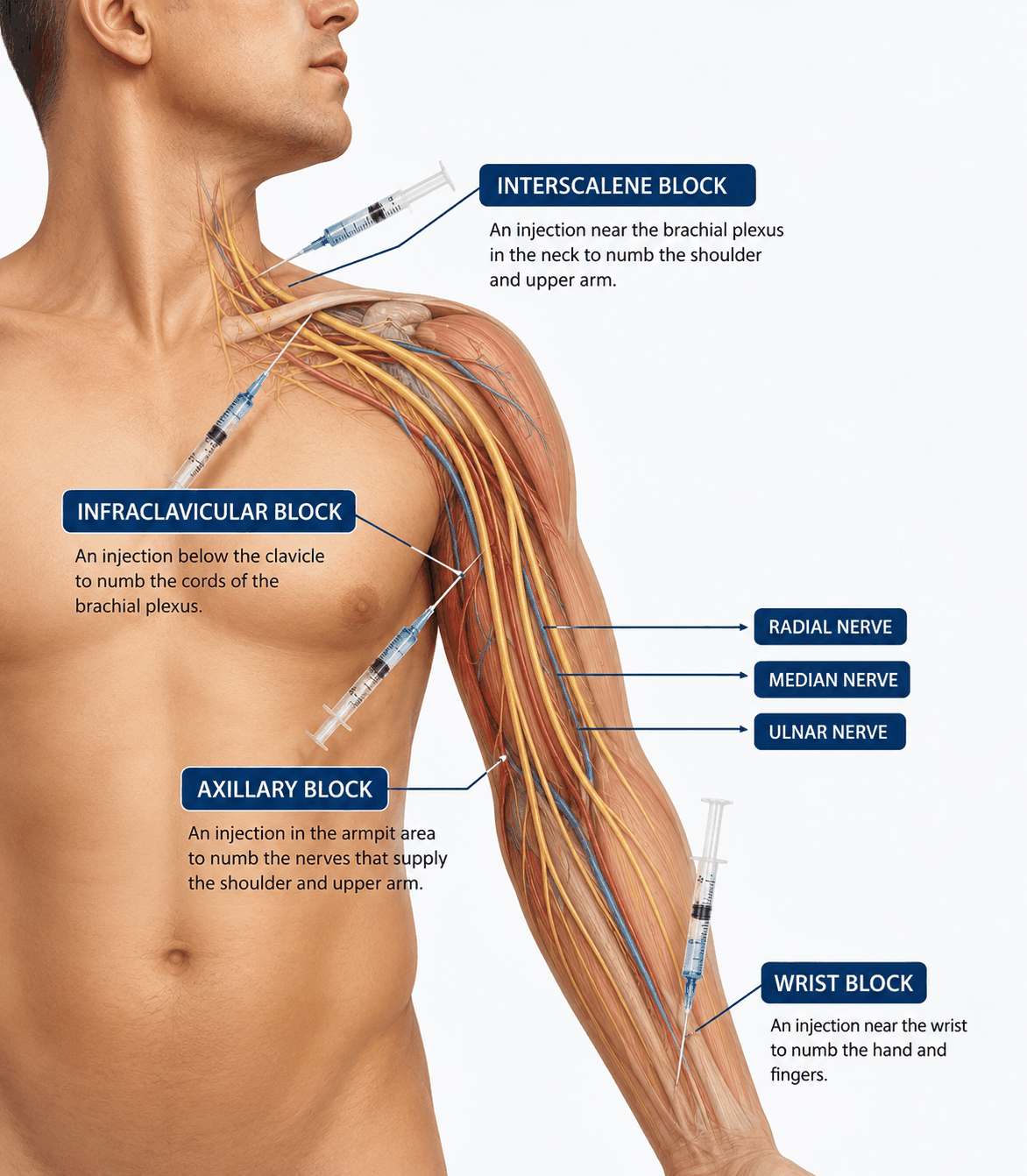
What Is an Interscalene Block?
Understanding the diagnosis and treatment target helps set realistic expectations before Interscalene Block is recommended.
Pain from the shoulder and upper arm travels through a complex network of nerves called the brachial plexus.
When surgery, injury, or inflammation affects the shoulder, pain signals travel through these nerves to the brain.
An interscalene block works by temporarily interrupting these pain signals before they fully reach the central nervous system.
An interscalene block is a type of regional anesthesia in which local anesthetic medication is injected near the brachial plexus nerves located in the neck.
These nerves are responsible for sensation and movement involving much of the shoulder and upper arm.
By temporarily numbing the nerves, the block may provide significant pain relief during and after surgery or injury treatment.
When Interscalene Block May Be Considered
A procedure or medication plan is chosen only after the likely pain source, prior care, health history, and personal goals have been reviewed.
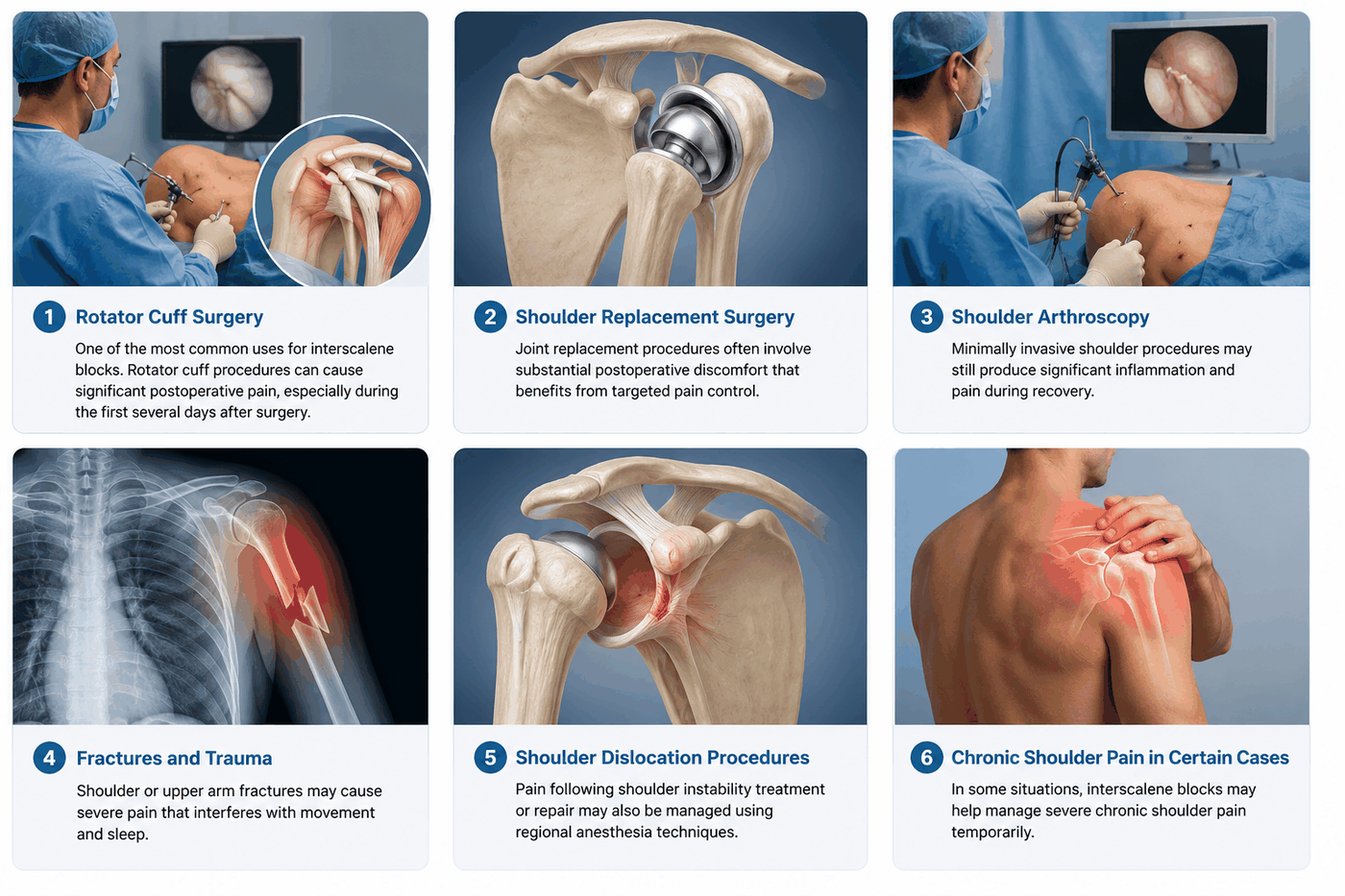
Rotator Cuff Surgery
Rotator cuff procedures can cause significant postoperative pain, especially during the first several days after surgery. This is one of the most common uses for interscalene blocks. Our shoulder pain page explains rotator cuff conditions in more detail.
Shoulder Replacement Surgery
Joint replacement procedures often involve substantial postoperative discomfort that benefits from targeted pain control.
Shoulder Arthroscopy
Minimally invasive shoulder procedures may still produce significant inflammation and pain during recovery.
Fractures and Trauma
Shoulder or upper arm fractures may cause severe pain that interferes with movement and sleep.
Shoulder Dislocation Procedures
Pain following shoulder instability treatment or repair may also be managed using regional anesthesia techniques.
Chronic Shoulder Pain in Certain Cases
In some situations, interscalene blocks may help manage severe chronic shoulder pain temporarily. For longer-term shoulder pain without surgery, options such as joint injections are more commonly considered.
Symptoms and Daily-Life Effects to Discuss
Tell your clinician where symptoms occur, what makes them better or worse, and how they affect function. That pattern can be as important as an imaging result. It also helps to know what you are likely to feel once the block takes effect:
- Reduced shoulder pain
- Numbness in the shoulder or arm
- Temporary weakness or heaviness in the arm
- This is expected and part of how the block works
How Candidacy Is Evaluated
Not everyone with a related diagnosis is a candidate for Interscalene Block. Evaluation is used to confirm the treatment target and compare reasonable alternatives.
Medical history
Your clinician reviews previous surgeries, breathing conditions, allergies, neurological symptoms, and medication history. Breathing history matters because the block often temporarily affects the phrenic nerve, which controls the diaphragm on the same side. An ASRA review explains that an interscalene block cannot be safely performed in a patient whose diaphragm on the opposite side is already paralyzed, so lung and diaphragm conditions are always screened.
Physical examination
The examination documents shoulder condition, arm function, neurological status, and overall health before the block.
Imaging and care planning
The block is often coordinated with the surgical team and anesthesia providers to optimize pain control during recovery.
What to Expect During Interscalene Block
Specific instructions vary. The care team explains preparation, anesthesia or medication decisions, what the patient may feel, and the follow-up plan before treatment.
Step 1: Positioning and Preparation
The patient is positioned comfortably, usually lying slightly reclined. The skin is cleaned carefully, and local anesthesia may be used to numb the skin.
Step 2: Ultrasound Guidance
Using ultrasound imaging, the provider identifies the brachial plexus nerves and surrounding structures. Ultrasound guidance greatly improves precision and safety.
Step 3: Needle Placement
A specialized needle is carefully guided near the nerves supplying the shoulder.
Step 4: Medication Injection
Local anesthetic medication is injected around the nerves. The medication temporarily blocks pain signal transmission.
Step 5: Monitoring and Recovery
Patients are monitored briefly while the block begins taking effect.
Recovery, Timing, and Follow-Up
Response to Interscalene Block varies with the diagnosis, treatment technique, and individual health factors. Follow the specific instructions provided by your care team.
After treatment
Patients often notice temporary arm heaviness or numbness while the block remains active. This is expected and gradually resolves as the medication wears off. Pain management instructions are carefully reviewed because discomfort may begin returning once sensation comes back. Many patients are advised to start their oral pain medication before the block fully wears off, and to keep the numb arm protected in a sling.
How long effects may last
The duration depends on the medication used and whether a continuous catheter system is placed. Some blocks provide relief for several hours, while others may last longer. In some cases, continuous catheter systems allow ongoing medication delivery for extended pain control. The American Society of Regional Anesthesia and Pain Medicine notes that a single-injection block can be expected to provide up to about 4 to 24 hours of pain relief after surgery, while home catheters remain in place for an average of 3 to 4 days after most orthopedic surgeries.
Rehabilitation and activity
Movement and rehabilitation are important parts of recovery after shoulder procedures. Range-of-motion exercises, strengthening programs, and rehabilitation sessions may improve long-term shoulder function and mobility.
Potential Benefits of Interscalene Block
The goal is meaningful improvement in comfort and function, not an unsupported promise that every symptom will disappear.
- Significant pain reduction
- Improved postoperative comfort
- Better sleep
- Reduced opioid requirements
- Earlier rehabilitation participation
- Improved recovery experience
- A treatment plan matched to a defined pain source
- Potential improvement in comfort and everyday function
Risks, Safety, and When to Call
All treatments have risks. The risks of Interscalene Block depend on the technique, medication or device, anatomy, and individual health history.
- Temporary arm weakness
- Hoarseness
- Shortness of breath sensation
- Infection
- Bleeding
- Nerve irritation
Contact your care team for fever, increasing swelling, drainage, severe pain, persistent hoarseness, or weakness that does not improve as expected. Seek urgent medical care for trouble breathing or swallowing, fainting, or new or progressive weakness.
How This Treatment Fits Into Comprehensive Care
Interventional care is most useful when it supports a broader plan built around diagnosis, movement, function, emotional well-being, and informed decision-making.
Part of a broader plan
Modern pain care focuses on reducing pain while minimizing unnecessary medication exposure whenever possible. Regional anesthesia has become one of the most important advances in orthopedic pain management, supporting precision pain management, enhanced recovery, reduced opioid dependence, and improved patient comfort.
Movement and rehabilitation
Movement and rehabilitation are important parts of recovery after shoulder procedures. Your surgeon and physical therapist set the pace for range-of-motion and strengthening work, which may improve long-term shoulder function and mobility.
Ongoing reassessment
Pain care is adjusted over time according to function, response, side effects, and the patient’s priorities.
Is an Interscalene Block Right for You?
Shoulder pain and surgery recovery can feel physically and emotionally exhausting. Simple movements become difficult. Sleep becomes interrupted. Pain may create fear around movement and recovery itself.
California Pain Consultants provides individualized evaluation and discusses the expected benefits, limitations, alternatives, and risks before recommending care.
Shoulder Pain Care at California Pain Consultants
Whether you are preparing for shoulder surgery or living with shoulder pain that has not settled, your care team at California Pain Consultants can help you understand your options. For surgical patients, we review your procedure, breathing history, medications, and recovery setting and coordinate with your surgeon and anesthesia team. For persistent shoulder pain, we evaluate the joint, tendons, and nerves to build a plan that may include therapy, image-guided injections, or nerve-targeted treatment.
We see patients at four clinics across San Diego County: Kearny Mesa, Rancho Bernardo, La Mesa, and Chula Vista. We accept most insurances. Request your appointment or call (858) 571-3630 to talk with your care team.
Book Your AppointmentTrusted Information and Related Care
General medical references: MedlinePlus: Pain · National Institute of Neurological Disorders and Stroke: Pain.
Related California Pain resources: Shoulder pain · Continuous catheter nerve blocks · Conditions and treatments.
This article is for general education and does not replace an individualized medical evaluation. Recommendations depend on the diagnosis, health history, current medications, examination, imaging or diagnostic testing, and personal goals.
Frequently Asked Questions
How long does an interscalene block last?
A single-injection interscalene block typically lasts several hours to about a day, depending on the medication and dose. ASRA notes that single-shot blocks provide about 4 to 24 hours of relief after surgery. When longer relief is needed, a continuous catheter can deliver medication for several days.
Will I be awake for an interscalene block?
Most patients receive light sedation so they are relaxed and comfortable, but they remain able to respond during the block. The skin is numbed first, and ultrasound guidance helps the clinician place the needle precisely. The block is often combined with general anesthesia or sedation for the surgery itself.
Why does my arm feel heavy and numb after the block?
Arm heaviness, numbness, and weakness are expected effects of an interscalene block because the brachial plexus nerves control both sensation and movement in the shoulder and arm. These effects fade as the medication wears off. Keep the arm in a sling and protect it from bumps, heat, and pressure until feeling returns.
Is shortness of breath normal after an interscalene block?
A mild sense of shortness of breath can occur because the block often temporarily affects the nerve that controls the diaphragm on that side. Most healthy patients tolerate this well, and it resolves as the block wears off. Seek urgent care for significant trouble breathing, and tell your team about any lung condition beforehand.
What happens when the block wears off?
As sensation returns, shoulder pain may increase, sometimes quickly. Starting oral pain medication on the schedule your care team recommends, before the block fully wears off, can make the transition smoother. Ice and positioning may also help. Contact your team if pain is not controlled with the prescribed plan.
Who should not have an interscalene block?
An interscalene block may not be appropriate for people with significant lung disease, existing diaphragm weakness on the opposite side, certain nerve conditions, infection at the injection site, or allergies to local anesthetics. Blood thinners may also need to be reviewed. Your anesthesia and pain team will weigh these factors and suggest alternatives if needed.