
Hip Pain Relief: What Works and When to Get Help
Dealing with this in San Diego? Same-day appointments are often available at our 4 clinics.
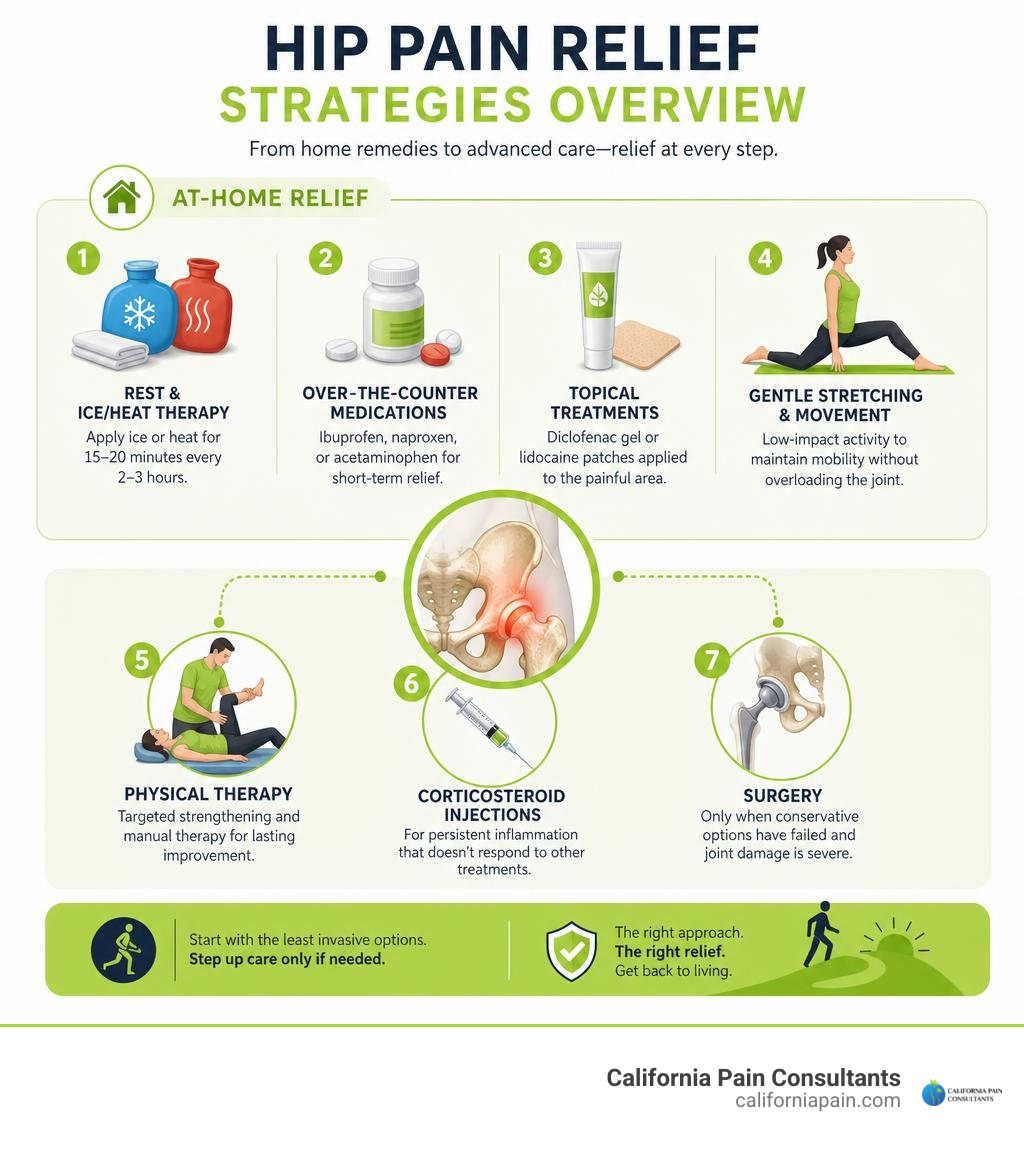
If you’re looking for pain relief for hips, here are the most effective options ranked from least to most invasive:
- Rest and ice/heat therapy — apply ice wrapped in a towel for 15–20 minutes every 2–3 hours
- Over-the-counter medications — ibuprofen, naproxen, or acetaminophen for short-term relief
- Topical treatments — diclofenac gel or lidocaine patches applied directly to the painful area
- Gentle stretching and movement — low-impact activity to maintain mobility without overloading the joint
- Physical therapy — targeted strengthening and manual therapy for lasting improvement
- Corticosteroid injections — for persistent inflammation that doesn’t respond to other treatments
- Surgery — only when conservative options have failed and joint damage is severe
Hip pain can stop you in your tracks. Something as simple as getting out of a chair, climbing stairs, or sleeping on your side can become genuinely difficult.
It’s one of the most common complaints across all age groups — but it’s especially frustrating for active, middle-aged adults who don’t want to slow down or depend on pain medications just to get through the day.
The good news? Most hip pain responds well to non-surgical treatment when the right approach is matched to the right cause.
Hip pain has many possible sources — worn cartilage, inflamed tendons, structural problems in the joint, or even pain referred from the lower back. That’s why a one-size-fits-all fix rarely works. Understanding what’s driving your pain is the first step toward real, lasting relief.
I’m Dr. Zach Cohen, a double board-certified specialist in Anesthesiology and Chronic Pain, and I’ve helped hundreds of patients find effective pain relief for hips through personalized, non-surgical care plans — from interventional injections to minimally invasive procedures. In this guide, I’ll walk you through every major option, from what you can do at home today to when it’s time to escalate your care.
Understanding Common Causes of Hip Pain
To choose the best treatment path, we first need to understand what is happening inside and around your hip. The hip is one of the largest weight-bearing ball-and-socket joints in the body, where the head of the thigh bone (femur) fits into the pelvic socket (acetabulum). Because it absorbs tremendous daily force, even slight imbalances or tissue damage can lead to substantial pain and joint stiffness.
According to global epidemiological studies, hip osteoarthritis affects roughly 7.2% of the world’s population, with nearly 2 million new cases diagnosed every year. In the United States alone, studies indicate that nearly 19.6% of adults aged 55 and older experience hip osteoarthritis. Interestingly, women are disproportionately affected, representing nearly 78% of diagnosed cases.
Beyond joint cartilage wear, hip discomfort frequently stems from soft tissue issues like bursitis, tendinitis, labral tears, or structural impingement. Identifying the true source allows us to customize treatment rather than relying on trial and error. For a detailed symptom check, you can review the NHS advice on adult hip pain causes.
Structural Conditions and Joint Degeneration
The most common structural cause of chronic discomfort is degenerative joint disease. In a healthy hip, slick articular cartilage coats the femoral head and acetabulum, allowing effortless gliding. When this protective cartilage degrades, bone-on-bone friction causes inflammation, bone spurs, and progressive stiffness.
Symptoms of structural joint degeneration usually include:
- Deep anterior groin pain that radiates toward the front of the thigh or knee (referred pain)
- Joint stiffness lasting longer than 30 minutes upon waking in the morning
- Difficulty putting on shoes, tying laces, or stepping in and out of vehicles
- Grinding, clicking, or catching sensations during weight-bearing movements
Osteoarthritis accounts for roughly 14% of all hospital discharges related to arthritis and 6% of physician office visits. Moreover, chronic joint pain carries a heavy physical and emotional burden; approximately 19% of patients diagnosed with osteoarthritis experience secondary anxiety and depression, and statistics reveal a 20% excess mortality rate compared to age-matched controls. At our clinics across San Diego, Chula Vista, and La Mesa, we focus on early intervention through specialized pain management for hip pain to halt joint wear and restore quality of life before total joint replacement becomes necessary.
Soft Tissue Injuries and Referred Pain
Not all hip pain originates deep inside the joint socket. Superficial or side-hip pain is far more likely to stem from surrounding tendons, bursae, or lower back nerves:
- Trochanteric Bursitis and Gluteal Tendinitis: The trochanteric bursa is a fluid-filled sac located over the prominent bump on the side of your hip. When repetitive strain or tight gluteal muscles compress this bursa, sharp or aching lateral hip pain develops. This is a primary culprit when you experience severe pain while sleeping on your side.
- Acetabular Labral Tears: The labrum is a ring of flexible cartilage that seals the outer rim of your hip socket. Athletes engaged in twisting or pivoting movements (such as soccer, gymnastics, or running) can tear this tissue, resulting in sharp groin pain and joint instability.
- Referred Lumbar Spine Pain and Sciatica: Irritated nerve roots in the lower back (L4-S1) can send radiating pain straight into the buttock, outer hip, or down the leg. If your pain shoots down past the knee or is accompanied by numbness or tingling, the true issue may reside in your spine rather than your hip joint.
Effective At-Home Care and Fast Pain Relief for Hips
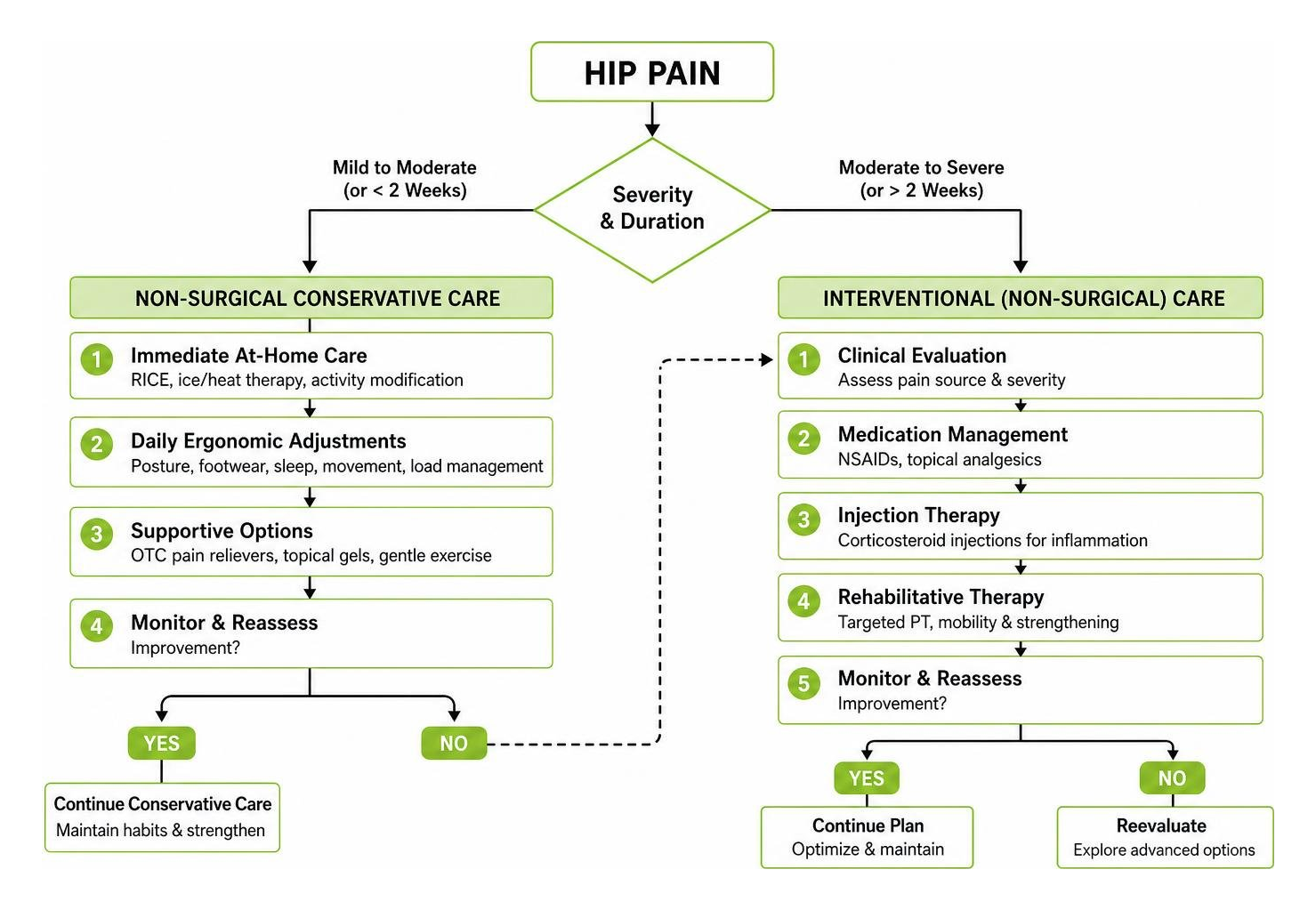
When a flare-up strikes, quick conservative management can calm raw nerve endings, reduce local swelling, and buy you time to implement long-term solutions. If your symptoms are mild to moderate, starting with immediate at-home care is both safe and highly practical. For a broader list of quick strategies, explore our guide on 9 ways to kick hip pain to the curb fast.
Immediate First-Aid and Thermal Therapy

The basic building block for acute hip pain relief is a modified RICE protocol (Rest, Ice, Compression, Elevation):
- Rest and Activity Modification: Pause high-impact activities like running or jumping. However, avoid complete bed rest, which can cause muscle atrophy and worsen morning stiffness. Keep moving gently.
- Cold Therapy: Apply cold packs wrapped in a thin towel for 10 to 15 minutes every hour on the first day of acute pain, or up to 20 minutes every 2 to 3 hours over subsequent days. Cold constricts local blood vessels, numbs sharp nerve impulses, and limits inflammatory fluid buildup.
- Heat Relaxation: After the initial 48 hours of an acute flare-up—or when dealing with chronic morning muscle tightness—transition to warm showers, baths, or heating pads for 15 to 20 minutes. Heat boosts local circulation, relaxes surrounding gluteal and flexor spasms, and prepares your tissues for gentle stretching.
Daily Ergonomic Adjustments for Pain Relief for Hips
Simple mechanical adjustments to your daily routine can dramatically reduce unnecessary weight-bearing strain:
- Avoid Low Chairs: Sitting in deep, soft sofas or low chairs forces your hips to flex beyond a 90-degree angle, placing intense mechanical pressure across the joint. Choose firm, elevated chairs with supportive armrests.
- Master the Car Entry Technique: When entering your vehicle, sit down on the side of the seat first with both feet on the pavement, then swing both legs into the cabin together. This prevents excessive joint twisting.
- Optimize Sleeping Postures: Never sleep directly on an inflamed side hip. Sleep on your back with a pillow under your knees to maintain neutral spinal alignment, or sleep on your uninjured side with a firm pillow between your knees to keep your hips parallel.
- Choose Shock-Absorbing Footwear: Wear supportive shoes with cushioned soles to damp ground reaction forces during walking.
- Lighten Daily Loads: Avoid carrying heavy bags on one side of your body. Use a rolling trolley or backpack to distribute weight evenly.
For additional lifestyle adjustments, consult the complete guide to natural relief for sore hips.
Medical Interventions: Medications, Injections, and Non-Surgical Options
When conservative home care does not deliver adequate relief after two weeks, clinical evaluations become essential. Modern pain management offers a wide spectrum of non-surgical medical treatments designed to ease inflammation and interrupt chronic pain signaling.
| Treatment Category | Primary Indications | Mechanism of Action | Duration of Effect |
|---|---|---|---|
| Oral Anti-Inflammatory (NSAIDs) | Mild-to-moderate OA, bursitis, strain | Inhibits COX enzymes to reduce systemic inflammation | Short-term (4–8 hours per dose) |
| Topical Analgesics / Gels | Localized lateral hip pain, superficial bursitis | Direct localized absorption; minimizes systemic stomach risks | 4–12 hours per application |
| Corticosteroid Injections | Moderate-to-severe OA flare-ups, bursitis | Direct cellular immune suppression in joint socket | 6 weeks to several months |
| Targeted Physical Therapy | All structural and muscular hip conditions | Restores range of motion, fixes gait deficits, strengthens abductors | Long-term functional improvement |
Over-the-Counter and Prescription Medications
Pharmacological therapy plays a key role in short-term symptomatic relief, but medications must be managed responsibly:
- Nonsteroidal Anti-Inflammatory Drugs (NSAIDs): Medications like over-the-counter ibuprofen or naproxen sodium, as well as prescription-strength options (such as meloxicam or celecoxib), target systemic inflammation. They are highly effective for arthritis and tendinitis. However, avoid taking oral NSAIDs for more than 10 consecutive days without medical supervision due to risks of stomach ulcers, kidney strain, and cardiovascular events.
- Acetaminophen (Tylenol): Acts purely as a central analgesic to dull pain signals without reducing joint inflammation. It is a viable alternative for patients who cannot tolerate NSAIDs due to gastrointestinal or renal issues.
- Topical Formulations: Gels containing diclofenac or patches with lidocaine offer localized relief without passing through the gastrointestinal tract, making them exceptionally safe for long-term supportive care.
- Non-Opioid Management Strategy: Expert consensus guidelines—including those from the American Academy of Orthopaedic Surgeons (AAOS)—strongly advise against using oral prescription opioids for conservative management of hip osteoarthritis due to risks of tolerance, dependency, and hyperalgesia. You can learn more about our balanced non-narcotic protocols in our guide to non opioid pain management.
For a complete breakdown of pharmacological choices, read the Arthritis Foundation hip medication guide.
Interventional Corticosteroid Shots and Diagnostics
When oral medications fail to provide noticeable pain relief for hips, targeted joint injections offer a powerful next step:
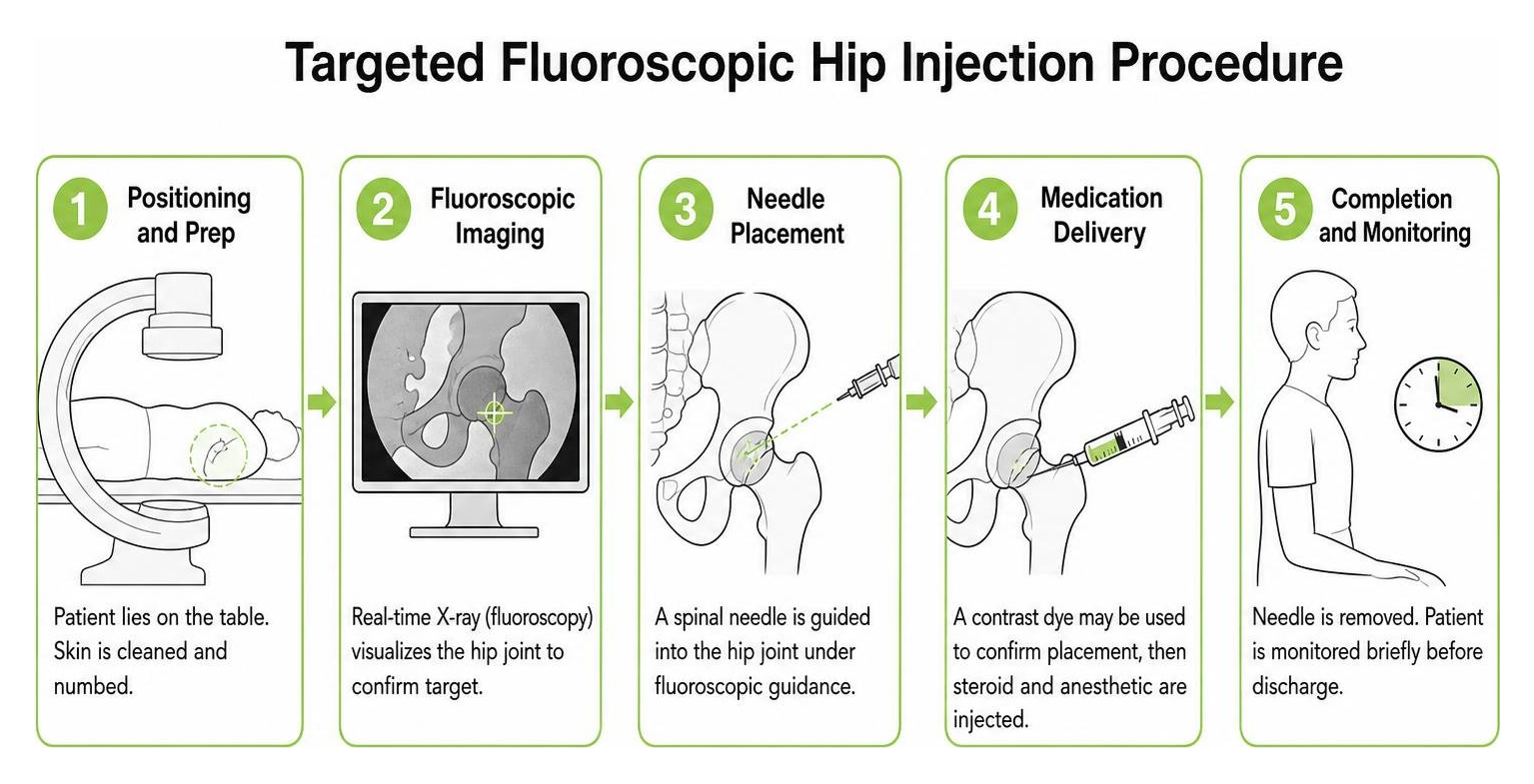
An intra-articular corticosteroid shot combines a long-acting steroid with a local anesthetic (such as lidocaine). When injected under real-time image guidance (ultrasound or fluoroscopic X-ray), the medication is delivered directly into the hip socket or trochanteric bursa.
Corticosteroid injections offer dual benefits:
- Diagnostic Utility: If the local anesthetic brings instant pain relief while you are on the exam table, we can definitively confirm that your pain originates inside the joint socket rather than from your lower back.
- Therapeutic Relief: The steroid halts local cellular inflammation, providing relief that can last from several weeks to several months.
As detailed in clinical literature on Cortisone shot safety and benefits, doctors limit these shots to 3 or 4 per year. Excessive steroid exposure inside a natural joint can accelerate cartilage breakdown and damage chondrocytes over time. For comprehensive non-operative guidelines, consult the Relieving hip pain without surgery guidelines.
Physical Therapy, Exercise, and Alternative Care
Active rehabilitation is the cornerstone of long-term hip health. While medications and injections reduce immediate discomfort, structured physical movement fixes the structural imbalances and muscle weakness that caused joint stress in the first place.
Physical Therapy and Exercise as Non-Surgical Pain Relief for Hips

Physical therapy restores joint mobility, fixes limping gait patterns, and strengthens key stabilizing muscles—particularly the gluteus medius, gluteus minimus, and core abdominal strength.
Key evidence-backed physical therapy techniques include:
- Manual Therapy and Long-Axis Distraction: A physical therapist applies gentle, controlled traction forces along the thigh bone to decompress the joint socket, increasing fluid circulation and instantly easing bone friction.
- Myofascial Dry Needling: Targeted insertion of fine needles into hyperirritated trigger points in the iliopsoas, rectus femoris, or gluteal muscles provides short-term relief lasting up to three weeks for Grade II and III hip osteoarthritis.
- Individualized Exercise Dosing: According to updated physical therapy clinical guidelines, optimal therapeutic exercise programs should be performed 1 to 5 times per week for 30 to 120 minutes per session over a 5 to 16-week period.
Explore our comprehensive library of hip pain relief exercises to start strengthening your joint safely, and review the official AAOS clinical practice guideline for hip osteoarthritis as well as the latest PT guidelines for hip osteoarthritis.
Weight Management, Exercise, and Evidence-Based Alternative Therapies
Your hips carry an extraordinary physical burden during standard daily movements:
- Normal walking exerts 3 to 5 times your total body weight across the hip joint.
- Climbing stairs or standing up from a seated position dramatically increases this load.
- Biomechanical math shows that every 10 pounds of extra body weight places 50 pounds of weight-bearing pressure across your hips.
Losing even a modest amount of weight yields immediate relief by reducing mechanical grinding forces. We strongly advise combining weight management with low-impact, joint-friendly exercises such as swimming, water aerobics, stationary cycling, or smooth walking.
Complementary alternative therapies also offer valuable pain management support:
- Acupuncture: Evidence supports acupuncture for calming nervous system pain sensitization and promoting local endorphin release.
- Therapeutic Massage: Relieves severe muscle spasms around overloaded hip flexors and IT bands.
To read more about holistic modalities, check out our guide on natural pain relief options.
Red Flag Warning Signs, Prevention, and When to Seek Emergency Care
While most hip discomfort can be managed conservatively, certain symptoms indicate serious underlying medical emergencies that require immediate hospital or urgent clinical care.
Seek immediate emergency medical attention if you experience any of the following:
- Acute High-Energy Trauma: Hip pain following a severe fall, motor vehicle accident, or direct blunt impact.
- Inability to Bear Weight: Complete inability to stand or place any weight on the affected leg.
- Visible Joint Deformity or Shortening: The painful leg appears noticeably shorter than the uninjured leg or is rotated abnormally outward.
- Signs of Septic Arthritis or Infection: Severe hip pain accompanied by high fever, chills, redness, or localized heat over the joint.
- Sudden Loss of Bowel/Bladder Control: Or severe groin numbness (saddle anesthesia), which indicates Cauda Equina Syndrome originating in the spinal cord.
To prevent non-emergency hip injuries in daily life:
- Clear floor rugs, loose cords, and clutter from hallways to lower fall risks.
- Avoid standing on chairs or countertops to reach high cabinets—use proper step stools with safety handles.
- Warm up and stretch thoroughly before playing sports or engaging in heavy gardening, and never “play through” sharp hip pain.
Frequently Asked Questions About Hip Pain
What is the fastest home remedy to ease acute hip pain?
The fastest way to calm acute hip pain at home is to rest the joint immediately, avoid weight-bearing strain, apply an ice pack wrapped in a towel for 15 to 20 minutes to numb nerve ends, and take an over-the-counter anti-inflammatory like ibuprofen or naproxen (if medically safe for you). Following this with gentle gluteal stretches once sharp pain subsides will help restore basic movement.
How does body weight affect hip joint pressure during daily activities?
Because of leverage and muscle contraction forces across the hip joint, simple daily activities like walking or stair climbing put 3 to 5 times your total body weight across the femoral head and socket. As a result, carrying just 10 pounds of excess weight adds 50 pounds of joint force with every step you take.
When should someone consider interventional pain management for hip pain?
You should consider consulting an interventional pain specialist if your hip pain lasts longer than two to three weeks despite rest and OTC medications, if discomfort disrupts your sleep or daily walking, or if you want to explore non-surgical solutions like image-guided injections to delay or avoid major joint replacement surgery.
Conclusion
Living with hip pain can make every day feel like an uphill struggle—but you do not have to accept persistent stiffness or give up the activities you love. From immediate first-aid iced compresses and daily ergonomic tweaks to image-guided corticosteroid injections and targeted physical therapy, effective non-surgical treatment pathways exist for almost every stage of joint discomfort.
At California Pain Consultants, our board-certified pain specialists serve patients throughout San Diego, Kearny Mesa, Chula Vista, Rancho Bernardo, La Mesa, and Miramar. We are dedicated to providing compassionate, multifaceted, and non-surgical care tailored to your unique anatomical needs.
Whether you are coping with early-stage osteoarthritis, trochanteric bursitis, or persistent pain after hip replacement causes and solutions, we are here to help you move freely again.
Take the first step toward lasting mobility today. Explore our hip pain relief complete guide or contact our expert medical team to schedule your personalized pain management consultation!