What You Need to Know About Treatment for OAB
Dealing with this in San Diego? Same-day appointments are often available at our 4 clinics.
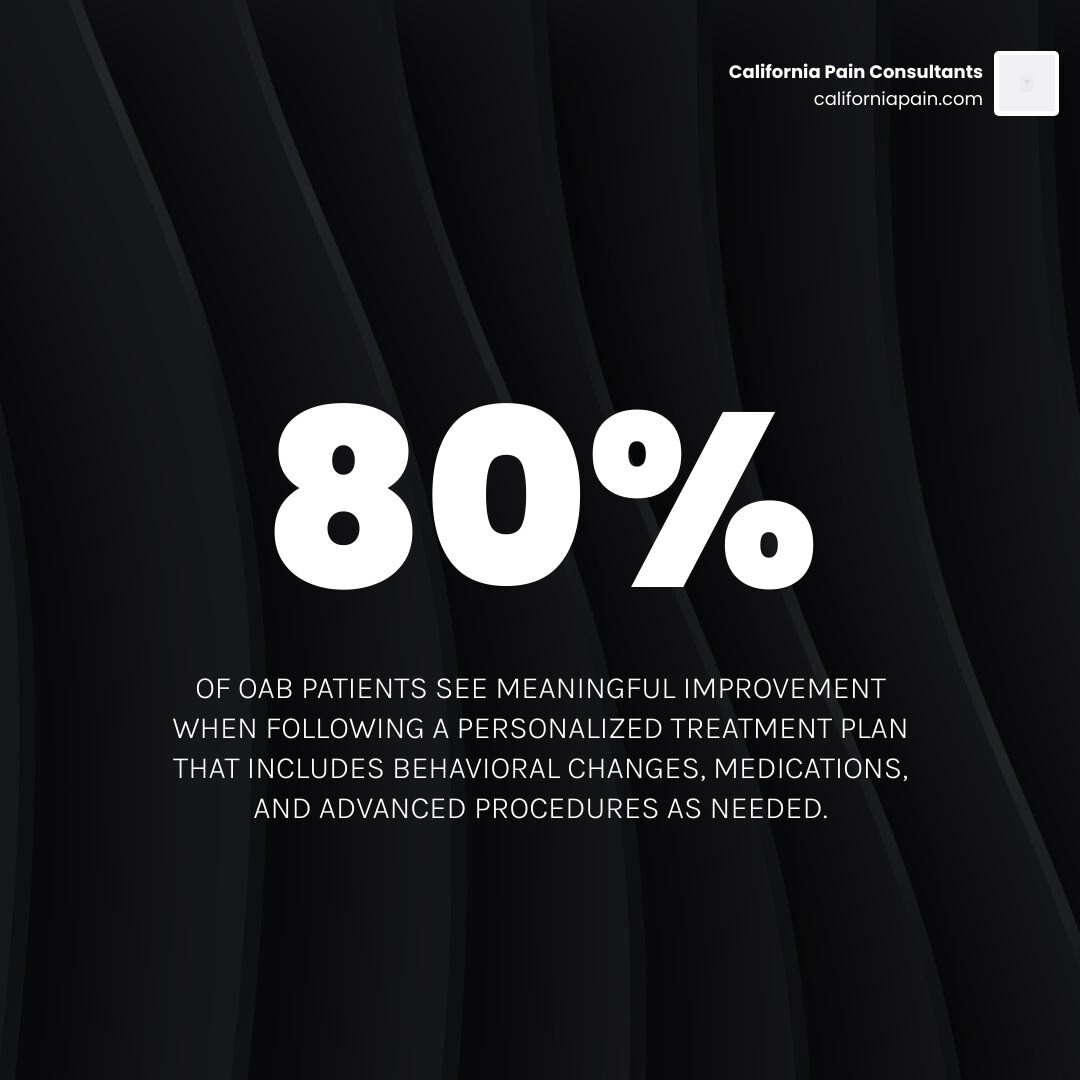
Treatment for OAB (overactive bladder) ranges from simple lifestyle changes to minimally invasive procedures — and most people see real improvement without surgery.
Here are the main treatment options, from least to most invasive:
- Behavioral therapies — bladder training, pelvic floor exercises, fluid management
- Lifestyle changes — reducing caffeine, alcohol, and bladder irritants; weight loss
- Medications — antimuscarinics (oxybutynin, solifenacin) or beta-3 agonists (mirabegron, vibegron)
- Minimally invasive procedures — bladder Botox injections, percutaneous tibial nerve stimulation (PTNS), sacral neuromodulation
- Surgery — reserved for severe cases that don’t respond to anything else
If you find yourself rushing to the bathroom more than eight times a day, waking up at night to urinate, or leaking urine before you can get there — you may be dealing with OAB.
OAB is not a disease. It’s a group of symptoms caused by an overactive bladder muscle that contracts too often, even when your bladder isn’t full. The hallmark symptom is urgency — a sudden, strong urge to urinate that’s hard to ignore.
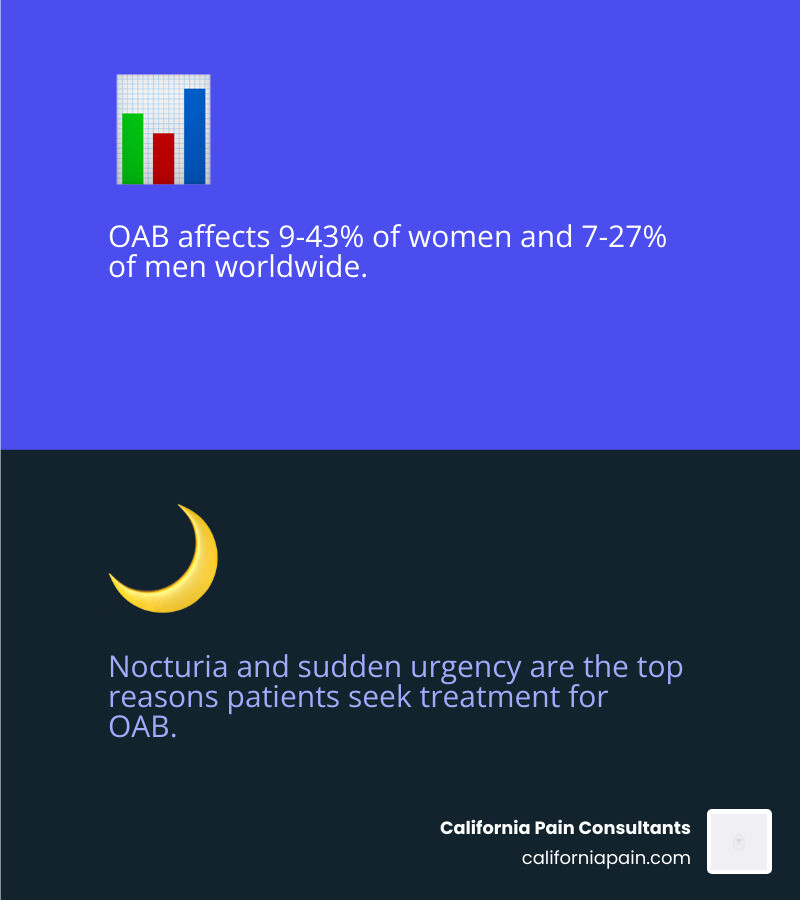
It’s more common than most people realize. Studies show OAB affects anywhere from 9% to 43% of women and 7% to 27% of men. Among older adults, those numbers climb even higher — up to 40% of older women and 30% of older men struggle with it.
And yet, many people never seek help. Some assume it’s a normal part of aging. It isn’t. OAB is a treatable condition, and the right approach can make a dramatic difference in daily life.
I’m Dr. Zach Cohen, a double board-certified specialist in Anesthesiology and Chronic Pain, with fellowship training at UC San Diego — and I’ve helped many patients navigate treatment for OAB as part of a broader, personalized pain and function recovery plan. In this guide, I’ll walk you through every evidence-based option available so you can make a confident, informed decision with your care team.
Understanding Overactive Bladder and the Diagnostic Process
Before we can dive into the best treatment for oab, we have to ensure we are actually dealing with an overactive bladder and not a different underlying condition, such as a urinary tract infection (UTI), bladder stones, or even diabetes. As of May 2026, the diagnostic process has become highly streamlined, focusing on patient comfort and accuracy.
The journey starts with a comprehensive medical history. We will ask you about your symptoms: How often do you go? How strong is the urge? Do you leak? We also look at your current medications, as some drugs (like diuretics for blood pressure) can mimic OAB symptoms.
A physical exam is the next step. For women, this may include a pelvic exam to check for vaginal atrophy or pelvic organ prolapse. For men, a prostate exam is often necessary to see if an enlarged prostate is causing the frequency.
Key diagnostic tools include:
- Urinalysis: To rule out infection or blood in the urine.
- Post-void residual (PVR) measurement: Using ultrasound to see how much urine stays in your bladder after you think you’ve finished.
- Bladder Diary: This is often the most “low-tech” but high-value tool. You track what you drink and when you urinate for three days. It helps us see patterns you might not notice.
- Urodynamic testing: Reserved for complex cases, this measures the pressure in your bladder as it fills.
- Symptom Questionnaires: These help us quantify your quality of life and track improvement once treatment begins.
According to the latest AUA/SUFU guidelines, we emphasize shared decision-making. We don’t just tell you what to do; we discuss how these symptoms affect your specific lifestyle in San Diego or Chula Vista and choose a path together.
First-Line Behavioral and Lifestyle Treatment for OAB
We always prefer to start with the most conservative options. Behavioral therapies are considered “first-line” because they have zero side effects and can be incredibly effective. In fact, many patients find that these techniques alone reduce their symptoms by 50% or more.
Bladder training is about teaching your bladder to hold more urine. If you currently go every hour, we might set a schedule to go every hour and 15 minutes. Gradually, we increase that interval. It’s like “weightlifting” for your bladder capacity.
Pelvic floor muscle training (PFMT), often called Kegel exercises, strengthens the muscles that support the bladder. When these muscles are strong, they can help “clamp down” on the urge to go.
Quick flicks are a specific technique we teach. When you feel a sudden urge, instead of racing to the bathroom (which actually increases bladder pressure), you perform several rapid pelvic floor contractions. This sends a signal to your nervous system to relax the bladder muscle.

Implementing Lifestyle Changes as a Treatment for OAB
What you put into your body directly affects how your bladder behaves. Some substances are known “bladder irritants” that can make the detrusor muscle twitchy and irritable.
| Bladder Irritant | Bladder-Friendly Alternative |
|---|---|
| Caffeinated Coffee/Tea | Herbal teas (non-citrus) or water |
| Alcohol (Wine, Beer, Spirits) | Seltzer water with a splash of cranberry |
| Spicy Foods | Mildly seasoned dishes |
| Artificial Sweeteners | Small amounts of natural sugar or honey |
| Carbonated Sodas | Still water with cucumber or mint |
Beyond diet, fluid management is key. We don’t want you to stop drinking water — dehydration actually makes urine more concentrated and irritating. Instead, we suggest “sipping” throughout the day and limiting fluids two hours before bedtime to reduce nocturia (waking up at night).
Weight loss also plays a massive role. Excess weight puts physical pressure on the bladder. Research shows that losing even 5% to 10% of body weight can significantly improve urinary incontinence. Additionally, managing constipation is vital; a full rectum can press against the bladder and worsen urgency. You can find more info about overactive bladder treatment on our specialized service page.
Pharmacological Options: Medications for Bladder Control
If lifestyle changes aren’t quite enough, the next step in treatment for oab is medication. These drugs generally work by relaxing the bladder muscle so it doesn’t contract prematurely.
Antimuscarinics
This is the traditional class of OAB drugs. They block the chemical signals (acetylcholine) that tell your bladder to contract. Common names include:
- Oxybutynin
- Solifenacin
- Tolterodine
While effective, these can cause “drying” side effects like dry mouth, dry eyes, and constipation. We often suggest using sugar-free gum or ice chips to manage the dry mouth.
Beta-3 Agonists
This is a newer class of medication, including Mirabegron and Vibegron. Instead of blocking signals, they directly stimulate the receptors that tell the bladder to relax and hold more urine.
- Benefits: They generally have fewer “drying” side effects than antimuscarinics.
- Considerations: Mirabegron can occasionally raise blood pressure, whereas Vibegron does not seem to have this effect.
According to recent pharmacological research, many patients find the best results by combining these medications with behavioral therapy.
Choosing the Right Medication Treatment for OAB
When we select a medication, we look at your whole health profile. For example, we prefer extended-release formulations over immediate-release versions because they maintain a steadier level in your blood and typically cause fewer side effects.
For post-menopausal women, vaginal estrogen therapy can be a game-changer. As estrogen levels drop, the tissues around the urethra and bladder base can thin and become irritated. Replacing that estrogen locally can strengthen those tissues and reduce the “gotta go” feeling.
It is important to note that certain medications are contraindicated for people with narrow-angle glaucoma or those with a history of urinary retention. We always perform a thorough screening at our San Diego or La Mesa clinics before starting any new prescription. For more details on these options, you can check more info about overactive bladder treatment.
Advanced and Minimally Invasive Procedures
What happens if you’ve tried the “behavioral basics” and the medications, but you’re still tied to the bathroom? This is what we call refractory OAB, and it’s where advanced treatments come in. These are often game-changers for patients who felt they had run out of options.
Bladder Botox (OnabotulinumtoxinA): Most people think of Botox for wrinkles, but it’s also a powerful treatment for oab. We use a small camera (cystoscope) to inject Botox directly into the bladder muscle. This “paralyzes” the overactive parts of the muscle, allowing the bladder to fill properly.
- Duration: The effects typically last about 6 months, though some patients see relief for up to a year.
- Note: About 5% of patients may have trouble emptying their bladder temporarily and might need to use a catheter for a short time.
Percutaneous Tibial Nerve Stimulation (PTNS): Think of this as “acupuncture for your bladder.” A tiny needle electrode is placed near your ankle (the tibial nerve). This nerve connects to the sacral plexus, which controls the bladder.
- Schedule: You come into the office for a 30-minute session once a week for 12 weeks. If it works, you move to monthly maintenance. It’s very low-risk and has no systemic side effects.
Sacral Neuromodulation (SNS): This is often called a “bladder pacemaker.” A small device is surgically implanted under the skin of the upper buttock. It sends continuous, mild electrical pulses to the sacral nerves to correct the “misfiring” signals between the brain and the bladder.
The AUA/SUFU guidelines emphasize that these third-line treatments should be offered to patients when more conservative measures fail to provide a satisfactory quality of life.
Tailoring OAB Care for Elderly and Frail Patients
In our practice serving the diverse populations of San Diego, Kearny Mesa, and Rancho Bernardo, we take special care with our older patients. OAB is more common as we age, but the treatment for oab must be adjusted to avoid complications.
A major concern with older antimuscarinic medications (like oxybutynin) is the risk of cognitive impairment and dementia. These drugs can cross the “blood-brain barrier” and interfere with memory and clarity. For our elderly patients, we often prefer:
- Trospium Chloride: This medication does not cross into the brain as easily, making it safer for those worried about memory.
- Beta-3 Agonists: Since they aren’t anticholinergic, they don’t carry the same dementia risks.
We also focus on fall prevention. If an elderly person has OAB, they are at a much higher risk of falling and breaking a hip because they are rushing to the bathroom in the dark. Treating the OAB isn’t just about comfort; it’s about safety.
We always look at “polypharmacy” — the total number of medications a patient is taking — to ensure there are no dangerous interactions. Our goal is to restore mobility and independence without adding a heavy burden of side effects.
Frequently Asked Questions about OAB Treatment
Is OAB a normal part of aging?
Absolutely not. While it is more common in older adults due to changes in muscle tone and nerve signaling, it is not something you “just have to live with.” If your bladder habits are preventing you from enjoying your life, traveling, or sleeping, it is a medical condition that deserves treatment.
How long do the effects of bladder Botox last?
On average, Botox injections in the bladder last about six months. Some patients find it wears off around month five, while others get a full year of relief. Once the symptoms start to return, you simply come back for another round of injections.
When is surgery considered for overactive bladder?
Surgery — such as augmentation cystoplasty (enlarging the bladder using a piece of the bowel) or urinary diversion — is extremely rare. It is reserved as a last resort for patients with severe, debilitating symptoms that have failed every other treatment mentioned in this guide. Most patients find relief long before surgery is ever discussed.
Conclusion
Living with the constant urge to find a restroom is exhausting, but you don’t have to manage it alone. At California Pain Consultants, we specialize in comprehensive, non-surgical management that looks at the whole person. Whether you are in San Diego, La Mesa, or Chula Vista, our board-certified doctors are here to provide compassionate care tailored to your specific needs.
From the latest medications to advanced procedures like PTNS and Botox, the treatment for oab has never been more effective or accessible. Our focus is on restoring your mobility and giving you back the freedom to live your life without being tethered to a bathroom.
If you’re ready to take the next step, we invite you to reach out to us. You can find more info about overactive bladder treatment and schedule a consultation at any of our convenient California locations. Let’s work together to get your symptoms under control and your quality of life back on track.