
Why the Right Balm for Shoulder Pain Can Make a Real Difference
Dealing with this in San Diego? Same-day appointments are often available at our 4 clinics.
Quick answer — best balms for shoulder pain by type:
| Pain Type | Best Ingredient | Example Products |
|---|---|---|
| Muscle strain | Menthol, camphor | Tiger Balm, Balm Ease |
| Arthritis / inflammation | Diclofenac (NSAID) | Voltaren Emulgel |
| Joint stiffness | Capsaicin | Battle Balm, TraumaBalm |
| General soreness | Methyl salicylate, eucalyptus | Iodex Multi-Purpose Balm |
| Natural / herbal preference | Hemp, arnica, wintergreen | Living Libations, Manuka Doctor |
Your shoulder is one of the most mobile joints in your body. That’s exactly what makes it so vulnerable.
When something goes wrong — whether it’s a strained rotator cuff, chronic arthritis, or a frozen shoulder — the pain can make even simple tasks feel impossible. Reaching for a shelf, putting on a jacket, sleeping through the night: all of it becomes a challenge.
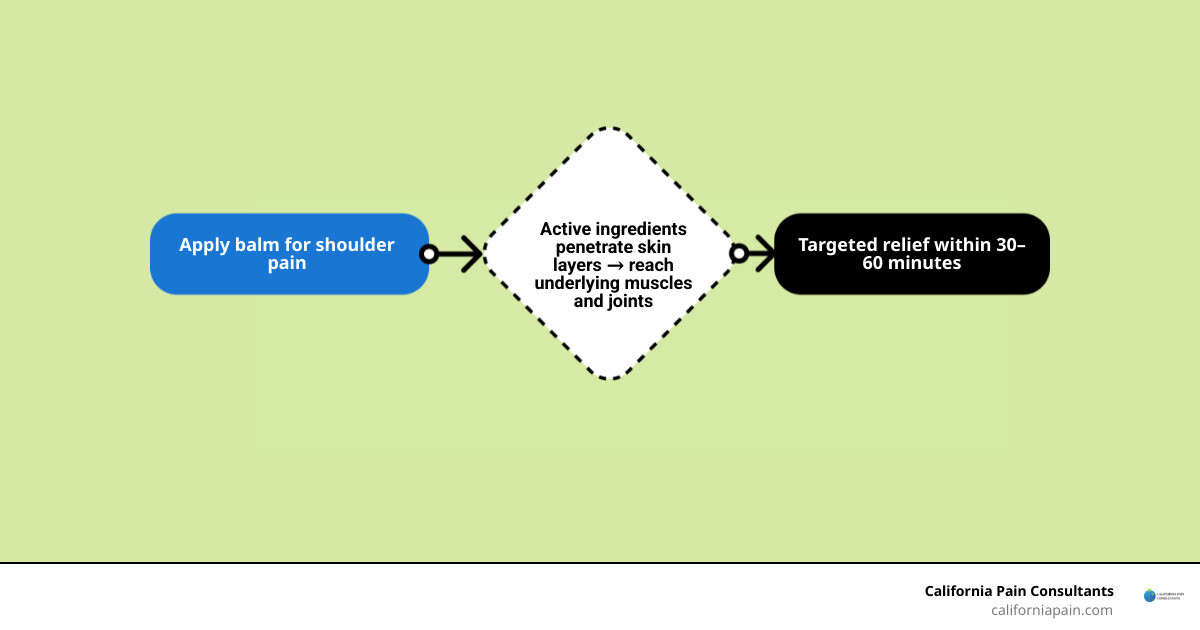
A good balm for shoulder pain can offer real, targeted relief without the risks that come with long-term oral medication use. Research shows topical analgesics can reduce pain by up to 50 percent — and many people feel results within 30 to 60 minutes of applying them.
But not all balms work the same way. The right choice depends on what’s actually causing your pain and which active ingredients match that cause.
I’m Dr. Zach Cohen, double board-certified in Anesthesiology and Chronic Pain Medicine, and I’ve worked with countless patients who’ve used a balm for shoulder pain as part of a broader, non-surgical pain management plan. In this guide, I’ll break down exactly what works, what doesn’t, and when it’s time to look beyond the balm.
Understanding Shoulder Pain: Causes and Home Remedies
Before we dive into the jars and tubes on the pharmacy shelves, we need to understand what is actually happening inside your shoulder joint. The shoulder is a highly complex ball-and-socket mechanism supported by a network of muscles, tendons, and ligaments. Because it has such a vast range of motion, it is highly susceptible to wear and tear, friction, and acute injuries.
Some of the most common culprits behind your shoulder discomfort include:
- Rotator Cuff Tears and Tendinitis: The rotator cuff is a group of four muscles and tendons that stabilize your shoulder joint. Repetitive overhead movements or sudden strains can irritate or tear these tissues, leading to sharp pain when lifting your arm.
- Muscle Strain: Overexerting yourself during a workout, heavy lifting, or even sleeping in an awkward position can pull or strain the muscle fibers around your shoulder blade and neck.
- Osteoarthritis: Over time, the protective cartilage within the shoulder joint can wear away. This leads to increased joint friction, stiffness, and chronic, dull aches and pains that worsen with cold weather or inactivity.
- Frozen Shoulder (Adhesive Capsulitis): Characterized by stiffness and pain that makes it incredibly difficult to move your joint, frozen shoulder occurs when the connective tissue surrounding the joint becomes thick and tight.
Often, shoulder tension doesn’t stay isolated. It frequently radiates upward, requiring targeted upper back pain relief and neck care to fully resolve the discomfort.
At-Home Care and Lifestyle Adjustments
While finding the right balm for shoulder pain is a fantastic step toward comfort, topicals work best when paired with smart daily habits. If you are managing a mild shoulder flare-up at home, we recommend incorporating these simple, non-invasive habits into your routine:
- Rest and Support: When your shoulder is throbbing, take a break from heavy lifting and overhead sports. When sitting or relaxing, try resting your arm on a cushion or pillow in your lap. This small adjustment unloads the weight of your arm from the shoulder joint, allowing irritated tendons to rest.
- Ice Therapy: For acute injuries or sudden flare-ups, apply an ice pack wrapped in a thin towel to the shoulder for approximately 20 minutes, 4 or more times per day. Never apply ice directly to the skin, as this can cause tissue damage. If ice therapy does not provide noticeable relief after 2 days, it is wise to consult a healthcare professional.
- Posture Correction: Poor posture is a major contributor to shoulder and neck strain. Make a conscious effort to keep your shoulders down and gently rolled back, rather than hunched forward over a keyboard or phone.
How to Choose the Best Balm for Shoulder Pain
With dozens of products lining the shelves, choosing the right topical can feel overwhelming. To make an educated choice, it helps to understand how these formulations interact with your nervous system to block pain.
Topical balms primarily relieve pain through a biological mechanism known as the Gate Control Theory of Pain.
When you apply a balm containing counterirritants, the active ingredients stimulate sensory receptors in your skin (such as thermal receptors that register hot or cold). This sensory stimulation travels along fast nerve fibers to the spinal cord, effectively “closing the gate” and blocking the slower pain signals traveling from your deep shoulder tissues to your brain.
Key biological pathways involved in this process include:
- TRPM8 Receptor Activation: Cooling agents like menthol bind to TRPM8 receptors in your sensory neurons, sending a cooling signal that distracts your brain from underlying muscle aches.
- Substance P Depletion: Warming agents like capsaicin work by temporarily depleting Substance P, a chemical transmitter in your body responsible for sending pain signals to the brain.
Let’s look at how the primary categories of active ingredients stack up against one another:
| Active Ingredient Class | Primary Mechanism | Best Suited For | Skin Sensation |
|---|---|---|---|
| Counterirritants (Menthol, Camphor) | Activates TRPM8 receptors; increases local blood flow | Acute muscle strains, tension knots, temporary relief | Cooling, tingling |
| Topical NSAIDs (Diclofenac) | Inhibits COX enzymes to reduce local prostaglandins | Arthritis, joint inflammation, chronic tendon issues | Neutral (no intense temperature sensation) |
| Capsaicinoids (Capsicum, Cayenne) | Depletes Substance P over consistent use | Deep joint stiffness, chronic arthritis, frozen shoulder | Warming to intense heat |
| Salicylates (Methyl Salicylate) | Dilates blood vessels; acts as a mild local anti-inflammatory | Deep tissue aches, stiffness | Warming |
| Natural Botanicals (Arnica, Hemp, Menthol) | Calms tissue inflammation; supports skin barrier | Mild soreness, everyday maintenance, sensitive skin | Mild cooling or warming |
Choosing between these options depends heavily on whether you prefer a medicated approach or a natural pain relief pathway.
Medicated vs. Natural Formulations
When selecting a balm for shoulder pain, you will generally choose between medicated over-the-counter (OTC) options and natural, plant-based formulations. Both have distinct clinical advantages.
Medicated Topicals (NSAIDs and Emulgels)
Medicated topicals, such as those containing diclofenac diethylamine, are highly effective for inflammatory conditions like osteoarthritis. Unlike counterirritants, which merely distract the brain from pain, topical non-steroidal anti-inflammatory drugs (NSAIDs) penetrate deep through the skin barriers to target local inflammation at its source.
Many leading medicated formulations utilize a specialized Emulgel formulation. This unique structure combines the cooling properties of a gel with the deep-penetrating properties of an emulsion, allowing the active diclofenac to accumulate under the skin. This creates a local “reservoir” that slowly and continuously releases the anti-inflammatory medication directly into the underlying joint tissues, muscles, and ligaments.
Because they act locally, topical NSAIDs carry a much lower risk of systemic side effects (such as gastrointestinal upset or cardiovascular risks) compared to oral pain relievers. They are an excellent option for those seeking an alternative non-opioid pain management guide to control localized joint swelling.
Natural and Herbal Formulations
For those who prefer a botanical approach, high-quality natural balms leverage therapeutic plant extracts, essential oils, and ancestral bases to soothe sore tissues.
Rather than relying on petroleum or synthetic gels, premium natural balms often use clean, nourishing bases like beeswax and Manuka honey. Beeswax has a rich history in pain relief, with documented medical use dating back to the ancient Egyptian Ebers Papyrus of 1550 B.C., where it was highly valued for its ability to soothe aching joints and lock moisture into the skin.
Modern natural formulations, such as those discussed in reviews of Soothing Rub Ease Balm – Manuka Doctor NZ, pair these traditional bases with modern anti-inflammatories like hemp seed oil (rich in gamma-linolenic acid) and topical glucosamine to help inhibit inflammatory pathways within the joint’s synovial cells.
Active Ingredients in a Balm for Shoulder Pain
To find a balm that truly works for your specific type of shoulder pain, you need to read the active ingredients list. Here is a look at the most scientifically backed compounds found in topical pain rubs:
- Menthol: This organic compound, typically derived from peppermint oil, is a powerhouse for muscle relief. A comprehensive clinical review of menthol-based treatments revealed that 82% of patients showed a marked improvement in their pain scores, with 50% achieving a highly meaningful pain reduction of 30% or more.
- Camphor: Often paired with menthol, camphor acts as a mild local anesthetic and counterirritant. It stimulates blood circulation to the applied area, creating a comforting warming sensation that eases stiff muscle fibers.
- Capsaicin: Derived from chili peppers, capsaicin is highly effective for chronic joint pain. In a double-blind randomized controlled trial of 101 patients, topical capsaicin produced a 57% mean pain reduction over 4 weeks, with 80% of patients experiencing noticeable relief within the first 2 weeks of consistent daily application.
- Methyl Salicylate: Closely related to aspirin, this compound dilates local blood vessels to increase circulation while offering mild anti-inflammatory properties. It is responsible for the classic “medicinal” wintergreen scent found in many traditional sports rubs.
- Eucalyptus and Clove Oils: These essential oils contain natural compounds (like eucalyptol and eugenol) that possess mild anesthetic, anti-inflammatory, and antispasmodic properties, making them excellent additions for soothing daily muscle fatigue.
If you are looking for high-quality, ingredient-focused products to add to your pain relief toolkit, several specialized formulations stand out:
- For a deeply warming botanical option, TraumaBalm – Warming Muscle Rub | Capsicum & Thai Ginger – Summer Solace Tallow utilizes a unique base of regenerative, grass-finished beef suet tallow. This base closely mimics the skin’s natural lipids, allowing active capsaicin, menthol, and ginger to absorb deeply while nourishing the skin barrier.
- If you prefer a sensory, hot-cold hybrid approach, Feeling the Shoulder of the Lion – Muscle Melt Balm – Living Libations combines warming cayenne and black pepper with cooling wild wintergreen and peppermint in a rich jojoba and tamanu oil base to melt away stubborn shoulder tension.
Comparing Popular Brands and Formulations
To help you find the right product for your medicine cabinet, let’s look at how several popular, widely available brands compare in terms of their active ingredients, texture, and real-world performance.

1. Tiger Balm (Specifically Tiger Balm Neck & Shoulder Rub)
- Key Active Ingredients: Menthol, Camphor, Eucalyptus Oil.
- How It Works: This formulation is specifically designed for the daily stresses of modern life (such as “tech-neck” and desk-bound shoulder strain). It utilizes classic counterirritants to stimulate thermal receptors, creating a rapid cooling sensation followed by a gentle, comforting warmth.
- Texture & Usability: Unlike the original orange Tiger Balm ointment, the Tiger Balm Neck and Shoulder Rub | Neck Pain Cream is a light, water-based cream. It absorbs quickly, does not leave a greasy residue, and has a much milder, cleaner scent that fades quickly, making it highly practical for daytime use at the office.
2. Voltaren Emulgel
- Key Active Ingredient: Diclofenac Diethylamine (1.16% or 2.32%).
- How It Works: As a topical NSAID, Voltaren does not rely on intense hot or cold sensations to distract your brain. Instead, the diclofenac penetrates deep into the joint to directly inhibit the enzymes responsible for pain and swelling. Clinical data indicates that more patients achieve a meaningful clinical benefit from Voltaren Emulgel than from other topical NSAIDs when compared directly to a placebo.
- Texture & Usability: It is a clean, non-greasy gel-cream that rubs in smoothly. Because it contains a medication, you must track your total daily usage and avoid using it on multiple large joints simultaneously without a doctor’s guidance.
3. Iodex Multi-Purpose Pain Relief Balm
- Key Active Ingredients: Wintergreen Oil (Methyl Salicylate), Eucalyptus Oil, Clove Oil, Peppermint, Turpentine Oil.
- How It Works: This traditional, multi-purpose Ayurvedic balm utilizes a synergistic blend of five natural essential oils. It is designed to start working within 4 minutes of application, providing a rapid transition from a cooling sensation to deep, warming relief.
- Texture & Usability: It is a classic, thick ointment base. The heavy base is intentional; it helps lock the active essential oils against the skin’s surface, preventing them from evaporating too quickly and ensuring a longer window of therapeutic absorption.
4. Battle Balm for Joint Pain
- Key Active Ingredients: Menthol, Capsicum (Capsaicin), Methyl Salicylate, and organic essential oils.
- How It Works: Battle Balm is engineered specifically for stubborn joint discomfort and morning stiffness. It uses a thick, heavy base designed to stay concentrated on the joint surface longer than liquid oils, providing a sustained release of its active ingredients. Users of Battle Balm for Joint Pain – 55 ML – Dr. Bhushan Research Lab Pvt. Ltd. report a highly encouraging 40% to 60% improvement in swelling and pain by weeks 3 to 4 of consistent, daily use.
- Texture & Usability: It is a dense, highly concentrated balm. Because it contains capsaicin, it can generate a very intense warming sensation, meaning a little goes a long way.
5. Balm Ease by PurBalm
- Key Active Ingredients: Menthol, Peppermint, Eucalyptus, and botanical carriers (Shea Butter, Beeswax).
- How It Works: Balm Ease relies on a specialized friction-melt technology. When you rub the balm onto your skin, the physical friction causes the dense botanical base to melt within 15 to 30 seconds, absorbing completely into a thin, non-greasy film within 60 seconds.
- Texture & Usability: This is a fantastic option for active individuals. Because the Sore Muscle Relief Balm — Balm Ease by PurBalm – PurBalm.com absorbs so cleanly without an oily residue, you don’t have to worry about the balm transferring to or staining your clothing. It is an excellent choice for a quick, pre-workout application to help ease morning joint stiffness and improve your range of motion. For general muscle soreness, it is a highly effective option for muscle pain relief.
Application Best Practices and Safety Precautions
To get the absolute most out of your balm for shoulder pain while protecting your skin from irritation, we recommend following these clinical best practices:
- Perform a Patch Test: Before applying a new balm to your entire shoulder, apply a pea-sized amount to a small, discreet area of skin (such as your inner forearm). Wait 24 hours to ensure you do not experience an allergic reaction, severe redness, or chemical burns.
- Wash Your Hands Thoroughly: This is the golden rule of topical pain relief! Many balms contain highly concentrated menthol, camphor, or capsaicin. If you touch your eyes, nose, or other sensitive mucous membranes with trace amounts of these ingredients on your fingers, it will cause an intense, painful burn. Wash your hands with warm water and soap immediately after every application.
- Never Apply to Broken Skin: Do not apply any topical pain reliever to open wounds, cuts, scrapes, rashes, burns, or freshly shaved skin.
- Avoid External Heat Sources: Never apply a heating pad, hot water bottle, or tight therapeutic wrap over an area where you have recently applied a warming or cooling balm. The combination of counterirritants and external heat can trap the active ingredients against your skin, leading to severe chemical burns or blistering.
- Be Mindful of Cumulative NSAID Use: If you are using a medicated gel like Voltaren, consult your doctor or pharmacist if you are also taking oral NSAIDs (such as ibuprofen, naproxen, or aspirin) to ensure you do not exceed safe daily limits.
Frequently Asked Questions About Shoulder Pain Relief
How long does it take for a balm for shoulder pain to work?
Most high-quality topical balms take between 30 to 60 minutes to fully absorb into the skin and deliver noticeable relief. You will often feel a surface cooling or warming sensation within 1 to 4 minutes of application, which helps distract your brain from pain signals immediately. However, the deeper therapeutic benefits — such as the anti-inflammatory action of a topical NSAID or the cumulative pain-blocking effects of capsaicin — require consistent application over several days or weeks to reach their full potential.
Can I use a topical rub before working out?
Yes, applying a non-greasy balm (like Balm Ease) roughly 15 to 30 minutes before physical activity can be highly beneficial. The warming action of the ingredients stimulates local circulation, which helps “wake up” stiff joints, ease morning muscle tightness, and temporarily improve your overall range of motion. However, do not use topicals to mask severe pain in order to push through an acute injury, as this can lead to further tissue damage.
When should I see a specialist instead of using a balm?
While a balm for shoulder pain is an excellent tool for managing mild strains and everyday stiffness, it is not a cure-all. You should stop using topicals and schedule an evaluation with a board-certified shoulder muscle pain doctor if you experience any of the following warning signs:
- Your shoulder pain does not begin to improve after 7 days of consistent home care and topical use.
- You experience a sudden, severe loss of mobility (e.g., you cannot lift your arm past shoulder height).
- The pain is accompanied by significant local swelling, redness, heat, or a visible deformity in the joint.
- You experience numbness, tingling, or weakness that radiates down your arm or into your hand.
- The shoulder pain is the result of a sudden, high-impact injury (such as a fall or sports collision).
Conclusion: Finding Long-Term Relief
Topical balms are a valuable, non-invasive, and highly effective first line of defense against shoulder discomfort. Whether you choose a cooling menthol cream for post-workout soreness, a deep-heating capsaicin balm for morning stiffness, or a targeted medicated gel to quiet arthritic inflammation, these tools can play a key role in keeping you moving comfortably.
However, chronic or severe shoulder pain is rarely a simple, single-cause issue. When topicals and home remedies only provide temporary relief, it is a sign that your body needs a more comprehensive, personalized approach to healing.
At California Pain Consultants, our team of board-certified specialists is dedicated to providing advanced, non-surgical pain management solutions. Serving patients across San Diego, Kearny Mesa, Chula Vista, Rancho Bernardo, La Mesa, and Miramar, we focus on diagnosing the root cause of your shoulder pain and designing a customized treatment plan to restore your long-term mobility and quality of life.
Don’t let shoulder pain limit your daily life. Schedule a consultation for advanced shoulder care with our compassionate team today, and let us help you find lasting relief.