
Why Neck Pain Exercises Are One of the Most Effective Ways to Find Relief
Dealing with this in San Diego? Same-day appointments are often available at our 4 clinics.
Neck pain exercises are one of the fastest, safest ways to ease stiffness, reduce tension, and restore mobility — no medication required. Here is a quick look at the most effective options:
| Exercise Type | Example | Best For |
|---|---|---|
| Gentle stretching | Upper trapezius stretch, head tilt | Daily stiffness, muscle tightness |
| Postural correction | Chin tucks, dorsal glide | Tech neck, forward head posture |
| Isometric strengthening | Neck side flexion, neck extension | Building stability, early rehab |
| Mobility movements | Head turn, forward head tilt | Restoring range of motion |
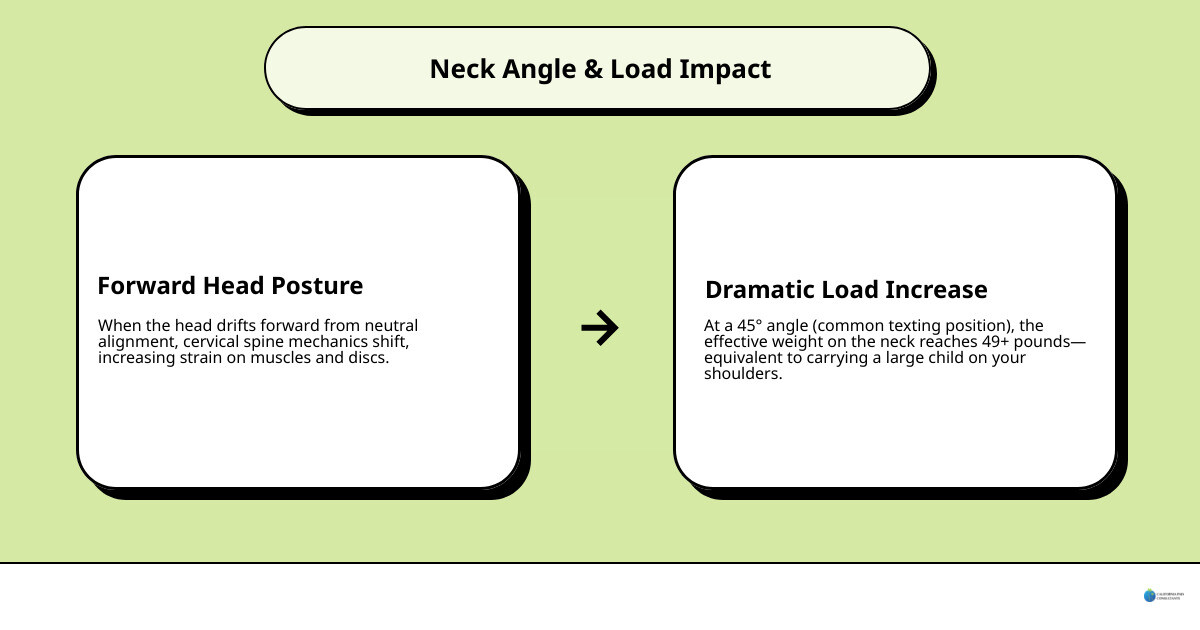
Neck pain is one of the most common complaints among American adults — and it’s easy to see why. Whether it’s hours at a desk, looking down at a phone, or simply sleeping in an awkward position, the daily strain on your cervical spine adds up fast. In fact, research shows that when your head drifts just one inch forward from its neutral position, the effective load on your neck increases by roughly 10 pounds. At a 45-degree angle — the typical texting position — that load can reach 49 pounds or more.
The good news? Most neck pain responds well to the right exercises, done consistently and correctly.
But knowing which exercises to do, how to do them safely, and when to stop is what makes the difference between real relief and making things worse.
I’m Dr. Zach Cohen, a double board-certified specialist in Anesthesiology and Chronic Pain, and I have helped countless patients develop personalized neck pain exercises as part of a broader, non-surgical pain management approach. In the sections below, I’ll walk you through exactly what works — and what to watch out for.
Neck pain exercises terms to know:
Understanding the Role of Posture and Neck Pain Exercises
At California Pain Consultants, we often tell our patients in San Diego, Chula Vista, and La Mesa that the human head is like a golf ball sitting on a tiny golf tee. In a perfectly aligned, neutral posture, your head sits directly over your shoulders. In this sweet spot, it weighs only about 10 to 12 pounds. Your cervical spine and the surrounding muscles can support this weight easily without overworking.
However, modern life constantly coaxes us out of this neutral alignment. When you slouch at your computer, lean forward to read a monitor, or crane your neck over a smartphone, you create a massive mechanical load. This forward migration behaves exactly like forward bending at the waist; just as bending over strains your lower back, drifting your head forward places an immense, continuous strain on the lower neck.
Over time, this increased mechanical load leads to chronic muscle fatigue, micro-tears in the soft tissues, and accelerated wear and tear on your spinal discs. This is where neck pain cervical pain begins. If left unaddressed, the chronic strain can progress to structural issues, contributing to cervical back pain and spinal stiffness.
To break this painful cycle, we must use targeted Cervical Exercises. These movements are designed to stretch what is tight, strengthen what is weak, and retrain your nervous system to recognize and maintain a healthy, neutral posture.
Stretching vs. Strengthening Neck Pain Exercises
When developing a rehabilitation routine, it is essential to understand that not all neck pain exercises serve the same purpose. A well-rounded program balances stretching and strengthening.
Stretching exercises focus on lengthening tight, overactive muscles and improving flexibility. For example, when you perform stretching exercises, you release the built-up tension in muscles like the upper trapezius and levator scapulae, which frequently become hyper-reactive from stress and poor posture.
Strengthening exercises, on the other hand, focus on building endurance and stability in the deep back and neck muscles. These are the structural support beams of your cervical spine. Without adequate strength, your neck lacks the stamina to hold your head up properly throughout a long workday, causing you to collapse back into a slouched posture.
| Feature | Stretching Exercises | Strengthening Exercises |
|---|---|---|
| Primary Goal | Increase range of motion and flexibility | Build muscle endurance, stability, and support |
| Target Muscles | Tight, overactive muscles (e.g., upper traps, chest) | Weak, inhibited muscles (e.g., deep neck flexors) |
| How It Feels | A gentle, pulling sensation in the muscle | A mild muscle burn or effort without joint pain |
| Typical Hold Time | 15 to 30 seconds per stretch | 5 to 10 seconds per contraction |
| When to Do It | Daily, especially during desk breaks | 3 to 4 times a week, or as tolerated |
Biomechanics of Tech Neck and Forward Head Posture
“Tech neck” is more than just a catchy modern phrase; it is a distinct postural syndrome characterized by a predictable muscle imbalance known as reciprocal inhibition.
Under the laws of reciprocal inhibition, when certain muscles become chronically tight and overactive, the nervous system automatically suppresses and weakens the opposing muscle groups. In the case of forward head posture, looking down at screens causes the muscles at the back of your skull (the suboccipitals), the upper trapezius, and the levator scapulae to tighten up. Simultaneously, the deep cervical flexors at the front of your neck and the stabilizing muscles of your middle and lower back (like the rhomboids and lower trapezius) become weak and inhibited.
This creates a structural tug-of-war that your body is constantly losing. Simply trying to “force” yourself to sit up straight rarely works because the muscles required to hold that position lack the endurance to do so. To fix this, you need a strategic routine like the one outlined in Tech Neck Exercises: Fix Forward Head Posture in 10 Minutes, which actively stretches the overactive tissues while waking up the sleeping, weakened stabilizers.
Step-by-Step Guide to Effective Neck Pain Exercises
Before starting any new physical routine, it is vital to prepare your body. Find a quiet space with plenty of room to move safely. Sit or stand tall, keep your shoulders relaxed and dropped down away from your ears, and remember to breathe deeply.
If you have joint problems or localized stiffness, starting slowly is the key to preventing a flare-up. For guided support on managing joint-related neck issues, refer to the clinical resources on Exercises for neck muscle and joint problems | NHS inform.
Gentle Stretching Neck Pain Exercises for Daily Relief
These basic stretches are excellent for breaking up muscle tension and restoring basic range of motion. They can be performed safely at home or at your desk.
1. Upper Trapezius Stretch
The upper trapezius runs along the back of your neck and shoulders, and it is highly sensitive to daily stress.
- How to do it: Sit up straight in a supportive chair. Place your right hand behind your lower back to anchor your right shoulder down. Gently lower your left ear toward your left shoulder. For a slightly deeper stretch, place your left hand on top of your head and apply very light, gentle downward pressure.
- Hold time: Hold for 15 to 30 seconds. Repeat 2 to 4 times on each side.
2. Levator Scapulae Stretch
This muscle runs down the side-back of your neck and often causes a nagging, localized ache near the top of your shoulder blade.
- How to do it: Sit tall and turn your head 45 degrees to the left (about halfway to your shoulder). Gently lower your chin toward your left collarbone, as if you are looking down into your shirt pocket. You can use your left hand to apply very gentle assistance.
- Hold time: Hold for 15 to 30 seconds. Repeat 2 to 4 times on each side.
3. Head Turn (Rotation)
This movement gently restores horizontal range of motion, making daily activities like checking your blind spot much easier.
- How to do it: Sit comfortably with your chin level. Slowly turn your head to the right as far as comfortable. Hold for 2 to 5 seconds, return to the center, and slowly turn to the left. If sitting is uncomfortable, you can perform this lying flat on your back on a bed so your head is fully supported.
- Hold time: Hold for 2 to 5 seconds at the end of the movement. Repeat 5 to 10 times per side.
4. Head Tilt (Lateral Flexion)
- How to do it: Keeping your face pointing straight forward, slowly tilt your left ear down toward your left shoulder. Do not let your shoulder shrug up to meet your ear. Hold for 5 seconds, return to center, and repeat on the right side.
- Hold time: Hold for 5 seconds. Repeat 5 times on each side.
For a comprehensive overview of daily stretching routines, check out our neck pain relief guide.
Isometric and Postural Strengthening Exercises
Isometric exercises involve contracting your muscles against resistance without actually moving your head. This is incredibly safe for early-stage rehabilitation because it strengthens the muscles without irritating the joints of the cervical spine.
1. Isometric Side Flexion
- How to do it: Place the palm of your right hand against the right side of your head. Gently press your head into your hand while resisting the movement with your hand. Your head should remain perfectly still. Press firmly, but not as hard as you can — about 20% to 30% of your maximum effort is plenty.
- Hold time: Hold the contraction for 6 to 10 seconds. Repeat 3 to 5 times, then switch to the left side.
2. Dorsal Glide / Chin Tuck
This is the single most important exercise for reversing forward head posture. It strengthens the deep cervical flexors at the front of your neck while stretching the tight suboccipital muscles at the base of your skull.
- How to do it: Sit or stand tall. Look straight ahead. Without tilting your head down (avoid nodding your head), slowly glide your head straight backward, as if you are trying to make a “double chin” or slide your head away from a wall. You can place a finger on your chin to help guide the movement straight back.
- Hold time: Hold for 3 to 5 seconds, then relax. Repeat 10 to 15 times, up to 3 or 4 times daily.
3. Wall Angels
Wall angels are fantastic for opening up a tight chest and strengthening the weak muscles of the upper back.
- How to do it: Stand with your back, head, and heels flat against a wall. Raise your arms to a 90-degree angle with your elbows and the backs of your hands touching the wall. Slowly slide your arms up the wall, then pull them back down, keeping your lower back and head pressed firmly against the wall. Do not let your ribs flare forward.
- Repetitions: Perform 10 to 12 controlled repetitions.
For more exercises that target the upper body to support your cervical spine, explore the clinical recommendations on Neck and Upper Back Exercises for Mobility, and read our guide on upper back pain relief.
How to Safely Perform Neck Exercises and Avoid Injury
When it comes to the cervical spine, the old saying “no pain, no gain” is not only wrong — it is dangerous. Your neck is a delicate structure housing vital nerves and blood vessels. Exercises should feel like a mild, comfortable stretch or a gentle muscle workout, never a sharp, stabbing, or pinching sensation.
Always start slowly, especially if you are recovering from an injury or dealing with chronic stiffness. If you are managing age-related wear, you can find tailored safety tips in Exercises to help with cervical spondylosis | NHS inform.

Monitoring Pain Levels and Symptom Centralization
To exercise safely, we recommend using a simple 0-to-10 pain scale:
- 0 to 3 (Minimal Pain): Safe zone. You may feel mild tension or a light stretch, which is perfectly normal.
- 4 to 5 (Acceptable Pain): Proceed with caution. Discomfort is tolerable, but you should not push any harder.
- 6 to 10 (Excessive Pain): Stop immediately. This is your body’s warning signal. Reduce your repetitions, slow down, or rest.
Another critical concept to understand is symptom centralization. If you have pain that radiates into your shoulder or down your arm, watch how it behaves during exercise.
- Centralization: If the pain moves out of your arm/shoulder and closer to the center of your neck, the exercise is working and your spine is healing.
- Peripheralization: If the pain begins to travel further down your arm, or if you experience new numbness or tingling in your fingers, stop the exercise immediately. This indicates that a nerve is being compressed or irritated.
For a detailed visual guide on safe ranges of motion and clinical tracking, refer to the Cervical Spine Exercises reference sheet.
Frequency, Repetitions, and Daily Work Routines
You do not need to carve out a massive block of time for a grueling neck workout. In fact, when dealing with neck stiffness, consistency over intensity yields much better results. Short, frequent “micro-sessions” spread throughout your day are far more effective than one long session.
Try implementing a 2-Minute Desk Reset every hour or two while you work at your computer:
- 0:00 – 0:30: 5 slow Chin Tucks (hold each for 3 seconds).
- 0:30 – 1:00: 1 Upper Trapezius Stretch on each side (hold for 15 seconds).
- 1:00 – 1:30: 1 Levator Scapulae Stretch on each side (hold for 15 seconds).
- 1:30 – 2:00: 5 slow Head Turns (hold for 2 seconds on each side).
This quick routine breaks up static postures, increases blood flow, and prevents your muscles from locking up during long workdays.
Frequently Asked Questions About Neck Pain Exercises
Can neck exercises help with tension headaches?
Yes, absolutely. Tension headaches are frequently caused by tightness in the suboccipital muscles, which sit at the very base of your skull. When these muscles become tight due to poor posture or stress, they can compress local nerves and refer pain upward, creating a dull, aching sensation that wraps around your head like a tight band.
Regularly performing chin tucks and gentle stretches helps to elongate these suboccipital muscles, reducing pressure on the nerves and significantly lowering the frequency and intensity of tension headaches. If you are looking for long-term solutions, exploring what is the best treatment for chronic neck pain can help you find comprehensive care.
What should I do if an exercise makes my neck pain worse?
If you experience a pain flare-up during or after an exercise, follow these steps:
- Stop the movement immediately. Do not try to push through the pain.
- Apply gentle home care. Use a cold pack for 15 minutes to reduce acute inflammation, or a warm compress to relax spasming muscles.
- Modify the exercise. Once the irritation settles, try the movement again with a smaller range of motion, fewer repetitions, or lighter effort.
- Seek a medical evaluation. If the pain is sharp, lingers until the next morning, or does not improve with rest, consult a professional before resuming your routine.
How do I know if my neck pain is serious and requires medical attention?
While most neck stiffness is harmless and resolves with simple stretching, certain “red flag” symptoms require immediate medical attention. Do not attempt self-treatment or exercises if you experience:
- Pain that radiates down your arm or into your hand.
- Numbness, tingling, or a “pins and needles” sensation in your fingers.
- Sudden weakness in your arm, hand, or grip strength (such as dropping objects).
- Dizziness, balance issues, or difficulty walking.
- Severe neck stiffness accompanied by a high fever, headache, nausea, or extreme sensitivity to light (which can be signs of meningitis).
Conclusion
Taking control of your neck health does not have to be complicated. By incorporating gentle stretching, postural correction, and safe isometric strengthening into your daily routine, you can significantly reduce stiffness, protect your cervical spine, and restore your mobility.
However, if your neck pain is chronic, worsening, or accompanied by radiating symptoms, self-care exercises may only be one piece of the puzzle. At California Pain Consultants, we specialize in comprehensive, non-surgical pain management. Our board-certified doctors across San Diego, Kearny Mesa, Chula Vista, La Mesa, Miramar, and Rancho Bernardo are dedicated to providing compassionate, personalized care to help you find lasting relief.
Whether you need a guided physical therapy program, chiropractic support, or advanced interventional care, we are here to help. Explore our neck pain chiropractor san diego guide or learn about specialized options in our neck pain injections complete guide.
For more tips on managing your symptoms safely at home, check out our resources on at-home pain care or contact us today to schedule your personalized consultation.