
How to Treat Lower Back Pain and Start Moving More Comfortably
Dealing with this in San Diego? Same-day appointments are often available at our 4 clinics.
For most lower back pain, start with five simple steps: keep gently moving, use heat or ice for short periods, do safe stretches and core exercises, use pain medicine carefully if appropriate, and get professional help if pain lasts or limits your life. Avoid prolonged bed rest, which can increase stiffness and weaken supporting muscles.
About 80% of people experience back pain at some point. The encouraging news: many episodes improve within a few weeks without surgery. But ongoing pain, pain that travels down the leg, or pain that affects sleep, work, and mobility may need a more tailored plan.
Dr. Zach Cohen is a double board-certified anesthesiologist and chronic pain physician who treats spine, nerve, and joint pain with medication strategies, rehabilitation, and interventional procedures. In this guide to lower back pain how to treat, he explains practical first steps and when non-surgical specialty care may help.
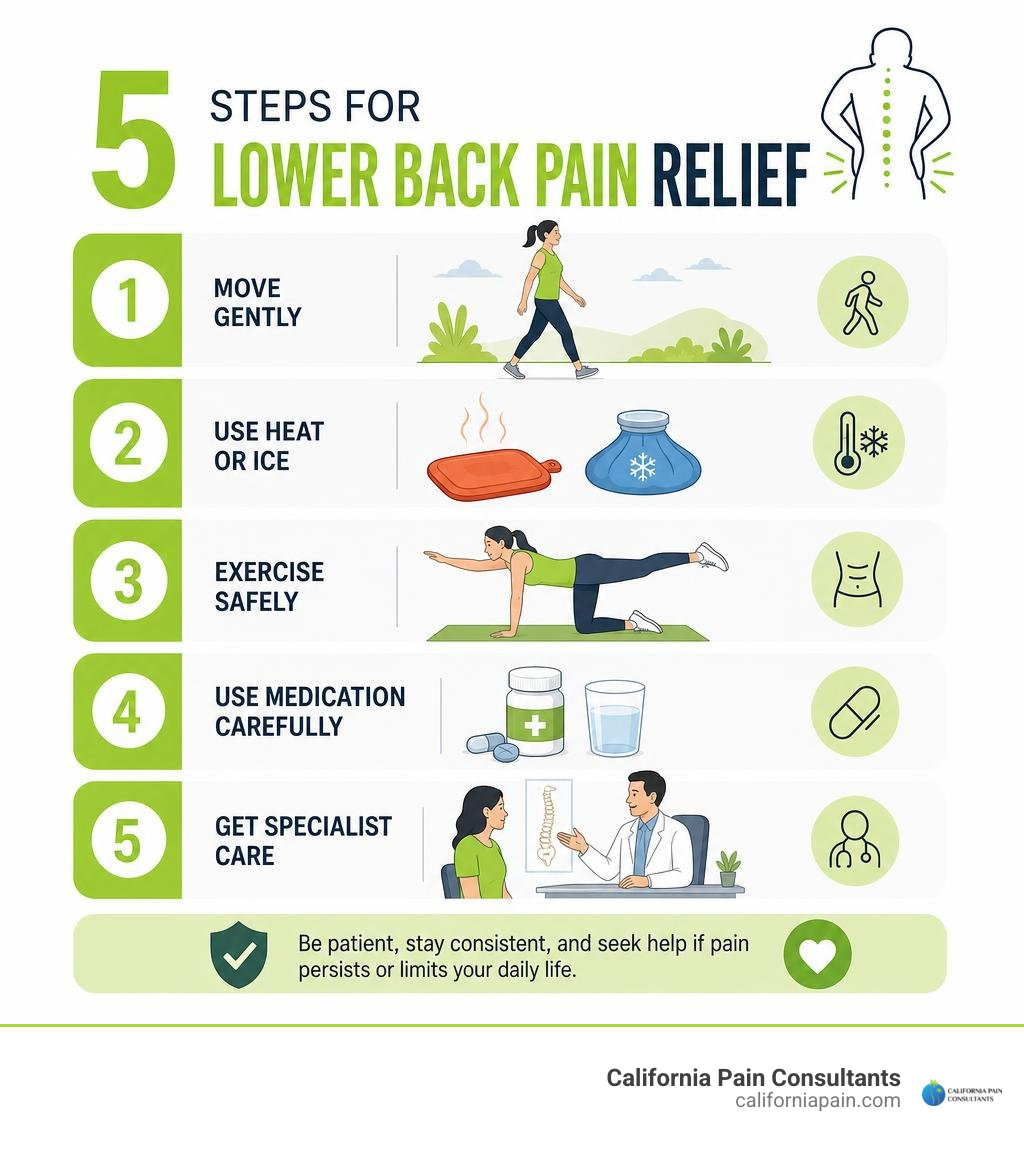
Lower back pain how to treat word roundup:
Lower Back Pain How to Treat: Common Causes and When to See a Doctor
The lumbar spine is an incredible mechanical structure. It bears over 60% of your body weight while allowing you to bend, twist, lift, and walk. Consisting of five sturdy lumbar vertebrae (L1–L5), shock-absorbing intervertebral discs, complex facet joints, and a web of stabilizing ligaments and muscles, your lower back handles tremendous force daily.
However, because this region is under continuous mechanical stress, it is also highly susceptible to irritation and injury (Margetis et al., 2025). For a thorough medical overview, clinicians often review the clinical evaluation and management of low back pain. At California Pain Consultants, we believe that understanding your symptoms is the first step toward reclaiming your everyday comfort. If you are curious about what initiated your discomfort, start by understanding lower back pain causes.
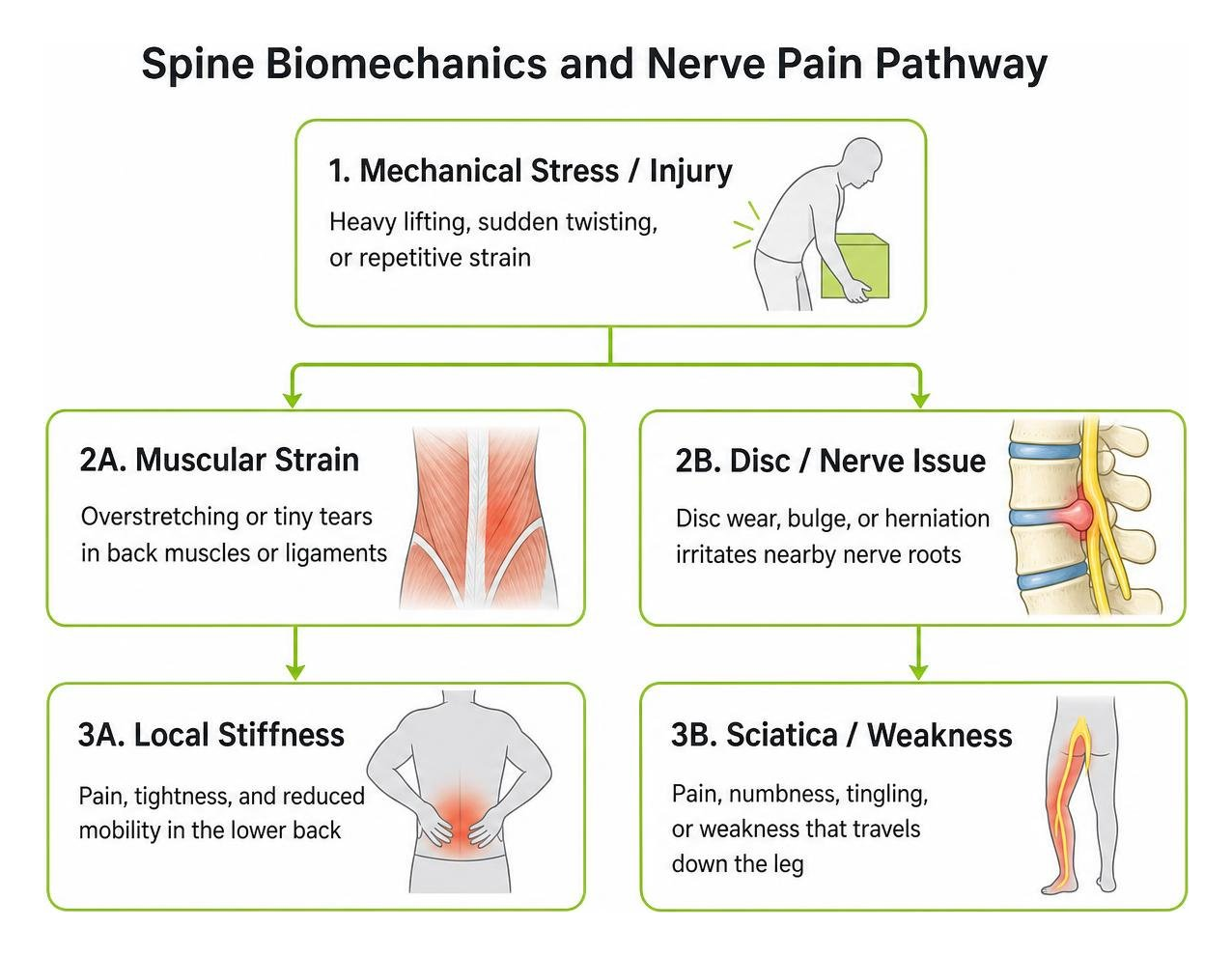
Common Mechanical and Structural Triggers
Roughly 90% of all lower back issues are mechanical or non-specific in nature (Chiodo et al., 2020). This means the discomfort originates in the spine’s working components rather than from systemic disease:
- Muscle Strains and Ligament Sprains: Overstretching or microscopic tearing of lumbar muscles or supportive ligaments from heavy lifting or sudden twisting.
- Degenerative Disc Disease (DDD): Natural age-related wear where intervertebral discs lose hydration and height, reducing their shock-absorbing capacity.
- Herniated or Bulging Discs: A disc’s soft inner nucleus pushes through the tough outer ring, potentially compressing adjacent nerve roots and causing sharp, shooting pain into the buttocks or legs (sciatica).
- Spinal Stenosis: Narrowing of the spinal canal or neural foramina, crowding nerve pathways and often causing pain or cramping when standing or walking.
- Facet Arthropathy: Wear and tear within the cartilage of the small stabilizing joints linking each vertebra.
- Myofascial Pain Syndrome: Chronic irritation and localized trigger points within the deep spinal musculature.
Critical Red Flags Requiring Immediate Care
While acute flare-ups usually settle down with time, certain warning signs indicate underlying issues that require immediate medical evaluation (See et al., 2021). Seek emergency care if you experience:
- Loss of bowel or bladder control, or sudden difficulty urinating
- Saddle anesthesia (numbness or tingling in the groin, buttocks, or inner thighs)
- Rapidly progressive weakness in your legs, such as foot drop
- Back pain accompanied by unexplained fever, chills, or sudden weight loss
- Severe back pain following major physical trauma (such as a car collision or fall from a height)
- A history of cancer accompanied by new, unrelenting pain that worsens at night
Step 1 & Step 2: At-Home Care, Safe Movement, and Targeted Exercise
When acute back pain strikes, our initial reaction is often to retreat to bed and stay completely still. However, clinical evidence shows that staying gently active accelerates healing significantly faster than extended bed rest. Major health authorities, including the NICE guidelines on low back pain and sciatica, strongly recommend maintaining daily activities as much as your pain allows.
Step 1: Acute Lower Back Pain How to Treat at Home with Active Recovery
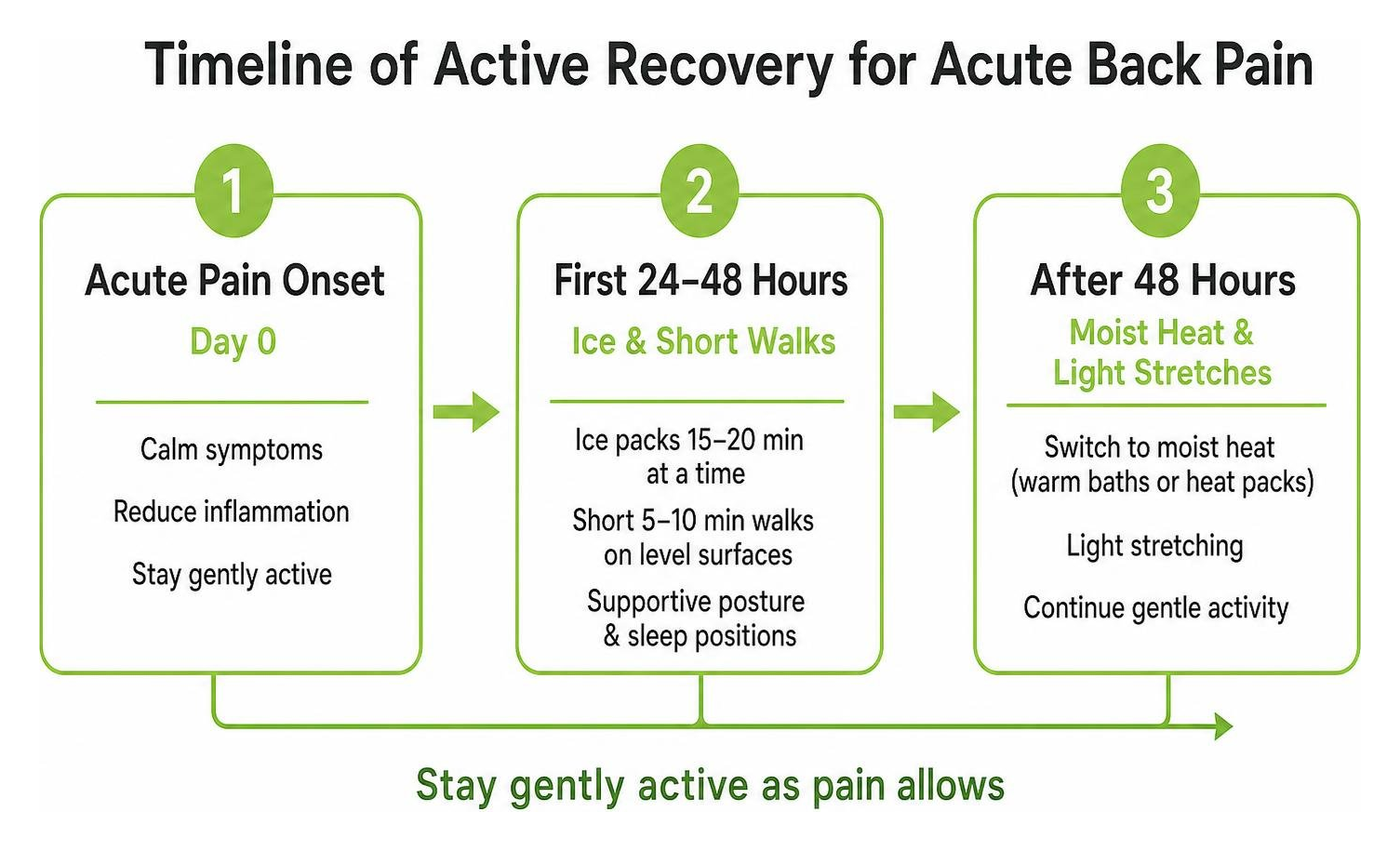
During the initial 24 to 48 hours of an acute episode, your main goals are calming muscle spasms, reducing local inflammation, and keeping tissues oxygenated:
- Thermal Therapy: Apply ice packs for 15–20 minutes at a time during the first 48 hours to blunt sharp inflammation. After two days, switch to moist heat packs or warm baths to soothe tight muscles and stimulate healing blood flow.
- Short, Frequent Walks: Take short 5-to-10-minute walks throughout the day on level surfaces. Gentle walking nourishes spinal discs through natural fluid exchange and prevents muscle deconditioning.
- Supportive Posture & Sleep Positions: Avoid soft, sagging couches. When sleeping, place a pillow between your knees if lying on your side, or put a pillow beneath your knees if resting on your back to reduce lumbar pressure.
- Comprehensive Self-Care: For practical daily strategies to manage flare-ups independently, check our practical guide on at home pain care.
Step 2: Gentle Stretches and Core Strengthening Exercises
Once the acute sharpness calms, targeted stretching and core stabilization help rebuild strength and prevent future recurrences (NBK562933). Aim to move smoothly without bouncing or pushing into sharp pain.
- Knee-to-Chest Stretch: Lie flat on your back. Slowly draw one knee toward your chest with both hands, holding for 15–20 seconds. Repeat 2–3 times per side to gently decompress the lumbar spine.
- Cat-Cow Stretch: On hands and knees, gently arch your back upward toward the ceiling (Cat), hold for 5 seconds, then slowly lower your belly while lifting your chest (Cow). Perform 8–10 smooth repetitions.
- Pelvic Tilts: Lie on your back with knees bent and feet flat on the floor. Tighten your abdominal muscles to flatten the small of your back against the floor. Hold for 5–10 seconds, then relax.
- Glute Bridges: Lie on your back with knees bent. Tighten your core and glutes, lifting your hips until your body forms a straight line from shoulders to knees. Hold for 3–5 seconds and lower gently.
For structured movement routines, explore our comprehensive guides on exercises for lower back pain and learn 5 proven stretches for the lower back.
Step 3: Strategic Use of Oral and Topical Pain Medications
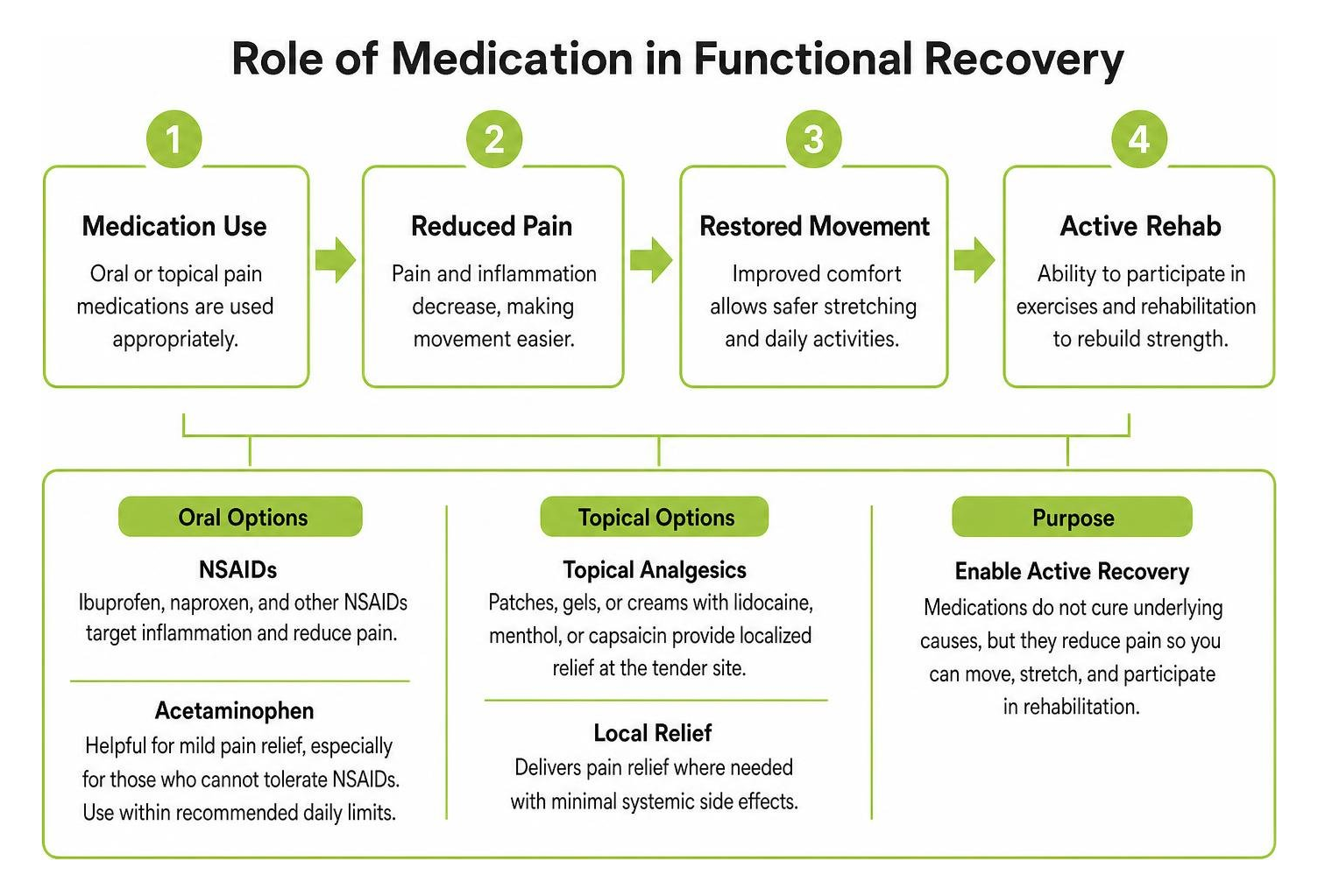
Medications do not cure the underlying mechanical causes of back pain, but when used appropriately, they reduce pain and inflammation so you can move, stretch, and participate in rehabilitation (Chiodo et al., 2020). For detailed clinical overviews on managing medications, refer to the Mayo Clinic guidance on back pain diagnosis and medication.
Over-the-Counter Pain Relievers and Anti-Inflammatories
- Non-Steroidal Anti-Inflammatory Drugs (NSAIDs): Medications such as ibuprofen and naproxen are common first-line options for mechanical back pain because they target underlying inflammation. Always take NSAIDs with food and speak with your physician if you have a history of ulcers, kidney issues, or cardiovascular conditions.
- Acetaminophen: Helpful for mild pain relief, especially for individuals who cannot tolerate NSAIDs due to stomach sensitivity. Be mindful of total daily dosages to safeguard liver health.
- Topical Analgesics: Over-the-counter patches, gels, or creams containing lidocaine, menthol, or capsaicin can provide localized relief directly at the tender site without significant systemic side effects.
To dive deeper into medication choices, dosages, and safety considerations, explore our detailed resource on back pain medication.
Prescription Muscle Relaxants and Non-Opioid Options
When severe muscle spasms prevent restorative movement, a short course (typically 3 to 7 days) of prescription muscle relaxants (such as cyclobenzaprine or methocarbamol) may be recommended by your doctor. Because these medications can cause drowsiness, they are best taken in the evening.
For nerve-related pain (such as sciatica or spinal stenosis), non-opioid medications like gabapentinoids or SNRIs may help quiet hypersensitive nerve pathways. At California Pain Consultants, we focus on safe, effective pain relief while minimizing reliance on habit-forming opioids.
Step 4 & Step 5: Advanced Non-Surgical Care and Long-Term Prevention
When lower back discomfort lasts longer than six weeks, it enters the subacute or chronic stage. Chronic pain often involves complex tissue inflammation, structural changes, and altered nerve signaling. Managing this requires a coordinated approach, as highlighted in the VA/DoD clinical practice guideline for low back pain.
Step 4: Chronic Lower Back Pain How to Treat with Non-Surgical Medical Procedures
If home remedies, medication, and standard physical therapy have not provided adequate relief, interventional pain treatments can directly target the root cause of your pain:
- Epidural Steroid Injections (ESIs): A targeted injection of anti-inflammatory corticosteroid medication directly into the epidural space surrounding compressed spinal nerves, offering substantial relief for disc herniations and sciatica.
- Facet Joint Injections & Medial Branch Blocks: Diagnostic and therapeutic injections placed directly into irritated spinal facet joints to reduce arthritis pain.
- Radiofrequency Ablation (RFA): A minimally invasive procedure that uses gentle heat energy to deactivate small sensory nerve branches sending pain signals from arthritic facet joints, providing relief that can last 6 to 12 months or longer.
- Sacroiliac (SI) Joint Injections: Targeted therapeutic injections designed to quiet inflammation where the spine connects to the pelvis.
To learn more about how modern, image-guided procedures provide lasting relief without surgery, explore our guides on non surgical pain relief and interventional pain management.
Step 5: Ergonomics, Weight Management, and Lifestyle Modifications
True long-term relief comes from reducing cumulative daily stress on your lumbar spine:
- Ergonomic Workstation Adjustments: Position your computer monitor at eye level, keep your feet flat on the floor, and use a chair with adjustable lumbar support. Stand up and reset your posture every 45 to 60 minutes.
- Body Mechanics & Lifting: Bend at your knees and hips rather than rounding your back. Keep heavy objects close to your chest and avoid twisting your torso while lifting.
- Anti-Inflammatory Nutrition & Weight Management: Carrying extra weight, particularly around the midsection, increases mechanical strain on lumbar discs. A diet rich in leafy greens, omega-3 fatty acids, berries, and lean proteins helps reduce systemic inflammation.
- Smoking Cessation: Nicotine constricts micro-blood vessels supplying the intervertebral discs. People who smoke are up to four times more likely to develop degenerative disc disease than nonsmokers.
- Stress Management: Chronic emotional stress causes subconscious muscle bracing and amplifies pain pathways. Practicing mindfulness, diaphragmatic breathing, and regular sleep hygiene helps quiet the nervous system.
For a complete blueprint on protecting your spine for years to come, read our comprehensive overview of back pain prevention strategies.
When Is Spine Surgery Considered?
The vast majority of individuals suffering from lower back pain never require surgery. Spine surgery is typically reserved for cases where progressive nerve damage threatens permanent loss of function, or when debilitating pain persists despite comprehensive non-surgical care.
| Treatment Category | Primary Goals | Common Modalities | Typical Recovery / Timeline |
|---|---|---|---|
| Conservative Care | Reduce acute pain, restore basic movement, maintain conditioning | Active rest, ice/heat, NSAIDs, gentle stretching, core exercises | 2 to 6 weeks |
| Interventional Pain Care | Pinpoint pain generator, eliminate inflammation, interrupt pain signals | Epidural injections, facet joint blocks, radiofrequency ablation (RFA) | Immediate to 2 weeks (Relief: months to years) |
| Surgical Intervention | Decompress nerves, stabilize structural instability | Microdiscectomy, laminectomy, lumbar spinal fusion | 6 weeks to 6+ months |
Surgical consultation is generally recommended if you have:
- Structural instability (such as severe spondylolisthesis) accompanied by intractable pain
- Progressive motor weakness (like foot drop or leg buckle) verified by clinical exam and MRI
- Persistent, disabling radicular pain that has not responded to 6 to 12 weeks of structured physical therapy and interventional procedures
Frequently Asked Questions About Lower Back Pain Relief
What is the fastest way to relieve acute lower back pain?
The fastest way to ease acute discomfort is combining thermal therapy (ice packs for the first 48 hours, followed by moist heat), short walking breaks every couple of hours, and appropriate over-the-counter anti-inflammatories if safe for you. Avoid long periods of sitting or complete bed rest, as both increase muscle stiffness.
How do I know if my lower back pain is muscular or nerve-related?
Muscular pain usually feels like a dull, aching, or throbbing tightness localized to the lower back and buttocks that worsens with movement and eases with rest. Nerve pain (such as sciatica) often feels sharp, electric, or burning, and typically radiates past the knee into the calf or foot, sometimes accompanied by tingling, numbness, or muscle weakness.
Can chronic lower back pain be resolved without surgery?
Yes. Clinical studies consistently demonstrate that over 85–90% of chronic lower back pain cases can be managed effectively without open surgery. Combining targeted interventional procedures (like epidural injections or radiofrequency ablation) with physical therapy, ergonomic improvements, and lifestyle changes helps patients achieve lasting pain relief and return to active lives.
Conclusion
Lower back pain can be frustrating and disruptive, but you do not have to let it control your daily routine. By staying gently active, practicing targeted stretches, using medications wisely, and adopting healthy lifestyle habits, most back pain episodes improve significantly.
If your lower back pain persists beyond a few weeks, radiates down your leg, or keeps you from enjoying your favorite activities, our board-certified pain management team is here to help. At California Pain Consultants, we provide advanced, compassionate, non-surgical spine care across our clinic locations in San Diego, Kearny Mesa, Chula Vista, Rancho Bernardo, La Mesa, and Miramar.
Take the first step toward lasting comfort today—schedule your appointment with our specialists and get back to moving comfortably.
References
See QY, Tan JB, Kumar DS. “Acute low back pain: diagnosis and management..” Singapore medical journal, 2021. PMCID PMC8801838. “Low back pain and sciatica in over 16s: assessment and management.” National Institute for Health and Care Excellence (NICE), 2020. NBK562933. Konstantinos Margetis, Charanjeet Singh, Vincent E. Casiano, Matthew A. Varacallo. “Low Back Pain: Evaluation and Management.” StatPearls Publishing, 2025. NBK538173. Anthony E. Chiodo, Suvarna N. Bhat, R. Van Harrison, Gregory D. Shumer, Ronald A. Wasserman, Paul Park, Rakesh D. Patel, R. Van Harrison, April L. Proudlock, Karl T. Rew. “Low Back Pain.” Michigan Medicine University of Michigan, 2020. NBK572334.