
How to Treat Hip Pain and Start Moving More Comfortably
Dealing with this in San Diego? Same-day appointments are often available at our 4 clinics.
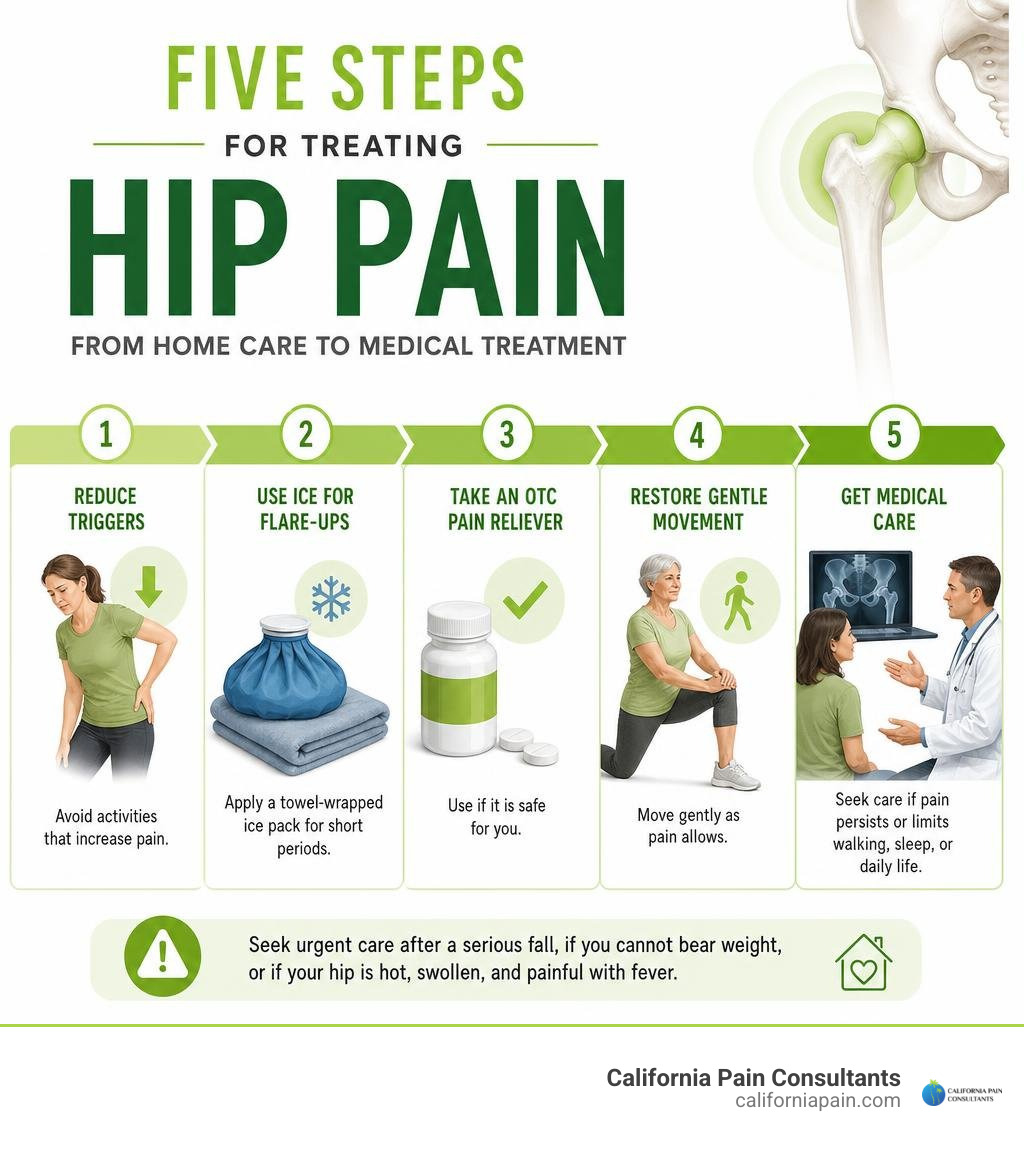
For hip pain, how to treat it often starts with five simple steps: reduce activities that trigger pain, use a towel-wrapped ice pack for short periods during a new flare-up, try an over-the-counter pain reliever if it is safe for you, restore gentle movement as pain allows, and get medical care if pain persists or limits walking, sleep, or daily life.
Hip pain can come from the joint itself, nearby muscles and tendons, or even the lower back. Groin pain may point to a joint problem, while pain on the outside of the hip is often linked to tissues around the joint. The right treatment depends on the cause, so do not try to push through sharp pain or a worsening limp.
This guide walks through a practical path from safe home care to physical therapy, medications, image-guided injections, and surgery when needed. Seek urgent care after a serious fall, if you cannot bear weight, or if your hip is hot, swollen, and painful with fever.
I am Dr. Zach Cohen, a double board-certified anesthesiologist and chronic pain physician who treats joint and nerve pain with personalized, non-surgical and interventional care. I help patients understand hip pain how to treat decisions clearly, so the next step is based on their symptoms, goals, and underlying condition.
Glossary for hip pain how to treat:
Understanding Hip Pain Symptoms and When to Seek Medical Care
The hip is one of the largest weight-bearing ball-and-socket joints in the body. Every time you take a step, climb stairs, or rise from a low couch, your hip joint absorbs mechanical forces ranging from three to five times your total body weight. When something goes wrong within this intricate network of bone, cartilage, labrum, bursae, and tendons, even the simplest daily routines can become a challenge.
To treat hip pain effectively, you must first understand where the pain comes from. Pain localized deep in the anterior groin or inner hip typically stems from intra-articular structures—meaning the inside of the ball-and-socket joint itself. In contrast, pain felt on the lateral (outer) side of your hip or buttock usually points to extra-articular issues, such as inflamed tendons, trochanteric bursitis, or referred pain from the lumbar spine.
Morning stiffness is another key diagnostic clue: stiffness lasting longer than 30 minutes after waking often signals an inflammatory condition or joint degeneration. If you find yourself developing an antalgic gait (limping to take weight off the sore leg), your body is actively trying to protect damaged joint mechanics. Following established clinical guidance on hip pain in adults and carefully evaluating hip pain symptoms helps pinpoint whether you are dealing with joint degeneration or soft tissue irritation.
| Clinical Feature | Intra-Articular Hip Osteoarthritis | Trochanteric Bursitis (Lateral Hip) |
|---|---|---|
| Primary Pain Site | Deep anterior groin, inner thigh, radiating to knee | Lateral outer hip, upper buttock, lateral thigh |
| Aggravating Factors | Weight-bearing, deep hip flexion, internal rotation | Sleeping on affected side, direct pressure, crossing legs |
| Morning Symptoms | Stiffness lasting 30+ minutes, joint “catching” | Localized tenderness upon waking or rolling over |
| Gait Impact | Marked limp (antalgic gait) due to joint loading | Tender gait, pain during single-leg stance |
| Primary Cause | Cartilage degradation, joint space narrowing | Friction/inflammation of the trochanteric bursa |
Identifying Root Causes and Hip Pain: How to Treat Underlying Conditions
A successful recovery plan targets the underlying condition rather than just masking the symptoms. The most frequent causes of hip discomfort include:
- Hip Osteoarthritis (OA): Osteoarthritis involves the progressive breakdown of cushiony articular cartilage, leading to bone spurs, joint space narrowing, and chronic inflammation. Globally, hip OA affects roughly 7.2% of the population, with incidence rates reaching 2 million new cases annually. Women account for roughly 78% of OA diagnoses, and the chronic discomfort can significantly impact emotional well-being—nearly 19% of diagnosed individuals experience secondary anxiety or depression. Patients with lower extremity OA also face an estimated 20% excess mortality rate compared to age-matched controls, largely driven by sedentary health decline. For in-depth joint strategies, review the complete guide to hip arthritis pain relief.
- Femoroacetabular Impingement (FAI): Structural bone overgrowth along the femoral head (cam lesion) or acetabular rim (pincer lesion) creates friction during hip flexion and rotation, often serving as an early precursor to joint arthritis.
- Acetabular Labral Tears: The labrum is a fibrocartilaginous ring sealing the hip socket. Tears often result from repetitive twisting sports (such as dance, soccer, or golf) or anatomical FAI, causing clicking, catching, and sharp groin pain.
- Greater Trochanteric Pain Syndrome (Bursitis & Tendinopathy): Friction between the iliotibial (IT) band and the greater trochanter inflames the underlying bursal sacs or gluteal tendons, making side-sleeping exceptionally painful.
- Lumbar Radiculopathy (Referred Spine Pain): Compressed nerve roots in the lower spine (L1-L4) can refer sharp, shooting pain down into the buttock, outer hip, and groin, mimicking true joint pathology.
Recognizing Red Flags and When to Seek Immediate Medical Care
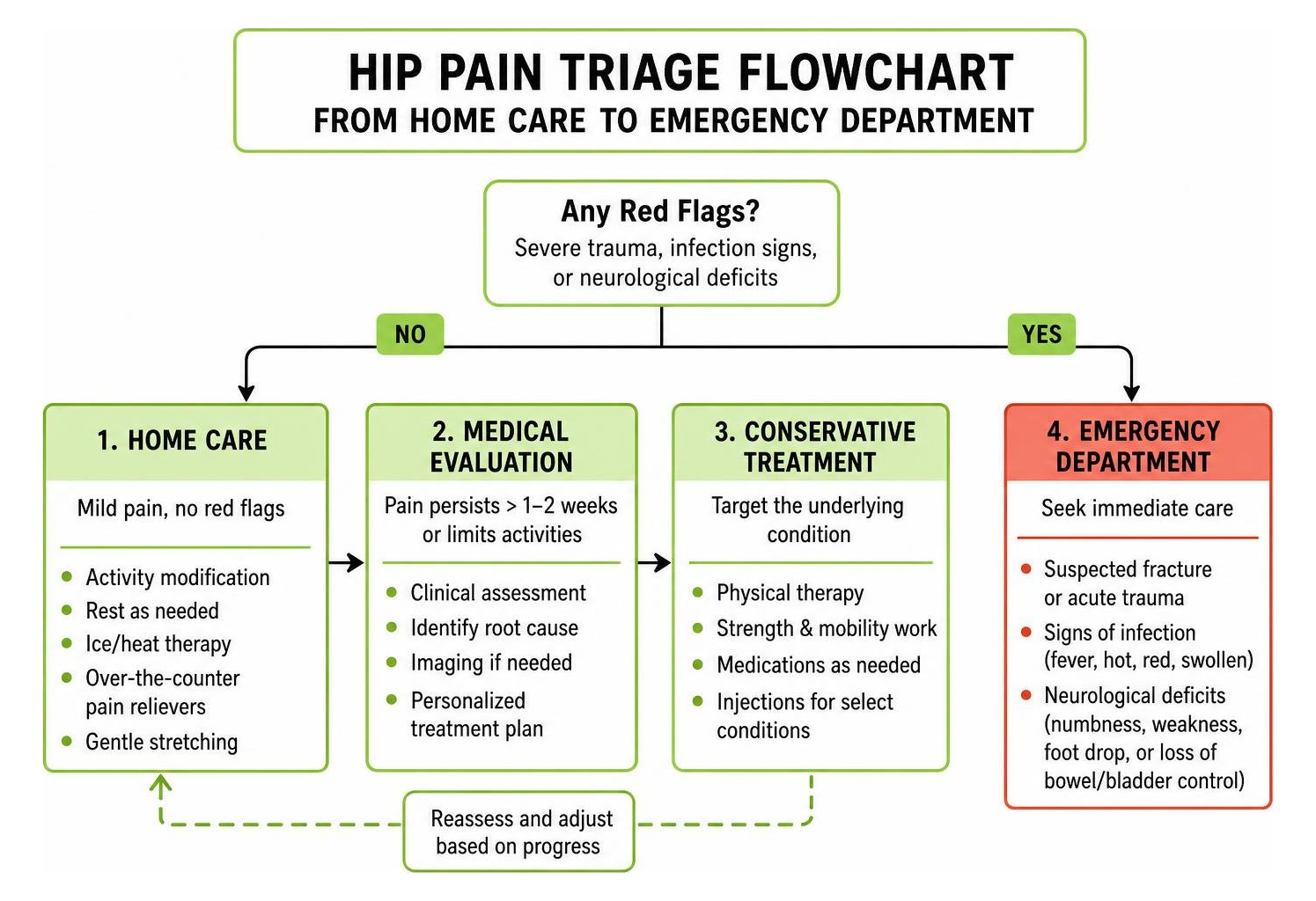
While most hip discomfort can be safely managed with conservative care, certain warning signs require immediate emergency intervention. Adhering to hip pain medical evaluation guidelines is critical when red flags appear.
Seek urgent or emergency medical evaluation immediately if you experience:
- Suspected Fracture or Acute Trauma: Severe, sudden pain after a fall or high-impact collision, an inability to bear any weight on the leg, or a visible deformity (such as the injured leg appearing shorter or unnaturally rotated outward).
- Septic Arthritis (Infection): A red, hot, visibly swollen hip accompanied by sudden high fever, chills, or systemic illness. Septic arthritis destroys joint cartilage rapidly and requires emergent drainage and intravenous antibiotics.
- Neurological Deficits: Sudden numbness, progressive weakness, “foot drop” (inability to lift the front of your foot), or loss of bowel and bladder control, which may indicate cauda equina syndrome.
Hip Pain How to Treat: The 5-Step Action Plan for Fast Relief
When red flags are ruled out, managing hip pain effectively requires a structured, multimodal approach. We utilize a stepped-care philosophy that restores joint biomechanics, quells acute inflammation, and preserves natural tissue without jumping straight to invasive surgery.
Step 1: Implement Rest, Ergonomics, and Thermal First-Aid
During an acute flare-up, the primary objective is to decompress irritated tissues. However, complete bed rest is counterproductive; prolonged immobility causes supportive muscles to weaken and joint capsules to stiffen. Instead, practice modified rest by cutting out high-impact activities, running, and heavy lifting while maintaining gentle daily movement.
Apply thermal first-aid correctly:
- Cold Therapy: Wrap an ice pack in a dry cloth and apply it to the painful area for 10 to 15 minutes every hour during the initial 24 to 48 hours. Cold constricts local blood vessels, reducing acute swelling and numbing superficial nerves. Never apply raw ice directly to bare skin.
- Heat Therapy: After 48 hours, or when dealing with chronic morning stiffness, apply moist heat for 15 to 20 minutes. Heat dilates blood vessels, eases muscle spasms in the glutes and hip flexors, and prepares joints for gentle mobility.
Adjusting your everyday ergonomics significantly unloads the joint:
- Side-Sleeping: Avoid sleeping directly on the painful hip. Sleep on your unaffected side and place a firm contour pillow between your knees and ankles to keep your pelvis, hips, and spine in neutral alignment. If sleeping on your back, place a pillow under your knees.
- Seating Choices: Avoid low, ultra-soft sofas that force your knees higher than your hips, pinching the anterior joint capsule. Choose firm chairs with armrests so you can use your arms to assist when standing up.
- Ergonomic Car Entry: Sit down sideways on the seat first with both feet on the pavement, then swing both legs into the car cabin together to prevent painful joint twisting. For additional immediate adjustments, discover 9 ways to kick hip pain to the curb fast.
Step 2: Targeted Mobility Routines for Hip Pain: How to Treat Stiffness Safely
A sedentary lifestyle is a major contributor to the hip and knee discomfort that half of all older adults experience. When you sit for hours at a desk or in a car, your hip flexor muscles remain locked in a shortened position. Over time, they adaptively shorten, pulling the pelvis forward and increasing strain across the lower spine and hip socket.
Gentle daily stretching and low-impact strengthening restore natural range of motion. Perform these movements smoothly without bouncing, and stop immediately if you feel sharp, stabbing pain:
- Seated Figure-4 Stretch: Sit tall on a sturdy chair. Cross the ankle of your painful leg over the opposite knee. Keeping your back flat, gently hinge forward from the hips until you feel a comfortable stretch in your outer hip and glute. Hold for 30 seconds; repeat 3 times.
- Kneeling Hip Flexor Stretch: Kneel on a soft mat or pillow with your affected leg behind you and your opposite foot flat in front. Keeping your chest upright and engaging your core, gently shift your weight forward until you feel a stretch along the front of your rear hip. Hold for 30 seconds; repeat 3 times.
- Glute Bridges: Lie on your back with knees bent and feet flat on the floor, hip-width apart. Drive through your heels and squeeze your glutes to lift your hips toward the ceiling until your body forms a straight line from knees to shoulders. Hold for 2 seconds at the top, then slowly lower. Perform 3 sets of 10 to 15 repetitions.
- Chair Sits (Sit-to-Stands): Stand in front of a firm chair. Hinge at the hips and bend your knees to sit down lightly without collapsing into the seat, then press through your heels to return to standing without using your hands if possible. Complete 3 sets of 10 repetitions to build quadricep and gluteal stability.
To expand your home routine, explore our guided hip pain relief exercises and read the complete guide to natural relief for sore hips.
Step 3: Utilize Evidence-Based Medications and Topical Analgesics
Medications should be used strategically to lower inflammation and create a window of relief so you can participate in rehabilitative exercise.
- Oral NSAIDs (Nonsteroidal Anti-Inflammatory Drugs): High-quality clinical evidence confirms that oral NSAIDs (such as ibuprofen, naproxen, or meloxicam) are highly effective first-line medications for reducing pain and improving function in symptomatic hip osteoarthritis. However, oral NSAIDs carry risks of gastrointestinal irritation, cardiovascular strain, and renal stress. Do not use over-the-counter NSAIDs for more than 10 consecutive days without medical supervision.
- Acetaminophen: Acetaminophen serves as a helpful alternative for individuals with gastrointestinal or cardiovascular contraindications to NSAIDs. While it targets central pain pathways without reducing peripheral inflammation, clinical consensus supports its role in multimodal regimens.
- Topical Analgesics: Prescription or OTC topical NSAID gels (such as diclofenac) and lidocaine patches provide localized pain relief directly over the lateral trochanter without significant systemic absorption.
- Avoiding Opioids: In line with the AAOS clinical practice guideline for hip osteoarthritis, our medical team strongly advises against the use of prescription oral opioids for non-operative hip management. Opioids fail to address joint biomechanics, carry significant risks of tolerance and dependence, and do not provide superior long-term functional recovery compared to non-opioid regimens.
Step 4: Advance to Physical Therapy and Interventional Pain Management
If home adjustments and medications fail to resolve your symptoms after two to three weeks, specialized clinical care is the next step. At California Pain Consultants, serving San Diego, Kearny Mesa, Chula Vista, Rancho Bernardo, La Mesa, and Miramar, our board-certified physicians combine advanced interventional care with structured physical rehabilitation.
According to updated clinical practice guidelines from the hip pain physical therapy clinical practice guidelines, the most effective non-surgical physical therapy protocols incorporate:
- Manual Therapy & Long-Axis Distraction: Clinicians apply specialized manual traction to gently decompress the hip joint capsule, reducing bone-on-bone friction, restoring synovial fluid flow, and increasing internal rotation.
- Dry Needling: Backed by Grade A clinical evidence for short-term relief (lasting up to three weeks), dry needling deactivates painful myofascial trigger points in the iliopsoas, rectus femoris, tensor fasciae latae (TFL), and gluteal musculature in Grade II and III hip OA.
- Structured Exercise Dosage: Optimal physical therapy dosing involves individualized land- or aquatic-based programs completed 1 to 5 times per week for 30 to 120 minutes per session over a 5- to 16-week cycle.
When joint pain persists, our interventional pain physicians utilize minimally invasive, image-guided procedures:
- Ultrasound- or Fluoroscopy-Guided Injections: The hip is a deep joint surrounded by major neurovascular structures; blind injections lack precision. Using real-time ultrasound or fluoroscopic X-ray guidance, we place anti-inflammatory corticosteroid medications directly into the intra-articular joint space or trochanteric bursa. This dual-purpose approach confirms the exact anatomical pain source while delivering powerful, targeted relief lasting several months.
- Hyaluronic Acid Viscosupplementation Considerations: While commonly used in knees, major orthopedic guidelines indicate that intra-articular hyaluronic acid does not significantly outperform placebo in hip osteoarthritis and is generally not recommended as a primary joint therapy.
- Articular Nerve Blocks & Radiofrequency Ablation (RFA): For patients with severe joint pain who cannot undergo surgery, sensory nerve branches supplying the hip capsule (such as the femoral and obturator articular branches) can be numbed and treated with radiofrequency energy to interrupt pain signaling for 6 to 12 months.
Learn more about these advanced modalities in the complete guide to hip pain relief methods and explore comprehensive pain management for hip pain.
Step 5: Adopt Long-Term Joint Preservation and Lifestyle Strategies
Sustained joint health depends on proactive lifestyle habits that protect cartilage and support hip mechanics:
- Weight Management Biomechanics: Because walking exerts forces up to 5 times body weight across the hip, carrying just 10 extra pounds adds 50 pounds of joint force with every step. Gradual, sustainable weight reduction dramatically lowers joint stress and slows cartilage breakdown.
- Low-Impact Cardiovascular Conditioning: Transition from high-impact running to joint-friendly exercises like swimming, water aerobics, and stationary cycling. These activities stimulate synovial fluid production to nourish cartilage without subjecting the ball-and-socket joint to pounding impacts.
- Shock-Absorbing Footwear: Wear supportive, flat, well-cushioned shoes with custom orthotics if you overpronate. Avoid high heels or worn-down sneakers that misalign the kinetic chain from the foot up to the hip.
- Fall-Proofing Your Home: Remove tripping hazards like loose rugs and electrical cords, install bright nightlights in hallways, and use assistive canes on the side opposite your painful hip to offload up to 30% of joint force during flare-ups.
For a full breakdown of long-term preservation methods, review our hip pain relief complete guide.
When to Consider Surgery and Advanced Joint Interventions
Most individuals manage their symptoms successfully using non-surgical protocols. However, when joint space narrowing becomes severe and conservative options no longer restore daily function, surgical consultation is appropriate.
Clinicians evaluate surgical timing using validated functional metrics, such as the WOMAC (Western Ontario and McMaster Universities Osteoarthritis Index) score and radiographic progression. Surgery is typically considered when there is:
- Failure to achieve at least a 20% to 25% improvement on the WOMAC pain scale after dedicated conservative management.
- Documented progressive joint space loss of 0.3 to 0.7 mm per year alongside severe functional impairment (e.g., inability to put on shoes, walk half a block, or sleep).
- Bone-on-bone end-stage joint collapse.
Surgical and advanced biologic pathways include:
- Hip Arthroscopy: A minimally invasive outpatient procedure using tiny cameras and instruments to debride torn labral tissue, repair labral tears, and reshape bony impingements (cam/pincer lesions) in younger, active patients without extensive arthritis.
- Total Hip Arthroplasty (THA): Total joint replacement replaces the damaged femoral head and pelvic socket with durable metal, ceramic, or high-density polyethylene prosthetics. Modern surgical techniques allow for rapid recovery and high rates of pain relief.
- Regenerative Interventions: Emerging biologic therapies, including platelet-rich plasma (PRP) and cellular therapies, continue to be studied for soft tissue healing and joint symptom modulation. To understand the science and realistic clinical expectations of these modalities, read an essential guide to stem cell hip arthritis treatments.
While joint replacement is highly successful, some patients experience ongoing discomfort following surgery. To understand why this occurs and how interventional care helps, consult our guide on persistent pain after hip replacement causes and solutions.
Frequently Asked Questions About Hip Pain Relief
How long should you treat hip pain at home before seeing a doctor?
If your hip pain is mild and developed from minor overuse, try at-home self-care (ice, modified rest, gentle stretching, and short-term OTC pain relievers) for 7 to 14 days. If the pain does not improve after two weeks, progressively worsens, disrupts your sleep, or causes an ongoing limp, schedule a medical evaluation. Never delay medical care if pain is accompanied by severe trauma, inability to bear weight, fever, or noticeable joint deformity.
What is the most effective sleeping position for hip pain?
The most effective sleeping position is on your unaffected side with a firm pillow placed between your knees and ankles. This prevents the top leg from pulling your pelvis out of alignment and keeps your hip joint in a neutral, relaxed position. If you prefer sleeping on your back, place a medium pillow directly beneath your knees to relieve tension on the hip flexors and lower lumbar spine. Avoid sleeping directly on the painful hip or sleeping on your stomach.
Can physical therapy help avoid hip surgery?
Yes. For many patients with mild-to-moderate hip osteoarthritis, labral irritation, or bursitis, a structured physical therapy program can effectively delay or prevent the need for surgery. Physical therapy strengthens the stabilizing gluteal, core, and quadricep muscles, unloads mechanical stress from the joint capsule, and restores range of motion. When paired with image-guided interventional treatments and lifestyle changes, physical therapy provides lasting relief and functional recovery.
Conclusion
Hip pain does not have to dictate your lifestyle, limit your favorite activities, or force you into an immediate surgical procedure. By taking a stepped, evidence-based approach—beginning with thermal first-aid, posture adjustments, and targeted mobility, and advancing to specialized physical therapy and image-guided treatments—you can protect your joint cartilage, reduce inflammation, and regain your functional independence.
At California Pain Consultants, we provide compassionate, individualized care across our Southern California clinic locations in San Diego, Kearny Mesa, Chula Vista, Rancho Bernardo, La Mesa, and Miramar. Our double board-certified physicians specialize in pinpointing the exact anatomical cause of your discomfort and designing non-surgical recovery plans tailored to your unique goals.
If you are ready to overcome hip stiffness and move freely again, schedule a consultation for joint pain relief san Diego or explore our hip pain relief complete guide to start your journey toward lasting relief today.