
Finding Pain Relief for Arthritis of the Hip
Dealing with this in San Diego? Same-day appointments are often available at our 4 clinics.
Pain relief for arthritis of the hip usually starts with a personalized mix of low-impact movement, physical therapy, weight and activity changes, and anti-inflammatory treatment when it is safe for you. If pain continues to limit walking, sleep, work, or daily tasks, image-guided injections and, eventually, a surgical evaluation may be appropriate.
Hip arthritis can cause aching in the groin, buttock, or outer thigh, along with stiffness and less range of motion. It often builds slowly, making everyday things like getting out of a car, climbing stairs, or putting on shoes more difficult.
The good news: pain management does not have to mean relying only on medication. The most useful plan focuses on your arthritis type, overall health, pain level, and goals for staying active.
I am Dr. Zach Cohen, a double board-certified anesthesiologist and chronic pain physician with training in interventional orthopedic procedures and medication-based pain care. In this guide, I will explain practical, evidence-based options for pain relief for arthritis of the hip and how they can fit into a broader plan for better movement and quality of life.
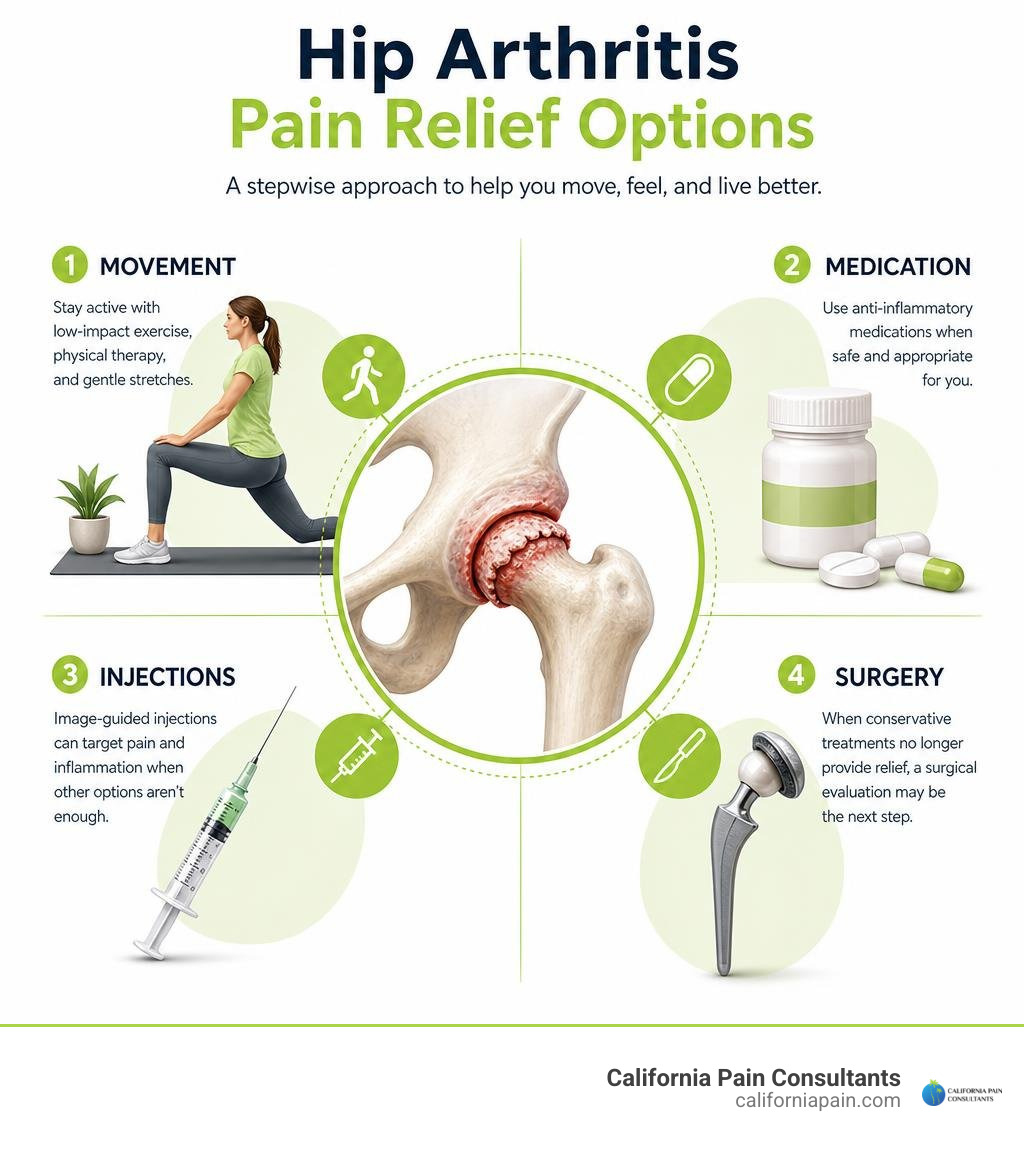
Discover more about pain relief for arthritis of the hip:
Understanding Hip Arthritis: Osteoarthritis vs. Inflammatory Types
To find effective pain relief for arthritis of the hip, we must first understand what is taking place inside the joint space. The hip is a heavy-duty ball-and-socket joint where the head of the femur fits into the acetabulum of the pelvis. Smooth articular cartilage coats these surfaces, enabling frictionless glides during movement.
Hip osteoarthritis (OA) is the most common form of hip joint degeneration. Globally, hip osteoarthritis affects roughly 1 in 14 adults (a 7.2% global prevalence rate), accounting for 6% of all physician clinic visits for osteoarthritis. In the United States, prevalence rises sharply with age—affecting nearly 19.6% of adults over age 55. Over a lifetime, an individual faces a 25% risk of developing symptomatic hip arthritis by age 85.
While mechanical wear-and-tear drives osteoarthritis, systemic inflammatory types of arthritis affect the joint through entirely different pathways:
- Osteoarthritis (OA): Progressive breakdown of articular cartilage, leading to joint space narrowing, subchondral bone remodeling, and bone spur (osteophyte) formation.
- Rheumatoid Arthritis (RA): An autoimmune condition where the body’s immune system mistakenly attacks the synovium (the lining of the joint capsule), producing chronic inflammation that destroys cartilage and bone.
- Ankylosing Spondylitis & Psoriatic Arthritis: Inflammatory spondyloarthropathies that inflame joint capsules and entheses (where tendons attach to bone), often starting in early adulthood (ages 17–35).
- Systemic Lupus Erythematosus (SLE): A complex systemic autoimmune disease that can trigger inflammatory joint flare-ups in both hips.
How Osteoarthritis Differs From Rheumatoid Arthritis
Distinguishing osteoarthritis from rheumatoid arthritis is critical because their underlying biology dictates completely different treatment choices.
Osteoarthritis typically manifests asymmetrical joint wear—one hip may suffer severe cartilage degeneration while the other remains relatively healthy. Pain usually develops gradually, worsening with weight-bearing activities like walking or standing, and easing during rest. Morning stiffness is common but usually lasts less than 30 minutes. Patients frequently feel deep groin pain radiating toward the anterior thigh or knee.
In contrast, rheumatoid arthritis typically causes symmetrical joint involvement, affecting both hips simultaneously alongside wrists, hands, or knees. Patients experience prolonged morning stiffness lasting an hour or longer, accompanied by systemic symptoms like fatigue, low-grade fevers, and localized joint warmth or swelling.
Whereas osteoarthritis management centers on structural joint unloading, targeted exercise, and local non-inflammatory analgesics, autoimmune inflammatory arthritis requires disease-modifying antirheumatic drugs (DMARDs) or targeted biologics to arrest systemic immune destruction.
Medications and Non-Surgical Pain Relief for Arthritis of the Hip
Pharmacological management serves as an essential pillar for reducing acute joint discomfort and restoring basic function. However, no single pill works for everyone. At California Pain Consultants, serving patients across San Diego, La Mesa, Chula Vista, Kearny Mesa, Rancho Bernardo, and Miramar, we carefully tailor non-surgical treatments to match each individual’s health profile.
| Treatment Category | Primary Mechanism of Action | Main Benefits | Key Considerations & Risks |
|---|---|---|---|
| Oral NSAIDs (Ibuprofen, Naproxen, Celecoxib) | Blocks COX enzymes to reduce systemic inflammation | Strong evidence for reducing pain and expanding range of motion | Risk of gastrointestinal ulcers, renal strain, and cardiovascular events |
| Acetaminophen (Tylenol) | Central nervous system analgesic signal blocker | Useful for mild pain; gentler on stomach | Lacks direct anti-inflammatory action; liver toxicity at high doses |
| Topical NSAIDs / Counterirritants | Local tissue penetration; nerve signal interference | Minimal systemic absorption; ideal for localized pain | Can cause mild skin irritation; less effective for deep intra-articular hip pain |
| Corticosteroid Injections | Direct intra-articular anti-inflammatory suppression | Rapid pain relief lasting up to 4 months | Risk of rapidly progressive OA (6%); limited to 3-4 times per year |
Over-the-Counter and Prescription Pain Relief for Arthritis of the Hip
Nonsteroidal anti-inflammatory drugs (NSAIDs) consistently rank among the most effective non-surgical medications for reducing hip osteoarthritis pain. By inhibiting cyclooxygenase (COX) enzymes, oral NSAIDs diminish pain-inducing prostaglandins inside the inflamed hip joint capsule. Clinical practice guidelines strongly endorse oral NSAIDs when not medically contraindicated.
However, oral NSAIDs carry potential risks. Long-term use can trigger gastrointestinal bleeding, increase blood pressure, and strain renal function. Patients with pre-existing kidney disease, active stomach ulcers, or severe cardiovascular disease must exercise caution. For deeper guidance on non-opioid safety, review our Safe Pain Relief an Essential Guide.
To bypass systemic risks, topical NSAIDs (such as diclofenac gel) or topical capsaicin creams (derived from chili peppers to deplete substance P in local nerve fibers) offer helpful options. While topicals work exceptionally well for superficial joints, deep hip joint capsular structures sometimes restrict complete penetration.
For individuals unable to take NSAIDs, oral acetaminophen serves as a mild analgesic alternative. While it does not treat underlying joint inflammation, it provides localized central pain modulation. You can read more about broad pharmaceutical strategies in the Hip Pain Medications for Arthritis | Arthritis Foundation resource guide.
Crucially, major medical guidelines—including the American Academy of Orthopaedic Surgeons (AAOS)—strongly advise against prescribing prescription opioids (such as tramadol or oxycodone) for conservative hip arthritis management. Opioids do not stop cartilage degeneration, carry significant risks of dependency and tolerance, and fail to provide long-term functional gains. Explore our guide on Alternative Non-Opioid Pain Management Guide to see effective non-addictive options.
Specialized Injections for Short-Term Pain Relief for Arthritis of the Hip
When oral medications fail to deliver sufficient comfort, interventional joint injections provide targeted relief. Because the hip is a deep, bone-encased ball-and-socket joint, precision is vital. Injections should be performed using image guidance—such as fluoroscopy (live X-ray) or ultrasound—to verify proper intra-articular needle placement and avoid nearby neurovascular structures.
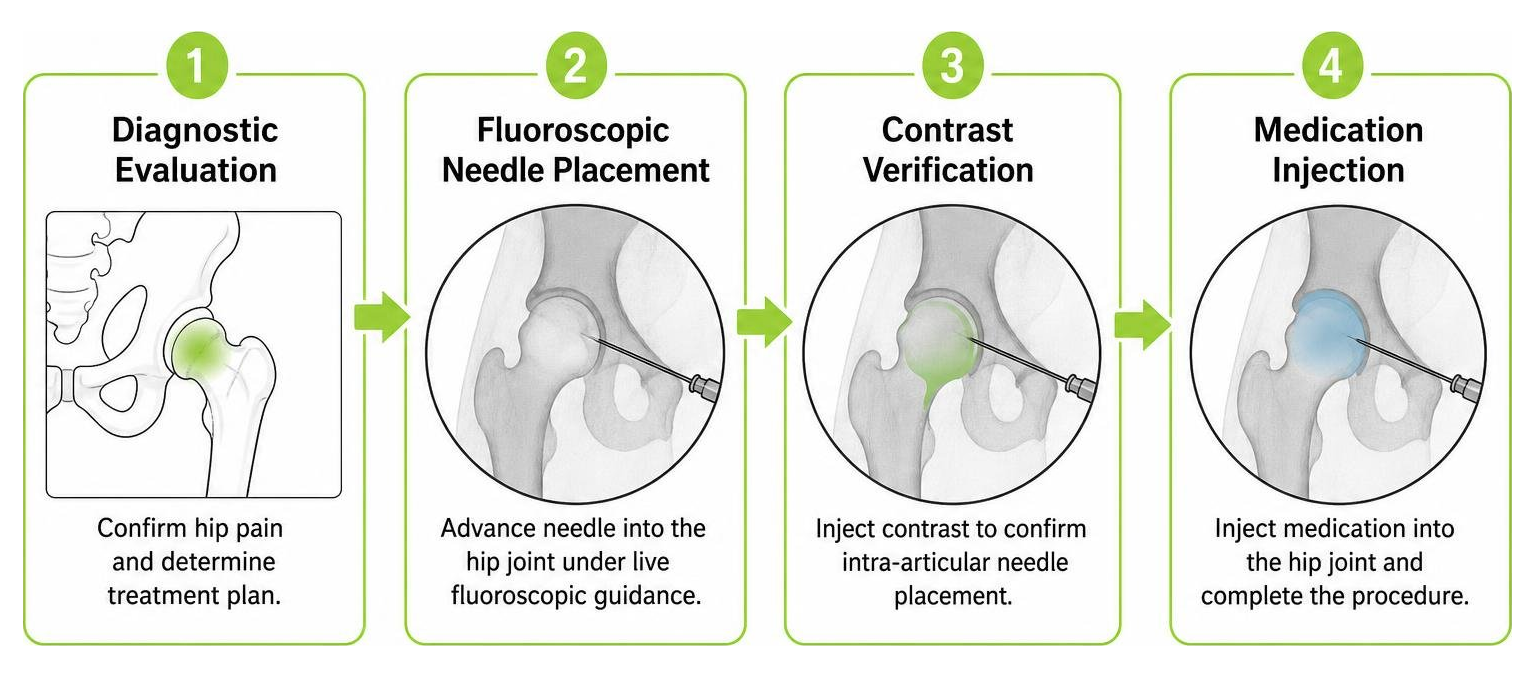
Intra-articular corticosteroid injections place powerful anti-inflammatory agents directly into the symptomatic hip capsule. According to clinical trial data, corticosteroid injections improve hip pain and physical function for up to 4 months. They are particularly beneficial for calming severe inflammatory flare-ups so patients can participate in physical therapy.
However, repeat corticosteroid injections must be carefully managed. Evidence indicates that approximately 6% of patients receiving intra-articular hip corticosteroid injections develop rapidly progressive osteoarthritis within 6 months. For an in-depth clinical look at injection protocols, consult the Hip Joint Injection – StatPearls – NCBI Bookshelf medical literature and our guide on The Point of Joint Injection Therapy for Chronic Pain.
Regarding viscosupplementation, systematic reviews like the Intra-articular hyaluronic acid injections for hip osteoarthritis: a level I systematic review | European Journal of Orthopaedic Surgery & Traumatology | Springer Nature Link explore how high-molecular-weight hyaluronic acid formulations compare against controls. However, current practice guidelines from the AAOS note that hyaluronic acid injections demonstrate no significant benefit over placebo for hip osteoarthritis and are generally not recommended.
Physical Therapy, Targeted Exercise, and Daily Movement Strategies
Physical therapy stands as one of the most effective long-term conservative treatments for hip osteoarthritis. When hip cartilage wears down, surrounding muscles—including the gluteus medius, iliopsoas, tensor fasciae latae, and quadriceps—often contract tightly to stabilize the joint, creating painful myofascial trigger points.
Structured physical therapy programs incorporate manual therapy techniques, including long-axis hip distraction, soft tissue mobilization, and joint capsule stretches to restore mobility. Clinical guidelines like Hip Pain and Mobility Deficits—Hip highlight that manual physical therapy significantly reduces pain scores while expanding functional walking distance.
Additionally, dry needling targeting hip stabilizer musculature can deliver short-term (up to 3 weeks) reductions in joint stiffness, muscle tightness, and pain for patients with moderate hip OA. For practical exercise walkthroughs, read our dedicated resource on Hip Pain Relief Exercises.
Safe Exercises vs. High-Impact Activities to Avoid
Staying physically active protects joint cartilage by circulating nutrient-rich synovial fluid throughout the hip socket. However, choosing the right movement patterns is key to preserving joint health:
Recommended Low-Impact Activities:
- Aquatic Therapy & Swimming: Buoyancy in water unloads up to 90% of body weight from the hip joint, enabling pain-free range-of-motion work.
- Stationary Cycling: Promotes smooth, repetitive hip flexion and extension without mechanical joint impact.
- Low-Impact Walking: Flat land walking with supportive footwear maintains lower extremity muscle tone and endurance.
High-Impact Activities to Avoid:
- Running & Jogging: Generates joint impact forces equivalent to 3 to 5 times body weight on the hip socket.
- High-Impact Aerobics & Plyometrics: Jumping, bounding, and step-up exercises aggravate cartilage damage.
- Singles Tennis & Racquet Sports: Sudden lateral shifts, sharp pivots, and rapid stops twist the hip joint capsule under heavy load.
Supervised Physical Therapy vs. Home Exercise Programs
A common question among patients is whether formal supervised physical therapy outperforms home exercise. Medical trials indicate that initial supervised sessions provide distinct benefits, particularly for gait retraining, correcting pelvic tilt imbalances (such as a Trendelenburg gait), and mastering proper technique.
Once patients master their individualized exercise routine, consistent home exercise programs yield comparable long-term functional gains. The key is dosage: clinical practice guidelines suggest performing therapeutic hip exercises 1 to 5 times per week over a 5 to 16 week period to build joint resilience. Learn more in The Complete Guide to Hip Pain Relief Methods.
Lifestyle Modifications and Mind-Body Non-Medication Approaches
Non-pharmacological lifestyle changes play a substantial role in reducing hip joint mechanical stress and soothing chronic pain signals.
Weight management represents one of the single most impactful levers for pain relief for arthritis of the hip. Because the hip acts as a lever arm during movement, every single pound of body weight lost translates into a 3 to 4 pound reduction in cumulative load across the hip joint during walking. To illustrate this impact, clinical data shows that a weight loss of just 11 pounds reduces the risk of developing lower extremity joint breakdown by 50%.
Smoking cessation is equally crucial. Ingestion of nicotine and toxins via traditional cigarettes or e-cigarettes impairs microvascular blood flow to subchondral bone, degrades collagen synthesis, and accelerates soft tissue breakdown around the joint capsule.
Natural pain relief approaches offer supportive daily comfort:
- Heat & Cold Therapy: Moist heat applications (limited to 20 minutes at a time) relax surrounding muscle spasms, while cold ice packs soothe post-activity joint flares.
- Acupuncture & Therapeutic Massage: Evidence supports acupuncture for modulating central pain pathways, while targeted deep tissue massage relieves muscular tension.
- Assistive Devices: Utilizing a cane held in the hand opposite the painful hip unloads joint forces by 30% to 50%, immediately stabilizing gait mechanics.
To review additional natural pain-relief strategies, explore The Complete Guide to Natural Relief for Sore Hips and our broad guide on The Ultimate Guide to Non-Surgical Pain Management.
Addressing Mental Health, Anxiety, and Chronic Pain Coping Skills
Living with chronic hip pain affects more than just physical movement—it impacts mental well-being. Studies show that roughly 19% of adults diagnosed with osteoarthritis experience significant anxiety and depression. Furthermore, among working-age adults (ages 18 to 64) living with arthritis, fully one-third report that pain limits their ability to work.
When joint pain persists for months, the central nervous system can become hyper-sensitized—a phenomenon known as central sensitization. Pain coping skills training, mindfulness relaxation techniques, and Cognitive Behavioral Therapy (CBT) help reframe pain perception, calm sensitized nerve signals, and reduce anxiety. Addressing psychological wellness is just as essential as managing physical joint wear. For additional strategies on managing chronic pain, read our Chronic Pain Relief Complete Guide.
Surgical Evaluation and Total Hip Replacement Recovery
While non-surgical treatments form the foundation of hip care, severe joint degeneration may eventually require a surgical consultation. Total Hip Arthroplasty (THA), or total hip replacement, remains one of the most successful surgical procedures in modern medicine, providing transformative pain relief for end-stage joint wear.
Patients should consider evaluating surgical options when they experience:
- Severe Non-Surgical Treatment Failure: Pain persists despite structured physical therapy, weight management, NSAID therapy, and image-guided injections.
- Intractable Night Pain & Rest Discomfort: Pain interrupts sleep and prevents rest, regardless of body positioning.
- Profound Functional Impairment: Radiographic images show advanced joint space collapse, severe subchondral sclerosis, or bone-on-bone friction that severely restricts walking, dressing, or working.
Total hip replacement involves removing damaged bone and cartilage from the femoral head and acetabular socket, replacing them with durable prosthetic components. Modern perioperative care emphasizes joint-sparing techniques, local nerve blocks, and perioperative medications like tranexamic acid to minimize blood loss.
Postoperative recovery begins almost immediately, with patients standing and walking with assistance on the day of surgery. Unsupervised home exercise programs often yield functional outcomes comparable to formal physical therapy following uncomplicated hip replacement.
However, if pain continues long after surgery, specialized medical evaluation is necessary to rule out prosthetic looseness, nerve irritation, or soft tissue impingement. Learn more about managing post-surgical issues in our guide on Persistent Pain After Hip Replacement Causes and Solutions.
Frequently Asked Questions About Hip Arthritis Pain
What is the most effective medication for relieving hip arthritis pain?
According to clinical practice guidelines from leading medical societies like the American Academy of Orthopaedic Surgeons (AAOS), oral nonsteroidal anti-inflammatory drugs (NSAIDs)—such as ibuprofen, naproxen, or prescription celecoxib—are the most consistently effective oral medications for reducing pain and improving function in hip osteoarthritis.
For patients who cannot take NSAIDs due to stomach ulcers, high blood pressure, or kidney conditions, acetaminophen or topical analgesics serve as safer alternatives. Always consult a physician to review contraindications before starting daily medication. You can review detailed evidence in the Hip Osteoarthritis: Guidelines From the American Academy of Orthopaedic Surgeons | AFP publication.
How do corticosteroid injections compare to physical therapy for hip pain?
Corticosteroid injections and physical therapy fulfill different, complementary roles in managing hip arthritis.
Image-guided corticosteroid injections deliver rapid, targeted anti-inflammatory relief within days, lasting up to 4 months. They excel at calming acute joint flares. However, injections do not rebuild muscle strength or correct walking mechanics.
Physical therapy provides long-term functional gains by strengthening gluteal muscles, expanding joint range of motion, and improving gait stability. Combining an injection to calm acute pain with structured physical therapy often yields the best overall clinical outcome.
When should someone consider total hip replacement surgery?
Total hip replacement surgery should be considered when conservative non-surgical treatments no longer provide adequate pain relief or functional mobility.
Key indicators include severe bone-on-bone cartilage loss visible on X-rays, persistent pain that disrupts sleep, and an inability to perform routine daily tasks like walking short distances, navigating stairs, or putting on shoes. A surgical evaluation allows an orthopedic surgeon to weigh structural joint degeneration against your individual health goals.
Conclusion
Finding reliable pain relief for arthritis of the hip requires a personalized, multifaceted approach. By combining physical therapy, low-impact exercise, weight management, non-opioid medications, and precision image-guided joint injections, most patients can reduce joint pain and regain active, fulfilling lives without rushing into major surgery.
At California Pain Consultants, our board-certified pain management specialists provide non-surgical treatment options tailored to your specific needs. Serving patients across San Diego, La Mesa, Chula Vista, Kearny Mesa, Rancho Bernardo, and Miramar, we focus on compassionate, comprehensive care designed to restore mobility and enhance your quality of life.
If hip stiffness or groin pain is holding you back, take the next step toward lasting comfort today. Explore comprehensive non-surgical strategies at California Pain Consultants and schedule your consultation with our experienced care team.