
Start Relieving Lower Back Pain With Simple, Safe Steps
Dealing with this in San Diego? Same-day appointments are often available at our 4 clinics.
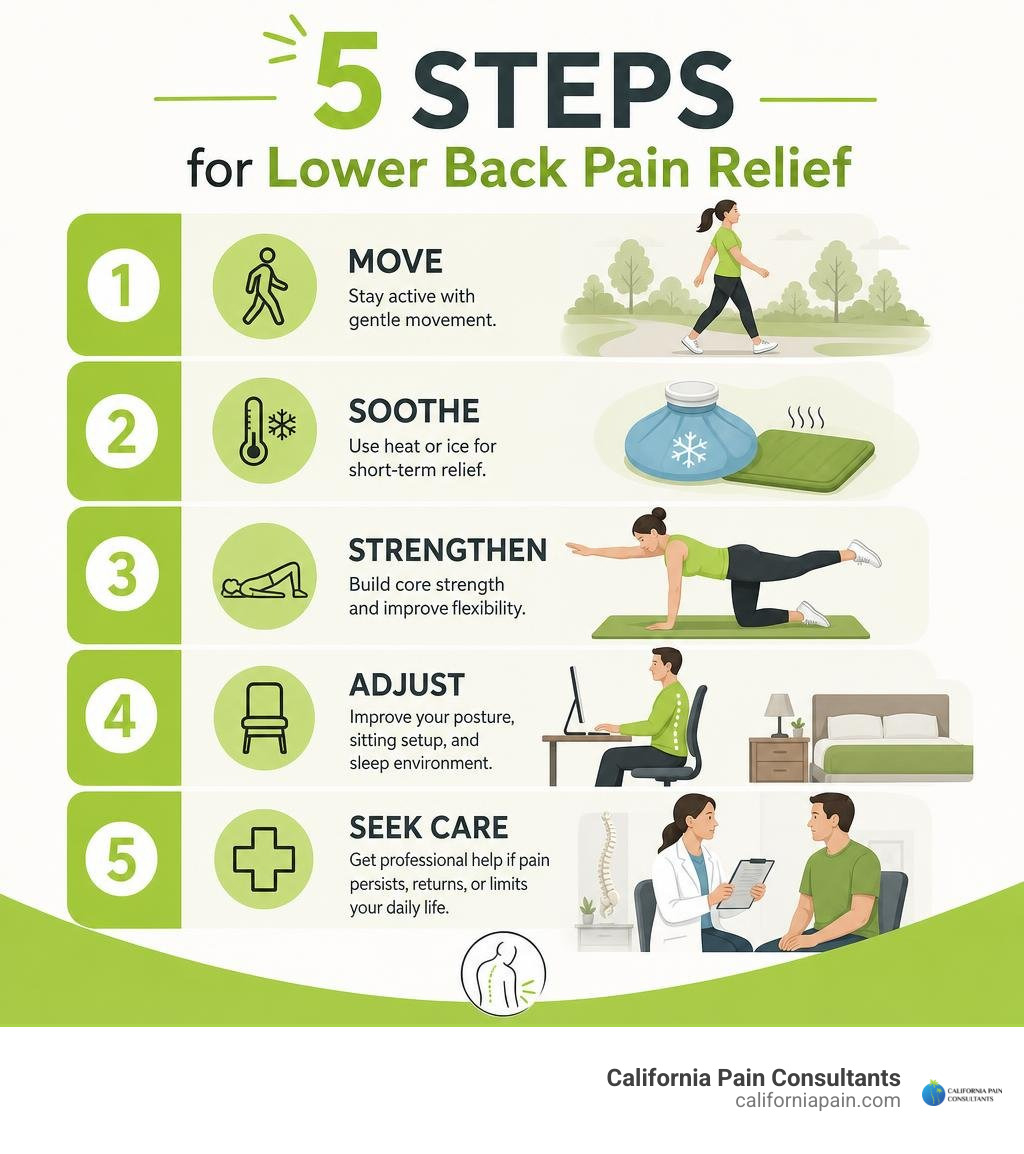
For lower back pain, how to treat it usually starts with gentle movement, not bed rest. Stay active within your comfort level, use heat or ice for short-term relief, begin simple stretches and core exercises, improve your sitting and sleep setup, and use over-the-counter medicine carefully if it is safe for you. If pain persists, keeps returning, or limits your life, a clinician can help identify the cause and build a plan that does not rely only on medication.
Most lower back pain is mechanical, meaning it is linked to muscles, joints, discs, posture, or everyday movement. It often improves with conservative care, but recurring or chronic pain may need a more complete approach that includes physical therapy, stress support, and targeted non-surgical treatment.
I am Dr. Zach Cohen, a double board-certified anesthesiologist and chronic pain physician who helps patients understand lower back pain how to treat with personalized strategies, including rehabilitation, medication planning, and interventional spine care when appropriate. These five steps can help you move from short-term relief toward more confident daily movement.
Lower back pain how to treat further reading:
Step 1: Optimize Activity, Heat, and Lower Back Pain How to Treat at Home
When sudden lumbar discomfort strikes, your immediate instinct might be to lie flat on the floor or retreat to bed. However, decades of clinical research confirm that immobility often delays healing. Up to 80% of adults experience lumbar discomfort at some point (Chiodo et al., 2020), and roughly 90% of cases are classified as mechanical or non-specific (Margetis et al., 2025). Learning how to relieve lower back spasms safely in 5 simple steps begins with balancing sensible movement with supportive home therapies.
Evidence-based protocols, such as the VA/DoD Clinical Practice Guideline for Managing Low back Pain Booklet, emphasize active recovery over prolonged rest. We want you to stay engaged in your daily routines within a pain-tolerable threshold to prevent muscular deconditioning and stiffness.
Safe Movement Strategies and Avoiding Bed Rest
Lying in bed for days allows the stabilizing muscles surrounding the spine to weaken rapidly. Understanding why does my lower back hurt usually reveals that spinal joints and soft tissues crave controlled movement to maintain circulation and tissue health (See et al., 2021).
- Take short, frequent walks: Walking on a flat, even surface for 10 to 15 minutes two to three times a day promotes blood circulation to irritated discs and muscles.
- Break up sitting: If you work at a desk, stand up every 30 to 45 minutes to alter the axial load on your lumbar vertebrae.
- Practice the “log-roll” technique: When getting out of bed, avoid twisting your torso. Roll onto your side as a single unit, use your arms to push your torso upright, and let your legs swing smoothly over the edge of the mattress.
Heat vs. Ice Guidelines for Acute Flare-Ups
Thermal therapies provide simple, drug-free symptomatic relief. If you are exploring how to get instant lower back relief even if youve failed before, using temperature modalities strategically makes a noticeable difference.
- Ice (Cryotherapy): Best applied during the first 24 to 48 hours following an acute muscle pull or strain. Cold numbs sharp pain and constricts local blood vessels to decrease acute tissue swelling. Apply an ice pack wrapped in a thin towel for 15 to 20 minutes at a time, up to three times daily.
- Heat (Thermotherapy): Ideal for persistent stiffness, ongoing tightness, and muscle spasms. Moist heat penetrates deep into spinal muscles, dilating blood vessels and relaxing tight tissue bands. Apply a warm compress or heating pad for 15 to 20 minutes before performing gentle mobility stretches.
Step 2: Perform Targeted Daily Stretches and Core Exercises
Targeted movement re-establishes normal range of motion and decompresses spinal segments. Incorporating structured exercises for low back pain relief into your daily schedule trains the musculoskeletal system to distribute loads evenly rather than focusing strain on your lumbar spine.
Following a comprehensive lower back stretches guide helps ensure movements are performed with correct biomechanics, minimizing the risk of re-injury.
Essential Gentle Stretches for Lumbar Flexibility
Flexibility exercises should never cause sharp pain. Move slowly into each stretch until you feel gentle tension, hold for 15 to 30 seconds, and breathe steadily.
- Knee-to-Chest Stretch: Lie flat on your back with knees bent and feet flat on the floor. Slowly pull one knee toward your chest using both hands, keeping the opposite foot planted. Hold for 20 seconds, lower gently, and repeat on the other side. This elongates the lumbar extensor muscles.
- Cat-Camel Stretch: Position yourself on all fours with hands directly under shoulders and knees beneath hips. Slowly arch your spine upward toward the ceiling, tucking your chin (the camel). Then, gently let your belly drop toward the floor while lifting your chest and gaze slightly upward (the cat). Repeat smoothly for 8 to 10 cycles.
- Pelvic Tilts: Lie on your back with knees bent. Tighten your abdominal muscles and gently flatten the small of your back against the floor. Hold for 5 to 10 seconds before relaxing. Older adults looking for gentle movements can also consult how to do safe lower back stretches for older adults to adapt these exercises safely, or review how to stretch lower back for detailed technique cues.
Core Strengthening for Long-Term Spinal Stability
Your core is an internal muscular corset consisting of the transverse abdominis, multifidus, obliques, and gluteal muscles. Establishing baseline core endurance protects spinal discs and facet joints during everyday lifting and bending. Dedicated exercises for lower back pain are essential for building lasting stability.

- Abdominal Bracing: Lie on your back with knees bent. Draw your belly button inward toward your spine as if bracing for a light tap to the stomach. Maintain normal breathing while holding this activation for 10 seconds.
- Glute Bridges: Lie on your back, bend your knees, and place feet hip-width apart. Engage your glutes and push through your heels to raise your hips until your thighs and torso form a straight line. Avoid arching your lower back. Hold for 3 to 5 seconds, then slowly lower. Perform 2 sets of 10 repetitions.
- Bird-Dog: Start on all fours with a neutral spine. Simultaneously extend your right arm forward and your left leg backward until both are parallel to the floor. Keep your hips level. Hold for 3 seconds, return to the starting position, and alternate sides for 8 to 10 repetitions per side.
Step 3: Choose the Right Medications and Ergonomic Adjustments
Balancing pharmacological relief with physical workspace optimization ensures you do not inadvertently aggravate irritated spinal tissues while seated or asleep. Leading clinical protocols, including the Low back pain and sciatica in over 16s: assessment and management – NCBI Bookshelf guidelines, recommend combining conservative self-care with short-term, targeted medication strategies (NBK562933).
| Medication Class | Common Examples | Primary Mechanism | Best Used For | Key Safety Notes |
|---|---|---|---|---|
| Oral NSAIDs | Ibuprofen, Naproxen | Inhibits inflammatory prostaglandins | Acute inflammatory pain, disc irritation | Use shortest duration; monitor GI and kidney health |
| Analgesics | Acetaminophen | Modulates central pain signaling pathways | Mild-to-moderate baseline aching | Avoid exceeding daily hepatic dosing limits |
| Topical Agents | Lidocaine, Menthol, Capsaicin | Blocks local nerve signaling / creates counter-stimulus | Localized muscle soreness, surface spasms | Safe systemic profile; avoid broken skin |
Over-the-Counter Medications for Pain Management
When mechanical irritation causes acute flare-ups, over-the-counter options can help manage symptoms so you can stay active and complete physical rehabilitation.
- NSAIDs (Non-Steroidal Anti-Inflammatory Drugs): Medications such as ibuprofen or naproxen sodium help decrease the local biochemical inflammation surrounding strained ligaments and irritated nerves.
- Acetaminophen: Provides pain relief for individuals who cannot tolerate NSAIDs due to gastrointestinal, cardiovascular, or renal considerations.
- Topical Pain Relievers: Patches and creams containing lidocaine, menthol, or camphor deliver targeted relief directly over the lumbar paraspinal muscles without entering the systemic bloodstream in high concentrations.
For persistent pain that fails to respond to standard retail options, reviewing professional back pain medication protocols can clarify when short-term prescription muscle relaxants or other targeted therapies are appropriate.
Workstation Ergonomics and Supportive Sleep Positioning
Sitting improperly for extended hours increases intradiscal pressure significantly compared to standing. Learning how to reduce back pain in 7 easy steps involves refining everyday biomechanical habits.
- Optimize Your Desk Setup: Adjust your office chair so your feet rest flat on the floor with knees bent at approximately a 90-degree angle. Place a lumbar support pillow or small rolled towel behind the small of your back to maintain your natural inward lordotic curve. Position your computer monitor directly at eye level to prevent forward head carriage.
- Supportive Sleep Positioning:
- Side Sleepers: Bend your knees slightly and place a firm pillow between your legs. This keeps your hips, pelvis, and lumbar spine in neutral alignment.
- Back Sleepers: Place a pillow beneath your knees and a small rolled towel under the curve of your lower back to relieve tension across the lumbar spine.
- Stomach Sleeping: Avoid sleeping on your stomach, as this forces the neck to rotate fully and flattens the natural curve of the spine, increasing facet joint pressure.
Step 4: Address Mental Health, Stress, and Lifestyle Triggers
The spine does not operate in isolation from the central nervous system. Prolonged psychological distress amplifies how the brain processes nociceptive signals, a physiological reality documented across modern pain research (Chiodo et al., 2020). Adopting practical habits outlined in how to relieve lower back pain in 7 simple steps requires looking beyond physical muscles to address systemic lifestyle influences.
Managing Stress and Chronic Pain Pathways
People experiencing high chronic stress or mood challenges are nearly three times more likely to develop persistent back pain (Chiodo et al., 2020). Elevated cortisol levels and heightened sympathetic nervous system activity lead to involuntary muscle clenching and central sensitization.
Reviewing lower back ache relief a practical guide can help you identify lifestyle stressors and introduce actionable nervous system calming practices:
- Diaphragmatic Breathing: Engaging in slow, belly-focused breathing for 5 to 10 minutes daily activates the parasympathetic nervous system, lowering systemic muscle tension.
- Cognitive Behavioral Strategies: Reframing catastrophic thoughts regarding pain (“My back is broken forever”) into recovery-oriented thoughts (“My spine is resilient and healing through movement”) measurably reduces pain-related disability.
- Mindfulness and Progressive Muscle Relaxation: Systematically tensing and releasing muscle groups from your shoulders down to your feet helps reset resting muscle tone.
Weight Management, Hydration, and Smoking Cessation
Spinal structures depend on consistent circulation and manageable mechanical loads to stay healthy. Discovering the root causes of flare-ups through back pain 101 and how to spot the culprits highlights several critical lifestyle factors:
- Vascular Health and Smoking: Individuals who smoke may be up to four times more likely to experience degenerative disc disease. Nicotine constricts microvascular blood vessels, depriving intervertebral discs of oxygen and vital nutrients necessary for self-repair.
- Hydration: Intervertebral discs are largely composed of water. Proper daily hydration supports disc height, elasticity, and shock-absorbing capacity.
- Weight Management: Excess body weight, particularly around the abdomen, shifts your center of gravity forward. This creates an anterior pelvic tilt that places continuous strain on the lumbar facet joints and lumbosacral junction.
Step 5: Know When to Consult a Specialist for Advanced Care
While most acute mechanical back pain episodes improve over two to six weeks (See et al., 2021), persistent or deteriorating symptoms warrant a specialist evaluation. Knowing understanding low back pain what you need to know helps you recognize when symptoms require formal clinical assessment as outlined in the Low Back Pain: Evaluation and Management – StatPearls – NCBI Bookshelf guidance (Margetis et al., 2025).
Physical Therapy, Spinal Manipulation, and Massage
If back pain persists beyond two to three weeks without improvement, structured physical modalities can help re-establish balanced mechanics. Expert summaries from the Back pain – Diagnosis and treatment – Mayo Clinic review show that combining targeted physical rehabilitation with manual therapies offers superior long-term functional recovery compared to passive rest alone.
- Physical Therapy (PT): A physical therapist assesses postural imbalances, pelvic obliquities, and movement faults, tailoring an individualized program using approaches like the McKenzie Method.
- Spinal Manipulation: Delivered by licensed chiropractors or osteopathic physicians, manual joint mobilization can provide short-term functional improvements for mechanical back pain.
- Therapeutic Massage: Target soft tissue trigger points and myofascial restrictions to reduce muscle spasm intensity and improve tissue pliability.
Advanced Interventions for Persistent Flare-Ups
When chronic pain persists for longer than 12 weeks, simple self-care may not fully resolve the underlying structural generator. Up to 23% of adults worldwide live with chronic lower back pain, making advanced non-surgical modalities a crucial step in preventing long-term disability.
Exploring the lower back pain solutions ultimate guide outlines how specialized interventions target stubborn anatomical issues:
- Epidural Steroid Injections (ESIs): Ideal for lumbar radiculopathy (sciatica) caused by a herniated disc compressing a spinal nerve root. Anti-inflammatory medication is placed directly into the epidural space under fluoroscopic (X-ray) guidance.
- Facet Joint Injections and Medial Branch Blocks: Diagnostic and therapeutic injections targeting arthritic facet joints along the back of the spine.
- Radiofrequency Ablation (RFA): A minimally invasive procedure that uses gentle thermal energy to stun the sensory nerves supplying painful facet joints, offering 6 to 12 months or more of targeted relief.
- Neuromodulation (Spinal Cord Stimulation): Advanced therapy for persistent neuropathic leg and back discomfort that modifies pain signals before they reach the brain.
Frequently Asked Questions About Lower Back Pain Relief
How long does it usually take for lower back pain to improve?
Most non-specific, acute lower back pain resolves within two to six weeks with conservative measures like light walking, gentle stretching, and short-term thermal therapies (See et al., 2021). If symptoms show no measurable progress after four weeks, or if you experience radiating leg discomfort, schedule a medical evaluation to assess underlying spinal structures.
What is the best sleeping position for lower back pain?
The optimal sleeping position keeps your spine in a neutral posture. Side sleeping with knees bent and a firm pillow placed between your legs prevents pelvic rotation and keeps the lumbar spine aligned. Alternatively, sleeping flat on your back with a supportive pillow placed under your knees reduces tensile strain across the lower back and hip flexors.
When is lower back pain considered a medical emergency?
Seek emergency medical care if lower back pain is accompanied by saddle anesthesia (loss of sensation around the groin and buttocks), sudden bowel or bladder incontinence, progressive leg weakness such as foot drop, or severe back pain accompanied by high fevers and unexplained weight loss. These symptoms may signal Cauda Equina Syndrome or acute spinal infection, both of which require urgent clinical decompression (Margetis et al., 2025).
Conclusion
Overcoming lower back pain rarely requires invasive surgery or long periods of bed rest. By prioritizing safe movement, implementing targeted core strengthening and flexibility routines, adjusting your daily ergonomics, and proactively addressing stress and lifestyle triggers, you can regain control of your spinal health and enjoy confident, comfortable mobility.
When back pain proves stubborn, our double board-certified physicians at California Pain Consultants provide comprehensive, non-surgical pain management tailored to your personal goals. We proudly serve our Southern California communities across San Diego, Kearny Mesa, Chula Vista, Rancho Bernardo, La Mesa, and Miramar. For a complete breakdown of conditions and advanced therapies, explore our comprehensive ultimate lower back pain guide or contact our team today to schedule an evaluation.
References
Anthony E. Chiodo, Suvarna N. Bhat, R. Van Harrison, Gregory D. Shumer, Ronald A. Wasserman, Paul Park, Rakesh D. Patel, R. Van Harrison, April L. Proudlock, Karl T. Rew. Low Back Pain.” Michigan Medicine University of Michigan, 2020. NBK572334. Konstantinos Margetis, Charanjeet Singh, Vincent E. Casiano, Matthew A. Varacallo. “Low Back Pain: Evaluation and Management.” StatPearls Publishing, 2025. NBK538173. See QY, Tan JB, Kumar DS. “Acute low back pain: diagnosis and management..” Singapore medical journal, 2021. PMCID PMC8801838. “Low back pain and sciatica in over 16s: assessment and management.” National Institute for Health and Care Excellence (NICE), 2020. NBK562933.