
How a Medical Back Brace Can Support Serious Pain Relief
Dealing with this in San Diego? Same-day appointments are often available at our 4 clinics.
A medical back brace is a supportive device that can reduce painful movement, improve spinal stability, and make daily tasks easier while an injury or irritated area heals. The right brace depends on where your pain starts and why it is happening:
- Choose a soft lumbar support for short-term muscle strain, mild low back pain, or activity-related discomfort.
- Consider a more structured lumbar-sacral brace for conditions involving the lower lumbar spine, sacroiliac joint, or post-surgical recovery, under clinical guidance.
- Use posture braces carefully. They can provide reminders to sit or stand taller, but they do not fix the cause of pain on their own.
- Pair bracing with movement, physical therapy, and a care plan. A brace should support recovery, not replace core strength or medical evaluation.
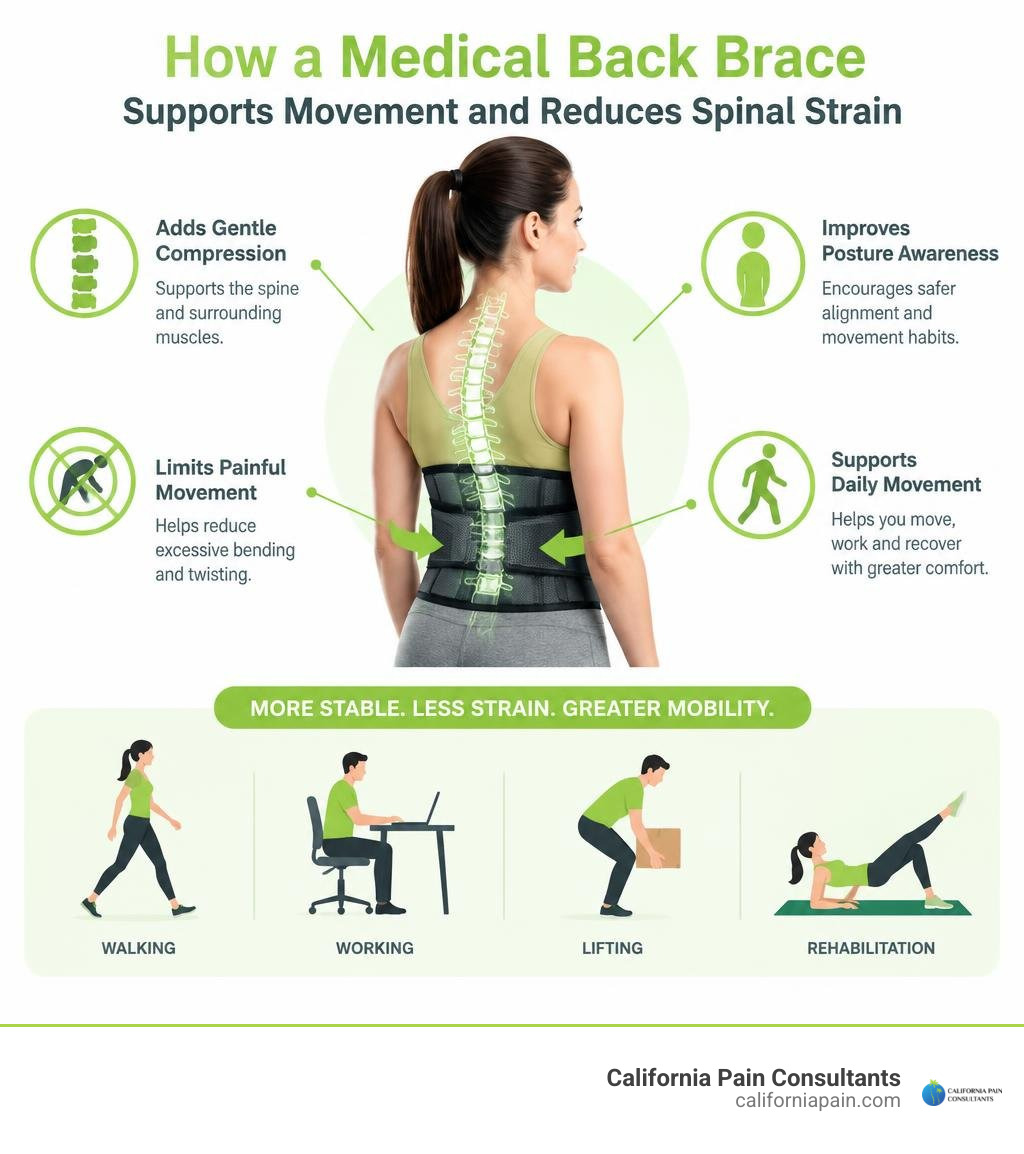
Low back pain is extremely common: about 80% of adults experience it at some point. For many people, a well-fitted brace offers a practical, non-surgical way to stay more comfortable during walking, working, lifting, or rehabilitation. It works by adding gentle compression, limiting painful bending or twisting, and improving awareness of your posture and movement.
I am Dr. Zach Cohen, a double board-certified anesthesiologist and chronic pain physician who treats lower back, joint, and nerve pain with personalized non-surgical and interventional care. In this guide, I will explain how a medical back brace may fit into a broader plan to restore safer movement and reduce reliance on pain medication.
Medical back brace helpful reading:
Understanding How a Medical Back Brace Relieves Spinal Pain
To understand how a medical spinal support relieves persistent discomfort, we must look at the biomechanics of the human spine. The lumbar region bears the majority of your upper body weight. When an intervertebral disc degenerates, tears, or herniates, the surrounding neural pathways become compressed and inflamed.
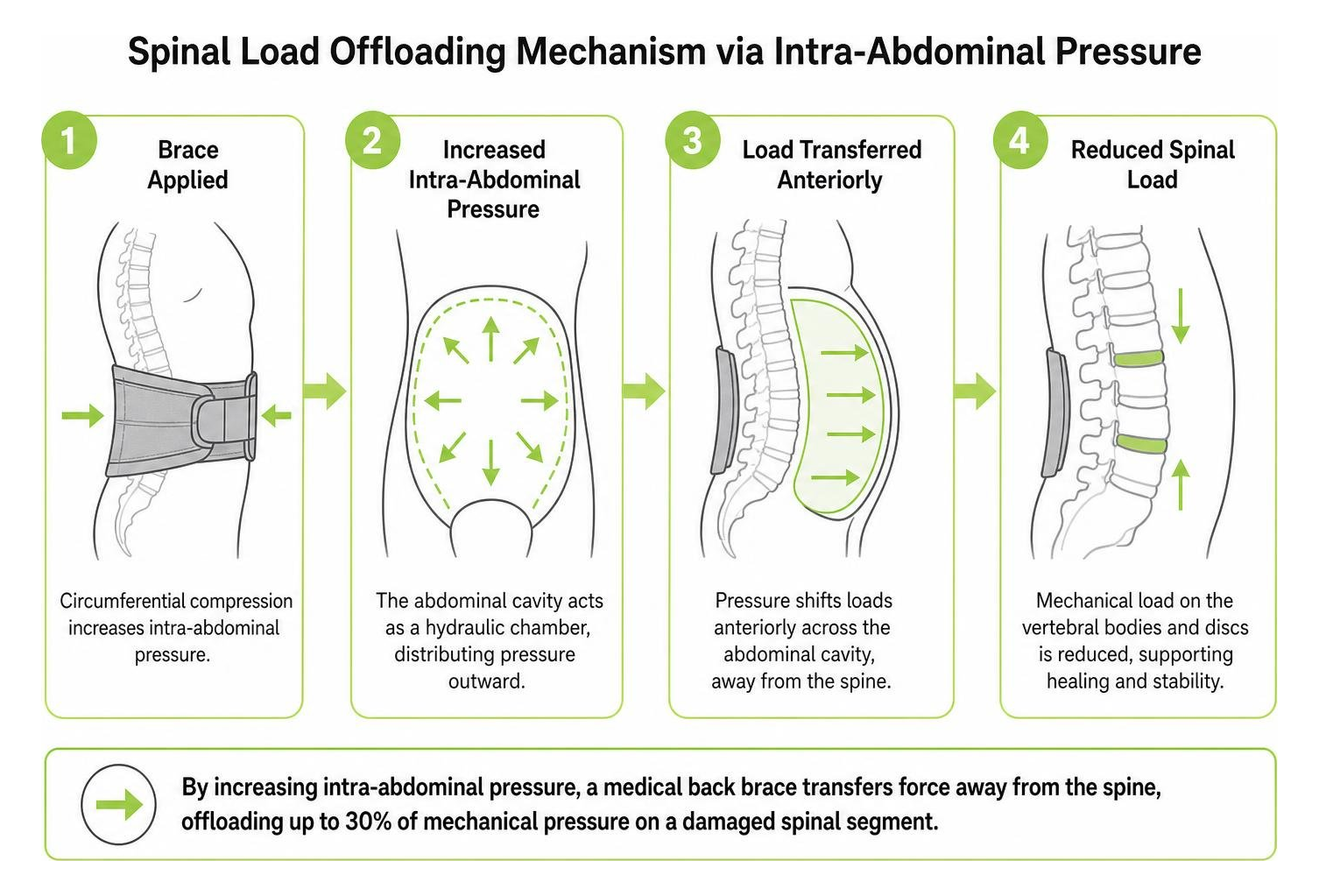
By applying circumferential compression around the torso, a spinal orthosis increases intra-abdominal pressure. This hydraulic chamber effect shifts mechanical loads away from the vertebral bodies and intervertebral discs, transferring that force anteriorly across the abdominal cavity. Research shows that a properly fitted brace can offload up to 30% of the mechanical pressure exerted on a damaged spinal segment.
This offloading is particularly critical at the L5-S1 junction (the lumbosacral joint), which carries the highest shear forces in the entire spinal column. By restricting excessive micro-motion, rotation, and forward flexion, medical braces create a stable biomechanical environment that allows inflamed tissues to recover. As an added benefit, external supports offer proprioceptive feedback—a physical reminder that alerts your nervous system whenever you begin bending or twisting into a harmful posture. For a broader look at how these devices fit into conservative care, the American Academy of Orthopaedic Surgeons provides an overview of spinal bracing.
Rigid vs. Flexible Medical Back Brace Mechanisms
Medical braces fall along a structural spectrum depending on the level of motion restriction and structural support required.
| Feature / Type | Soft / Elastic Braces | Semi-Rigid Braces | Rigid Orthotics |
|---|---|---|---|
| Primary Materials | Breathable elastic knit, medical-grade neoprene | Elastic fabrics with moldable stays or modular plastic inserts | Thermoplastic polymers, carbon composite, rigid anterior/posterior shells |
| Motion Restriction | Minimal (provides compression and warmth) | Moderate (limits flexion, extension, and lateral bending) | Maximum (immobilizes sagittal, coronal, and transverse planes) |
| Primary Clinical Indication | Mild muscular sprains/strains, fatigue prevention | Moderate disc herniations, sciatica, post-op recovery | Spinal fractures, severe instability, major spinal fusion |
| Intended Wear Time | Episodic (during high-strain physical tasks) | 2–6 hours daily during acute rehabilitation | Prescribed full-time wear (often 8–24 hours/day post-surgery) |
Soft braces rely on compression to boost local blood flow, elevate tissue temperature, and promote proprioceptive awareness. In contrast, rigid braces use anterior and posterior thermoplastic panels to lock the torso into place, preventing harmful movement during recovery from bone fractures or complex spinal fusions.
Indications: When to Use a Medical Back Brace
Our clinical team evaluates spinal mechanics to determine whether an orthotic device fits your conservative treatment plan. Common indications include:
- Lumbar Disc Herniation & Degenerative Disc Disease (DDD): When inner disc material presses against the spinal canal, limiting lumbar flexion significantly reduces nerve impingement.
- Sciatica and Radiculopathy: Offloading compression at the lower lumbar vertebrae (L4-L5, L5-S1) calms radiating leg pain caused by sciatic nerve root compression.
- Lumbar Spinal Stenosis: Semi-rigid bracing held in slight flexion opens the neuroforaminal canals, providing relief from walking-induced leg heaviness and pain.
- Spondylolysis and Spondylolisthesis: Controlling sagittal plane extension prevents forward slippage of unstable vertebrae.
- Sacroiliac (SI) Joint Dysfunction: Targeted pelvic compression belts stabilize the sacroiliac joint, reducing joint shear during walking.
- Acute Muscle Sprains and Ligament Strains: Brief support periods reduce painful muscle spasms and guard tender paraspinal muscles.
- Post-Operative Recovery: Protects surgical fusion sites and delicate hardware while bones heal.
Types of Orthotic Back Supports and Key Clinical Features
Orthotic spinal devices are classified according to the anatomical regions they stabilize:
- Lumbar Orthosis (LO): Encircles the lower spine between the L1 and L5 vertebrae. These low-profile designs are ideal for isolated muscular sprains and mild disc issues.
- Lumbar-Sacral Orthosis (LSO): Extends from the mid-lumbar spine down over the sacrum and pelvis. LSO units control motion at the critical L5-S1 junction.
- Thoracolumbosacral Orthosis (TLSO): Covers the mid-to-upper back (thoracic) down to the sacrum. These larger rigid braces are typically reserved for thoracic compression fractures, severe scoliosis, or multi-level fusions.
Many contemporary LSO systems feature mechanical advantage pulley systems. These allow patients—even those with limited hand strength or arthritis—to pull dynamic drawstrings and create powerful, uniform intracavitary compression with minimal effort. Modular designs allow clinicians to remove rigid panels as the patient’s healing progresses, gradually converting a rigid frame into a flexible support belt.
For individuals struggling with forward head posture and hunched upper shoulders, gentle posture braces can serve as dynamic training aids. If you are evaluating these upper-body supports, learning whether a posture corrector aligns with your rehabilitation goals is an important first step.
Occupational and Heavy Lifting Support
Workplace lifting injuries remain a leading contributor to lost workdays across California and nationwide. When workers repetitively hoist heavy items, fatigue in the core musculature causes the lumbar spine to lose its neutral lordotic curve. This shifts severe shearing forces directly onto the intervertebral discs.
Utilizing a reliable work brace acts as an external stabilizing wall. During strenuous shifts, a lifting support helps maintain neutral alignment, preventing hyper-flexion injuries during deep bends. Understanding how an occupational brace redistributes lifting mechanics helps physical laborers safeguard their spinal health over long careers.
Custom-Fitted Orthotics vs. Over-the-Counter Braces
Patients often ask whether a basic over-the-counter (OTC) brace matches a custom-molded medical device.
OTC braces provide generalized elastic compression and fit broad body profiles. They work well for minor sprains or episodic lifting support. However, for complex pathologies like adolescent idiopathic scoliosis, severe spondylolisthesis, or post-surgical immobilization, prefabricated supports fall short.
Advanced clinical orthotics leverage 3D digital body scanning and CAD/CAM modeling to create custom-molded braces tailored to the patient’s exact anatomy. These custom medical devices carry specific Healthcare Common Procedure Coding System (HCPCS) L-codes (such as L0637 or L0650) and undergo rigorous PDAC verification. This ensures clinical-grade biomechanical control that simple retail options cannot match.
Proper Sizing, Daily Wear Guidelines, and Safety Protocols
An improperly fitted brace provides little therapeutic value and can cause pressure sores or skin chafing. Sizing errors are remarkably common because many patients base their selection on standard trouser waistbands rather than anatomical measurements.
Sizing and Fitting Protocol
- Measure at the Navel: Stand upright and wrap a flexible measuring tape around your abdomen at the level of your belly button, not your beltline.
- Apply the Positioning Wrap: Position the posterior panel symmetrically over your spine. Wrap the primary elastic wings around your abdomen so they sit comfortably snug. Avoid over-tightening the base layer.
- Engage the Compression Straps: Grasp the secondary dual-pull straps, pull them forward simultaneously away from the body, and fasten them firmly to the front panels.
- Check the Seated Fit: Sit down in a sturdy chair. The front margin of the brace should not push uncomfortably into your thighs, nor should the top edge press sharply against your rib cage.
Women often experience fit challenges with generic tubular braces due to the natural curvature of the hips and waist. Exploring ergonomic considerations through our guide on female lumbar support helps ensure targeted relief without uncomfortable pinching.
Daily Wearing Duration and Weaning Strategies
Spinal braces should be used as dynamic rehabilitation tools, not permanent structural crutches. Wearing a brace continuously for weeks without targeted core therapy can cause muscle deconditioning and disuse atrophy.
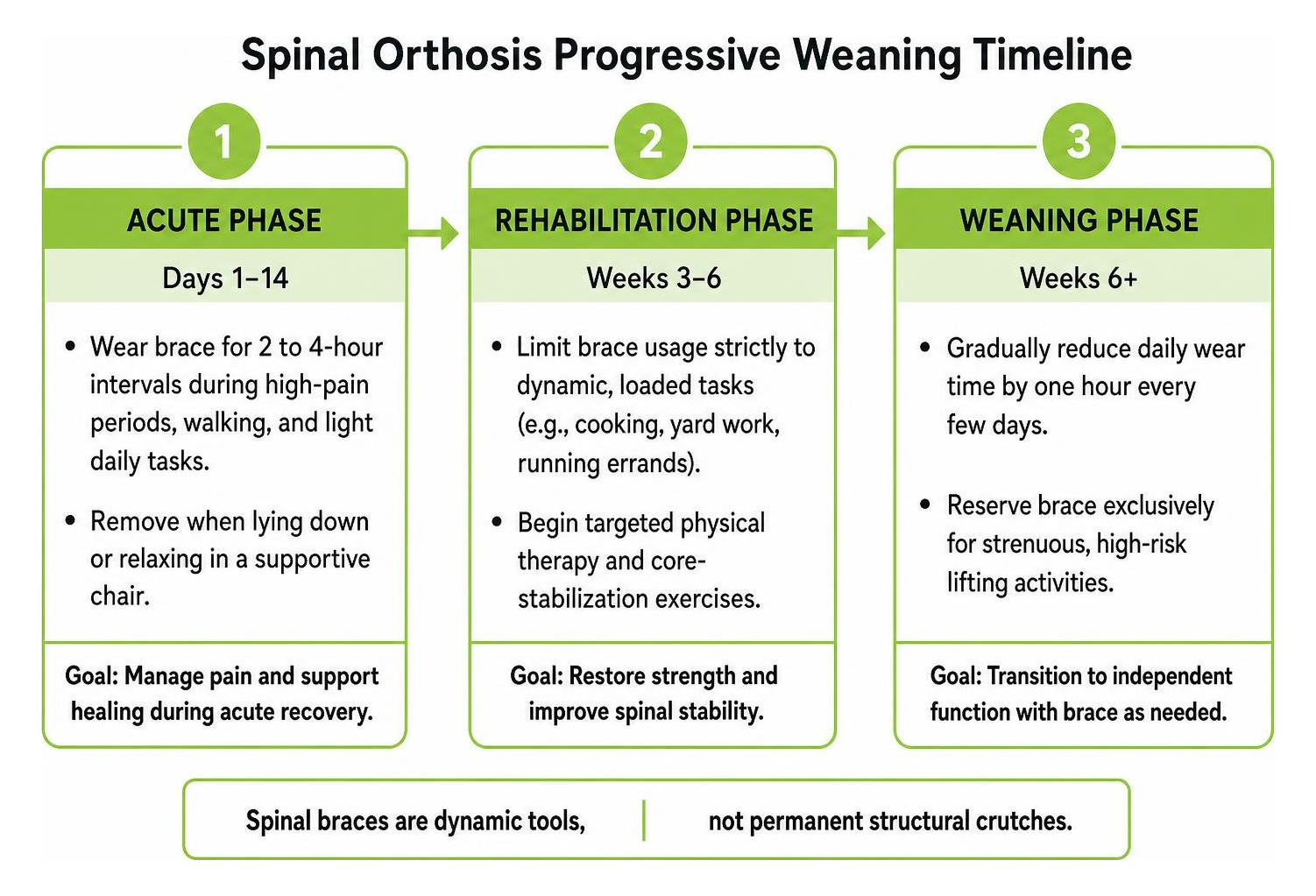
- Acute Phase (Days 1–14): Wear the brace for 2 to 4-hour intervals during high-pain periods, walking, and light daily tasks. Remove it when lying down or relaxing in a supportive chair.
- Rehabilitation Phase (Weeks 3–6): Limit brace usage strictly to dynamic, loaded tasks (e.g., cooking, yard work, running errands). Begin targeted physical therapy and core-stabilization exercises.
- Weaning Phase (Weeks 6+): Gradually reduce daily wear time by one hour every few days. Reserve the brace exclusively for strenuous, high-risk lifting activities.
For a comprehensive approach to balanced stabilization across the entire shoulder and spinal girdle, review our support checklist.
Preventing Complications and Brace Care
To keep your brace functioning properly and protect your skin:
- Wear an Undershirt: Always wear a seamless, breathable cotton undershirt beneath your brace to prevent friction, sweat accumulation, and skin irritation.
- Maintain Skin Hygiene: Inspect your skin daily for localized redness or pressure spots, especially over the iliac crests and spinous processes.
- Cleaning Protocol: Hand wash the fabric and removable liners in cold water using mild soap. Never machine wash, bleach, iron, or tumble dry, as heat destroys elastic fibers and warps plastic stays.
- Fastener Care: Keep Velcro hooks clear of lint and debris to ensure strong strap closure and consistent compression.
Insurance Coverage, FSA/HSA Eligibility, and Clinical Evaluation
Most commercial medical back braces, rigid LSOs, and ergonomic supports qualify for purchase using Flexible Spending Account (FSA) and Health Savings Account (HSA) funds without requiring special prior authorization.
However, obtaining coverage through Medicare Part B or private commercial health insurance requires meeting specific Durable Medical Equipment (DME) coverage criteria:
- In-Person Clinical Evaluation: A licensed physician must perform a thorough physical and neurological examination.
- Formal Prescription & LMN: Your doctor must supply a detailed Letter of Medical Necessity (LMN) specifying your diagnosis (such as lumbar disc herniation, severe spinal stenosis, or post-surgical recovery) along with the matching HCPCS L-code.
- Comprehensive Care Integration: The brace must form part of an active, multifaceted conservative treatment plan.
Frequently Asked Questions About Spinal Bracing
How many hours a day should I wear a medical spinal support?
For acute sprains or flare-ups of chronic pain, we generally recommend wearing the brace for 2 to 4 hours at a time during active, weight-bearing tasks. It should rarely be worn 24 hours a day unless your orthopedic surgeon gives strict post-operative orders. Always remove the brace when sleeping to allow your core muscles to rest naturally.
Can wearing a back brace weaken my core muscles?
Yes, prolonged and continuous brace use without exercise can lead to disuse muscle atrophy. When an external device does all the work of stabilizing your trunk, your deep abdominal and multifidus muscles naturally weaken. To prevent this, back braces should always be paired with active physical therapy and core-strengthening routines.
Does insurance or Medicare cover the cost of a prescribed back brace?
Medicare Part B and most private insurance plans cover rigid and semi-rigid back braces when prescribed by a physician for qualifying diagnoses, such as spinal fractures, disc herniations, or post-operative recovery. The brace must be classified as an eligible DME device and prescribed under appropriate HCPCS L-codes.
Conclusion
A medical back brace is a proven, non-surgical tool that can reduce acute spinal pressure, stabilize injured discs, and help you stay mobile throughout your recovery. However, true long-term relief requires a complete approach that addresses the root cause of your pain.
At California Pain Consultants, our double board-certified physicians specialize in comprehensive, non-surgical pain management. Serving communities throughout San Diego, Kearny Mesa, Chula Vista, Rancho Bernardo, La Mesa, and Miramar, we craft personalized treatment plans that combine physical therapy, image-guided interventional procedures, and proper orthotic support.
If lower back pain is disrupting your daily life, visit us for expert back brace guidance and evaluations to take the first step toward lasting, non-surgical relief.