
Choosing a Back Brace for a Herniated Disc
Dealing with this in San Diego? Same-day appointments are often available at our 4 clinics.
A back brace for herniated disc pain can help during sitting, standing, walking, and light work by supporting the lower spine and limiting movements that trigger symptoms. For most people, the best starting point is a low-profile, adjustable semi-rigid lumbar brace with breathable fabric and supportive stays; a rigid lumbar sacral orthosis may be more appropriate for severe pain, instability, or recovery under a clinician’s direction.
A brace does not push a herniated disc back into place or replace treatment. It can reduce strain, improve comfort, and make it easier to stay gently active while you work on the real drivers of recovery: activity changes, physical therapy, and medical care when needed.
This guide compares the support levels, fit features, and daily-use considerations that matter most, so you can choose a brace that supports your life without becoming something you depend on all day.
I am Dr. Zach Cohen, a double board-certified physician in Anesthesiology and Chronic Pain who treats spine and nerve pain with non-surgical, personalized care. When advising on a Back brace for herniated disc, I view bracing as one useful tool within a broader plan to restore movement, manage pain, and protect long-term function.
Back brace for herniated disc glossary:
How a Back Brace for Herniated Disc Alleviates Pain and Promotes Healing
An intervertebral disc acts as a shock-absorbing cushion between the bony vertebrae of your spine. When the tough outer ring (annulus fibrosus) tears or weakens, the soft, jelly-like center (nucleus pulposus) can push outward. This herniation frequently compresses adjacent spinal nerve roots, producing intense local aching, muscle spasms, and radiating nerve pain down the leg, commonly known as sciatica.
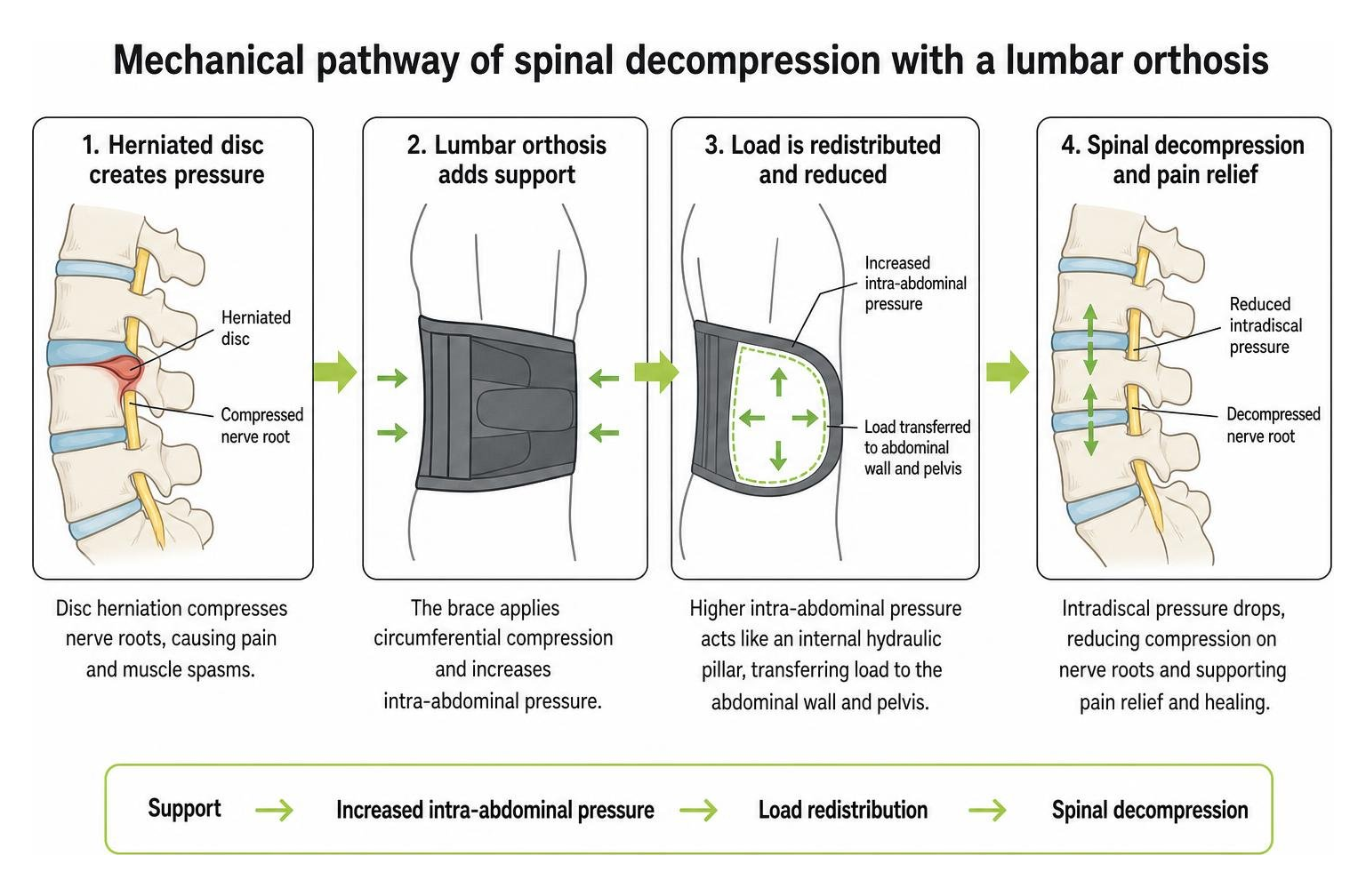
While conservative care remains the cornerstone of recovery, a supportive orthosis plays a pivotal role in comprehensive herniated disc pain management. By creating circumferential compression around the torso, an external support redistributes mechanical weight, unloads sensitive spinal joints, and stabilizes the lumbar curvature. Understanding the decompression mechanisms of lumbar orthoses helps clarify how these devices shift physical stress away from vulnerable discs, providing an optimal environment for tissue recovery.
Biomechanics of Spinal Load Reduction
The human lumbar spine constantly bears the weight of the upper body, multiplied by gravitational forces during forward bending or lifting. A properly fitted brace increases intra-abdominal pressure (IAP). By generating a fluid-gas cylinder effect within the abdominal cavity, the brace acts like an internal hydraulic pillar.
This mechanism offloads significant vertical forces from the lumbar vertebrae (particularly L4-L5 and L5-S1, where herniations occur most frequently). By transferring axial load to the abdominal wall and pelvic girdle, intradiscal pressure drops dramatically, relieving continuous compression on the injured disc margin.
Restricting Micro-Motions to Protect Nerve Roots
Everyday movements involve subtle twisting, shearing, and micro-motions across individual spinal motion segments. When a spinal disc is ruptured, even minor rotations can irritate an already inflamed nerve root.
A supportive lumbar orthosis stabilizes the facet joints and reinforces the sagittal alignment of the spine. By restricting extreme flexion (bending forward) and lateral twisting, the brace shields nerve fibers from dynamic friction, helping to dampen radiating neurological symptoms and break the vicious cycle of muscle spasms.
Types of Lumbar Braces for Disc Herniation and Degeneration
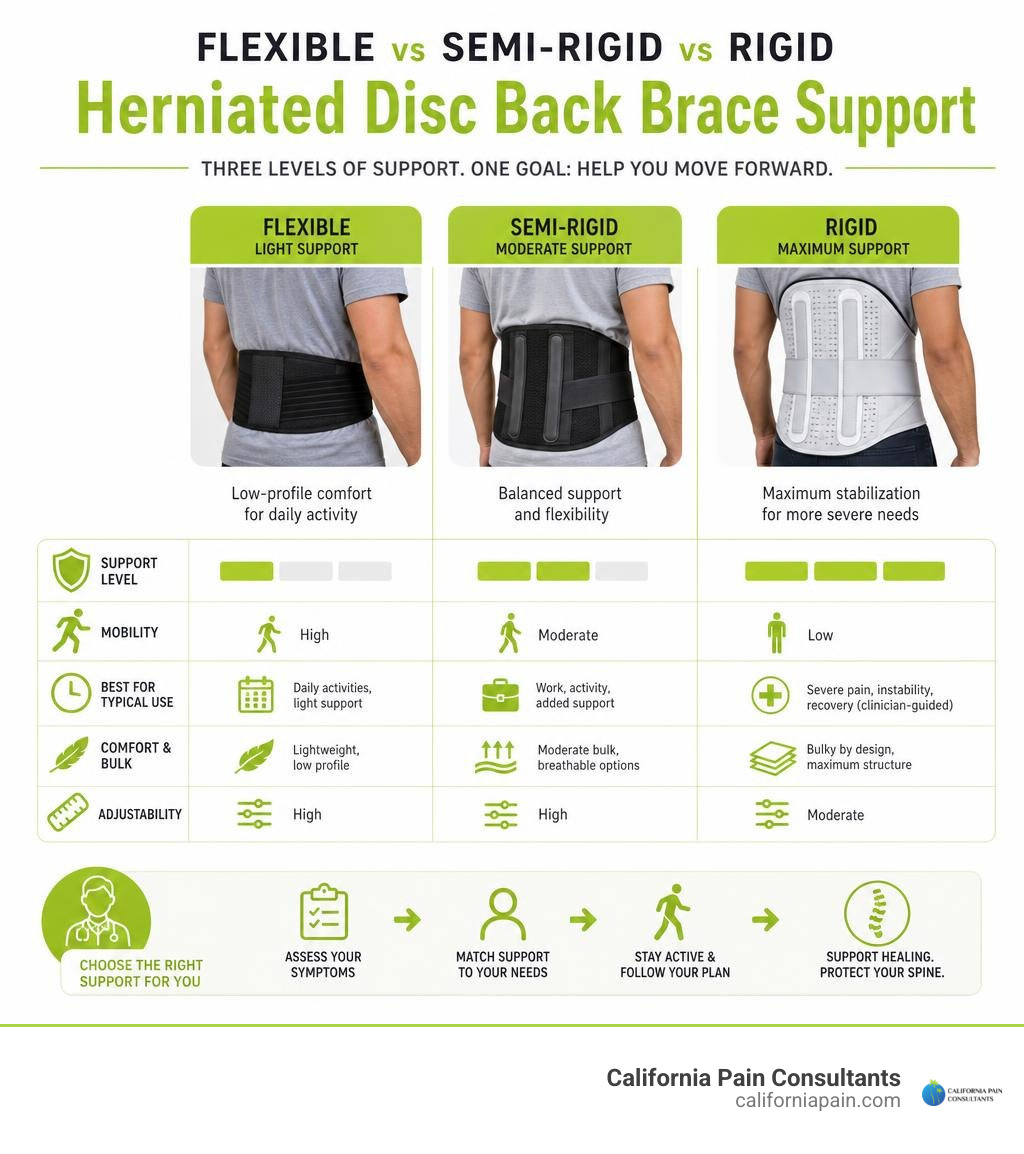
Selecting the appropriate brace requires matching the structural design of the device to the severity of your disc pathology. As detailed in our in-depth guide to choosing the right back brace, lumbar supports generally fall into three structural tiers:
| Brace Category | Primary Construction | Best For | Support Level |
|---|---|---|---|
| Rigid LSO | Hard ABS/polymer anterior & posterior panels, mechanical pulley system | Acute herniations, post-operative stabilization, severe radiculopathy | Maximum (Rigid immobilization) |
| Semi-Rigid | Breathable fabric with curved steel or plastic stays, secondary tension straps | Moderate disc herniations, daily occupational tasks, active flare-ups | Moderate-to-High (Dynamic support) |
| Flexible Elastic | Elastic knit, neoprene, compression bands | Mild disc irritation, postural cueing, minor muscle soreness | Mild (Proprioceptive compression) |
Rigid Lumbar Sacral Orthoses (LSO)
Rigid Lumbar Sacral Orthoses utilize molded anterior (front) and posterior (back) polymer panels to encase the lower torso. Devices engineered for rigid LSO spinal stabilization often feature mechanical pulley drawstrings that amplify your pulling strength, creating powerful intra-abdominal pressure with minimal hand effort.
These orthoses are indicated for severe disc extrusions, spondylolisthesis, spinal fractures, or post-surgical recovery. They deliberately limit spinal range of motion in both the sagittal (forward/backward) and coronal (side-to-side) planes to protect healing spinal structures.
Semi-Rigid Braces with Stays and Stiffeners
Semi-rigid braces strike a balance between structural reinforcement and functional mobility. These braces incorporate vertical stays constructed from tempered manganese steel or flexible polymers along the lumbar spine.
These vertical elements mirror the natural lordotic curve of your lower back, preventing painful hyperflexion while permitting the controlled motion needed for walking and light daily tasks. They are ideal for individuals managing moderate disc protrusions who need reliable stability during daily routines.
Flexible Elastic and Compression Supports
Flexible supports rely on high-grade elastomeric fabrics, 3D knits, and adjustable tension straps without rigid structural inserts. As explored in the definitive guide to lower back support for pain relief, flexible supports work primarily through gentle compression, localized therapeutic warmth, and proprioceptive biofeedback.
They serve as a tactile reminder to maintain proper posture during mild disc irritation or the later stages of rehabilitation when rigid restriction is no longer required.
Selecting the Best Supportive Features for Disc Injuries
Modern orthopedic braces have evolved beyond bulky, uncomfortable corsets. When selecting a brace to help manage a disc injury, look for functional features that maximize daily compliance and therapeutic relief.
Key Features in a Back Brace for Herniated Disc
- Mechanical Advantage Pulley Systems: A multi-tier or 6:1 mechanical advantage pulley allows you to achieve targeted, firm abdominal compression smoothly without straining your hands, wrists, or back.
- Removable and Heat-Moldable Panels: Modular panels allow you to step down the brace’s rigidity as your tissue heals and your functional strength improves.
- Breathable 3D Knit & Moisture-Wicking Liners: Porous fabrics and spacer mesh facilitate airflow, preventing sweat accumulation and skin irritation during extended wear.
- Integrated Hot/Cold Therapy Pockets: Dual-purpose slots positioned along the lumbar spine allow you to apply cold gel packs for acute inflammation (ideal during the first 48 hours) or heat packs to relax hypertonic paraspinal muscles.
- Ergonomic, Low-Profile Contours: Anatomically tapered side profiles prevent the brace from pinching into your ribs or rolling up when transitioning between standing and sitting.
Sizing and Achieving the Correct Compression Fit
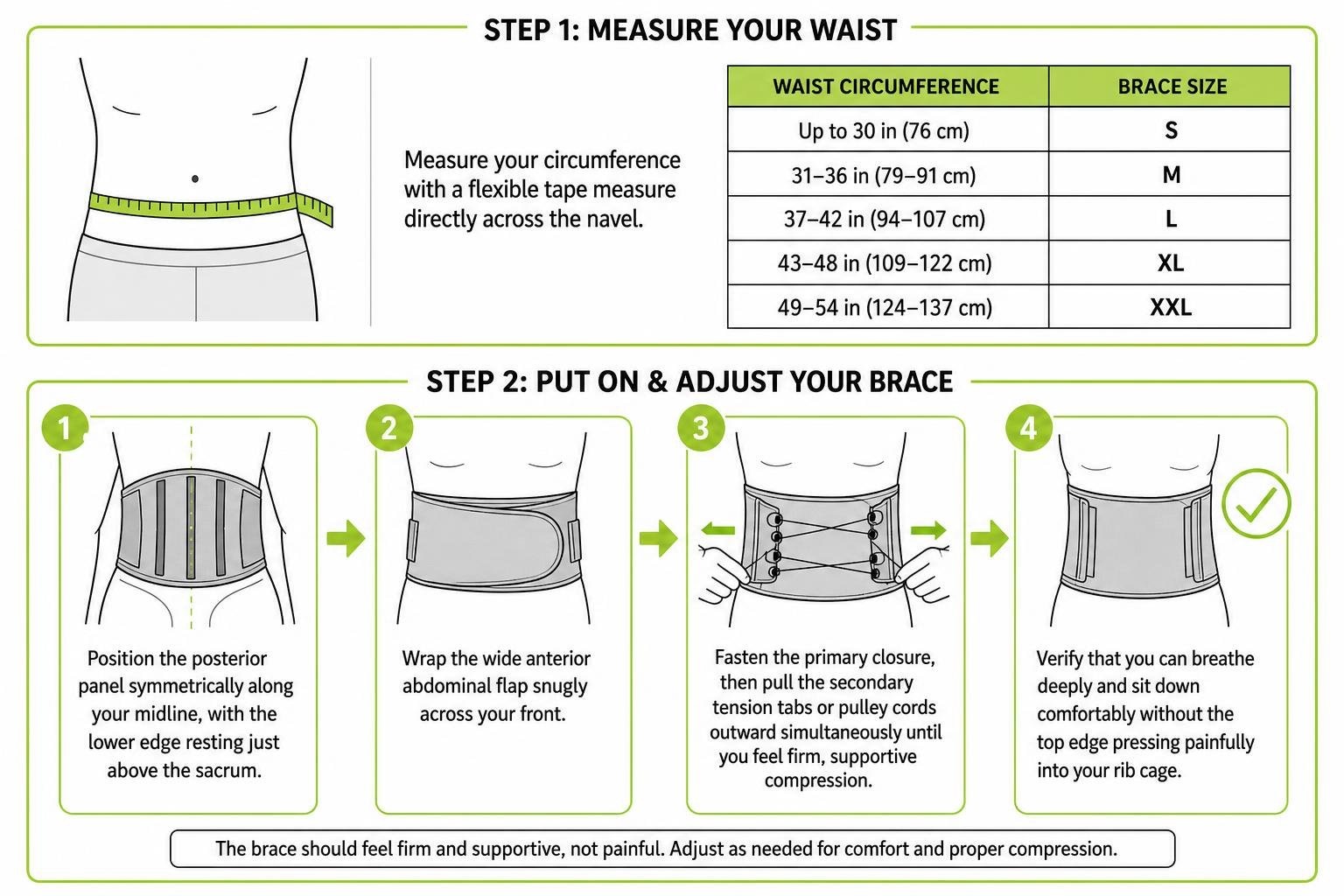
An improperly sized brace can cause discomfort or fail to provide therapeutic offloading. Never rely solely on standard pant sizes; instead, measure your circumference with a flexible tape measure directly across the navel.
When putting on the brace:
- Position the posterior panel symmetrically along your midline, with the lower edge resting just above the sacrum (tailbone).
- Wrap the wide anterior abdominal flap snugly across your front.
- Fasten the primary closure, then pull the secondary tension tabs or pulley cords outward simultaneously until you feel firm, supportive compression.
- Verify that you can breathe deeply and sit down comfortably without the top edge pressing painfully into your rib cage.
Safe Daily Usage: Timing, Activity, and Muscle Preservation
A back brace is a therapeutic tool, not a permanent structural replacement for your core muscles. Using a brace strategically prevents muscle deconditioning while shielding your spine during high-demand movements.
Wearing a Back Brace for Herniated Disc at Work and Daily Life
For individuals managing disc issues during work hours, wearing a back brace for work provides vital postural support during sustained sitting, prolonged standing, or repetitive movement. Sedentary computer work places high static pressure on lumbar discs; a brace helps maintain a healthy neutral lordosis and discourages slouching.
When performing physical tasks, understand that while braces remind you to use proper body mechanics, they do not make you invincible. Exploring whether do back braces work for lifting reveals that braces serve as physical and proprioceptive guides rather than substitutes for safe lifting techniques. Always bend at the knees, hold objects close to your center of gravity, and avoid lifting beyond safe physical limits.
As a general guideline, limit brace wear to 4 to 6 hours per day, focusing on times of peak physical activity, prolonged sitting, or acute symptom flares.
Combining Bracing with Active Rehabilitation
A brace stabilizes your spine in the short term, but long-term recovery depends on neuromuscular control and balanced core strength. Integrating your orthosis into a comprehensive physical therapy program ensures you build natural stability as inflammation subsides.
Mastering how to do bulging disc exercises the right way allows you to safely engage the transversus abdominis, multifidus, and gluteal muscles. Over time, progressive rehabilitation allows you to gradually taper brace use, transitioning from external support to your own muscular core.
Frequently Asked Questions About Herniated Disc Bracing
How tight should a back brace be for a herniated disc?
A back brace should feel firm, snug, and supportive, but never painfully restrictive. It must generate enough intra-abdominal pressure to limit sudden, painful movements without hindering normal diaphragmatic breathing or restricting blood circulation. If you experience numbness, tingling in your legs, acid reflux, or shortness of breath, loosen the tension straps immediately.
Can I sleep with a back brace on?
In most cases, you should remove your back brace before going to sleep. When lying down on a supportive mattress, gravitational compression on your intervertebral discs is naturally minimized. Wearing a rigid brace to bed can restrict breathing, cause localized skin pressure sores, and disrupt restful sleep.
Unless your physician explicitly prescribes overnight bracing following spinal surgery or an acute fracture, remove the device at night and use supportive pillows under your knees (when sleeping on your back) or between your knees (when sleeping on your side) to maintain spinal alignment.
Will wearing a back brace weaken my core muscles?
Wearing a back brace continuously for weeks on end without breaks can lead to disuse atrophy of your deep stabilizing core muscles. However, using a brace intermittently—for 4 to 6 hours daily during physically demanding activities—will not cause muscle weakening, especially when paired with active physical therapy. Use the brace to control acute pain so you can comfortably perform rehabilitative exercises and daily walking.
Conclusion
Managing a herniated disc requires an evidence-based, multifaceted approach. When selected thoughtfully and fitted correctly, a lumbar brace offers valuable pain relief, stabilizes sensitive spinal segments, and reduces the risk of aggravating disc injuries during daily routines.
However, true long-term relief requires addressing the underlying drivers of spinal pain. At California Pain Consultants, our double board-certified physicians specialize in comprehensive, non-surgical pain management tailored to your specific condition. If you are navigating lumbar disc pain across San Diego, Kearny Mesa, Chula Vista, Rancho Bernardo, La Mesa, or Miramar, California, our team is here to help you develop a personalized recovery path.
Explore our expert back brace guidance and contact California Pain Consultants today to schedule a comprehensive evaluation and take the next step toward lasting mobility and pain relief.