
Quick At-Home Remedies for Back Sprain Pain
Dealing with this in San Diego? Same-day appointments are often available at our 4 clinics.
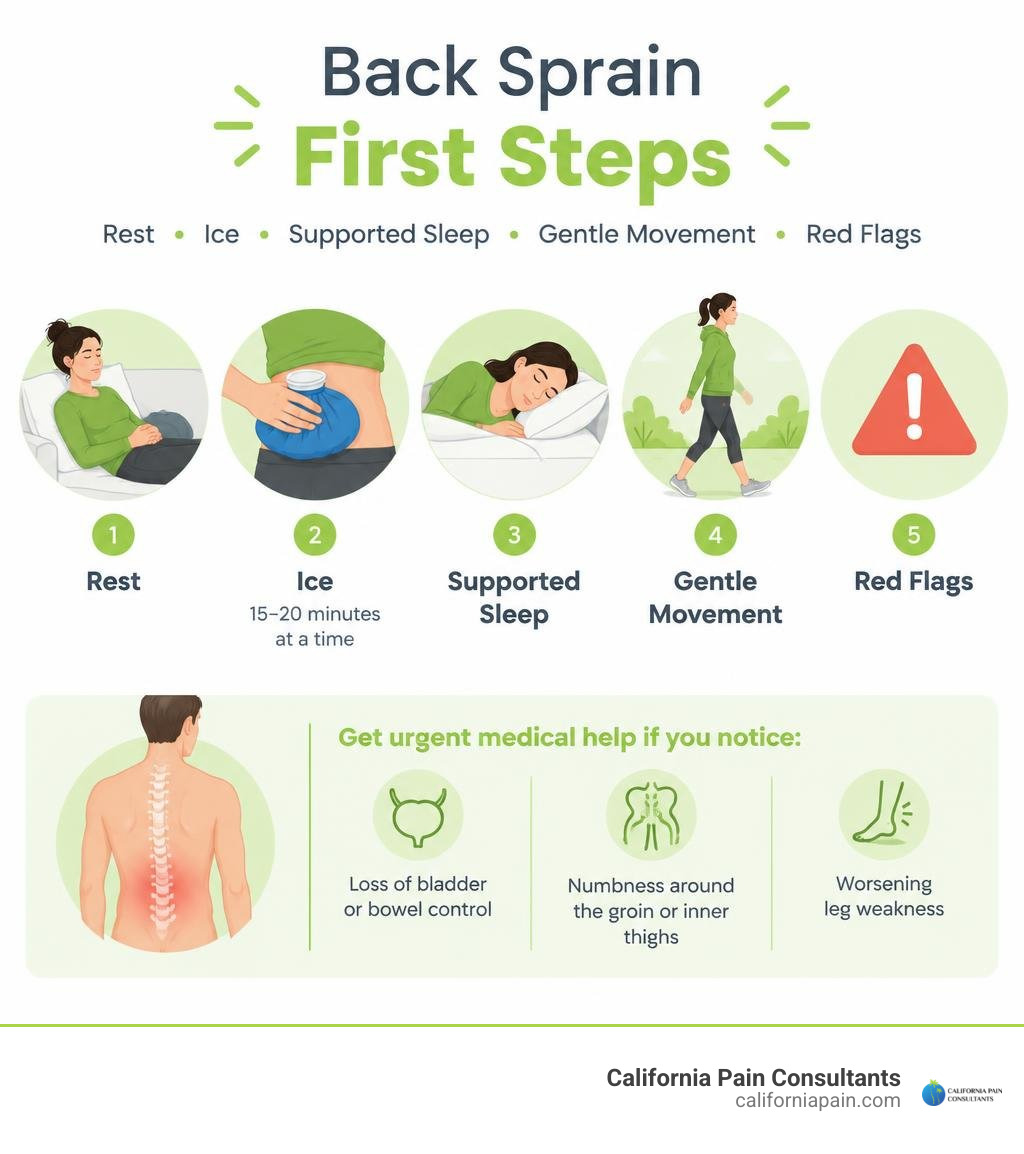
For most mild back sprains, the best first steps are relative rest, ice for 15 to 20 minutes at a time, comfortable pillow-supported positions, and short, gentle walks as pain allows. Avoid heavy lifting, twisting, and long periods of bed rest. After the first 48 hours, heat may help ease lingering stiffness or muscle spasms.
A back sprain involves stretched or torn ligaments that support the spine. It can happen after an awkward twist, fall, or lift. Low back pain is common – about 80% of adults experience it at some point – but many lumbar sprain and strain symptoms improve within about two weeks with sensible self-care.
Get urgent medical help for new loss of bladder or bowel control, numbness around the groin or inner thighs, or worsening leg weakness. These symptoms may point to something more serious than a simple sprain.
I am Dr. Zach Cohen, a double board-certified anesthesiologist and chronic pain physician with experience helping people use safe, practical remedies for back sprain and other spine-related pain. The next steps explain how to reduce pain at home while protecting your mobility and knowing when professional care is needed.
Learn more about remedies for back sprain:
Understanding Your Injury: Back Sprain vs. Back Strain
When you suddenly feel a sharp tweak in your lower back while picking up a box or turning awkwardly, it is easy to assume you simply “threw your back out.” In clinical practice, that sudden pain typically falls into one of two categories: a sprain or a strain. While people often use the terms interchangeably, they involve distinct anatomical structures.
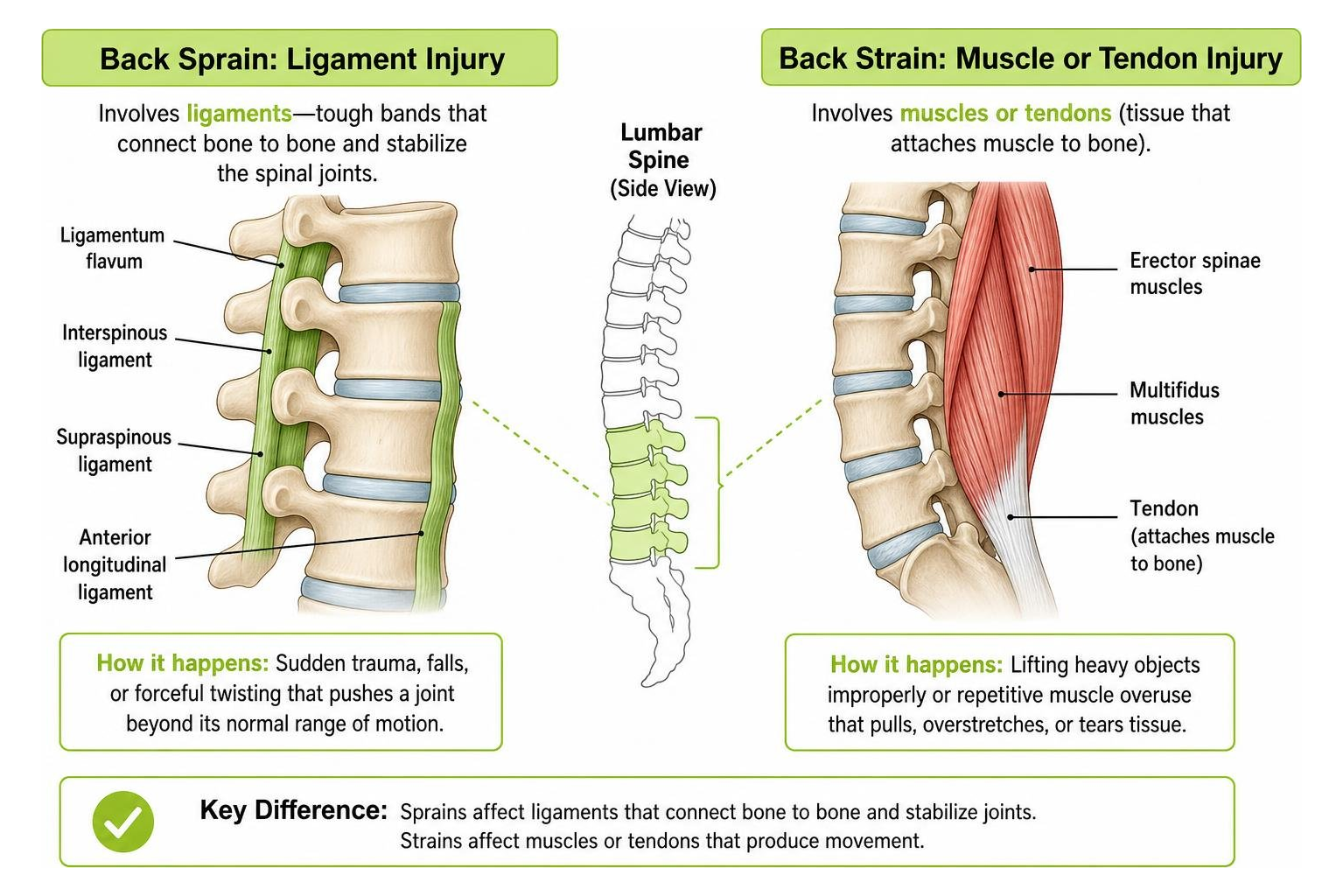
Your spine consists of 33 vertebrae (with 24 mobile segments) stacked neatly to support your body weight and protect the spinal cord. Holding these bony structures together is a complex network of ligaments, muscles, and tendons:
- Back Sprain: Occurs when the ligaments—tough, fibrous bands of connective tissue that connect bone to bone and stabilize your spinal joints—are overstretched or torn. Sprains commonly happen during sudden trauma, falls, or forceful twisting motions that push a joint beyond its normal range of motion.
- Back Strain: Occurs when a muscle or tendon (the tissue attaching muscle to bone) is pulled, overstretched, or torn. Strains frequently stem from lifting heavy objects improperly or repetitive muscle overuse, which can feel like a classic pulled muscle in back.
Knowing which structure is irritated is helpful when evaluating back pain causes, though early conservative management is remarkably similar for both. Both conditions can trigger localized pain, tenderness, and secondary muscle guarding or cramping as the body tries to brace the injured segment.
| Feature | Back Sprain | Back Strain |
|---|---|---|
| Primary Tissue Affected | Ligaments (bone-to-bone connection) | Muscles or Tendons (muscle-to-bone connection) |
| Common Trigger | Sudden twisting, impact, hyperextension, or falls | Improper lifting, sudden heavy loading, or chronic overuse |
| Primary Sensation | Sharp, deep, localized joint tenderness | Aching, stiffness, cramping, and active muscle spasms |
| Pain Behavior | Aggravated by bending or joint mobilization | Aggravated by muscle contraction or weight-bearing effort |
| Initial Focus | Joint stabilization and swelling control | Reducing muscle spasm and restoring soft-tissue length |
According to the Cleveland Clinic, back problems are the second most common complaint seen by healthcare providers, trailing only headaches. While a severe ligament tear requires targeted evaluation, most mild-to-moderate injuries heal well with structured conservative care at home.
7 Effective At-Home Remedies for Back Sprain
When acute ligament irritation occurs, the goal is simple: calm inflammation, protect the healing tissues, and prevent secondary stiffness. You do not need complex equipment to achieve noticeable relief. Following proven conservative methods can jumpstart your recovery and help you achieve acute back pain relief safely in your own living room.
First-Aid PRICE Protocol: Essential Remedies for Back Sprain
The PRICE protocol (Protection, Rest, Ice, Compression, Elevation) is a standard first-line conservative standard endorsed across major medical guidance, including the NHS guide on sprains and strains and the Mayo Clinic sprain treatment guidelines. Here is how to apply it specifically to the lower back:
- Protection: Protect the vulnerable lumbar spine from further stress. Avoid heavy lifting, sudden bending, or athletic activities during the first few days.
- Relative Rest: Take it easy for the first 24 to 48 hours, but avoid strict, prolonged bed rest. Rest should mean eliminating aggravating movements while continuing light, tolerated daily activities.
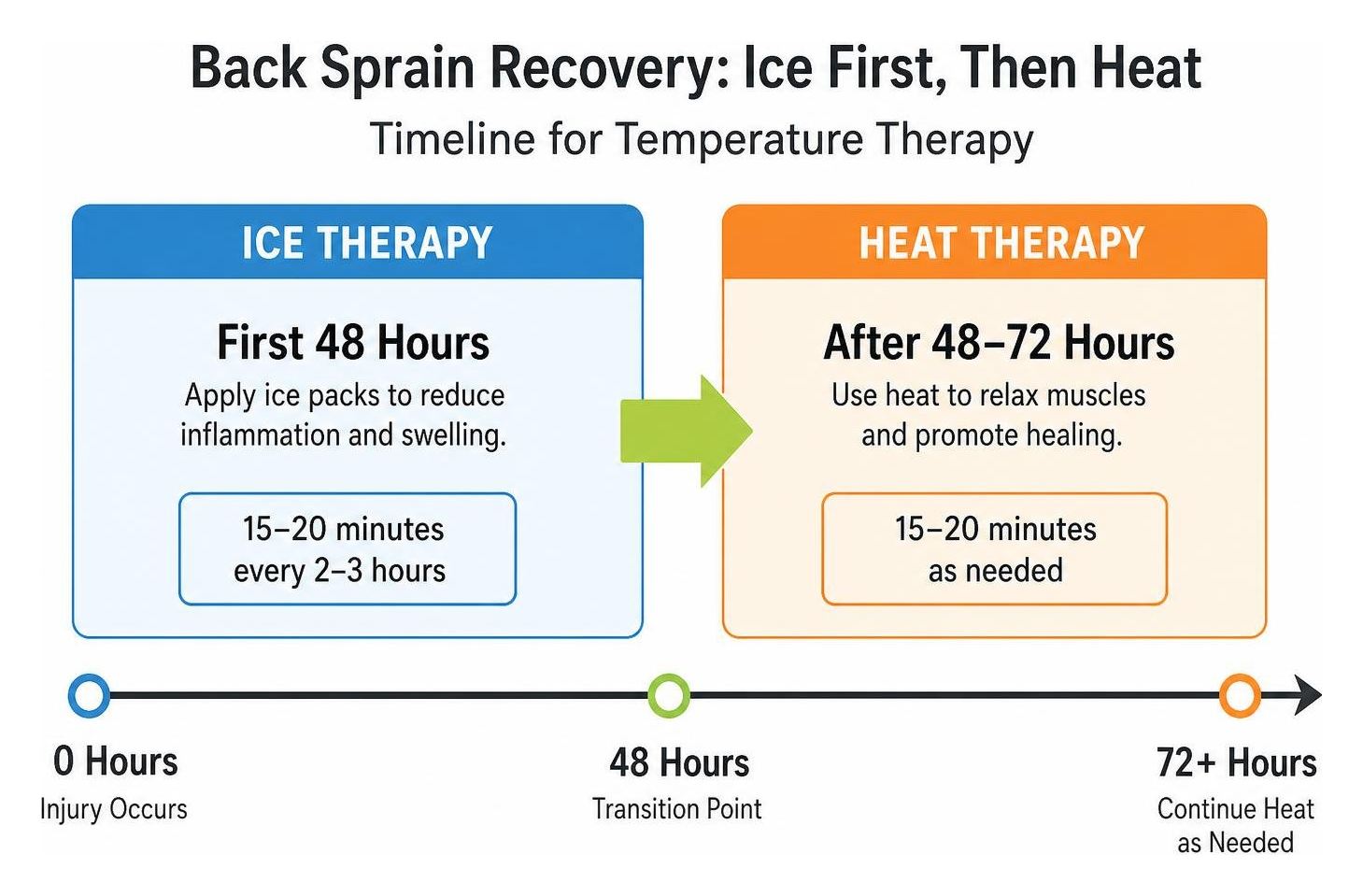
- Ice: Apply a cold pack wrapped in a thin towel directly over the tender lumbar area for 15 to 20 minutes every 2 to 3 hours during the initial 48 hours.
- Compression: While you cannot easily wrap your lower back with an elastic bandage like an ankle, a supportive lumbar binder or abdominal brace worn snugly (not constrictively) can provide stability and remind you to avoid sudden rotation.
- Elevation: For spinal injuries, elevation translates to positioning your hips and knees in a bent, supported posture (such as resting with pillows under your knees) to decompress the lumbar vertebrae and relax the surrounding soft tissues.
Heat and Cold Therapy: Proven Temperature Remedies for Back Sprain
Timing makes all the difference when choosing between ice and heat for a fresh back sprain:
- The First 48 Hours (Ice Only): Fresh ligament micro-tears initiate an inflammatory response. Applying heat early on can cause blood vessels to dilate, worsening local swelling and throbbing—much like adding fuel to a fire. Stick with ice packs or frozen gel wraps for 15 to 20 minutes at a time to promote vasoconstriction and numb sharp nerve signals.
- After 48 to 72 Hours (Introduce Heat): Once the sharpest phase of swelling calms down, you can switch to moist heat pads, warm baths, or a heated wrap. Heat dilates blood vessels, bringing oxygen-rich blood and nutrients to accelerate cellular repair while relaxing secondary muscle tightness.
For practical steps on managing thoracic or mid-spine discomfort alongside lumbar issues, reviewing back sprain recovery tips can help you time your temperature therapies appropriately.
Over-the-Counter Medications for Pain and Inflammation
Over-the-counter (OTC) pain relievers offer targeted symptom management so you can rest comfortably and stay mobile:
- Nonsteroidal Anti-Inflammatory Drugs (NSAIDs): Medications such as ibuprofen and naproxen work by dampening inflammatory pathways, reducing both pain and tissue swelling.
- Acetaminophen: Helps interrupt pain signaling in the central nervous system. It is a suitable alternative for individuals who cannot take NSAIDs due to stomach sensitivity, kidney concerns, or cardiovascular precautions.
- Topical Analgesics: Gels, creams, or patches containing menthol, capsaicin, or topical NSAIDs (such as diclofenac) deliver localized relief directly through the skin with minimal systemic absorption.
Always consult your doctor or pharmacist before starting a new medication regimen, especially if you have underlying medical conditions or take prescription drugs. You can learn more about how different classes of medications support recovery in our guide on back pain medication options.
Ergonomic Sleeping Positions and the Log Roll Technique
Sleep is essential for tissue healing, yet back pain often disrupts healthy rest. According to the Sleep Foundation, proper sleep posture and supportive surfaces play a massive role in spinal comfort, with up to 92% of users experiencing improved rest when optimizing alignment.
To take pressure off injured lumbar ligaments overnight:
- Back Sleepers: Place one or two supportive pillows beneath your knees. This slight bend flattens the lumbar curve against the mattress, removing mechanical tension from the lower spine.
- Side Sleepers: Keep your knees bent and place a firm pillow between your legs from knees to ankles. This keeps your pelvis, hips, and spine in neutral alignment and prevents your top leg from twisting your lower back forward.
- Avoid Stomach Sleeping: Sleeping on your stomach forces your neck to rotate fully to one side and hyperextends the lumbar spine, placing sustained strain on healing ligaments.
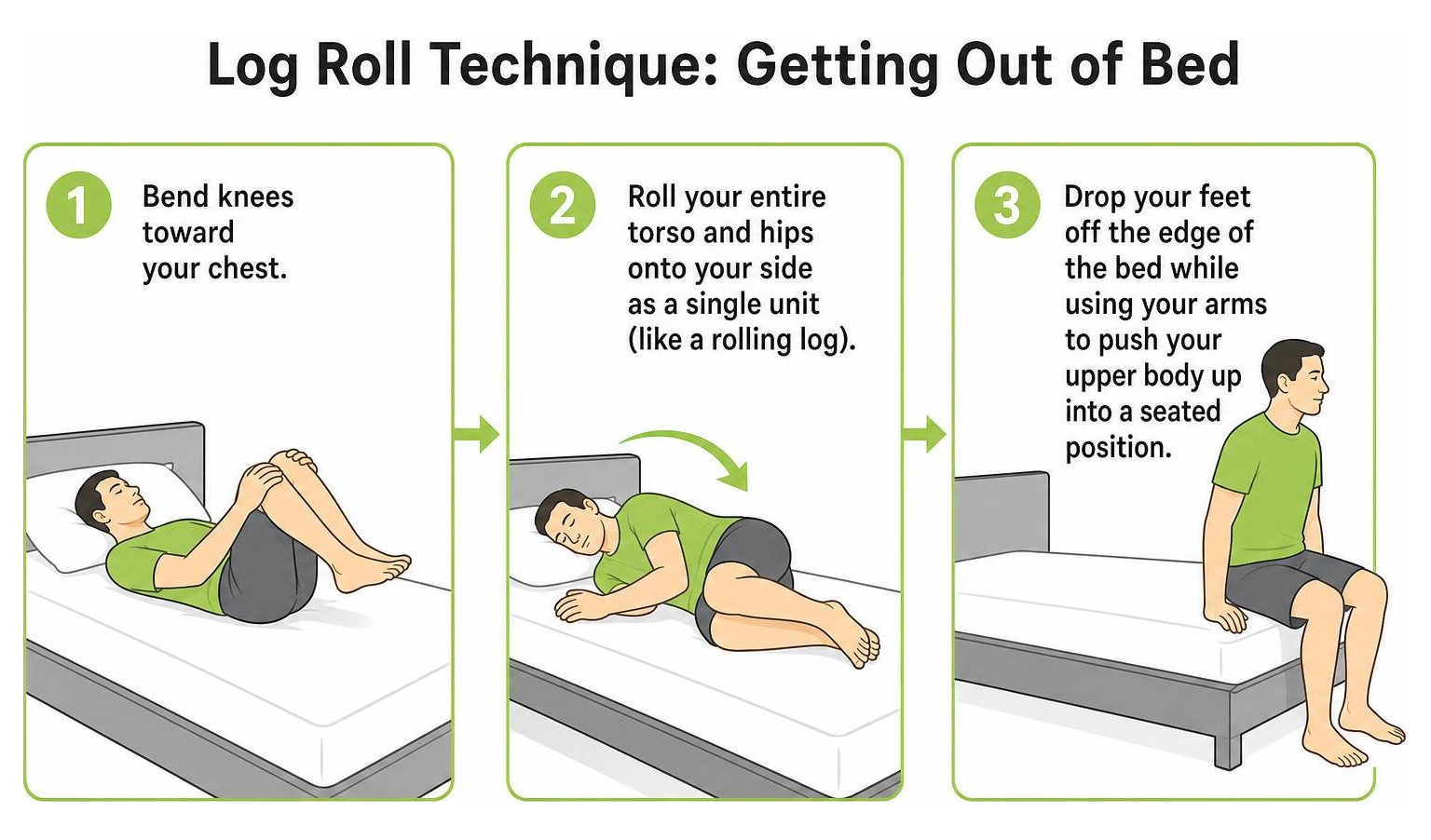
When rising from bed, avoid sitting straight up like a sit-up, which places intense shear force on healing tissues. Instead, use the Log Roll Technique:
- While lying on your back, gently bend both knees toward your chest.
- Roll your entire torso and hips onto your side simultaneously as a single unit (like a rolling log), avoiding spinal twisting.
- Drop your feet slowly off the edge of the bed while using your arms and hands to push your upper body up into a comfortable seated position.
Investing in supportive pillows or lumbar rolls can make a noticeable difference; explore our breakdown of back pain relief products for helpful ideas.
Safe Movement and Early Gentle Stretching
While taking it easy for the first day or two helps settle initial inflammation, staying in bed for days on end causes spinal muscles to weaken, joints to stiffen, and recovery to stall. As outlined by Scripps Health, gentle movement within tolerable limits accelerates tissue remodeling and promotes healing blood flow.
After the initial 48-hour resting window, incorporate these gentle movements:
- Short Walking Intervals: Walk on a flat, even surface for 5 to 10 minutes, two to three times a day. Walking engages postural stabilizers and promotes blood flow through the spinal discs.
- Pelvic Tilts: Lie on your back on a firm mat with knees bent and feet flat on the floor. Gently tighten your abdominal muscles and press your lower back flat against the floor. Hold for 5 seconds, relax, and repeat 8 to 10 times.
- Single Knee-to-Chest Stretch: Lying on your back, slowly bring one knee toward your chest with both hands, feeling a mild, comfortable stretch across the lower back and gluteal area. Hold for 15 to 20 seconds, release, and switch legs.
- Cat-Cow Mobility: On your hands and knees, gently alternate between arching your back slightly toward the ceiling and letting your belly dip downward. Move slowly within a pain-free range.
For additional recovery techniques, see our guide on how to treat muscle strain and stiffness. If you are looking for methods to calm surrounding muscle guarding, reading about how to relieve muscle strain fast can help you pair gentle stretching with targeted soft-tissue relaxation.
When Home Care Is Not Enough: Red Flags and Professional Treatment
Most lumbar sprains resolve cleanly with conservative measures. Clinical data indicates that most individuals with acute lumbar sprains and strains experience substantial improvement within about two weeks. However, roughly 20 percent of people affected by acute low back pain develop chronic pain that persists at one year without proper rehabilitation.
It is critical to distinguish between normal sprain recovery and emergent medical issues. Seek immediate emergency evaluation if you experience any of the following “red flag” symptoms:
- Loss of Bowel or Bladder Control: New incontinence or difficulty urinating can signal cauda equina syndrome, a serious spinal emergency requiring immediate surgical decompression.
- Saddle Anesthesia: Sudden loss of sensation or numbness around your groin, buttocks, perineum, or inner thighs.
- Progressive Neurological Deficits: Rapidly worsening weakness in your legs, such as “foot drop” (inability to lift the front part of your foot), or numbness spreading down both limbs.
- Unexplained Weight Loss or Fever: Back pain accompanied by unexplained systemic symptoms or chills warrants immediate diagnostic screening.
- Traumatic Onset: Pain following a high-impact motor vehicle collision, serious fall from height, or trauma in individuals with osteoporosis.
If your pain shows no sign of improvement after 3 to 5 days of consistent home care, schedule a comprehensive back pain diagnosis with a specialist. Clinical diagnostic tools such as physical exams, digital X-rays, and MRI scans can rule out hidden complications like herniated discs or facet joint disruptions.
Long-Term Recovery and Preventing Future Back Sprains
Once your acute pain resolves, true recovery shifts toward building long-term spinal stability. Ligaments take time to regain their full tensile strength, and muscles must be retrained to properly support the spine during daily tasks.
- Master the Hip-Hinge Technique: When lifting objects—whether heavy weights or everyday household items—bend at your hips and knees rather than rounding your lumbar spine. Keep the object close to your center of gravity and let your strong glutes and quadriceps do the lifting.
- Strengthen Core Stabilizers: Your core is more than your abdominal muscles; it includes your transverse abdominis, multifidus, oblique system, and pelvic floor. Exercises like planks, bird-dogs, and bridges create a natural “internal corset” that protects your spinal ligaments from torsional stress.
- Optimize Your Daily Workstation: Keep your computer monitor at eye level, adjust your chair to support your lumbar curve with feet resting flat on the floor, and stand up every 45 to 60 minutes to prevent prolonged spinal loading.
- Work with Physical Therapists: A customized, supervised program at a back pain rehabilitation center provides progressive resistance training, posture correction, and tailored functional exercises that help prevent re-injury.
Frequently Asked Questions About Back Sprains
How long does a back sprain typically take to heal?
For most mild-to-moderate back sprains, noticeable recovery occurs within about 2 weeks when using conservative remedies like ice, relative rest, and gentle movement. More significant ligament micro-tearing may require 4 to 8 weeks for complete tissue remodeling. High-impact sports or heavy manual lifting should be reintroduced gradually under guidance.
Should I stay in bed until my back sprain pain completely stops?
No. Prolonged bed rest beyond the first 24 to 48 hours can actually delay healing. Extended immobility causes supportive muscles to decondition, joints to stiffen, and pain sensitivity to increase. Gentle walking and light range-of-motion exercises maintain blood circulation and speed up healing.
What is the safest way to get out of bed with a sprained back?
Use the log roll technique: lie on your back, bend your knees, and roll your entire body to one side in a single fluid motion without twisting your waist. Then, drop your lower legs slowly off the edge of the mattress while pushing your upper torso up with your arms to sit upright.
Conclusion
A sudden back sprain can interrupt your daily routine, but it does not have to sideline you long-term. By applying the PRICE protocol early on, alternating from ice to heat after 48 hours, adopting spine-friendly sleep positions, and maintaining gentle movement, you can navigate recovery safely from home.
If your symptoms linger beyond two weeks, or if you are looking to build a resilient, pain-free back, our team of board-certified specialists is here to help. We provide compassionate, evidence-based care focused on restoring your mobility and getting you back to the activities you love. Contact us today to explore comprehensive, non-surgical back pain treatment in San Diego, Kearny Mesa, Chula Vista, Rancho Bernardo, La Mesa, or Miramar.