
Quick Back Tightness Relief for Morning Stiffness
Dealing with this in San Diego? Same-day appointments are often available at our 4 clinics.
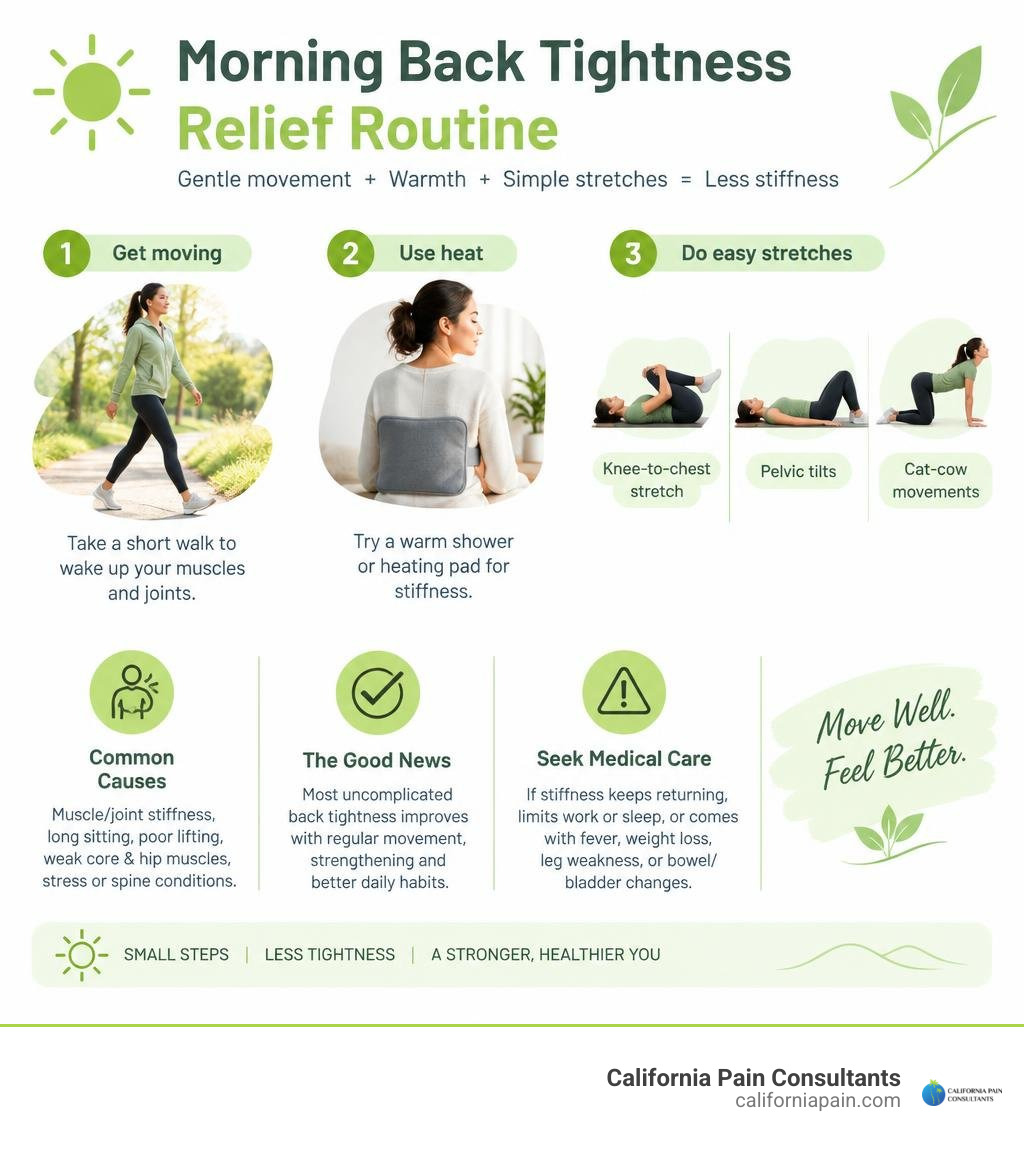
For fast back tightness relief in the morning, start with gentle movement instead of staying in bed. Take a short walk, use a warm shower or heating pad for stiffness, and try easy motions such as knee-to-chest stretches, pelvic tilts, and slow cat-cow movements. Stop if pain becomes sharp, shoots down a leg, or causes numbness or weakness.
Morning tightness often happens when muscles and joints have stayed still for hours. It can also be linked to long sitting, poor lifting mechanics, weak core and hip muscles, stress, or an underlying spine condition. The good news: most uncomplicated back tightness improves with regular movement, gradual strengthening, and better daily habits – not prolonged rest. For a broader overview of how morning stiffness develops, the American Academy of Orthopaedic Surgeons explains common causes of low back pain and when to seek care.
If your stiffness keeps returning, limits work or sleep, or comes with fever, unexplained weight loss, leg weakness, or bowel or bladder changes, seek medical care promptly.
I am Dr. Zach Cohen, a double board-certified anesthesiologist and chronic pain physician with training in interventional spine care and non-surgical pain management. I help patients find practical, personalized paths to back tightness relief while addressing both physical strain and the stress that can worsen pain.
Important back tightness relief terms:
Understanding Back Tightness: Causes vs. Chronic Pain
Waking up feeling like your spine is cast in concrete is remarkably common. About 80 percent of adults experience low back pain at some point in their lifetimes, and more than 25 percent of American adults are experiencing lower back pain right now. In fact, low back pain stands as the most common cause of job-related disability and the second most common reason people are hospitalized in the United States.
To understand why tightness occurs, it helps to look at spinal anatomy. The lumbar spine consists of five vertebrae (L1–L5) cushioned by shock-absorbing intervertebral discs, stabilized by tough ligaments, and surrounded by paraspinal muscle bands. This structure bears roughly 60 percent of your total body weight. When surrounding muscles stay contracted overnight to splint or protect your spine, you wake up with significant stiffness.
Back tightness generally falls into two categories:
- Mechanical and Muscular Strains: Often triggered by sudden twisting, heavy lifting, or poor sleep posture. Paraspinal muscles contract into spasms to prevent further tissue damage.
- Structural and Chronic Degeneration: Involves degenerative disc disease, lumbar disc herniation, facet joint osteoarthritis, or spinal stenosis (narrowing of the spinal canal). About 20 percent of people affected by acute low back pain develop chronic low back pain with persistent symptoms at one year.
Several contributing factors accelerate tightness:
- Sedentary Habits: Prolonged sitting shortens your hip flexors and weakens the gluteal muscles, shifting mechanical stress directly onto the lumbar spine.
- Age and Spinal Fluid Loss: As we age, intervertebral discs lose water content, reducing morning spinal flexibility.
- Pregnancy and Weight Changes: Shifting centers of gravity place extra strain on the lumbar curve.
- Stress and Mental Health: Anxiety activates the sympathetic nervous system, leading to sustained paraspinal muscle clenching.
For practical steps on self-care, establishing reliable routines for taking care of your back at home provides a strong foundation for daily comfort.
Recognizing Red Flags and Underlying Conditions
While most morning stiffness stems from tight muscles and joint immobility, certain symptoms point to serious medical issues that require urgent attention:
- Cauda Equina Syndrome: Sudden loss of bowel or bladder control, saddle anesthesia (numbness in the groin, buttocks, or inner thighs), or rapid weakness in both legs. This is a medical emergency.
- Progressive Neurological Deficits: Increasing numbness, tingling, or “foot drop” (inability to lift the front part of the foot).
- Systemic Symptoms: High fever, unexplained chills, or sudden weight loss accompanying back stiffness, which can indicate spinal infection or malignancy.
- Unremitting Night Pain: Severe, deep aching that does not change with position or worsens when lying flat.
- Recent Trauma: Severe back stiffness following a fall, motor vehicle collision, or sports injury.
If you experience any of these red-flag symptoms, seek immediate emergency medical care.
Evidence-Based Home Routines for Back Tightness Relief
Managing morning tightness starts with proactive daily movement. The instinct to remain motionless in bed often backfires, as prolonged bed rest weakens postural muscles and increases joint stiffness.
A well-rounded home recovery strategy combines:
- Active Movement: Light walking stimulates circulation, lubricates facet joints, and delivers oxygen to tight muscle fibers. Aim for 150 minutes of moderate aerobic activity weekly, as recommended by public health guidelines.
- Thermal Therapy: Use a heating pad or warm shower for 15 to 20 minutes in the morning to increase blood flow and relax tight muscles. If you experience an acute strain with swelling, switch to an ice pack for the first 24 to 48 hours before reintroducing heat.
- Hydration: Proper hydration keeps intervertebral discs pliable and supports healthy muscle contractions.
- Sleep Ergonomics: Use a medium-firm mattress that maintains neutral spinal alignment. Side sleepers benefit from a pillow placed between their knees, while back sleepers can place a small pillow beneath their knees to reduce lumbar pressure.
Morning Stretches for Immediate Back Tightness Relief
Incorporate these gentle mobility exercises right after getting out of bed. Perform each stretch smoothly, breathing deeply, without bouncing:
- Knee-to-Chest Stretch: Lie on your back with knees bent and feet flat. Gently pull one knee toward your chest using your hands, holding for 20 to 30 seconds. Switch legs, then bring both knees to your chest.
- Pelvic Tilts: Lie flat with knees bent. Tighten your abdominal muscles and flatten your lower back against the floor by rotating your pelvis slightly upward. Hold for 5 seconds, release, and repeat 8 to 10 times.
- Cat-Cow Pose: Position yourself on hands and knees. Inhale as you gently arch your back, lowering your belly toward the floor (Cow). Exhale as you round your spine toward the ceiling, tucking your chin (Cat). Move smoothly through 5 to 10 cycles.
- Figure-Four Stretch (Gluteal & Piriformis Release): Lie on your back, cross your right ankle over your left knee, and gently grasp the back of your left thigh, pulling it toward your chest until you feel a comfortable stretch in your right hip. Hold for 30 seconds per side.
- Neural Glide (Sciatic Nerve Flossing): Sit upright in a chair. Straighten one leg while flexing your ankle upward, gently tilting your head back. Then lower the foot and bend your neck forward. Perform 5 to 10 rhythmic repetitions to ease nerve tension.
To target mid-back or shoulder blade tightness alongside your lumbar spine, learning techniques to relieve muscle strain fast can help prevent compensation injuries.
Core Strengthening and Ergonomic Modifications
A stable muscular core acts as an internal back brace, taking pressure off the lumbar vertebrae and facet joints.
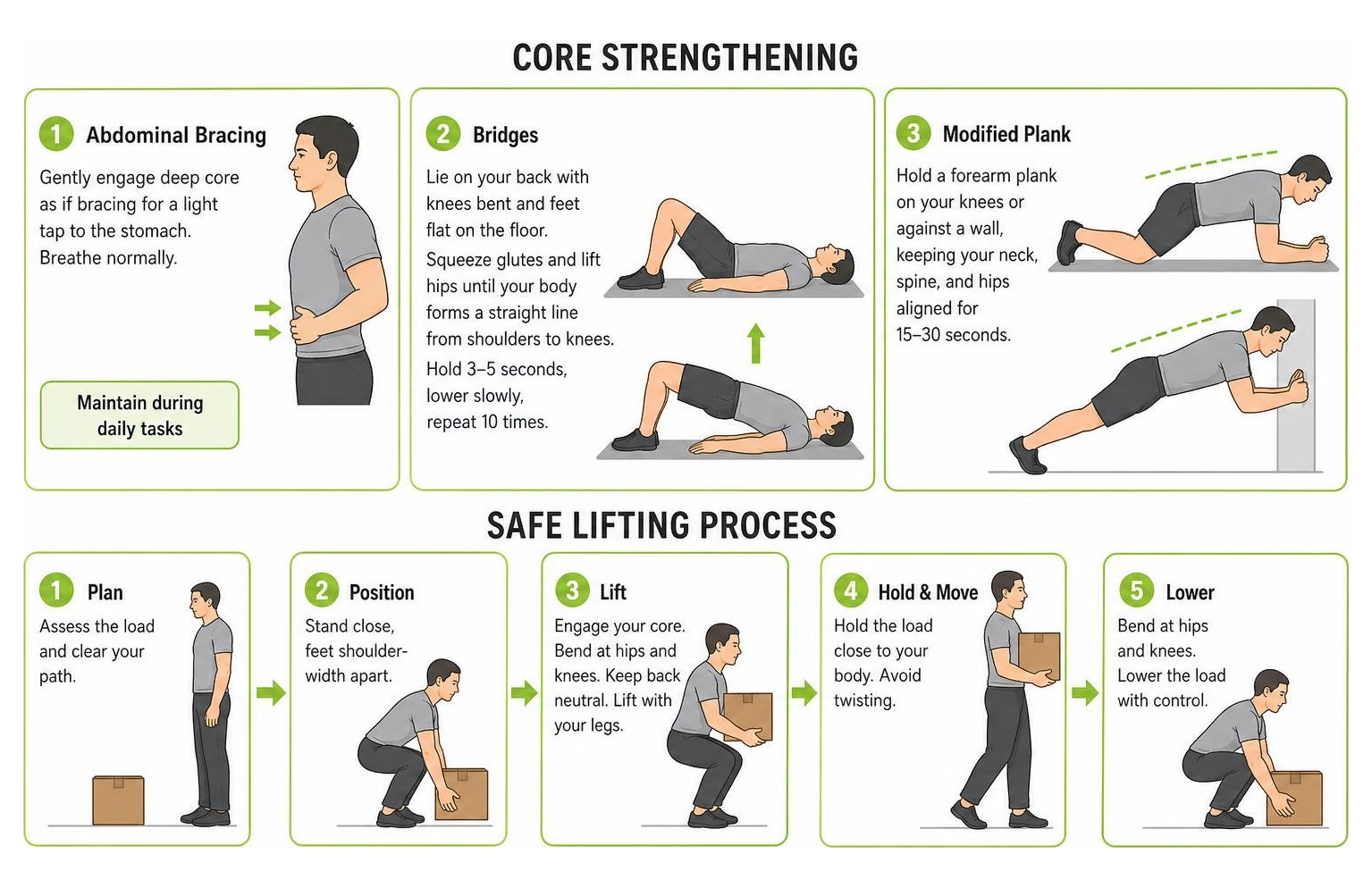
Focus on these fundamental strengthening exercises at least two to three times per week:
- Abdominal Bracing: Practice gently engaging your deep core muscles—as if bracing for a light tap to the stomach—while breathing normally. Maintain this activation during routine daily tasks.
- Bridges: Lie on your back with knees bent and feet flat on the floor. Squeeze your glutes and lift your hips until your body forms a straight line from shoulders to knees. Hold for 3 to 5 seconds, lower slowly, and repeat 10 times.
- Modified Planks: Hold a forearm plank on your knees or against a wall, keeping your neck, spine, and hips aligned for 15 to 30 seconds.
Pair your exercise routine with sound daily mechanics:
- Workstation Ergonomics: Keep computer monitors at eye level, position elbows at a 90-degree angle, and support your lower back with an ergonomic lumbar roll.
- Movement Breaks: Avoid remaining in one position for longer than 45 to 60 minutes. Set a timer to stand, walk, or perform a standing backward extension.
- Safe Lifting Technique: Always bend at the hips and knees, keep loads close to your chest, and avoid twisting your torso while carrying heavy objects.
For sudden flare-ups during a busy workday, reviewing proven ways to relieve back tension quickly helps you de-escalate spasms without disrupting your schedule.
Comparing Professional Therapies and Non-Surgical Treatments
When home care alone does not fully resolve persistent tightness, clinical interventions offer structured relief. At California Pain Consultants, our board-certified physicians specialize in comprehensive, non-surgical pain management across San Diego, Kearny Mesa, Chula Vista, Rancho Bernardo, La Mesa, and Miramar. We build multifaceted plans to restore mobility without unnecessary surgery.
| Treatment Modality | Best Suited For | Primary Mechanism of Action | Typical Treatment Duration |
|---|---|---|---|
| Physical Therapy | Weak core, postural imbalances, recurring spasms | Targeted stretching, neuromuscular re-education, strengthening | 4–8 weeks (1–3 sessions/week) |
| Interventional Pain Injections | Localized joint inflammation, severe trigger points, nerve irritation | Image-guided anti-inflammatory delivery, precise nerve blocks, spasm interruption | Targeted outpatient procedures |
| Comprehensive Medical Pain Management | Chronic stiffness, persistent back discomfort | Non-opioid pharmacotherapy, functional restoration, rehabilitation coordination | Customized ongoing care |
| Spinal Decompression / Traction | Bulging discs, degenerative nerve compression | Mechanical separation of vertebrae, reducing intradiscal pressure | 4–6 weeks |
| TENS / Neuromuscular Stimulation | Myofascial pain, stress-induced muscle bracing | Electrical nerve stimulation to block pain signals; muscular relaxation | Home use or clinical therapy |
If muscular discomfort extends into your shoulder blades or thoracic spine, exploring dedicated upper back pain relief options can help address posture-related upper body tension.
Clinical Interventions for Long-Term Back Tightness Relief
For persistent or severe stiffness, advanced non-surgical procedures provide targeted relief when conservative options plateau:
- Trigger Point Injections: Precise local anesthetic injections placed directly into hyperirritable paraspinal muscle bands to release stubborn knots and spasms.
- Epidural Steroid Injections: Image-guided injections that deliver anti-inflammatory medication around irritated spinal nerves, relieving radicular pain and secondary muscle tightening.
- Facet Joint Injections & Medial Branch Blocks: Targeted local anesthetics and corticosteroids applied to arthritic spinal joints, easing localized pain and stiffness during spinal extension or rotation.
- Radiofrequency Ablation (RFA): A specialized procedure that uses thermal energy to temporarily deactivate sensory nerves supplying painful facet joints, offering long-lasting relief often spanning 6 to 12 months.
When dealing with sharp thoracic or rib cage discomfort alongside lumbar stiffness, applying methods to relieve mid-back muscle pulls can restore rotational mobility.
When to Consult a Specialist for Persistent Back Stiffness
Most uncomplicated cases of back tightness begin improving within two to four weeks of consistent home care and active movement. However, if your stiffness persists beyond four weeks, limits your ability to work or walk, or progressively worsens, consulting a pain specialist is the next logical step.
During an evaluation, a specialist will perform a physical and neurological examination to assess reflexes, muscle strength, and range of motion. Depending on your presentation, diagnostic imaging may be recommended:
- X-rays: Useful for evaluating bone alignment, joint space narrowing, spinal instability, or arthritis.
- MRI (Magnetic Resonance Imaging): The gold standard for visualizing soft tissues, including herniated discs, spinal cord compression, ligaments, and nerve root impingement.
- CT Scans: Provide detailed cross-sectional views of bony architecture when MRI is contraindicated.
- Electromyography (EMG) and Nerve Conduction Studies: Evaluate nerve health and confirm whether tingling or weakness originates in the spine.
For those seeking rapid stabilization while awaiting an evaluation, understanding how to get instant relief from back pain provides safe interim comfort.
Frequently Asked Questions About Back Tightness Relief
How do I tell if back tightness is muscular or structural?
Muscular tightness typically feels like a dull, aching band across the lower back, often aggravated by movement and relieved by heat, rest, and gentle stretching. Structural issues (such as herniated discs or spinal stenosis) often cause sharp, stabbing pain that may radiate down the buttocks, legs, or feet, accompanied by tingling, burning, or focal weakness. A clinical evaluation with a spine specialist is the most reliable way to identify the underlying source.
Is bed rest recommended when waking up with a stiff back?
No. Prolonged bed rest allows spinal joints to stiffen further and can cause surrounding muscles to weaken, prolonging recovery. Medical guidelines recommend limiting bed rest to brief periods (no more than 24 to 48 hours during severe acute episodes) and engaging in light walking and gentle stretching as early as possible to promote blood flow and tissue healing.
Should I apply ice or heat for morning back tightness?
For general morning tightness without acute swelling, heat is usually best. Warm showers, baths, or a heating pad applied for 15 to 20 minutes help dilate blood vessels, relax tense muscle fibers, and ease joint movement. If your stiffness follows a sudden injury, fall, or acute strain involving sharp inflammation, apply ice packs for the first 24 to 48 hours to minimize swelling before switching to heat.
Conclusion
Morning back stiffness does not have to dictate your daily routine. By combining gentle morning mobility stretches, regular core strengthening, proper sleep ergonomics, and consistent movement breaks throughout your workday, you can release chronic muscle tension and protect your spine over the long term.
If persistent tightness or spinal discomfort continues to limit your quality of life, our board-certified pain physicians at California Pain Consultants are here to help. Serving patients across San Diego, Kearny Mesa, Chula Vista, Rancho Bernardo, La Mesa, and Miramar, we provide compassionate, personalized care and advanced non-surgical therapies, including our comprehensive pain management programs, to help you take your next step toward lasting relief and restored mobility.